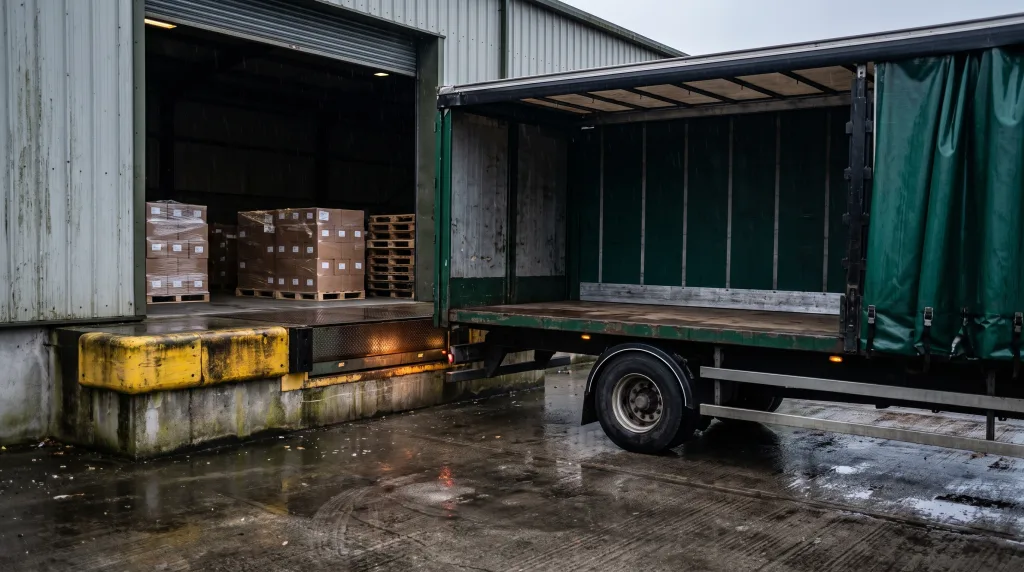
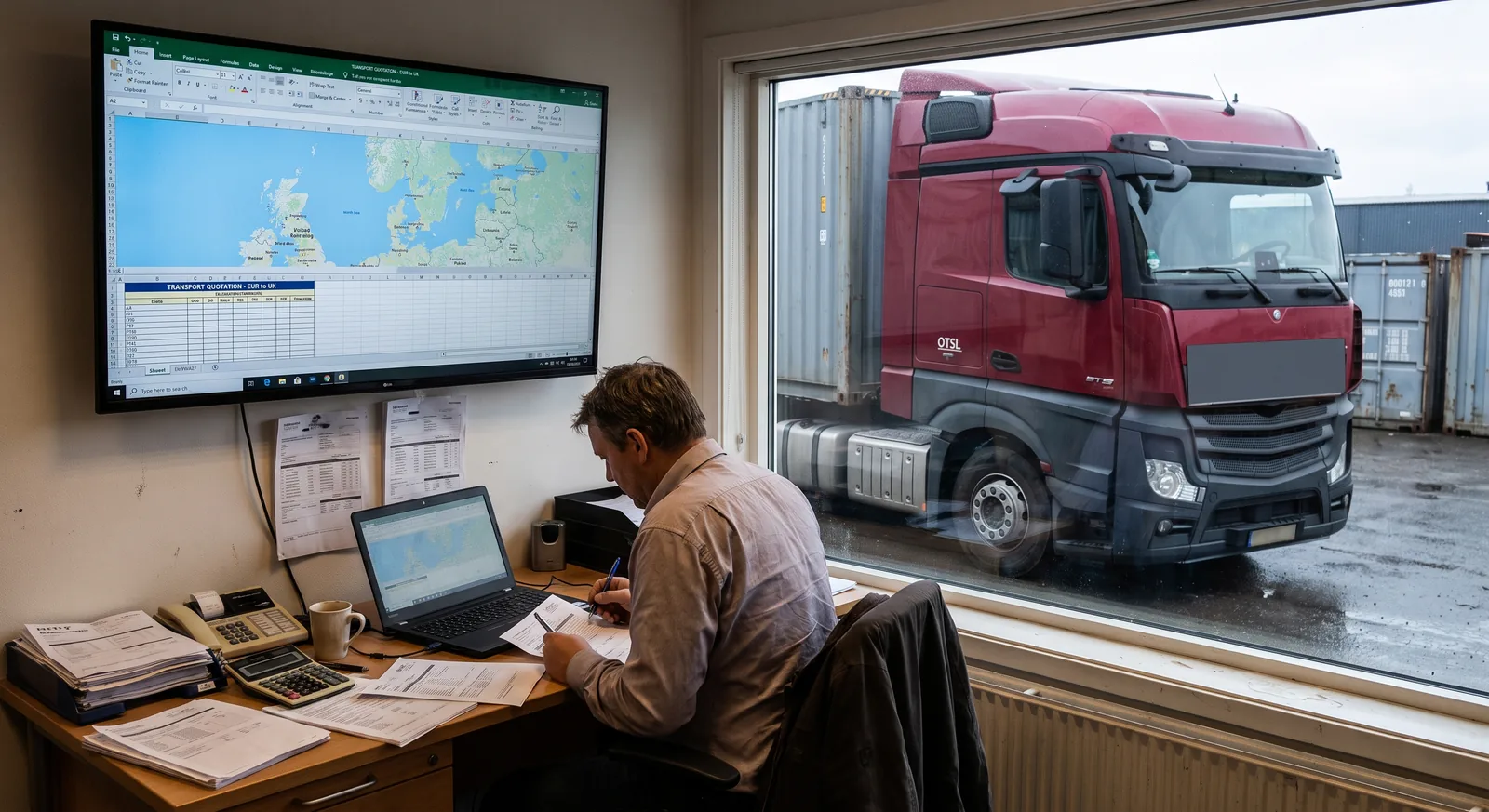
 AI image
There is no single rate for transport to the United Kingdom. The price depends on the type of load and vehicle, the route and the crossing, post-Brexit customs clearance, the deadline and special requirements such as ADR or temperature control. A reliable quote therefore starts with specifics: what is moving, from where to where and by when.
What builds the price of UK transport
- Type of carriage: a full load (FTL), groupage (LTL) or an express van. You pay for the whole trailer, for the space you occupy or for a dedicated vehicle against one deadline. We explain the differences in FTL or LTL.
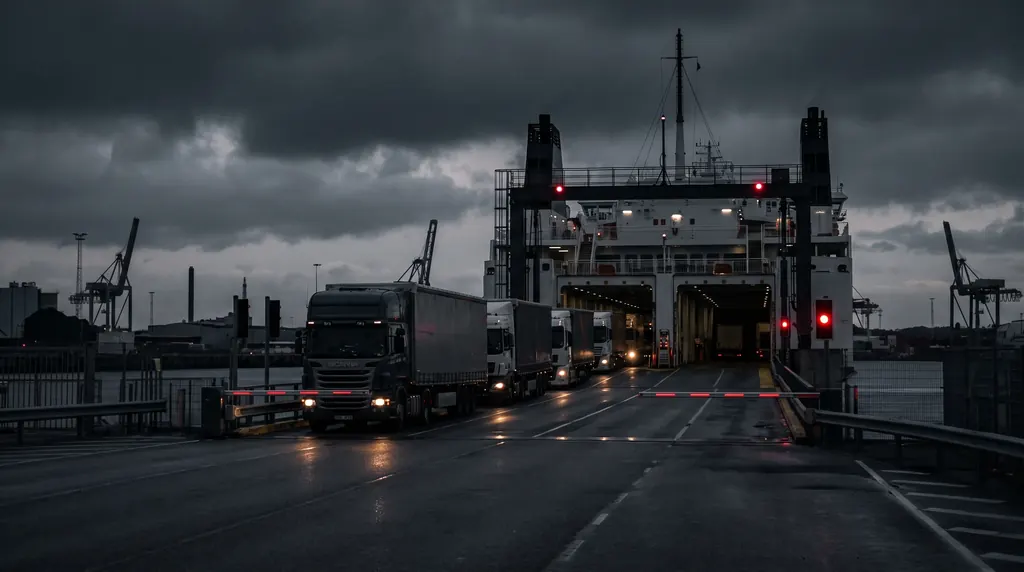
- Route and crossing: the loading and delivery points, the choice of ferry or tunnel and how early the crossing can be booked. More in our article on ferry booking.
- Customs and documents: after Brexit the price includes handling customs declarations and the GMR (Goods Movement Reference, required at the UK border) number. Some firms quote this separately; with us it is part of one order.
- Deadline: a standard delivery is priced differently from an urgent one, where the vehicle runs dedicated, sometimes with two drivers.
- Special requirements: ADR dangerous goods, temperature control, oversize cargo, deliveries to exhibition venue slots.
- Season: exhibition periods and seasonal peaks change the availability of vehicles and crossings.
| Factor | How it moves the price |
|---|---|
| Transport mode | FTL, LTL or express van: you pay for the whole vehicle, the space you use or a dedicated van |
| Route and crossing | Loading and delivery points, ferry or tunnel, how early the crossing is booked |
| Customs and documents | Post-Brexit declarations and the GMR, priced separately or within one order |
| Deadline | Standard delivery versus an urgent dedicated vehicle, sometimes double-manned |
| Special requirements | ADR, temperature control, oversized cargo, venue delivery slots |
| Season | Exhibition and seasonal peaks change vehicle and crossing availability |
The costs few people mention at quoting stage
Most unplanned expense is born not in the price list but in the standstill. A vehicle waiting for documents or for unloading costs money whether or not it is moving.
So when you compare offers, ask not only about the rate per kilometre but about what happens when the border or the consignee stops the truck. The cheapest offer can prove the most expensive when nobody controls the documents and the deadline.
What a reliable quote looks like
Instead of quoting blind, we ask about the goods, dimensions and weight, the loading and delivery points, the deadline and any extra requirements. In return you get a complete price: carriage, crossing and customs in one order, with no additions after the event. Send an enquiry through the contact form and you will receive a quote calculated for your load.
What key factors determine the final price of UK freight transport?
The total cost depends primarily on the selected carriage mode, such as full loads or groupage, the specific route and ferry or tunnel crossing, post-Brexit customs procedures including GMR generation, as well as any special cargo needs like temperature control or dangerous goods handling.
Step by step
- Define load parameters. Gather exact dimensions, weight and any special requirements for your cargo.
- Select transport type. Decide whether you require a full trailer, groupage space or a fast van.
- Plan route and crossing. Choose the appropriate road route and ferry or Eurotunnel booking.
- Prepare customs paperwork. Collate the necessary declarations and generate your GMR reference number.
- Execution and delivery. Hand over your cargo for carriage and monitor its journey to the destination.
Definitions
- FTL (Full Truckload): A full load transport where you book the entire trailer exclusively for your goods.
- LTL (Less Than Truckload): Groupage or partial transport where you pay only for the space occupied by your shipment.
- GMR (Goods Movement Reference): A customs reference number required when moving goods into or out of the UK.
- ADR (European Agreement concerning the International Carriage of Dangerous Goods by Road): Regulations governing the international transport of dangerous goods by road.
The OTSL role
OTSL organises freight transport between Poland and the UK, supporting you in selecting efficient options like road transport. You can also read our guide on express vans and time-critical transport to learn how different shipment types affect logistics schedules.