 AI image
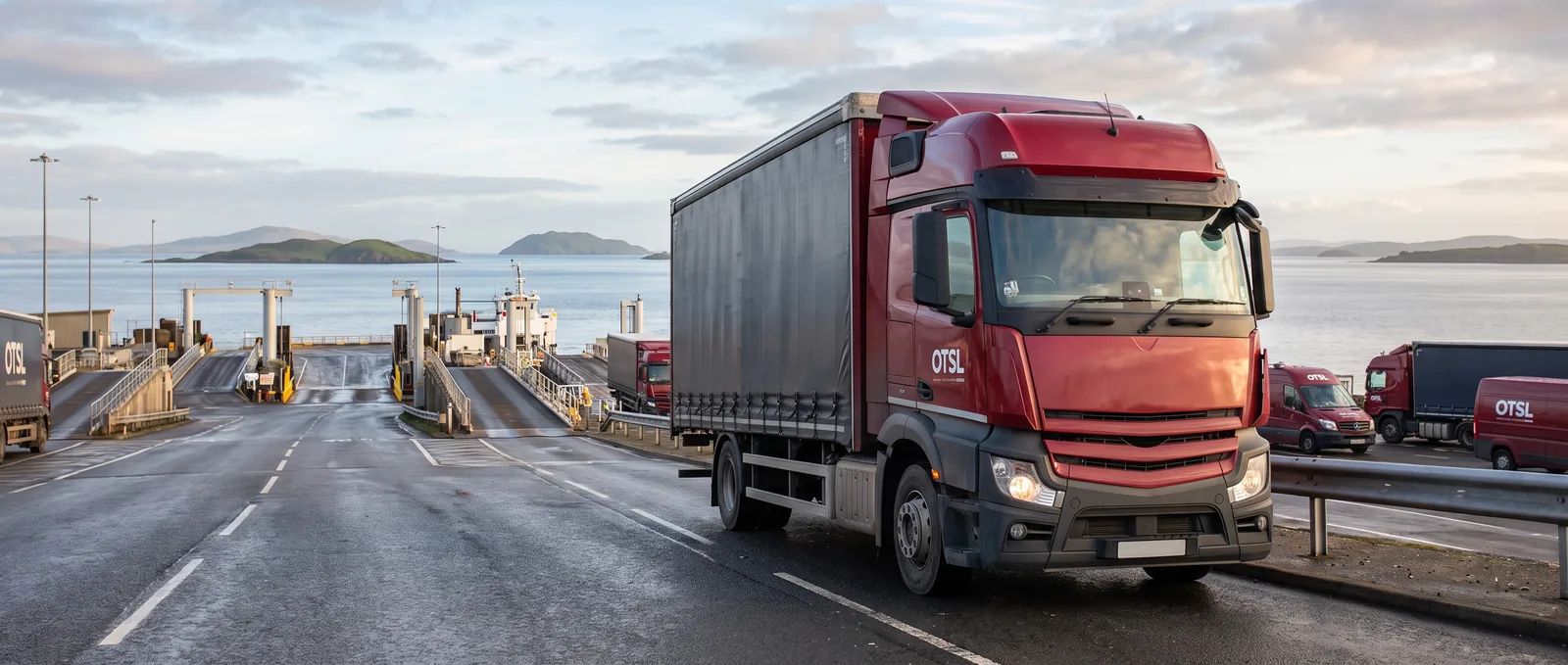
The islands around Britain and Ireland fall into three different customs realities: domestic UK islands (the Scottish islands, Wight, Anglesey, Scilly) with no clearance against Great Britain, Crown Dependencies (the Isle of Man in a customs and VAT union with the UK, the Channel Islands outside the UK VAT area) and Ireland, split into the Republic of Ireland within the EU and Northern Ireland under the Windsor Framework. OTSL arranges transport to each of them: road, customs and the crossing booking in a single order.
Three groups of islands, three scenarios
- Domestic UK islands: the Hebrides, Orkney and Shetland and Wight, Anglesey and Scilly. Once inside Great Britain this is domestic carriage, and the challenge is the ferry crossing and the deadline.
- Crown Dependencies: the Isle of Man in a customs and VAT union with the UK, and Jersey and Guernsey outside the UK VAT area, where clearance is needed even from Great Britain.
- Ireland: the Republic of Ireland as an EU market with no clearance and Northern Ireland under the Windsor Framework.
What every island destination has in common
After Brexit every consignment from Poland to Great Britain crosses a customs border, and the island leg adds a ferry crossing with a booking. That is why we run the order door to door: choice of route and vehicle, customs clearance, the crossing booking and the delivery slot. The formal basics, from documents to the identification number, are covered in the texts on export documents to the UK and on the EORI number.
Not sure which status your island falls under and what formalities it requires? Describe the consignment in the contact form and we will choose the route, the crossing and the scope of clearance.
Why does the status of an island dictate transport requirements?
The customs status determines whether a consignment requires clearance, which trade documents must be presented, and where border regulations come into effect.
Step by step
- Check the island customs status. You verify whether the destination is a domestic UK island, Crown Dependency, or Republic of Ireland.
- Gather commercial documentation. You assemble invoices and packing lists required for the specific customs zone.
- Book the ferry crossing. You select the sea route suited to the transport schedule and vehicle size.
- Complete customs declarations. You register the consignment in the relevant systems before boarding.
- Deliver to the destination. You transport the goods directly to the unloading point on the selected island.
Definitions
- Domestic UK islands: Islands forming part of the United Kingdom where movement from Great Britain requires no customs clearance.
- Crown Dependencies: Self-governing territories under the British Crown with separate tax and customs regulations.
- Windsor Framework: Arrangements governing the movement of goods between Great Britain and Northern Ireland.
- Customs clearance: Formal entry or exit declaration required to move goods across borders legally.
When does this rule not apply?
The simplified routing rule does not apply when shipments originate outside the relevant customs territory or move onto Crown Dependencies outside the UK VAT area.
The OTSL role
OTSL coordinates shipments across the British Isles and Ireland using its operational bases in Kielce and Milton Keynes. The team manages ferry booking and oversees customs compliance. Learn more about express vans and time-critical transport in Europe for urgent island freight.