 AI image
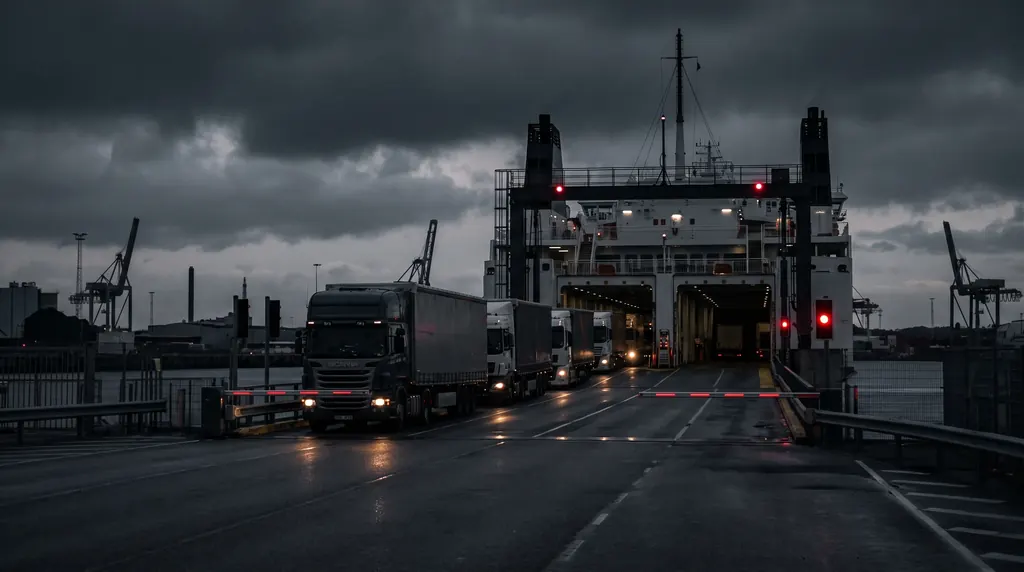
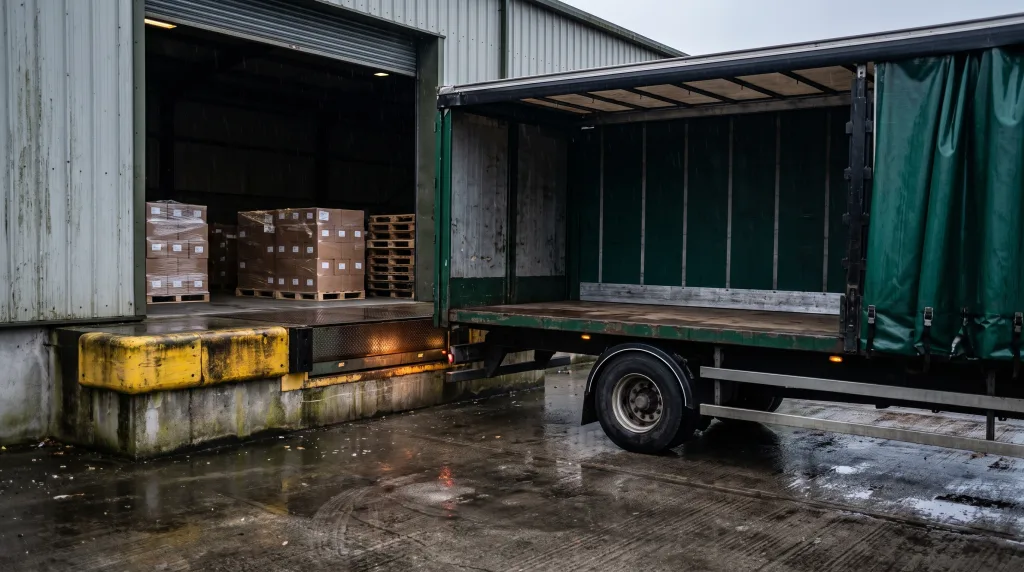
In the United Kingdom large consignee warehouses, from retail chains to distribution centres and Amazon, accept goods only after prior booking-in. The consignee assigns the delivery a time window and opens the ramp only within it. A late truck, or one without a booking, waits or leaves. The forwarder handles the booking and the client receives a confirmed window.
Why British warehouses require a booking
Large warehouses in the United Kingdom run on a ramp schedule laid out in advance. Every window has a vehicle, goods and an unloading bay assigned to it, and a delivery from outside the schedule disrupts the plan of the whole shift. That is why consignees, from retail chains through distribution centres to e-commerce warehouses, accept only deliveries agreed beforehand. It is not awkwardness but a way to stay predictable: the warehouse knows what will arrive and has the people and the ramp ready for it.
How the booking-in process works step by step
- Order references: the order or delivery number issued by the consignee. Without it the booking system will not accept the request.
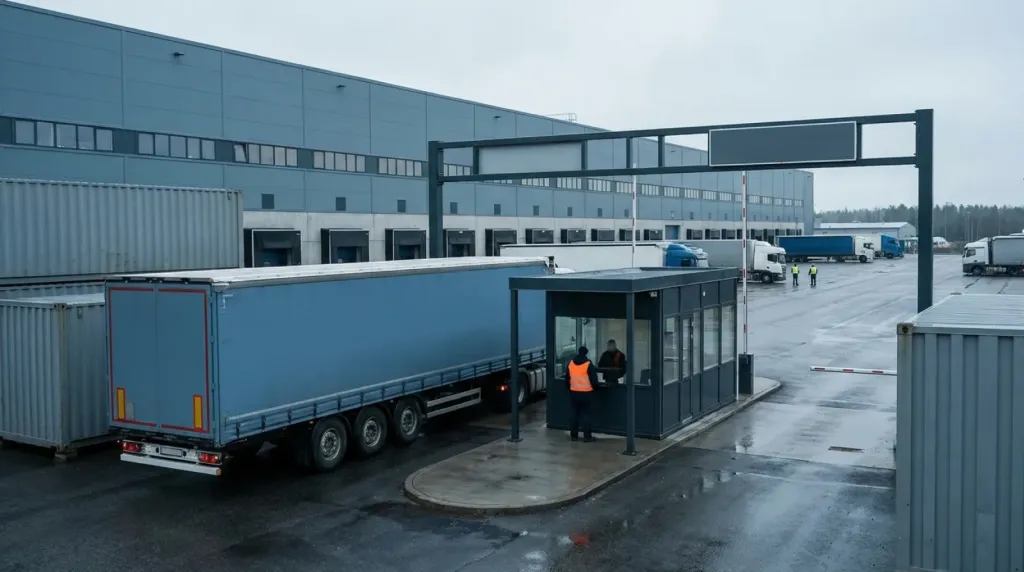
- Vehicle and driver details: registration numbers, the name of the carrier, the driver details. Security at the gate compares them with the booking.
- Description of the delivery: the number of pallets, the type of goods, the way of unloading. The warehouse plans people and equipment around it.
- Documents: the consignment note and a delivery document matching the order; some consignees require labels in their own standard.
- Confirmation: the warehouse sends back a date and a time window. Only this confirmation is the basis of the transport plan.
What happens when a slot is lost
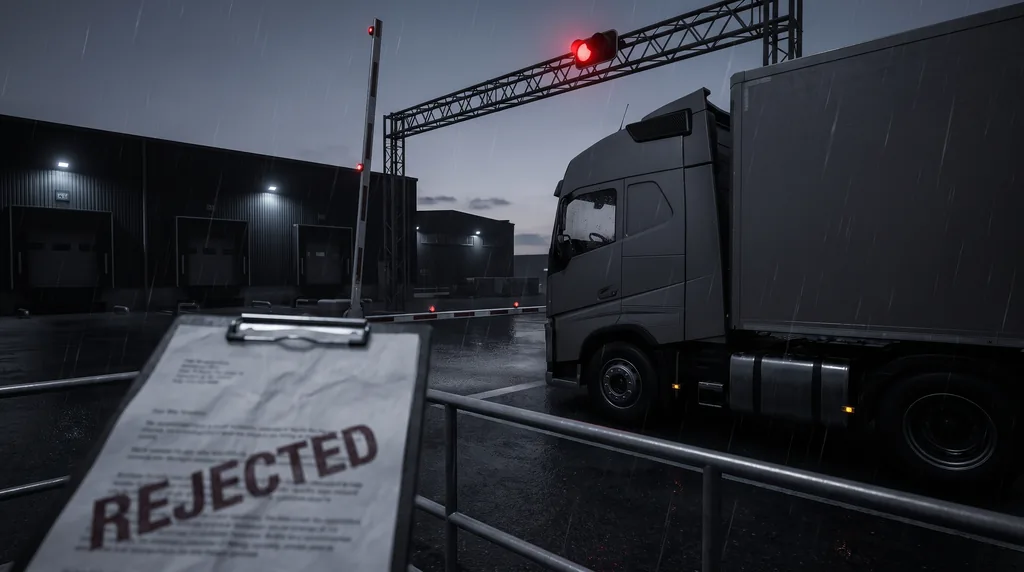
A slot can be lost for reasons beyond the driver: a queue at the crossing, an inspection, a motorway jam. A truck outside its window stands in a car park and waits for the warehouse decision. Some consignees will take it once a gap appears in the ramp schedule, others turn the truck away and require a new booking, and the new slot can fall much later than the delivery plan assumes. Then the rescue is a warehouse buffer: we unload, the goods wait close to the consignee and set off for the ramp only for a confirmed window. We describe the same mechanism for a changed slot at a trade fair, and the tightest version of time windows in the text on automotive deliveries to slots.
A booking at the consignee versus a slot at a fair venue
Both mechanisms look similar but have a different owner. A fair slot is assigned by the organiser or the venue and concerns the stand build, as with deliveries to Targi Kielce. A warehouse booking is run by the consignee of the goods and its reservation system. The stakes differ too: at a fair a lost window threatens the build schedule, at a warehouse it means a refused delivery and a repeat of the whole run.
What does this mean for the sender?
Booking-in is operational work the forwarder takes on: notifying the delivery, completing the data, watching for the confirmation and reacting when something shifts. The client receives a confirmed unloading window and knows when the goods will reach the consignee. Deliveries to Amazon FBA warehouses have a reservation system of their own, which we cover in the text on Amazon FBA deliveries in the UK, and planning the whole route with the crossing in how long transport from Poland to the UK takes.
Sending goods to a warehouse in the United Kingdom where the consignee requires booking-in? Send the details through the contact form and we will handle the booking and confirm the window before the truck departs.
Step by step
- Data collection. You gather the cargo specification along with carrier and driver details.
- Booking submission. The freight forwarder contacts the warehouse to request an available unloading slot.
- Confirmation receipt. The warehouse issues a confirmed time window for arrival and unloading.
- Route planning. The driver aligns driving time and ferry crossings with the assigned delivery slot.
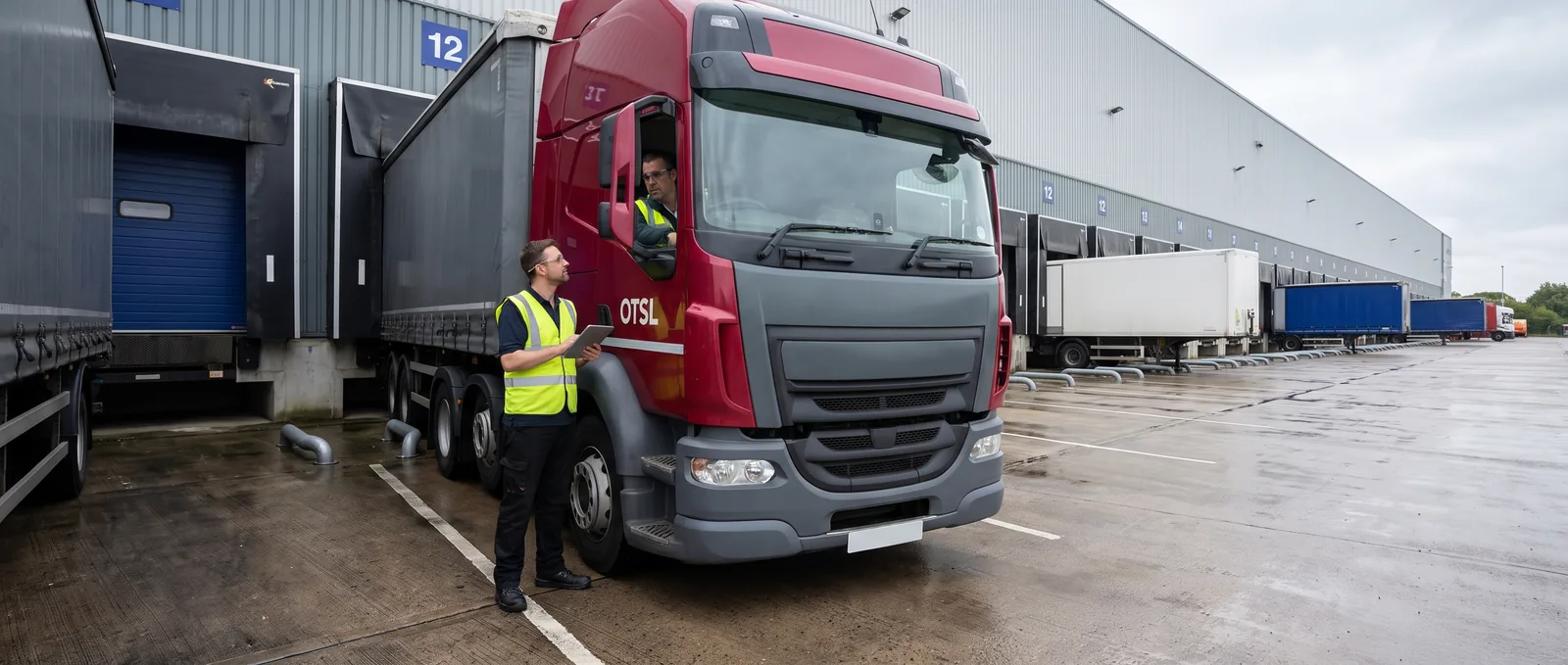
- Ramp arrival. The vehicle reports to the facility precisely within the confirmed booking window.
Definitions
- Booking-in: The process of advance notification and reservation of an unloading slot at the consignee warehouse.
- Time slot: A strictly designated time window during which the vehicle must report to the warehouse ramp.
- Ramp schedule: The operational timetable of a warehouse specifying the order and times for servicing trucks.
- Amazon FBA (Fulfilment by Amazon): A logistics service where goods are delivered directly to e-commerce fulfilment centres.
When does this rule not apply?
Strict booking-in does not apply to smaller regional warehouses or private recipients that handle unloading continuously on a first-come, first-served basis.
The OTSL role
We coordinate road haulage and manage time slot reservations, including specialised Amazon UK deliveries. We ensure seamless alignment between transport timing and warehouse operations, applying guidelines covered in our guide on Amazon FBA UK deliveries.