 AI image
In haulier slang, barcode, regime 42 and smart border often mean the same thing: crossing the French smart border at the UK frontier. The barcode is the code from the French customs system, today the mandatory logistics envelope, ELO. Regime 42, in turn, is a customs and VAT procedure, an import into the EU with deferred VAT. We run all of it for you, from documents to the green lane at the border.
Where the name barcode comes from
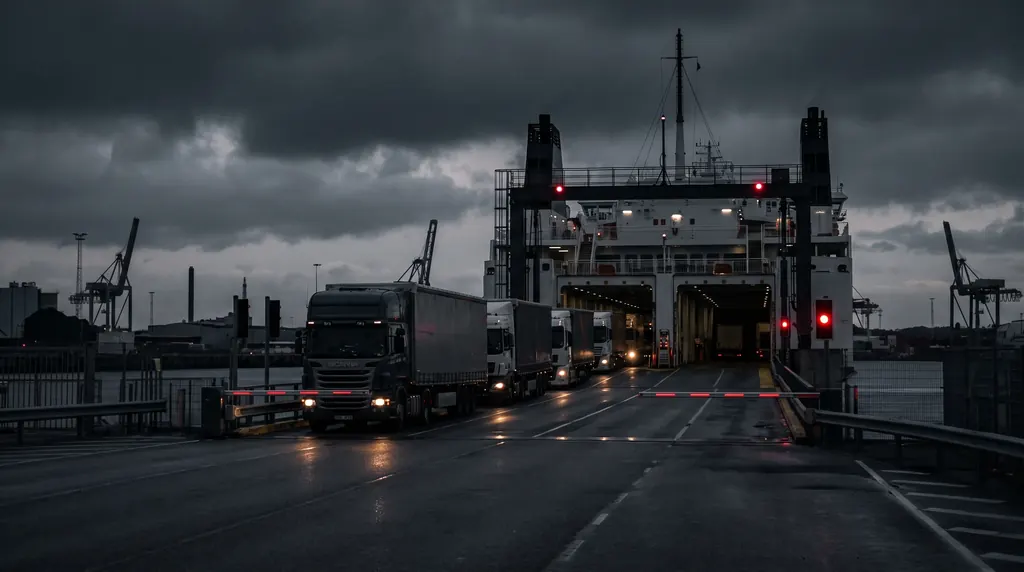
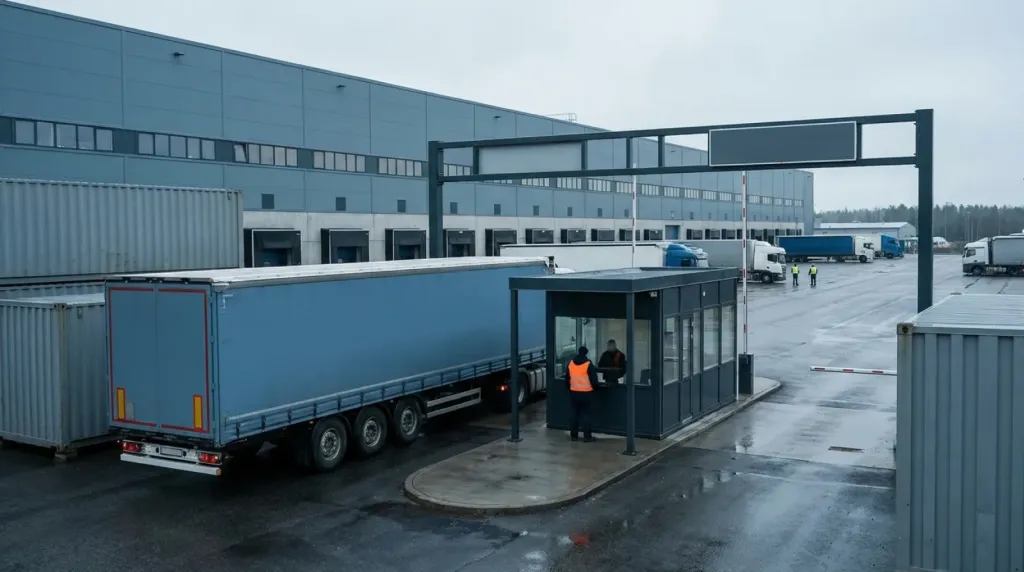
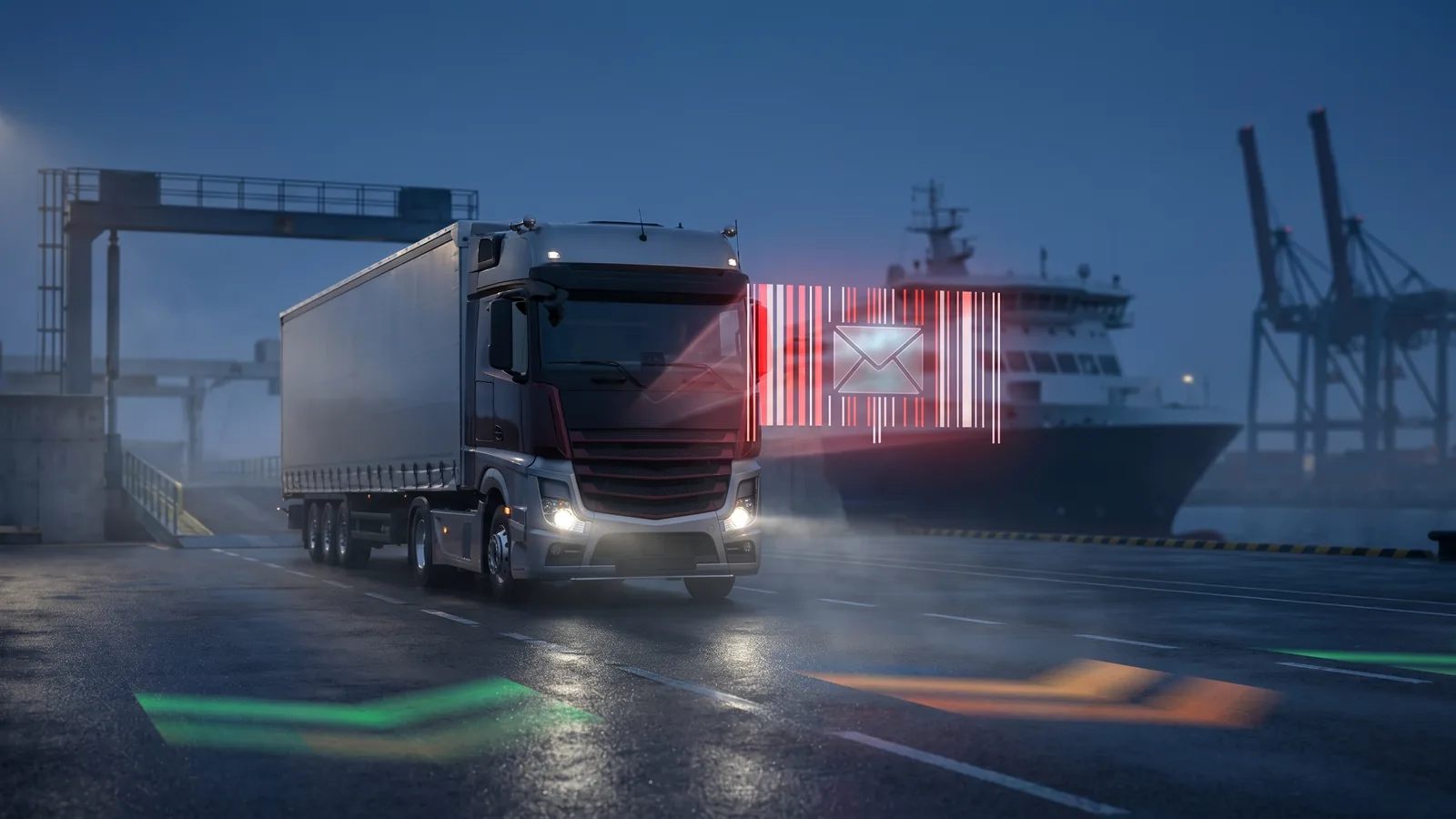
After Brexit, France launched the smart border. Customs declarations are filed before the truck arrives, and the system links them into one barcode tied to the vehicle registration. The driver shows the barcode when boarding the ferry or the Channel Tunnel, and French customs decides in advance whether the truck goes to the green lane, a drive-through, or the orange lane, a control. That is why the trade talks about barcode clearance. UK forwarders use the name for customs regimes 40 and 42, because those generate the barcode instead of a full T1 transit.
How regime 40 differs from regime 42
These are two EU import procedures, treated differently for VAT.
- Regime 40, release for free circulation in the country of entry, for example France, with VAT accounted there.
- Regime 42, import into one EU country combined at once with an intra-community supply to another EU country. Import VAT is exempt, and the buyer accounts for the tax in the country of destination.
Procedure 42 has hard conditions: the supply to the other EU country must follow immediately, with no storage or processing, the importer must hold a VAT number in the country of declaration, and you must give the buyer VAT number and hold proof of dispatch. Without the full set of documents the VAT exemption does not apply.
What changes in 2026
Two important changes. From 20 April 2026 the ELO envelope is mandatory, and a truck without it may be refused boarding on the ferry or shuttle. The second change is fiscal: from 1 January 2026 one-off fiscal representation for procedure 42 ends, so non-EU companies, UK firms included, need full French VAT registration and an accredited fiscal representative. We plan this ahead so it does not catch you at the border.
How do we run it?
We handle the smart border, the ELO envelope and procedures 40 or 42 as part of transport, not a separate problem at the end of the route. We file the declarations, make sure the barcode is complete and the truck reaches the green lane, and we say plainly who supplies which documents. A mistake here means the orange lane, a hold and cost, sometimes a stoppage at the consignee. We treat the client goods as our own.
See customs clearance, transport to the United Kingdom and contact.
Step by step
- Filing customs declarations. You submit the required import and export paperwork before the vehicle reaches the terminal.
- Creating the logistics envelope. Customs declarations are combined into a single barcode linked to the truck registration.
- Checking in at the port. The driver presents the generated barcode at ferry check-in or Eurotunnel boarding.
- Automated risk assessment. French customs systems process the data during the crossing and assign a border lane.
- Crossing via the green lane. The vehicle exits the terminal directly onto the motorway without stopping for manual checks.
Definitions
- Barcode: A digital identifier generated by customs systems linking declarations to a vehicle registration.
- Regime 42: A European Union customs procedure allowing imports into the EU with deferred Value Added Tax (VAT).
- Smart border: An automated French border system operating at the UK frontier to streamline customs crossings.
- ELO (Enveloppe Logistique - Logistics Envelope): A mandatory digital envelope grouping multiple customs declarations under a single code.
The OTSL role
At OTSL, we manage your cross-border shipments by handling paperwork and logistics envelopes for smooth border passages. Learn more about our Road transport (FTL) options or read our guide on Regime 42, EU import clearance with deferred VAT.