 AI image
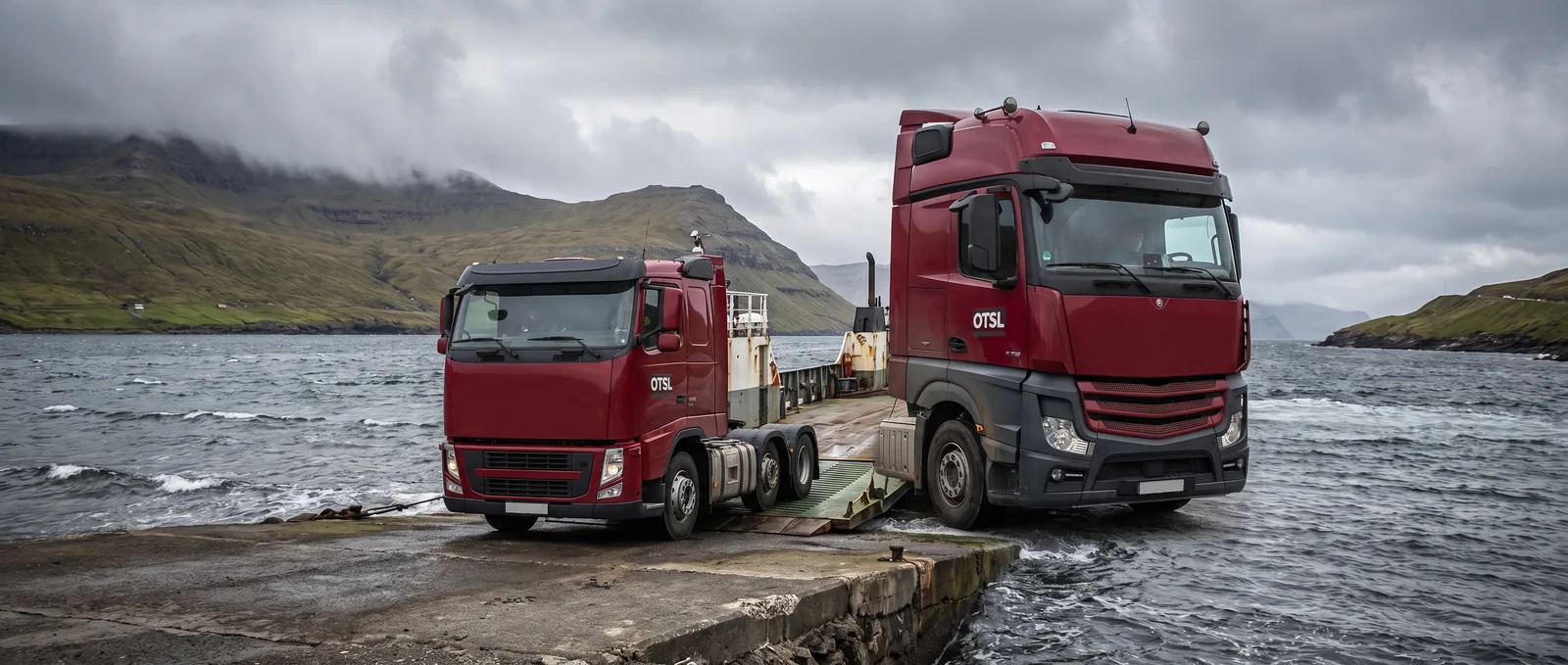
The Hebrides, Orkney and Shetland belong to Scotland and therefore to Great Britain. After clearance on entry to the UK the onward carriage is domestic, with no further customs border. The challenge is the last leg: a RoRo ferry crossing from the Scottish mainland, dependent on the timetable and the weather. OTSL plans the route, the clearance on entry to the UK and the ferry booking to the islands.
Which islands and how to reach them
- The Hebrides: the Outer Hebrides (Lewis, Harris, the Uists, Barra) and the Inner Hebrides (Skye, Mull, Islay). Most are served by ferries from the Scottish coast, and Skye is also linked to the mainland by a bridge.
- Orkney: the main port is Kirkwall, reached by ferries from ports including Scrabster and Aberdeen.
- Shetland: the capital is Lerwick, served by overnight sailings from Aberdeen.
The Outer Hebrides: CalMac ferries and causeways between the islands
The chain of the Outer Hebrides covers Lewis and Harris (one island with two names), North Uist, Benbecula, South Uist and Barra. According to the CalMac route network the main crossings are: Ullapool-Stornoway to Lewis, Uig (Skye)-Tarbert to Harris, Uig-Lochmaddy to North Uist, Mallaig or Oban-Lochboisdale to South Uist, and Oban-Castlebay to Barra.
The middle of the chain is stitched together by causeways: Benbecula has a road link both to North Uist and to South Uist, and another causeway leads to Eriskay. One crossing therefore opens several islands at once, and the internal CalMac sailings Berneray-Leverburgh and Ardmhor-Eriskay allow the whole chain to be driven from north to south without returning to the mainland.
We plan delivery windows around the ferry timetable, not the other way round: the sailings to the Uists and Barra do not leave every hour, and in winter storms on the Minch can take a crossing off the timetable for a day or longer. With a rigid unloading date we book space for the vehicle in advance and build in a weather buffer, especially from autumn to spring.
What decides the deadline
On these routes the delivery is decided by the ferry timetable and the weather, so we plan the crossing booking well ahead, as with other crossings to the UK. The standard run to the islands is joined by the wait for a sailing and the sailing itself, which we allow for in the schedule in line with the guide on how long transport to the UK takes. The customs formalities remain the same as for any delivery to Great Britain, so the goods travel to the islands with no extra clearance once they have passed customs clearance on entry.
Have a load for the Hebrides, Orkney or Shetland? Describe it in the contact form and we will choose the ferry and the date. All the island destinations are gathered in the guide to the islands of Britain and Ireland.
Do goods heading to the Scottish islands undergo additional customs clearance after UK entry?
No, because the Scottish islands are part of Scotland and Great Britain, meaning onward transport after initial UK customs clearance is purely domestic carriage without further customs borders.
Step by step
- Document preparation. Gathering required commercial invoices and cargo specs before leaving Poland.
- UK customs clearance. Submitting the goods for entry clearance upon arrival in Great Britain.
- Mainland transit. Driving across the UK mainland towards the designated ferry terminal in Scotland.
- Ferry boarding. Loading the vehicle onto the RoRo vessel according to the timetable booking.
- Final island delivery. Disembarking the ferry and completing delivery to the recipient on the island.
Definitions
- RoRo (Roll-on/roll-off): A ferry design allowing wheeled cargo and vehicles to be driven directly on and off the vessel.
- Hebrides: An archipelago off the western coast of Scotland, divided into the Outer and Inner Hebrides.
- Orkney: An island group north of the Scottish mainland with its main port in Kirkwall.
- Shetland: The northernmost British archipelago with the primary port situated in Lerwick.
When does this rule not apply?
The standard domestic transit rule does not apply if the transported goods require special sanitary or phytosanitary inspections requiring additional checks on the Scottish mainland.
The OTSL role
OTSL handles the logistics from Poland to the Scottish islands by combining customs management with sea passage arrangements. For urgent shipments you can read about Express vans and time-critical transport, while our Ferry booking service secures the necessary RoRo crossings.