 AI image
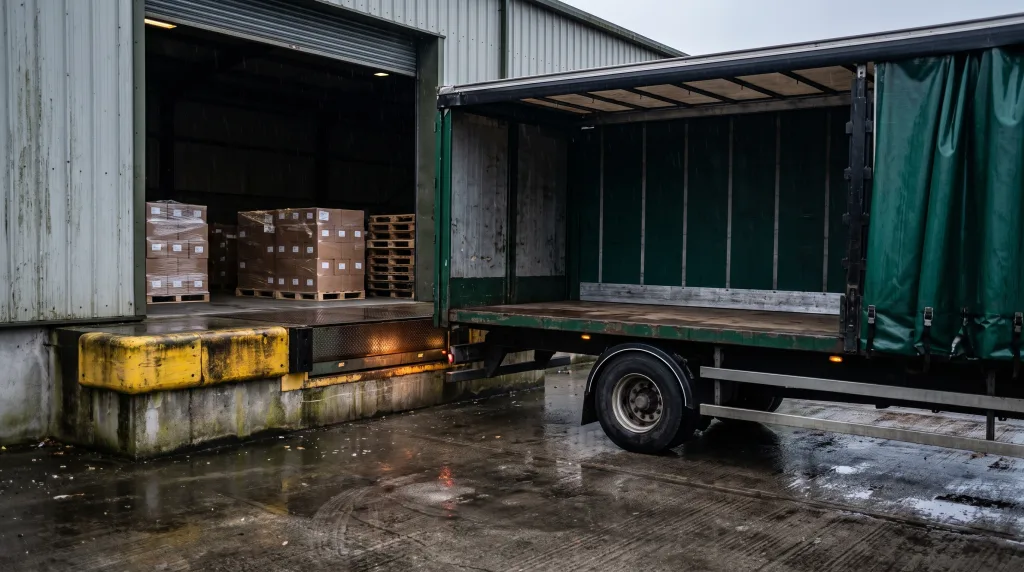
Transport time from Poland to the United Kingdom is the sum of stages: loading, the drive to the crossing, customs with a GMR number, the ferry or the tunnel, the leg to the consignee and their unloading window. So instead of one figure, it is more honest to show what really extends that time and how to protect against it.
What delivery time consists of
- Loading and a complete set of documents on the sender side.
- The drive across Europe to the crossing, with mandatory driver rest breaks.
- Customs: declarations and a ready GMR number, without which the driver will not board the crossing. We describe the whole process in UK customs clearance step by step.
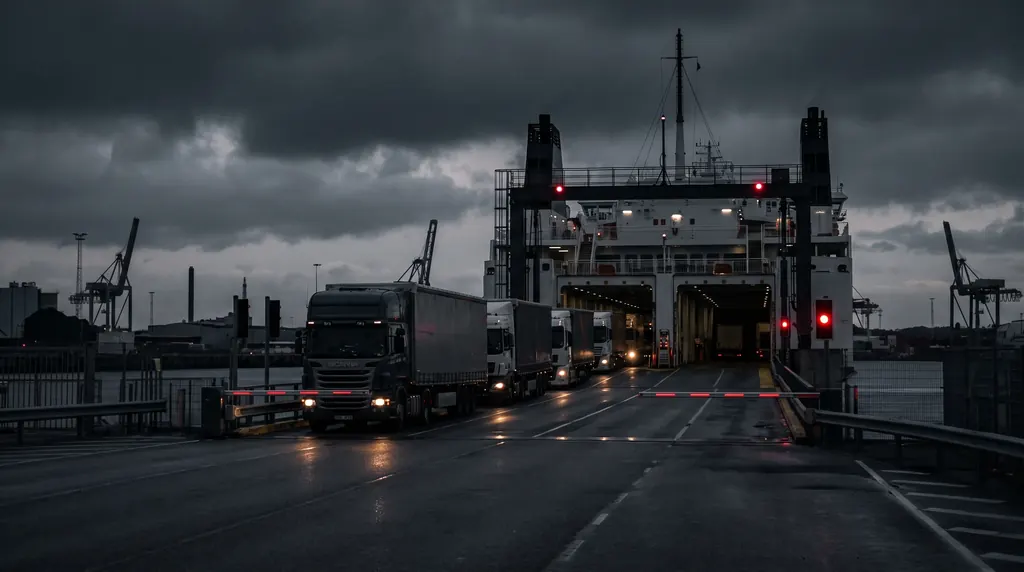
- The ferry or the tunnel, depending on availability and booking.
- The leg to the consignee and their unloading slot.
What most often extends transport
- Documents not ready before the border: the truck stands still and the standstill costs money. The most common and most avoidable cause of delay.
- Border inspection: being directed to a check of documents or goods stops the vehicle for a time outside the carrier control.
- Queues and weather at the crossings: especially in peak season, during strikes and in strong Channel winds.
- The consignee slot: a truck arriving outside its unloading window waits for the next one.
- Driver rest breaks: mandatory rests are part of the plan, not a reserve to be cancelled.
Ferry or Eurotunnel: crossing comparison
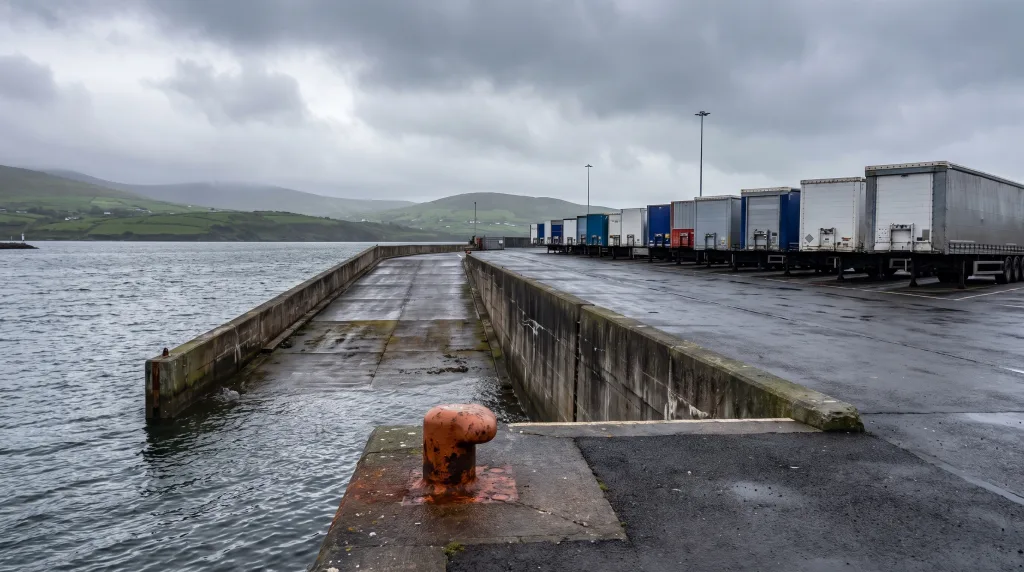
On the short Channel leg there are two ways across: a ferry from Calais or Dunkirk to Dover, or the Eurotunnel (LeShuttle) train from Calais to Folkestone. Both require completed customs and a valid GMR number. The choice depends on the cargo and the deadline, so we match the crossing to the specific transport.
| Criterion | Ferry (Dover-Calais, Dover-Dunkirk) | Eurotunnel (LeShuttle Freight) |
|---|---|---|
| Crossing time itself | Around 90 minutes from Calais, around 2 hours from Dunkirk | Around 35 minutes Folkestone-Calais |
| Frequency | Dozens of sailings a day across three operators | Up to 6 departures an hour, around the clock |
| ADR (dangerous goods transport) cargo | Most classes after prior declaration, rules depend on the operator | Rules stricter than ADR itself, some loads excluded |
| Flexibility | Two ports and three operators, easier to rebook | One route and one operator |
| Weather sensitivity | Storms and strong winds delay or cancel sailings | Practically independent of the weather |
How do we shorten delivery time?
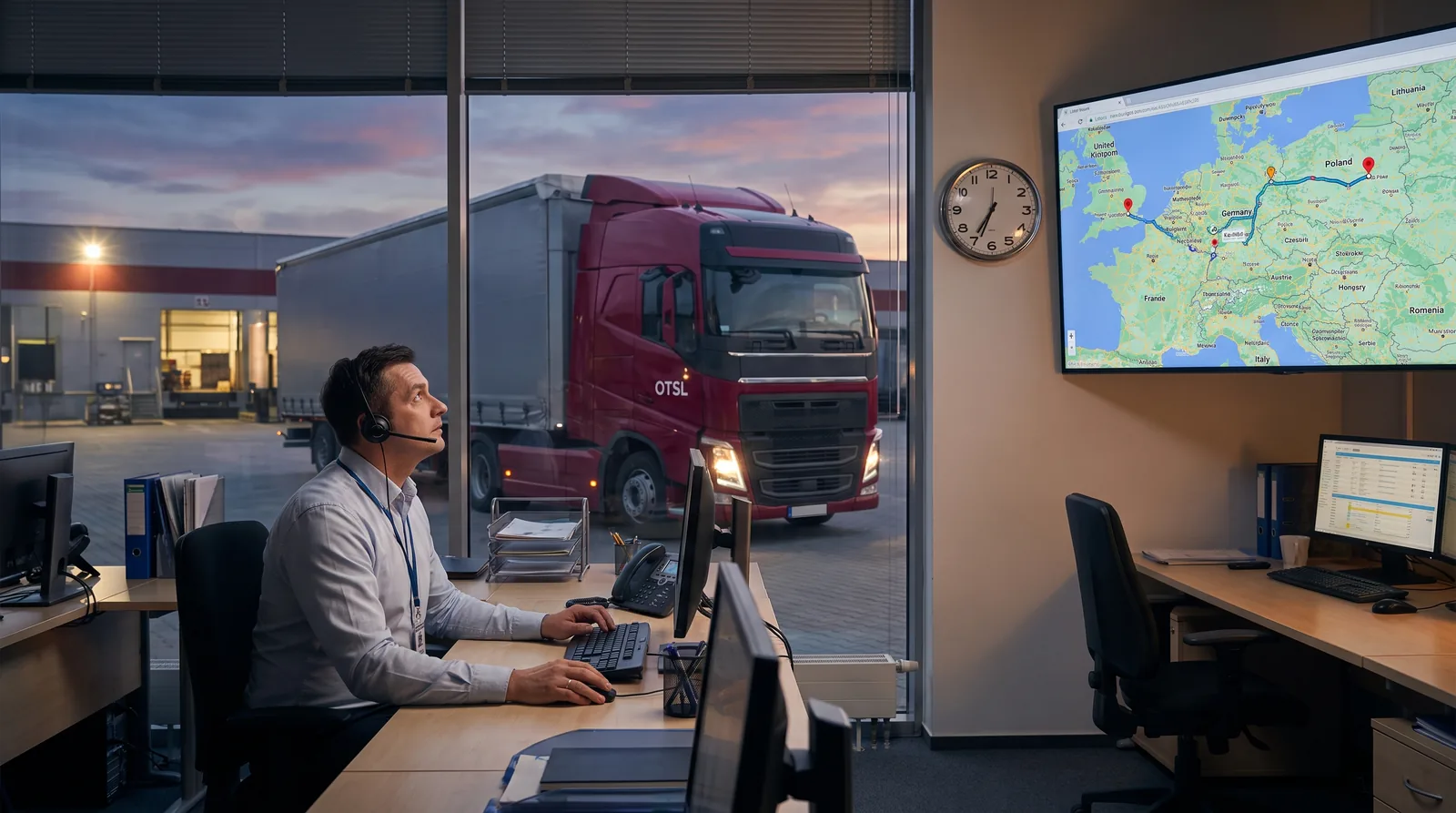
We do not promise miracles on the road; we remove the reasons for standstills before the truck departs. Documents and the GMR are ready before the border, the crossing is booked with a buffer for disruption, and we know the position of the vehicle throughout the route, so we learn about a problem before it becomes a delay. For deliveries where every hour counts we send a dedicated vehicle, sometimes with two drivers, as in our time-critical delivery scenario. We write about crossing reservations in ferry booking.
Do you have a delivery with a hard deadline? Describe it in the contact form and we will plan the route around your date.
Step by step
- Document preparation. Collect all required commercial and customs documents before the truck leaves the loading point.
- Cargo loading. Load the goods into the vehicle and secure them properly according to transport requirements.
- GMR generation. Submit customs declarations to receive the mandatory code before reaching the crossing.
- Transit and crossing. Complete the transit across Europe with driver rest breaks and pass via ferry or train.
- Final delivery. Arrive at the destination point precisely within the assigned unloading window.
Definitions
- GMR (Goods Movement Reference): A reference number in the UK customs system required for a vehicle to board a ferry or train.
- Customs clearance: The process of verifying documents and cargo by customs authorities before crossing the border.
- Unloading slot: A scheduled time window assigned by the recipient for the vehicle to unload at the destination.
- Driver rest break: Mandatory rest time for drivers required by road transport regulations during long-distance transit.
The OTSL role
When you organise shipments to the United Kingdom, OTSL coordinates each stage of the transport chain and manages border procedures. Operating from facilities in Kielce and a warehouse in Milton Keynes, we arrange solutions such as road transport (FTL) and offer guidance through options like express vans and time-critical transport in Europe to help prevent border standstills.