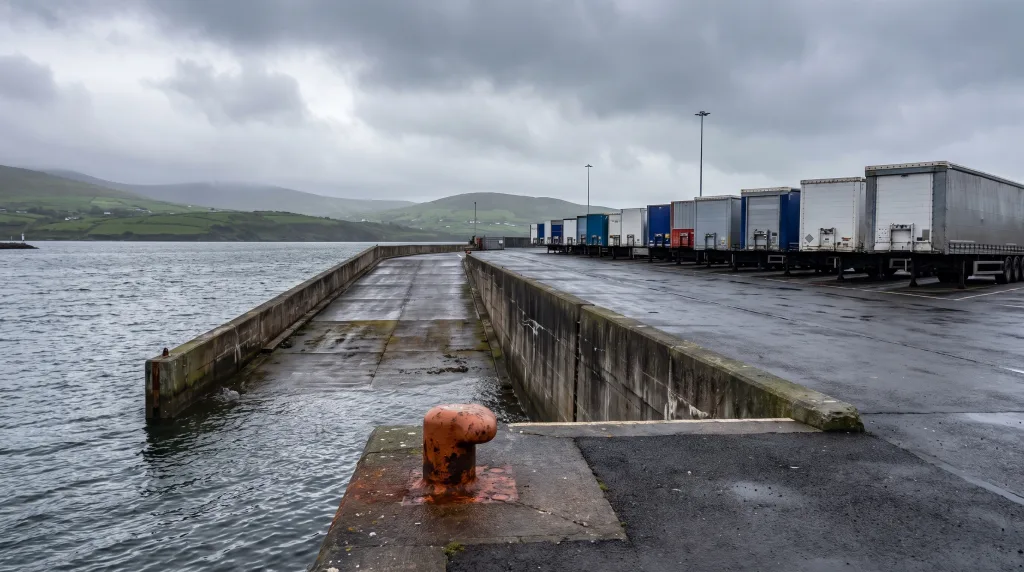
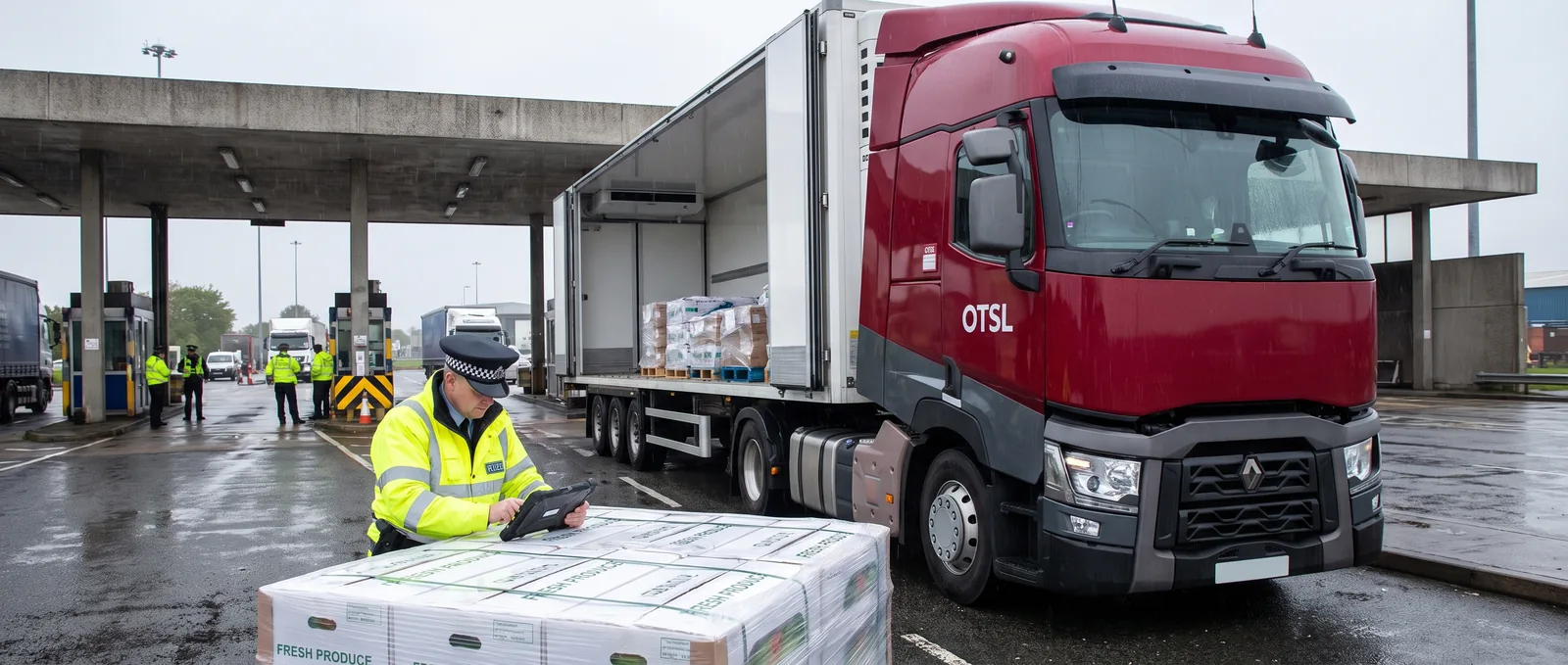
 AI image
BTOM (the Border Target Operating Model) is the British border controls model that has phased in sanitary and phytosanitary (SPS) controls on imports into Great Britain of products of animal origin, plants and food. Goods are assigned to risk categories (low, medium, high); some require a health certificate, prior notification in the IPAFFS system and a possible check at a Border Control Post (BCP).
The Polish-language version of this article is the reference one. This is an informational translation.
Who does it apply to?
Above all SPS loads: products of animal origin (meat, dairy), plants and plant products and higher-risk food. The scope of requirements depends on the risk category of the goods. Many consignments require prior notification in IPAFFS and, for medium and high risk, a health certificate issued in the country of dispatch. We run temperature-controlled food transport in line with these requirements, which we also cover alongside export documents to the UK.
What does it change in practice?
Importing SPS goods needs preparation in advance: establishing the risk category, notification in IPAFFS, a full set of documents and planning any BCP check so it does not delay delivery. Customs formalities (declaration, number, safety declaration) are handled within customs clearance; SPS is an extra layer on top of standard clearance. We do not guess the requirements for a specific product. We confirm them at the source before dispatch. What the border check itself looks like, from documents to the physical inspection, is covered in our article on the step-by-step sanitary check of a load at a BCP.
How do you plan time and logistics for SPS freight in practice?
You must submit the pre-notification in the IPAFFS system well in advance – the standard operational window is at least 24 hours prior to the estimated time of arrival at the UK port of entry. In justified operational scenarios, this period can be reduced to 4 hours, subject to prior confirmation by customs agents. For medium-risk consignments, the physical check rate at the Border Control Post (BCP) is currently set at approximately 15 percent of shipments, whereas documentary checks apply to 100 percent of notifications. Every physical inspection extends trailer dwell time by an average of 3 to 6 hours, which you must factor into the driver's shift schedule.
When loading refrigerated cargo weighing more than 2000 kilograms or occupying over 6 pallets, the physical arrangement of goods inside the trailer is critical. BCP inspectors take samples from various sections of the load, so you must maintain access to boxes containing different production batches. Keep in mind the exemptions where these rules DO NOT apply:
- These requirements DO NOT apply to processed composite products where the animal-origin ingredient content falls below statutory thresholds.
- Exemptions also cover commercial trade samples weighing less than 2 kilograms intended strictly for laboratory testing or quality analysis.
Overall transit time depends directly on the speed of data transfer between the exporter, customs broker, and transport carrier. Discrepancies in batch numbers on the Export Health Certificate (EHC) or weight variances exceeding 5 percent compared to the IPAFFS entry will automatically trigger a full identity check at the BCP.
Step by step
- Check the risk category. You verify the risk level of your specific goods on official government portals.
- Obtain health certificates. For medium and high-risk goods, you secure the required export health or phytosanitary certificate.
- Submit an IPAFFS notification. You register the import notification in the UK system before the goods arrive at the border.
- Arrange compliant transport. You provide all necessary documentation to the carrier prior to departure.
- Complete BCP checks if routed. If selected for inspection, the vehicle presents the goods at the designated Border Control Post.
Definitions
- BTOM (Border Target Operating Model): The British border control framework categorising SPS goods by risk level for import into Great Britain.
- SPS (Sanitary and Phytosanitary): Measures and controls designed to protect human, animal and plant health.
- IPAFFS (Import of Products, Animals, Food and Feed System): The UK electronic system used for prior notification of imported animals, food and plant products.
- BCP (Border Control Post): An inspection facility at the border where documentary, identity and physical checks are conducted.
The OTSL role
We support you through the UK import process under the BTOM framework. We provide professional temperature-controlled transport for sensitive food products, while our team helps align your logistics strategy as outlined in our guide on FBA or FBM from Poland: the logistics and costs of both models. See also: ADR tunnel codes: tunnel categories A to E and route planning.
Sources
Moving food or plants to Great Britain? Describe the consignment in the contact form and we will set the SPS requirements, IPAFFS and the clearance plan.