 AI image
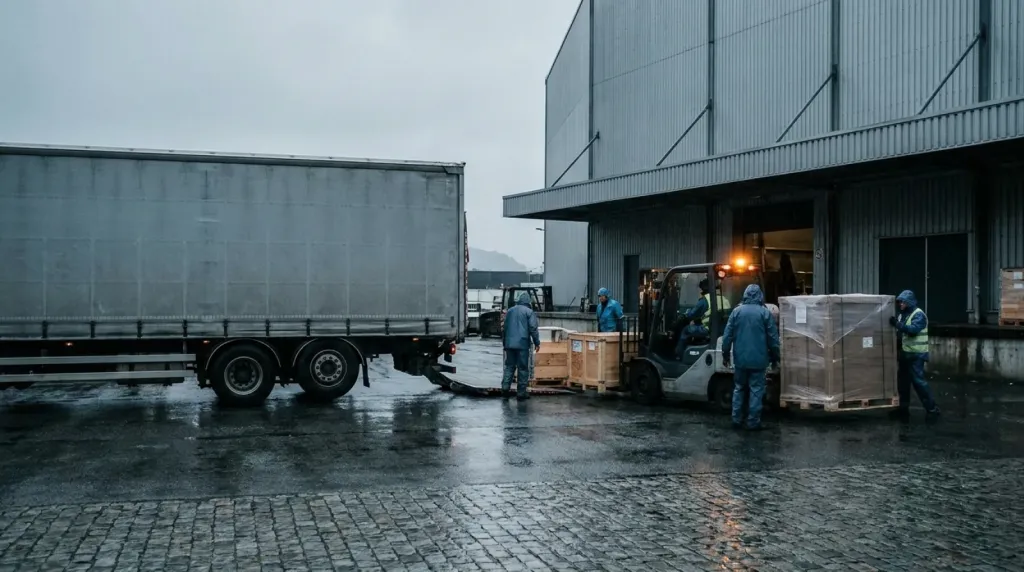
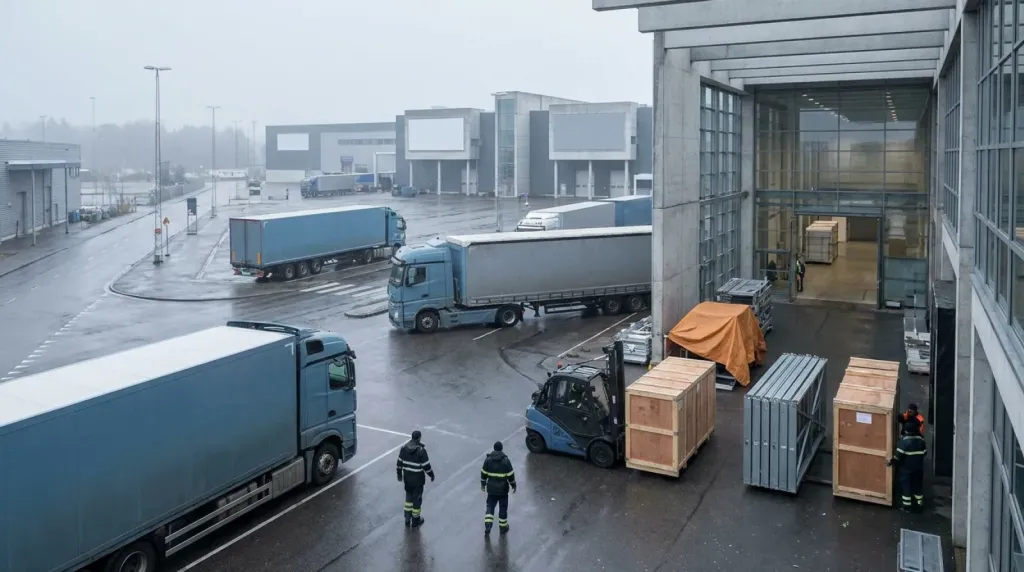
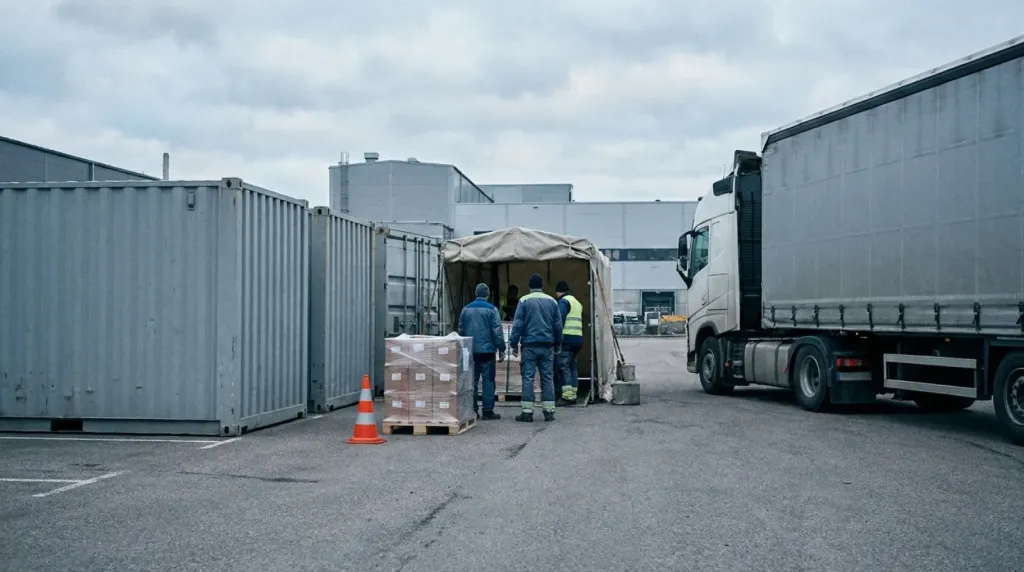
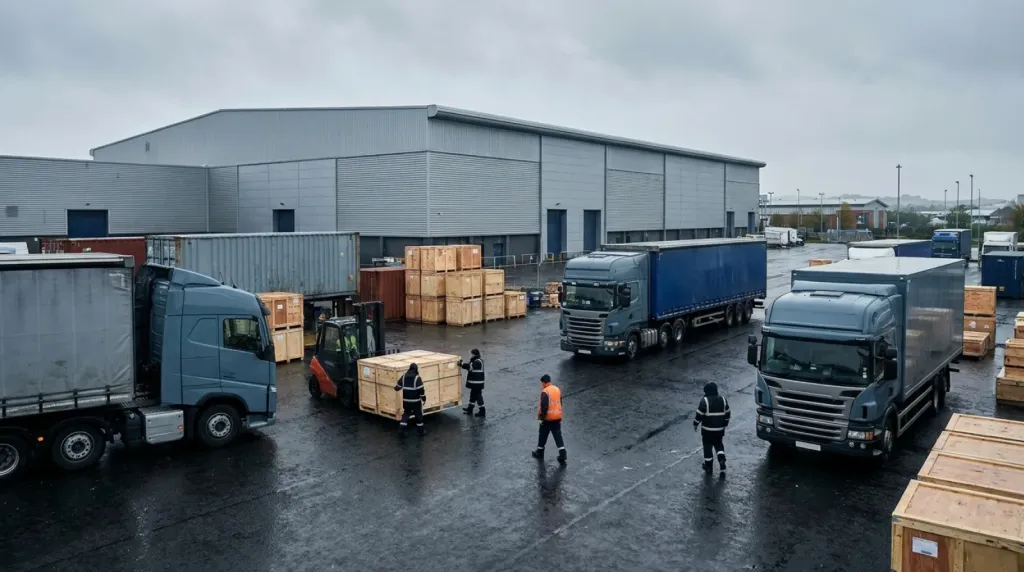
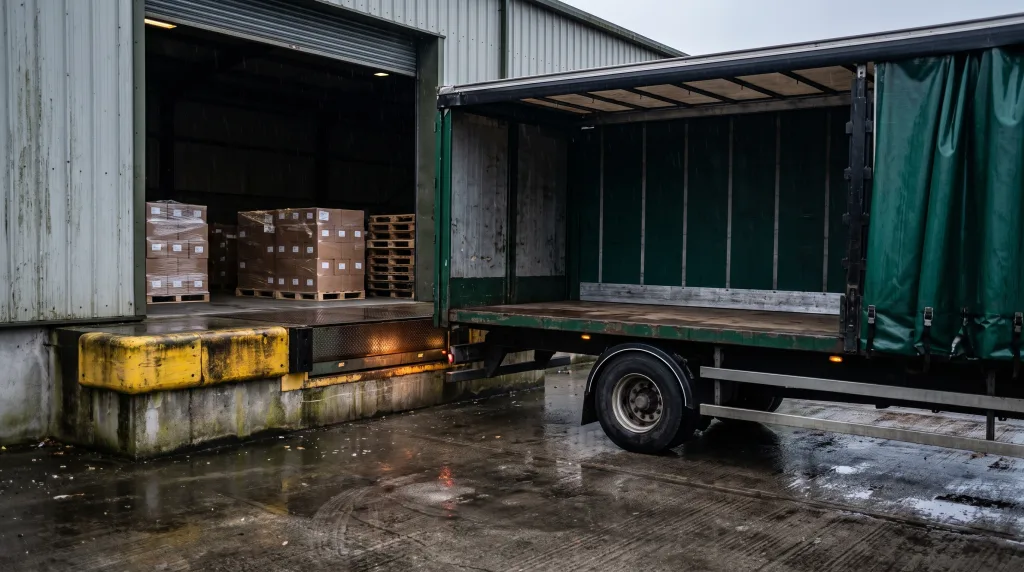
When your build slot does not match the moment the goods are ready, you need a place where they can wait for the right hour. A warehouse near the venue lets us take goods in early and deliver them exactly for your slot, without keeping a driver at the hall and without improvising.
When you need a buffer
- Goods arrive earlier than your build window opens.
- You have a late slot and do not want to park a rig in town.
- Some goods must wait until space frees up on the stand.
How does our backup work?
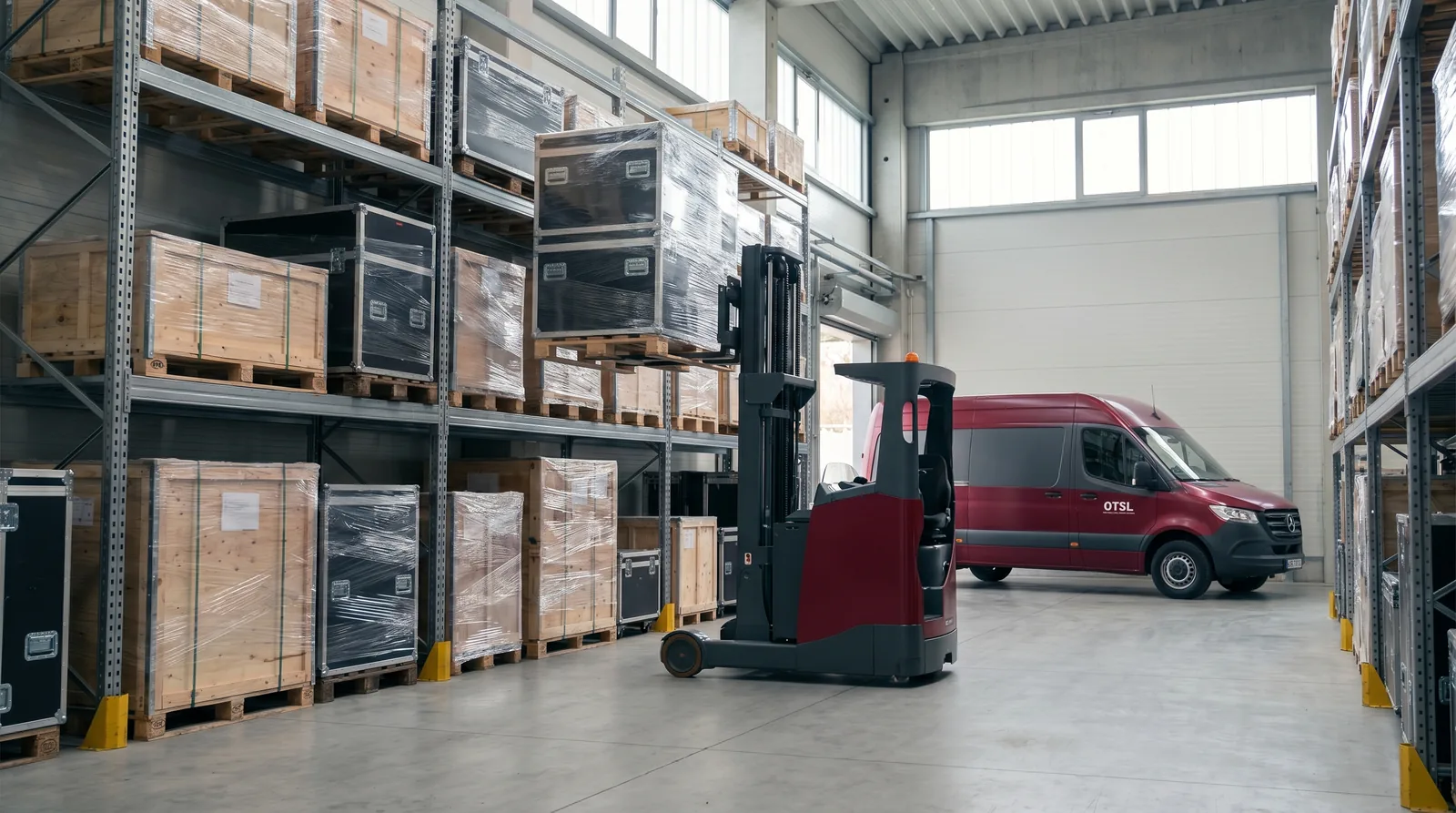
The Kielce base runs 24/7 and sits near the fairground, so it can act as a buffer: we take goods in, store them short-term and deliver them for your slot. We apply the same thinking on other lanes, joining transport with warehousing instead of treating them separately.
What does it give you?
Peace of mind that goods are safe and will appear at the right time, and one contact who syncs the warehouse with the fair schedule. When the plan changes, we react, because the goods are at hand. We treat them as our own.
See exhibition logistics, warehousing and delivery to Targi Kielce.
How do you calculate buffer time and cargo parameters before entering the exhibition hall?
Organising deliveries to trade fairs requires exact calculations of load dimensions and operational timing. A standard pallet intended for an exhibition hall should not exceed a height of 2.2 metres or a weight of 800 kg. Exceeding these limits increases offloading time at the buffer site by approximately 45 minutes, as it necessitates heavy-duty handling equipment. When scheduling your transport, you must always factor in at least a 15 per cent time buffer to account for road congestion and queuing at the venue gate. If your driver is approaching the maximum 9 hours of daily driving time, directing the vehicle to a buffer warehouse before reaching this threshold avoids tachograph infringements and allows for the mandatory 45 hours weekly rest without occupying space at the exhibition centre.
For movements between the European Union and the United Kingdom, customs formalities linked to temporary admission procedures are critical. When transporting display goods under an ATA (Admission Temporaire, the temporary admission document) Carnet or a T1 transit procedure, the time spent at a buffer facility must comply with the strict discharge deadlines of the transit movement. Holding goods at an intermediate warehouse for more than 48 hours requires formal notification to customs authorities and placement into a temporary storage facility, which suspends the transit movement and delays immediate release when your assembly slot opens. Any shift in your venue time slot must be cross-referenced with your customs clearance status to prevent guarantee document invalidation.
- A buffer window of 12 to 24 hours provides sufficient time to inspect outer packaging for transit damage after long-distance haulage.
- Cross-dock operations using standard forklift trucks take approximately 30 minutes for every 10 pallets handled.
- Sensitive print materials and display electronics require at least 6 hours of temperature acclimatisation in the warehouse prior to hall installation.
These buffer warehousing rules DO NOT apply to abnormal loads with a width exceeding 3.0 metres or to temperature-controlled perishable cargo. Out-of-gauge structures over 3.0 metres wide operate under specific route permits and abnormal load notifications, requiring direct delivery to the exhibition booth with escort vehicles, bypassing intermediate cross-dock facilities entirely.
Step by step
- Schedule notification. You send us details regarding your assigned build window and cargo readiness.
- Goods receipt. We collect the shipment and transfer it to our facility located near the venue.
- Short-term holding. We keep your goods in safe storage until your scheduled build slot begins.
- Timely positioning. We transport the load directly to the exhibition grounds precisely on time.
- Unloading completion. We deliver the goods to your stand without delays or parking hassle.
Definitions
- Build slot: The allocated time window for vehicle entry and setup at the exhibition venue.
- Warehouse backup: Storage space located near the fairground to hold goods before delivery.
- Storage buffer: A practical solution that keeps freight safe until the venue opens.
- Build window: A specific time frame designated for unloading and stand construction.
When does this rule not apply?
This procedure does not apply when venue regulations mandate direct hall access for primary transport vehicles without any external unloading allowed.
The OTSL role
OTSL manages international logistics by combining services such as road transport with intermediate holding solutions. Learn more about event delivery management in our article on logistyka targowa NEC Birmingham.