 AI image
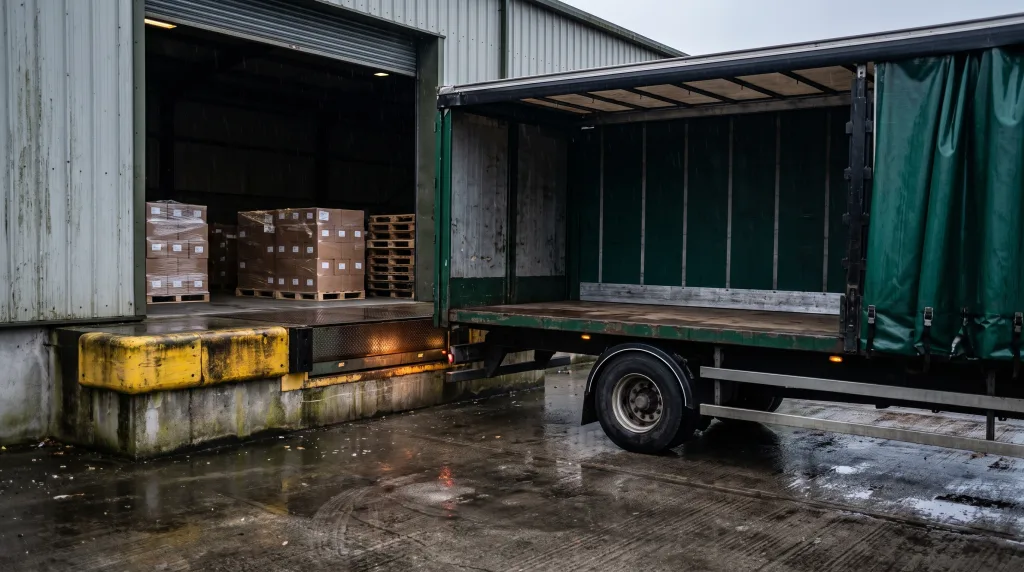
Emergency cross-docking is a rapid transfer of a load from one vehicle to another when the original vehicle cannot continue: a breakdown, a driver out of hours, an accident or a failed trailer. In our Milton Keynes warehouse we run it 24/7, moving the cargo across to a sound vehicle, stabilising and re-securing it, often the same day, so a stalled delivery still reaches its consignee.
The English-language version of this article is the reference one for the UK cluster.
When a load has to move to another vehicle now
Deliveries fail for reasons no plan covers. A trailer breaks down on the motorway. A driver reaches the end of their permitted driving hours with the load still short of its destination. A vehicle is damaged in an incident and cannot be trusted with the cargo. A refrigerated unit fails and a chilled load has to move before it warms. In each case the cargo is fine but the vehicle is not, and the answer is the same: get the load onto a sound vehicle quickly, and do it somewhere it can be handled properly rather than at the roadside.
What does rapid load transfer involve?
- Take the load in fast. The stricken vehicle comes into Milton Keynes and goes straight onto the dock, no queue and no waiting for the office to open.
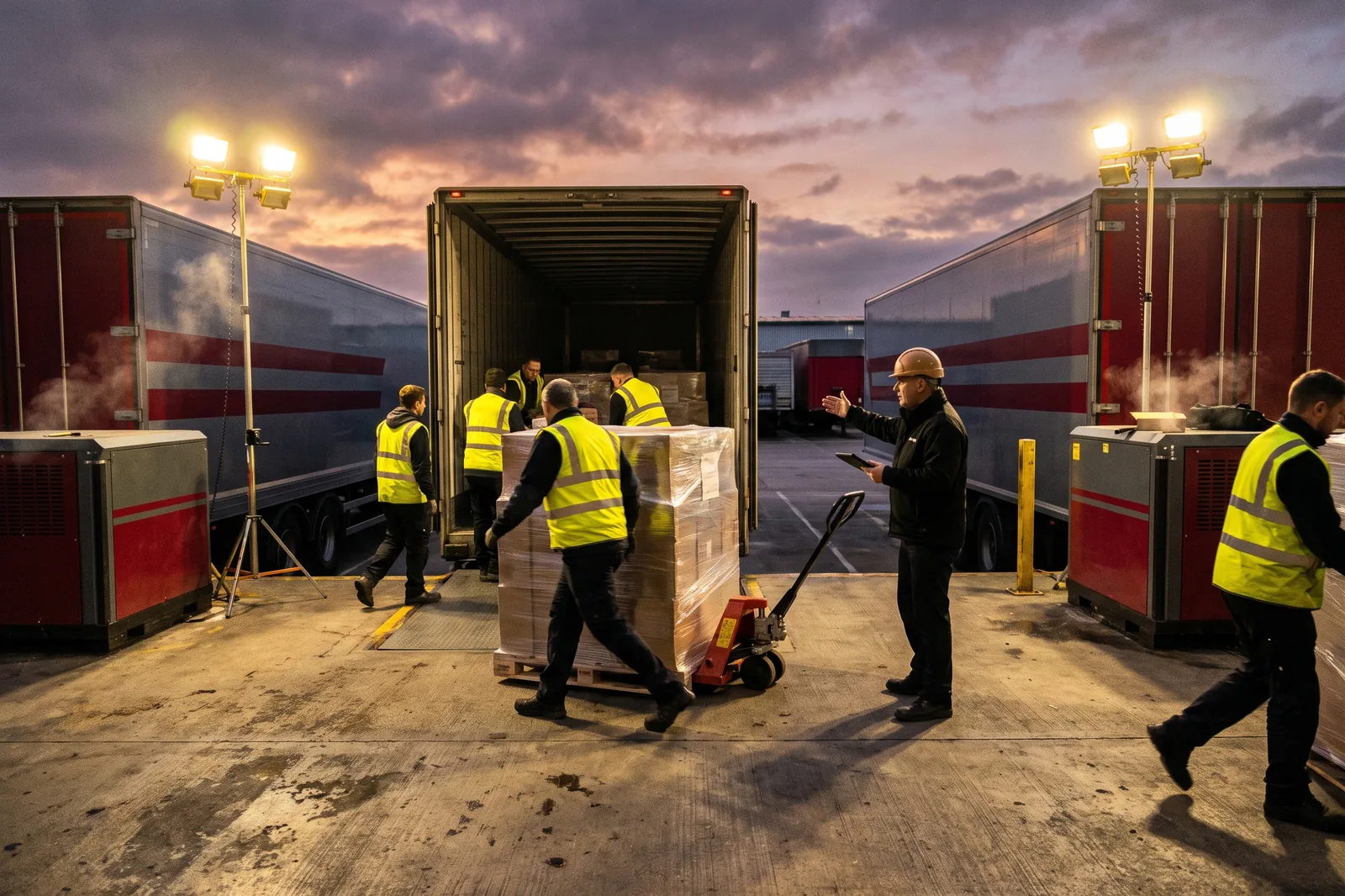
- Transfer to a sound vehicle. We move the pallets across to a serviceable trailer routed to the same destination, checking each as it crosses.
- Stabilise and re-secure. The load is re-stowed for correct axle weight and re-secured with straps, bars and edge protection so it is legal and stable for the onward leg, following the published load-securing rules.
- Handle what the emergency damaged. Where pallets cracked or cartons split in the incident, we repair or repack them on the spot rather than sending the problem on.
- Document it. We record the state on arrival, the transfer and the securing, for the operator, the sender and any insurer.
Why 24/7 and same-day matter here
An emergency does not wait for opening hours. A breakdown at midnight or a run out of hours on a Sunday is exactly when a warehouse that closes at five is useless, because the load simply sits until Monday and the delivery is already lost. Our Milton Keynes dock works around the clock, so the transfer happens when the emergency happens. The location does the rest: sitting on the M1 corridor between London and Birmingham, roughly in the centre of England, means a stricken vehicle is rarely far from us and the replacement vehicle has a sensible onward run to any UK region. For most emergencies that reach us in time, a same-day turn is realistic.
Emergency cross-dock is still controlled
Fast does not mean careless. A rushed roadside transfer that overloads an axle or leaves the load loose only swaps one problem for another, because the replacement vehicle then fails a weighbridge or sheds the load. We move quickly but we still check the weight distribution, still secure the load to standard and still document it, so the delivery that leaves us is one the consignee can accept and a weighbridge will pass. The planned version of this work is covered in the article on cross-dock and transshipment, and the re-stow detail in the article on re-stow and load re-arrangement.
Where do we do it?
We run emergency cross-docking and rapid load transfer in our Milton Keynes warehouse, 24/7 between London and Birmingham, within our warehousing and cargo handling services. It sits alongside scheduled cross-dock and transshipment as part of the full Milton Keynes value-added service.
Step by step
- Incident report. You report a vehicle breakdown or a driver hitting driving time limits.
- Selecting replacement transport. We arrange a suitable vehicle or trailer tailored to your cargo.
- Arrival at the warehouse. The vehicle enters the Milton Keynes facility for load inspection.
- Transfer and re-securing. Cargo is transferred onto the replacement truck and secured for transport.
- Resuming delivery. The new vehicle departs immediately toward the destination.
Definitions
- Emergency cross-docking: An unplanned, time-critical transfer of a load onto another vehicle following a breakdown or road incident.
- Scheduled cross-docking: A standard warehouse operation involving the immediate transfer of goods without long-term storage.
- Milton Keynes warehouse: The UK handling hub of OTSL in the United Kingdom (UK) operating 24/7 for rapid handling.
- Driver hours limit: The maximum permitted driving time after which a mandatory rest period must be taken.
When does this rule not apply?
This procedure does not apply when the cargo has been completely destroyed in an accident and cannot be safely transported further by road.
The OTSL role
OTSL provides immediate crisis support in the UK and across Europe, deploying express vans for urgent cargo pickup. All emergency operations are backed by our cross-dock and transshipment warehouse in Milton Keynes to keep your supply chain moving.
Sources
- GOV.UK: load securing, vehicle operator guidance
- GOV.UK: drivers hours rules for goods vehicles
- HSE: warehousing and logistics, safe manual handling and workplace transport
Have a vehicle down, a driver out of hours or a load that has to leave a failed trailer right now, anywhere reachable in the UK? Describe it in the contact form and we will run an emergency cross-dock in Milton Keynes and get the delivery moving again.