 AI image
A cross-dock and transshipment warehouse moves a load straight from an inbound vehicle to an outbound one with little or no storage in between. In our Milton Keynes warehouse we transship pallets, consolidate several inbound loads into one outbound trailer and break bulk deliveries down into onward drops. The site runs 24/7 at 36 Clarke Road, Bletchley, MK1 1LG, between London and Birmingham.
The English-language version of this article is the reference one for the UK cluster.
What does cross-docking actually do?
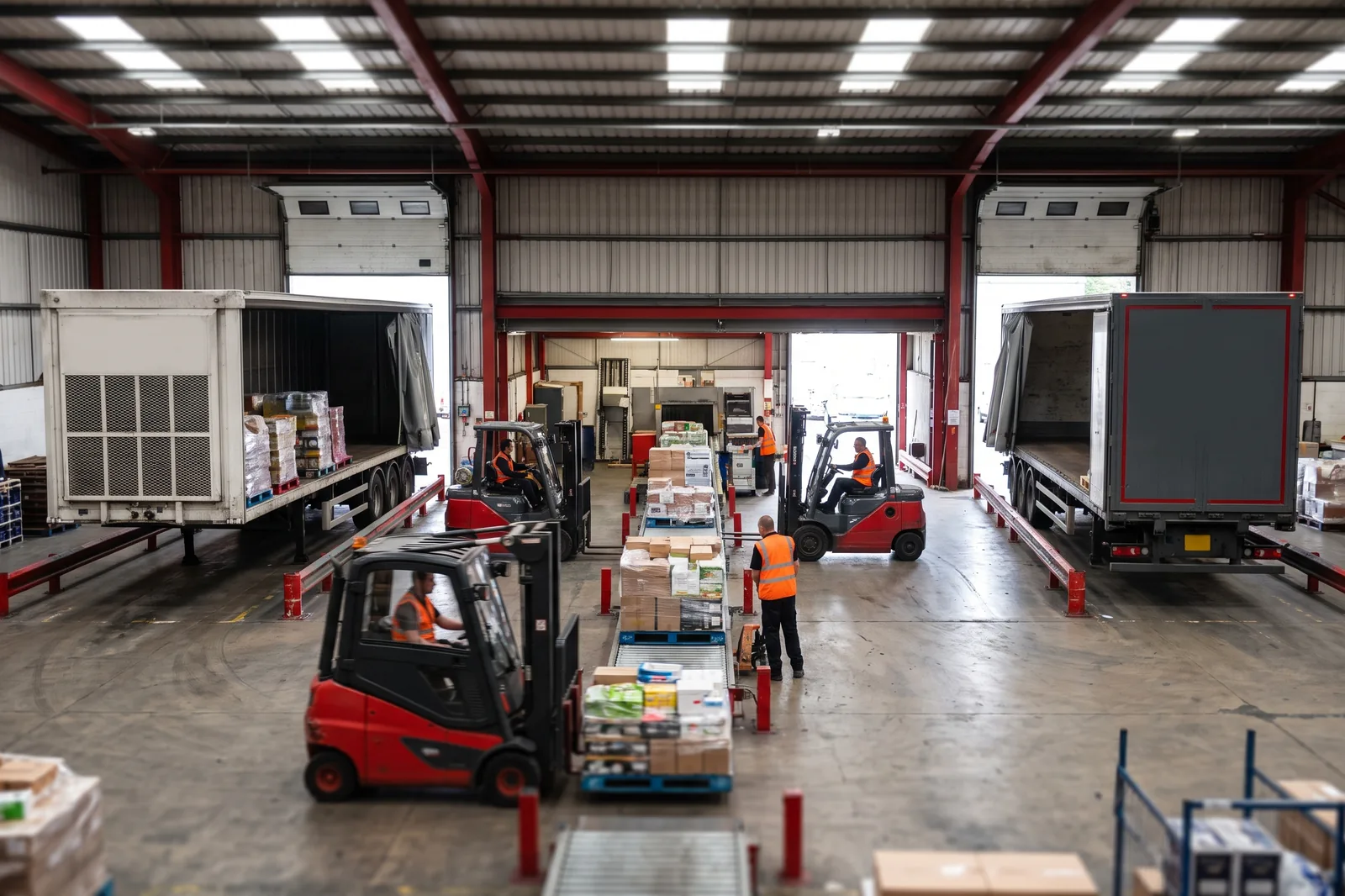
A conventional warehouse receives goods, puts them away on racking and later picks them out again. A cross-dock skips the middle. The load is booked in, checked, sorted on the dock and loaded onto the next vehicle, often within hours and sometimes within the same shift. Nothing sits on a shelf waiting for an order, because the onward destinations are already known. That saves two handling cycles, the storage cost and, above all, time. For a UK delivery under a fixed retail booking or a same-week deadline, the hours a cross-dock saves are often the difference between hitting the slot and missing it.
Transshipment, consolidation and break-bulk in one place
The three moves we make on the dock are related but not the same, and a single site lets us combine them on one load.
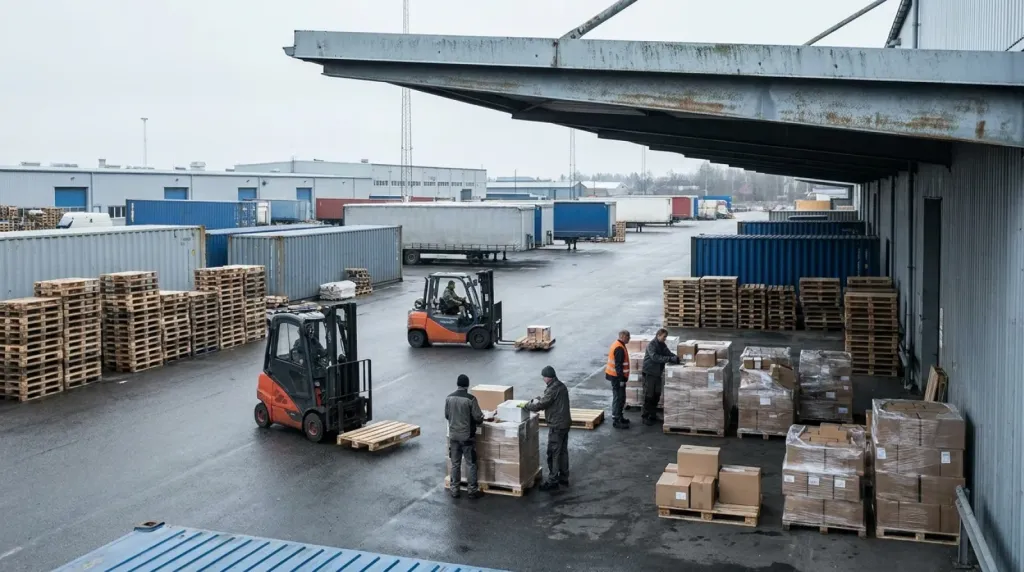
- Pallet transshipment. Pallets come off an inbound trailer and go onto the outbound trailers that match their routes. A full load arriving from the continent is split across several UK vehicles, each carrying only the drops on its patch.
- Consolidation. Several part loads, from different senders or different inbound trailers, are combined into one full outbound vehicle heading the same way. One well-filled trailer runs instead of three half-empty ones.
- De-consolidation and break-bulk. One large bulk delivery is broken down into many smaller consignments, each routed to its own consignee. A single inbound container becomes twenty local drops.
Because all three happen under one roof, a load does not travel from a receiving yard to a separate sortation site to a third dispatch depot. It arrives, gets sorted and leaves.
Cross-dock without long storage, but with real handling
Cross-docking does not mean the load is untouched. As the pallets pass across the dock we check them, and where a load needs work we do it there rather than sending it away. A leaning pallet is straightened, a load that has shifted is re-stowed, a damaged pallet is swapped, all covered in the article on re-stow and load re-arrangement. The point is speed with control, not speed by skipping the checks that keep a UK delivery legal and acceptable at the door.
Why Milton Keynes, and why 24/7
Cross-docking only works if the site sits where the routes cross. Bletchley is on the M1 corridor between London and Birmingham, roughly in the geographic centre of England, so an inbound load barely diverts to reach us and every UK region is within a sensible onward leg. The clock matters as much as the map. Loads off the Channel arrive at night, over weekends and on bank holidays, and a dock that closes at five in the afternoon holds the transshipment until the next working day, which defeats the purpose. Our Milton Keynes dock works around the clock, so an inbound trailer that lands at two in the morning is sorted and its pallets are on their way, not parked until Monday.
Pallet facts that shape a transshipment
Most inbound loads from the continent arrive on EUR pallets at 1200 by 800 mm, while UK retail and domestic distribution often works to the UK pallet at 1200 by 1000 mm. When we consolidate or break bulk we build the outbound loads to the format each consignee accepts, and where a swap is needed we exchange pallets across the pool. Every outbound trailer also has to respect the 44 tonne UK gross vehicle weight limit and its per-axle limits, so we distribute the pallets across the axles as we load, not by eye.
| Move | What it does | Typical use |
|---|---|---|
| Pallet transshipment | Pallets off one trailer, onto trailers matching their routes | One continental load split across several UK vehicles |
| Consolidation | Several part loads combined into one outbound trailer | Three half loads become one full trailer the same way |
| Break-bulk | One bulk delivery broken into many smaller drops | A single container becomes many local consignments |
Where do we do it?
We cross-dock and transship in our Milton Keynes warehouse, running 24/7 between London and Birmingham, within our warehousing and cargo handling services. Cross-dock sits alongside re-stow and emergency cross-docking as part of the full Milton Keynes value-added service. We run the same transshipment work at our Kielce cross-dock in Poland.
Step by step
- Vehicle arrival. The inbound truck arrives at the bay and delivery documentation is checked.
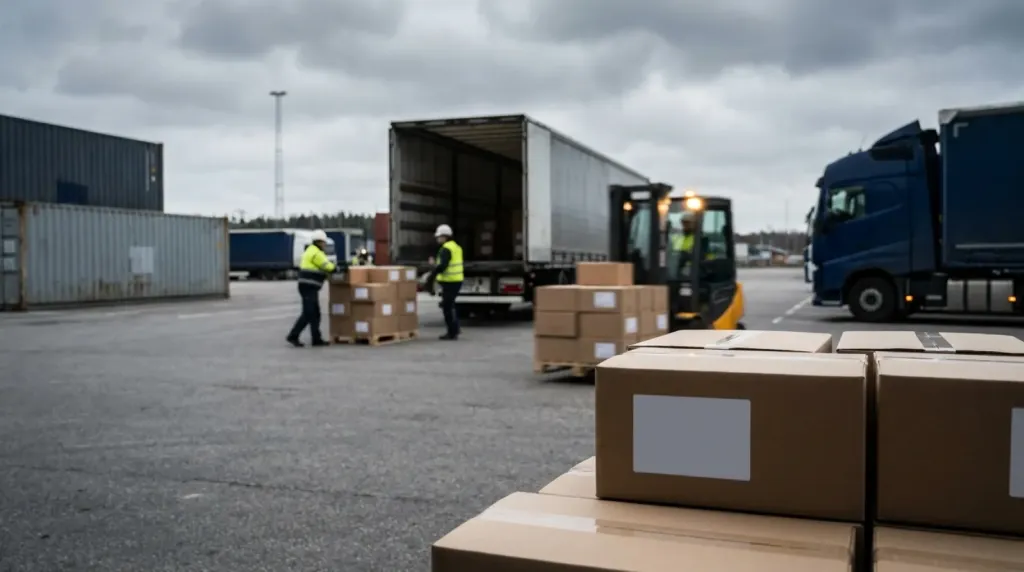
- Pallet unloading. Forklifts unload the pallets directly from the trailer onto the transit area.
- Shipment sorting. Goods are sorted according to their final destination routes and postcodes.
- Load consolidation. Pallets headed for the same delivery zone are gathered together.
- Outbound loading. Sorted pallets are loaded onto the designated vehicles for final delivery.
Definitions
- Cross-docking: A warehouse operation where goods transfer directly from inbound to outbound transport with minimal storage.
- Transshipment: The process of moving a load from one transport vehicle to another during transit.
- Pallet transshipment: The unloading, sorting, and reloading of individual pallets onto appropriate onward vehicles.
- Load consolidation: Combining several smaller inbound shipments into a single outbound trailer for onward transport.
- Break bulk: Deconsolidating a large bulk shipment into smaller loads for individual final deliveries.
When does this rule not apply?
This process does not apply when goods require long-term storage or extended customs hold prior to distribution.
The OTSL role
At OTSL, we manage cross-dock operations and freight flows across the UK and Continental Europe. We provide flexible groupage (LTL) solutions backed by our Milton Keynes warehouse facilities for efficient pallet handling.
Sources
- HSE: warehousing and logistics, safe manual handling, workplace transport and stacking
- GOV.UK: load securing, vehicle operator guidance
- UNECE: European best practice guidelines on cargo securing for road transport
Have a load to transship, several part loads to consolidate or a bulk delivery to break down for UK drops? Describe it in the contact form and we will cross-dock it in Milton Keynes and send each pallet on the right vehicle.