 AI image
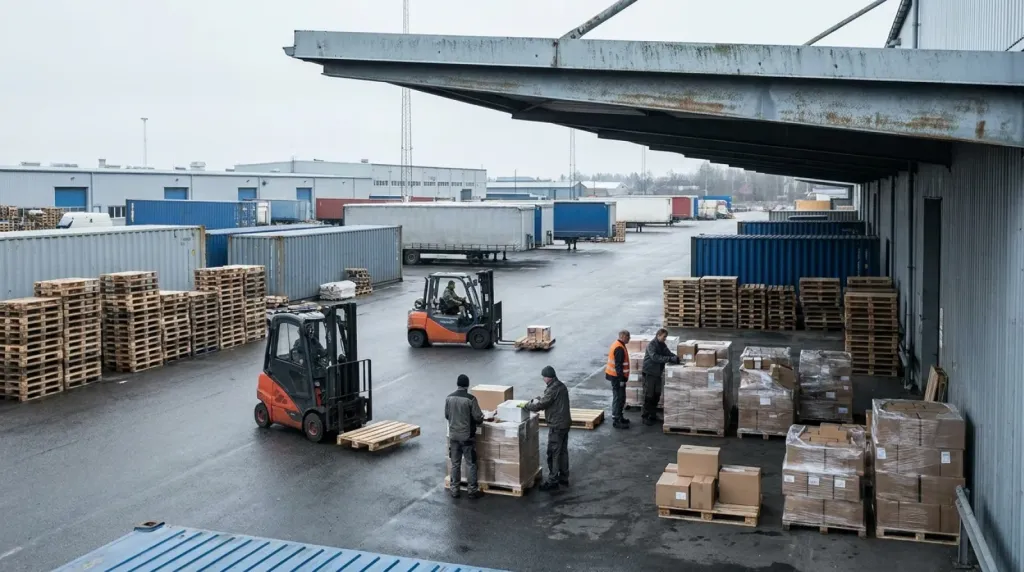
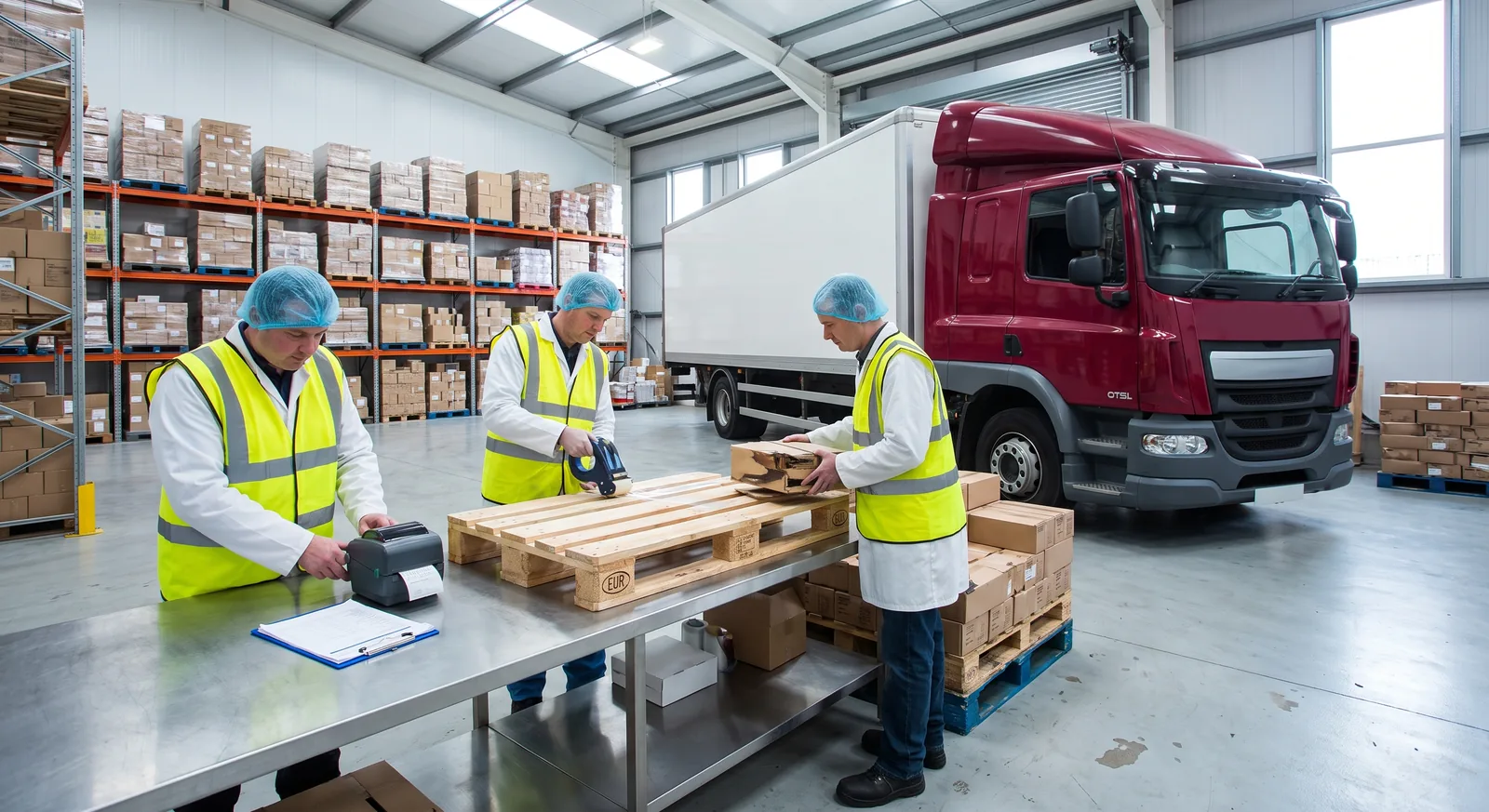
Repacking, also known as pallet rework, is the warehouse work of preparing a consignment again: depalletising and restacking the goods, exchanging pallets for compliant ones, relabelling and replacing damaged outer packaging. Our Milton Keynes warehouse carries this out to food grade standards, with a full inspection and a photo report, and the last hygiene inspection scored 10 out of 10.
What repacking and pallet rework cover
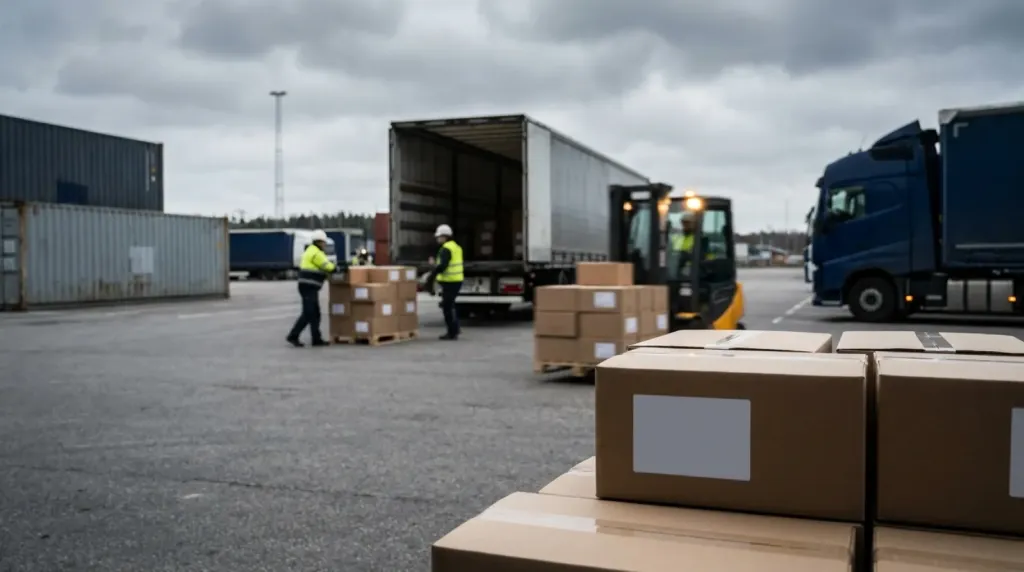
This is operational work, not storage space to let: the goods arrive, pass through the hands of our warehouse team and travel on. The typical scenario: a lorry from Poland brings goods to England and the consignee requires different pallets, a different stacking pattern or labels in its own standard. Instead of sending the consignment back or improvising at the consignee ramp, the goods go through rework with us and arrive at the destination warehouse prepared exactly as its rules require.
When a consignment needs rework
- Goods after transport: tilted pallets, torn stretch film, cartons marked by straps. We describe straightening and restacking in the text on re-palletising after a tilt.
- A change of configuration: splitting mixed pallets into single-product ones, lowering stack heights to match the consignee racking, dividing a large delivery into smaller drops.
- Consignee requirements: retail chains and e-commerce warehouses accept goods on specified pallets, with labels in their own standard. This includes deliveries to Amazon FBA, where a poorly prepared consignment is turned away at the gate.
- Damaged outer packaging: replacing torn cartons, transferring goods from a damaged batch, separating write-offs from sound stock.
How to pack goods so rework is never needed in the first place is covered in our guide to pallets and load securing.
Hygiene standard: food grade and a 10 out of 10 result
The warehouse works to food grade standards and handles food as well. In practice this means clean, separated working zones, pest control, personal hygiene rules for the team and documentation that shows what happened to the goods at every step. The last hygiene inspection scored 10 out of 10. For the owner of food products this matters more than anything else on this page: repacking food in a random shed can end its route to sale. How we work with food after an incident on the road is described in the article on food safety after a trailer breach.
Goods-in, inspection and the photo report
Every rework starts at goods-in with an assessment of the consignment and photographic documentation: what arrived, in what condition, what needs replacing. When the work is done, a photo report shows the goods before and after. The owner of the cargo receives material for the conversation with the insurer, the consignee or the supplier, instead of relying on the account of the driver.
Why does Milton keyne?
The warehouse at 36 Clarke Road in Milton Keynes sits in the logistics heart of England, in the area known as the Golden Triangle, between the main routes linking London, the Midlands and the ports. A vehicle that comes off its route for rework does not add distance. On top of that comes 24/7 access: goods can be received and released at night and at weekends, whenever the transport plan requires it. The full scope of this site, from cargo recovery to inspections, is described in the text on our Milton Keynes warehouse.
Need repacking, a pallet exchange or relabelling in the United Kingdom? Describe the consignment in the contact form and we will agree the scope of work and prepare the goods to the consignee requirements.
Step by step
- Goods receipt. The vehicle enters the warehouse where staff inspect outer packaging and pallets.
- Initial inspection. Warehouse operators take photos of the consignment and determine the required scope of work.
- Operational handling. Staff perform depalletising, replace damaged cartons, and restack goods onto compliant pallets.
- Labelling and securing. Goods receive new labels required by the consignee and are wrapped securely.
- Final verification. A full photo report is compiled to confirm compliance with destination standards.
Definitions
- Repacking (rework): A warehouse service involving the re-preparation of goods for onward carriage or acceptance by the consignee.
- Food-grade standard: A set of warehouse and hygiene rules ensuring safe contact between facilities, staff, and food packaging.
- Depalletising: The removal of goods from a pallet for inspection, sorting, or restacking.
- Photo report: Photographic documentation showing the condition of the consignment before, during, and after warehouse handling.
When does this rule not apply?
The requirement for complete repacking does not apply to consignments whose pallets and outer packaging already meet all technical and hygiene standards of the final consignee.
The OTSL role
OTSL manages consignment handling in the Milton Keynes facility, integrating services such as groupage (LTL) with practical warehouse support, which is further explained in our guide on food-safe storage and handling in the UK. See also: Buffer warehouse for economic zone suppliers: how a production buffer works.