 AI image
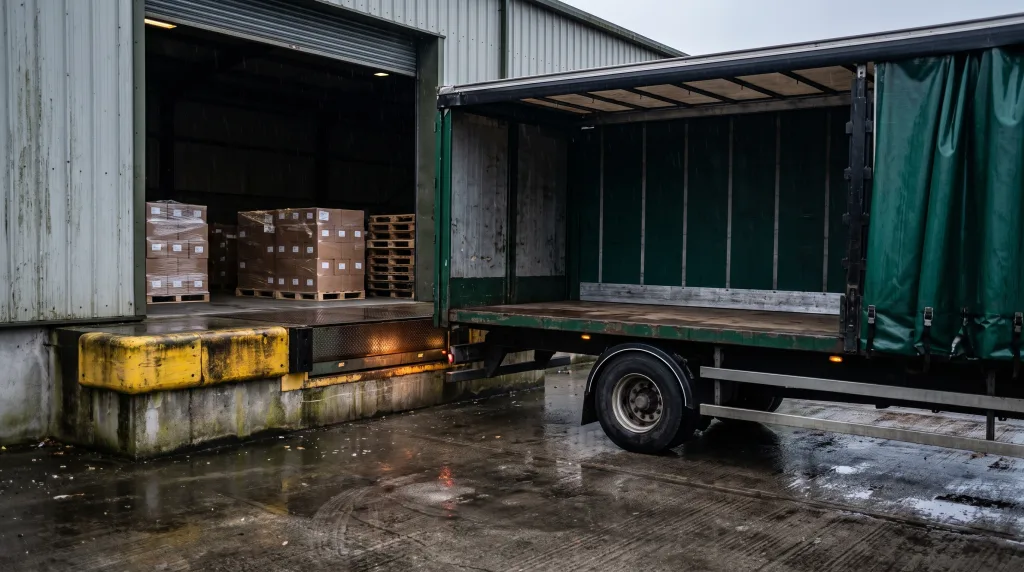
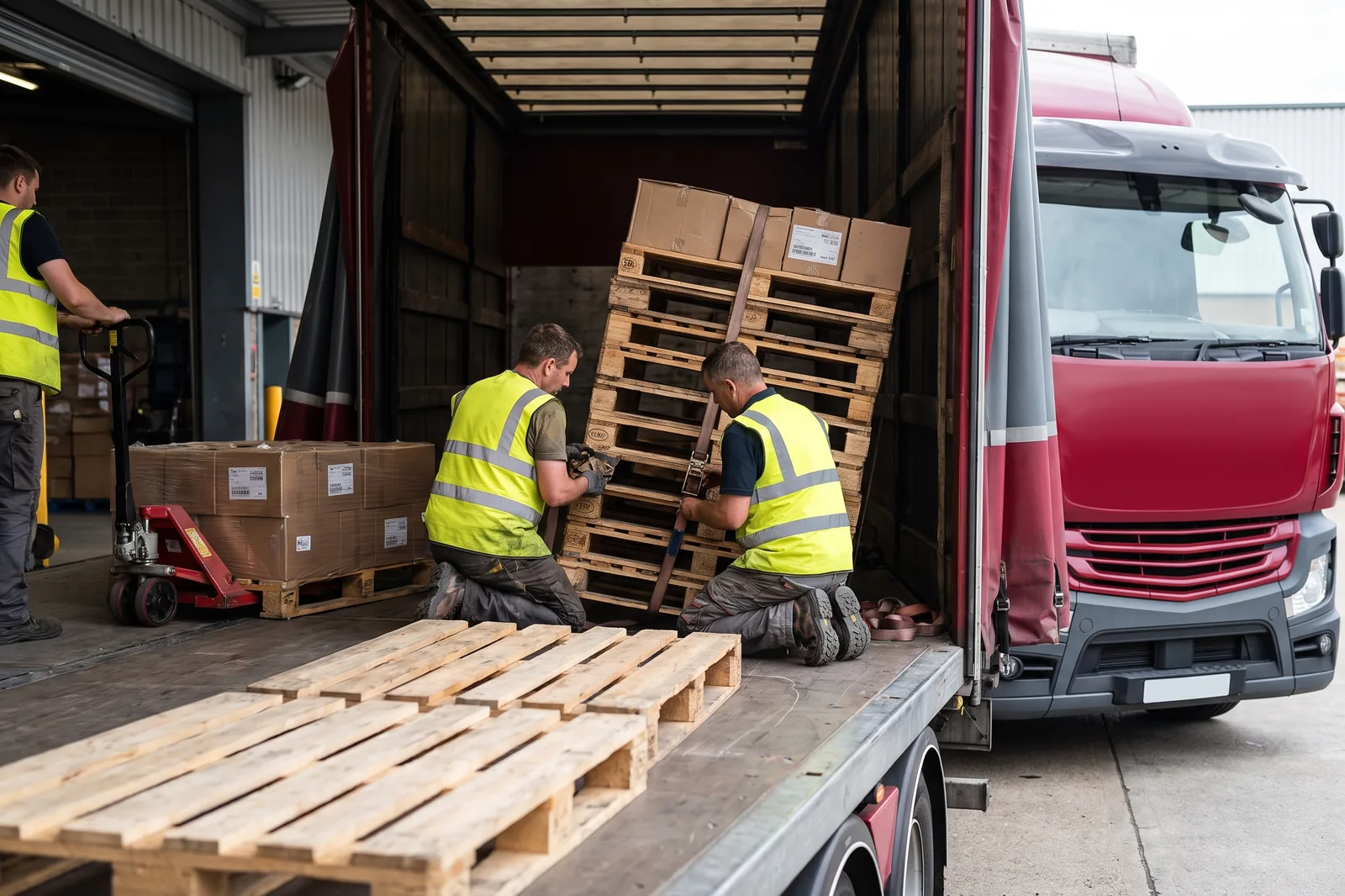
Pallet re-stow is re-arranging how pallets sit on the trailer so the load is legal, stable and secure: redistributing weight across the axles, rebuilding rows that have shifted, and re-securing everything before the ferry or border. In our Milton Keynes warehouse we also recover cargo that has collapsed or slid on the road, and get the trailer moving again.
The English-language version of this article is the reference one for the UK cluster.
Why re-stow is an axle-weight problem first
A UK articulated combination is limited to a 44 tonne gross vehicle weight, but the total is only half the story. Each axle has its own limit, and a load that is legal on paper can still be illegal on the road if it sits too far forward or back and overloads one axle. Weighbridges at ports and roadside checks catch exactly this. When a load has shifted in transit the distribution changes on its own, and what left the sender legally weighted can arrive over the limit on the drive axle. Re-stow is how we put the weight back where it belongs before the vehicle reaches a scale.
When a load needs re-stowing
- Pallets slid forward or back under hard braking on the crossing or motorway.
- A row toppled or leaned and the rest of the load is now unstable around it.
- The build overloads one axle, so the combination is legal in total but not per axle.
- Straps and bars have loosened and the load needs re-securing before the ferry or border.
- Part of the load was dropped off and the remainder now needs re-balancing for the next leg.
Collapsed and shifted-load recovery
The hardest jobs are the ones that happen on the road: a load that has partly collapsed, a stack that has toppled against the curtain, pallets jammed at an angle. Turning that trailer back to the continent means two more crossings and days lost. We take it into Milton Keynes instead, open it carefully, stabilise what is still standing, straighten and rebuild what has fallen, and re-stow the whole load into a state fit to travel. Where individual pallets are damaged we repair or rebuild them, which we cover in the article on damaged pallet repair, and where cartons are breached we repack, as described in the article on repacking.
Re-securing before the ferry or border
A re-stow is not finished until the load is secured to the same standard it should have had on departure. We re-apply the securing the load needs: straps, load bars, edge protectors, anti-slip mats and layer pads, so it survives the pitch and roll of a ferry crossing and the braking of the onward leg. The principles we follow are the published cargo-securing rules, not guesswork. How to build and secure a load so it does not shift in the first place is covered in the article on pallets, packaging and load securing.
Documentation for the driver and insurer
A shifted load is often a claim and always a compliance question. Before we touch it we photograph how the load arrived, then record the re-stow: what was moved, how the weight was redistributed and how the load was re-secured. The driver leaves with a trailer that will pass a weighbridge, and the sender and insurer get a record of the state on arrival and the work done. The wider inspection and reporting process is described around the Milton Keynes warehouse.
Where do we do it?
We re-stow and recover loads in our Milton Keynes warehouse, running 24/7 between London and Birmingham, within our warehousing and cargo handling services. Re-stow is one spoke of the full Milton Keynes value-added service.
Step by step
- Trailer assessment. You inspect the position of pallets and identify overloaded or underloaded vehicle axles.
- Cargo check. You verify whether shifted boxes sustained damage or can be safely repositioned.
- Weight distribution. You move heavy pallets along the trailer deck to rebalance axle loading.
- Row rebuild. You align tilted rows back into secure, solid cargo blocks.
- Final lashing. You apply lashings and shoring bars to secure the freight before ferry boarding.
Definitions
- Re-stow: Rearranging pallets on a trailer to restore lawful axle weight distribution and load stability.
- Axle weight: The portion of the total vehicle weight supported by a single axle or axle group on the road surface.
- Shifted load: Cargo that moved from its original placement inside the trailer due to vehicle braking or turning.
- Gross vehicle weight (GVW): The maximum permitted total weight of the loaded vehicle combination.
When does this rule not apply?
This rule does not apply if the underlying wooden pallets are structurally broken and require full repalletisation rather than simple repositioning.
The OTSL role
At our Milton Keynes warehouse and Kielce facility, we help hauliers adjust shifted loads to meet legal axle limits. Learn more about our road transport options and read our guide on pallet alignment after cargo shifts.
Sources
- GOV.UK: load securing, vehicle operator guidance
- GOV.UK: goods vehicle weight and roadworthiness checks
- UNECE: European best practice guidelines on cargo securing for road transport
Have a trailer with a shifted load or an axle-weight problem heading to the UK or already on site? Describe it in the contact form and we will re-stow it, re-secure it and send it on legal and stable.