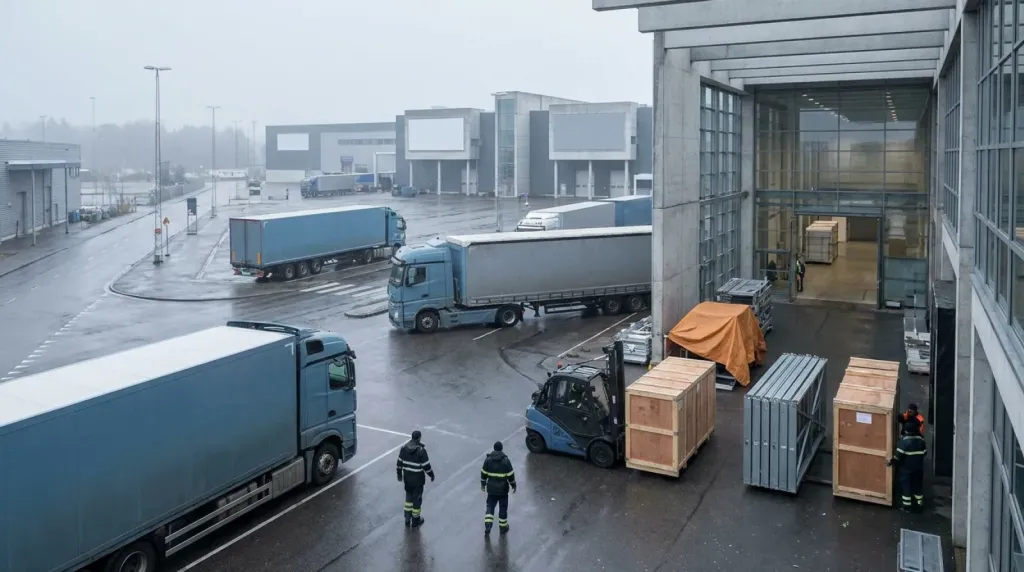
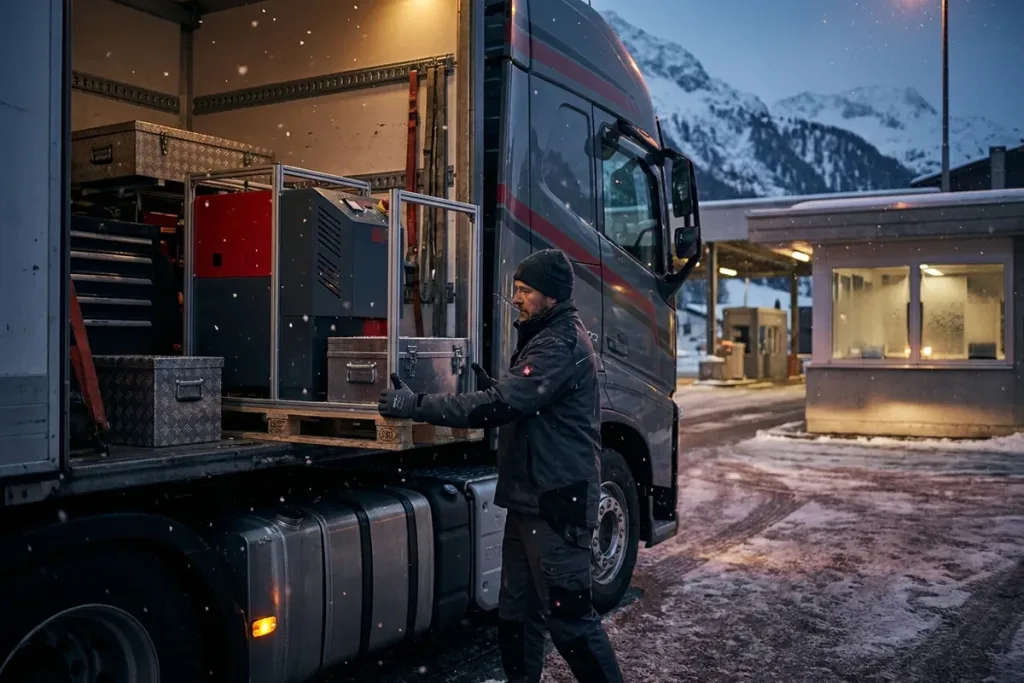
 AI image
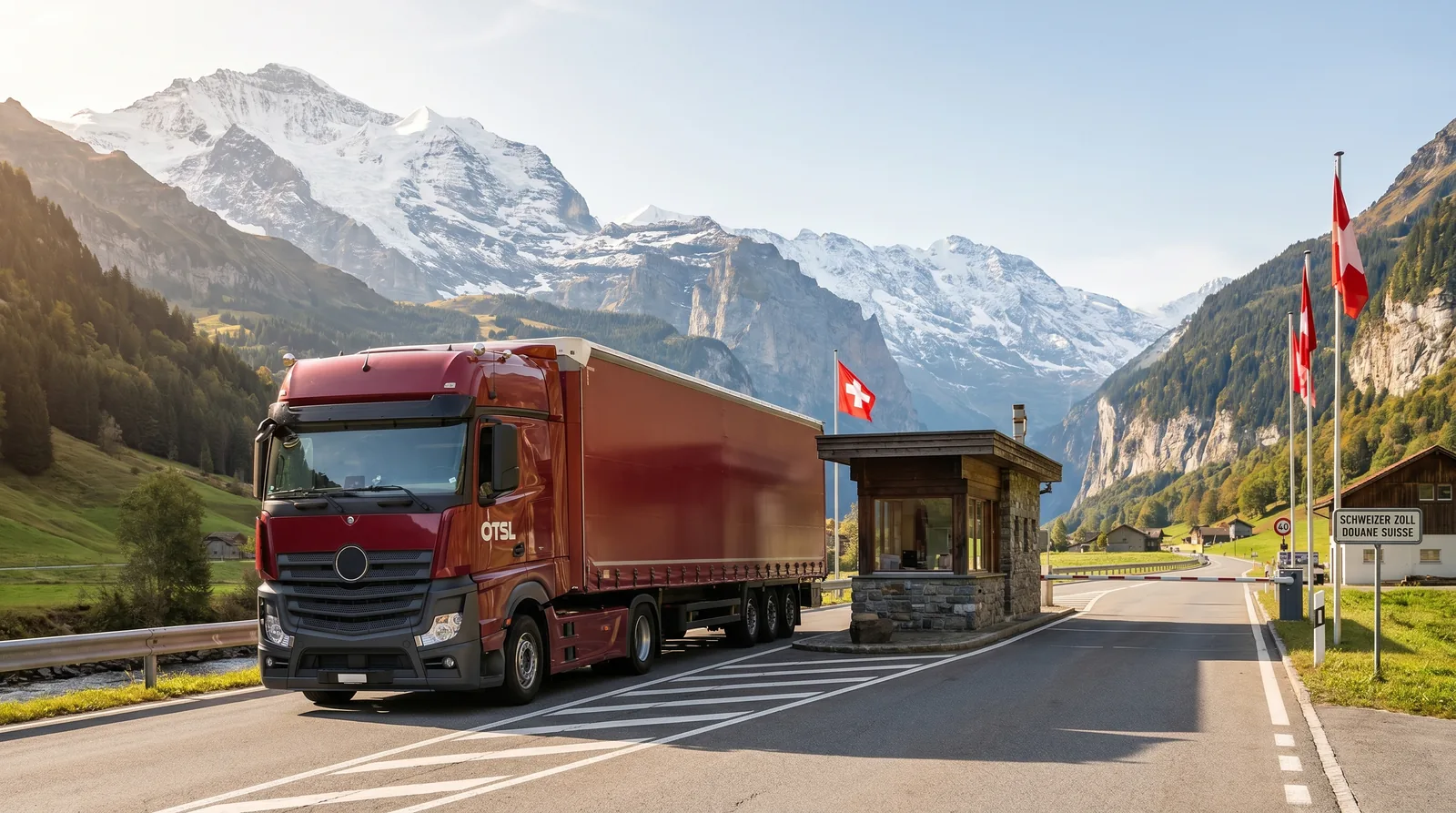
Export to Switzerland is dispatch outside the EU customs territory, so an EU export declaration and import clearance in Switzerland apply. Many industrial goods are duty-free, but some categories, especially agricultural and food, are subject to charges. The origin of the goods and a correct description decide how clearance goes.
Procedures in brief
- An EU export declaration (EX/EAD) before leaving the customs territory.
- The border crossing with the right documents.
- Import clearance in Switzerland with charges assessed.
- Delivery to the consignee in CH.
What should you watch for?
Most problems come from incomplete documents, a wrong goods description or unclear origin. With agricultural and food goods there are extra requirements. So we ask for the details up front and confirm what charges and requirements apply to a specific load, instead of assuming it will be duty-free.
How do we work?
We have our own customs agencies and handle Switzerland customs as part of transport. We settle the documents ahead and run clearance so the border does not stop the delivery. We confirm the exact rates and requirements for your goods individually.
See transport to Switzerland, customs clearance and transport to Switzerland step by step.
How do you avoid delays at the Swiss border using the T1/T2 transit procedure?
Opening a T1 or T2 transit procedure in the NCTS system requires submitting a customs declaration and generating an MRN at least 24 hours before the vehicle arrives at the border crossing point. When you arrange international road haulage and your consignment weighs over 300 kg or occupies more than 4 pallets, the absence of prior pre-lodgement forces the goods vehicle to wait in the customs holding area. The transit procedure suspends the payment of import duties at the border, but it requires a financial guarantee covering 100% of the potential customs debt and VAT liability across the transit territory.
Once the vehicle physically crosses the Swiss border, you have exactly 3 days to present the consignment together with the Transit Accompanying Document (TAD) at the inland destination customs office to discharge the procedure. Exceeding this time frame triggers an automated customs query and places immediate financial liability on the guarantee holder. These rules for opening NCTS transit do not apply to personal removals, temporary importations under an ATA (Admission Temporaire, the temporary admission document) Carnet, or small groupage consignments under 30 kg, which are eligible for simplified direct clearance at the frontier.
When calculating transit times, you must factor in the physical dimensions of the transport unit. Vehicles with an overall combination length exceeding 12 meters are subject to mandatory axle-load and weight checks at Swiss border terminals before being cleared for onward journey. Border processing speed depends directly on traffic density at the specific border post, the accuracy of the cargo manifest, and the uptime of customs IT networks.
- Presenting a clean MRN barcode allows the driver to use fast-track freight lanes where available.
- A weight discrepancy exceeding 5% between physical cargo and manifest documents leads to mandatory vehicle hold.
- The driver must carry a printed physical copy of the Transit Accompanying Document (TAD) in the cab.
Step by step
- Document preparation. You collect the commercial invoice, packing list and documents confirming the origin of the goods.
- Export declaration. You submit the EX/EAD export declaration before leaving the EU customs territory.
- Transport to the border. You haul the shipment to the Swiss border along with the required customs documents.
- Import clearance. You present the cargo at the Swiss customs office for duty assessment.
- Final delivery. Upon customs release, you deliver the goods directly to the consignee in Switzerland.
Definitions
- EX/EAD (Export Declaration / Export Accompanying Document): A customs document confirming that goods have been declared for export outside the EU customs territory.
- EU customs territory: The single area within which goods circulate without internal customs duties or tariffs.
- Import clearance: The customs procedure required to enter goods into a destination country and assess duties or taxes.
- CH (Confoederatio Helvetica – Switzerland): A country situated outside the EU customs territory that requires standard customs clearance for incoming shipments.
When does this rule not apply?
This standard export procedure does not apply to goods transported under international transit or temporary admission, unless the cargo is officially cleared for home use in Switzerland.
The OTSL role
OTSL coordinates cross-border logistics and customs documentation, providing professional road transport to Switzerland. For additional information on procedures, read our article Transport do Szwajcarii, odprawa i dokumenty.