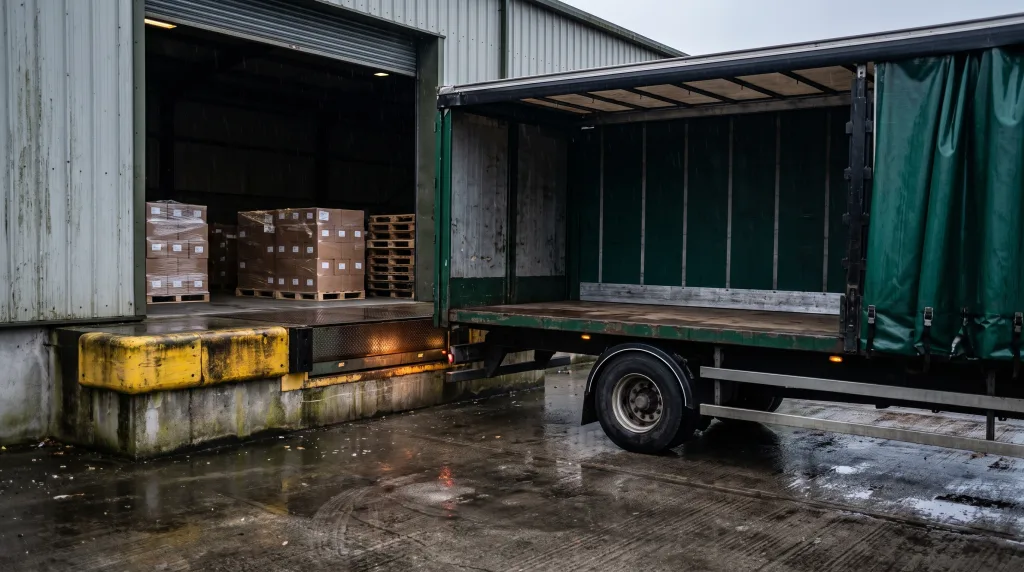
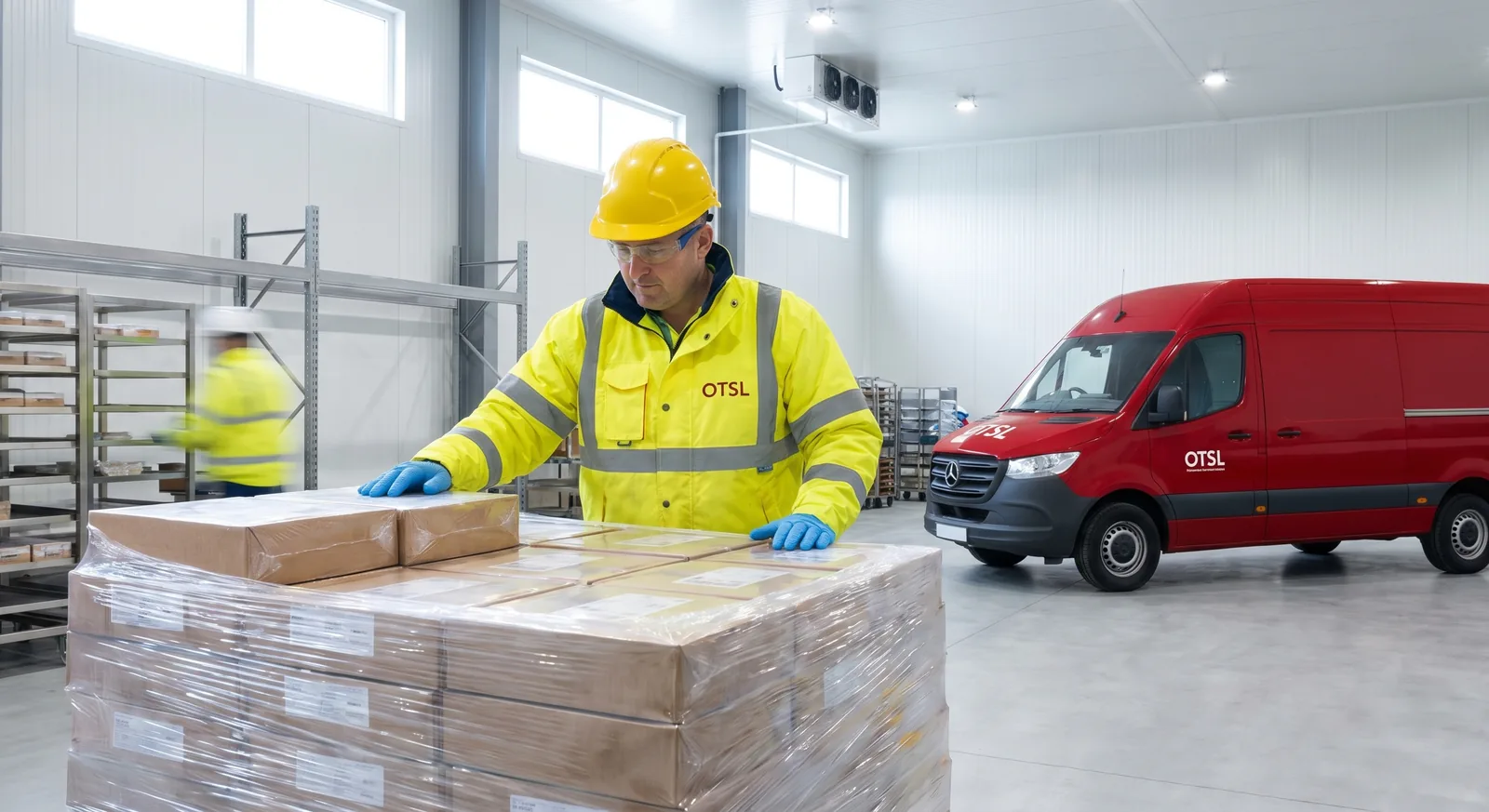
 AI image
After a breach of a trailer carrying food it is not enough to judge whether the products look intact. EU food law applies, including Regulation EC 178/2002, which lays down the general principles of food safety. The decision on whether the goods are fit for trade must be cautious and documented. At OTSL we run that assessment factually.
Why food is a separate case
- It is not only the physical state that counts but safety for the consumer.
- A trailer breach can mean a risk that is not visible to the eye.
- The decision to release or withdraw must be documented.
How do we approach the assessment?
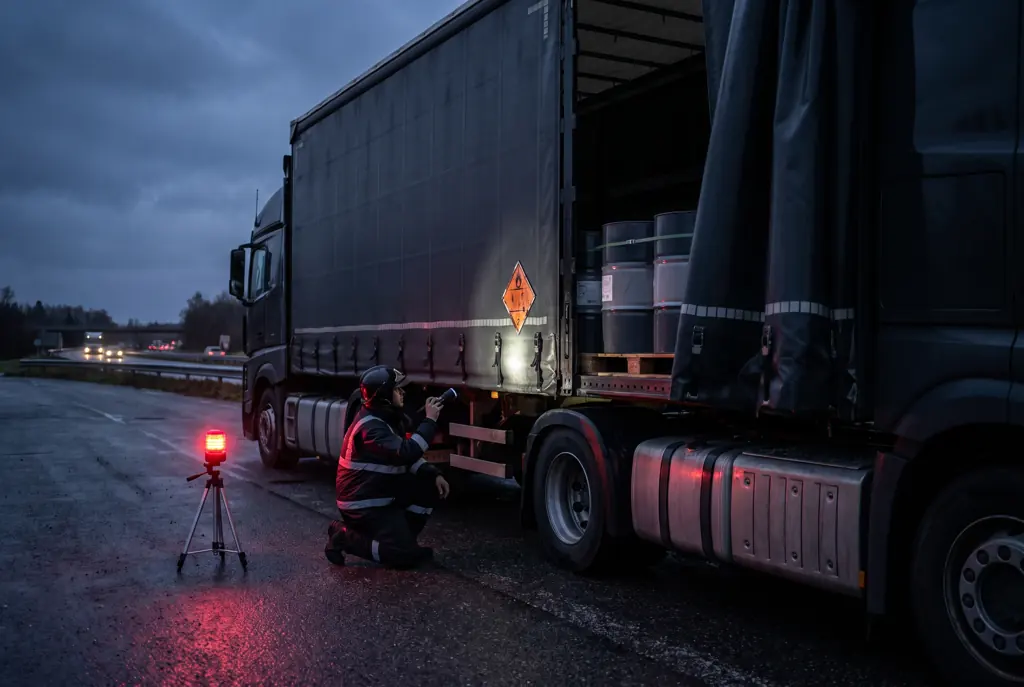
After an event we secure the goods and document the state, and with food we keep special caution. At the UK warehouse we run sanitary and hygiene checks, and when goods are not fit for trade we support the client with disposal. We do not take shortcuts on a release decision, because consumer safety and the client responsibility are at stake.
How do we work?
We run the assessment and report so the client can decide on facts and, if needed, settle with the insurer. We act factually and without sensation. The exact requirements depend on the type of food and the situation, so we confirm them individually.
See inspection and recovery, the fitness assessment and the inspection process.
What operational steps must you take within the first hours of discovering a broken seal?
When you discover a broken seal or a cut curtain upon opening the trailer, your reaction time determines the chances of salvaging the cargo. First, stop the vehicle immediately and create photographic documentation before moving any of the pallets. If the trailer carries 33 pallets of chilled goods, measure the core temperature at a minimum of 5 measurement points: near the rear doors, in the middle section, and close to the refrigeration unit. Any temperature deviation exceeding 2 degrees Celsius from the specification for longer than 2 hours requires placing the batch into quarantine. You must measure the temperature deep inside the product, not just on the outer carton surface.
When a curtain tear exceeds a length of 0.5 metres, the risk of particulate contamination requires a physical inspection. Typically, you inspect the cargo hold along the first 3 metres starting from the cut area. However, these quarantine rules do not apply to hermetically sealed dry goods in metal or glass containers, provided a visual inspection confirms zero mechanical damage and no contact with liquid chemicals. In such cases, the goods move directly into standard distribution without requiring additional laboratory testing.
- Inspect the integrity of factory packaging along the first 3 metres from the curtain cut.
- Isolate damaged cartons – if weight loss exceeds 50 kilograms or 5 percent of a single pallet volume, dispose of that specific portion.
- Secure the remaining cargo and submit the incident report within 24 hours of discovery.
Step by step
- Securing the cargo. Halt the transport immediately after discovering an unauthorised trailer opening.
- Documenting condition. Take detailed photographic evidence of the seals, doors, and packaging.
- Risk evaluation. Check for unseen safety hazards and contamination risks to the food products.
- Sanitary consultation. Submit the documentation to qualified inspectors to assess fitness for trade.
- Release decision. Record the formal determination to either release or withdraw the shipment.
Definitions
- Regulation EC 178/2002: European Community regulation laying down the general principles and requirements of food law.
- European Union (EU): Economic and political union of European states applying shared food safety standards.
- Trailer breach: An unauthorised access to the cargo space that may compromise product integrity.
- Market withdrawal: A decision to remove food products from distribution due to potential consumer risk.
When does this rule not apply?
This rule does not apply to non-food industrial goods, unless specific hygiene standards are contractually required for the shipment.
The OTSL role
We provide reliable temperature-controlled transport and assist with verification procedures outlined in our guide on sanitary inspection of food cargo after breach.