 AI image
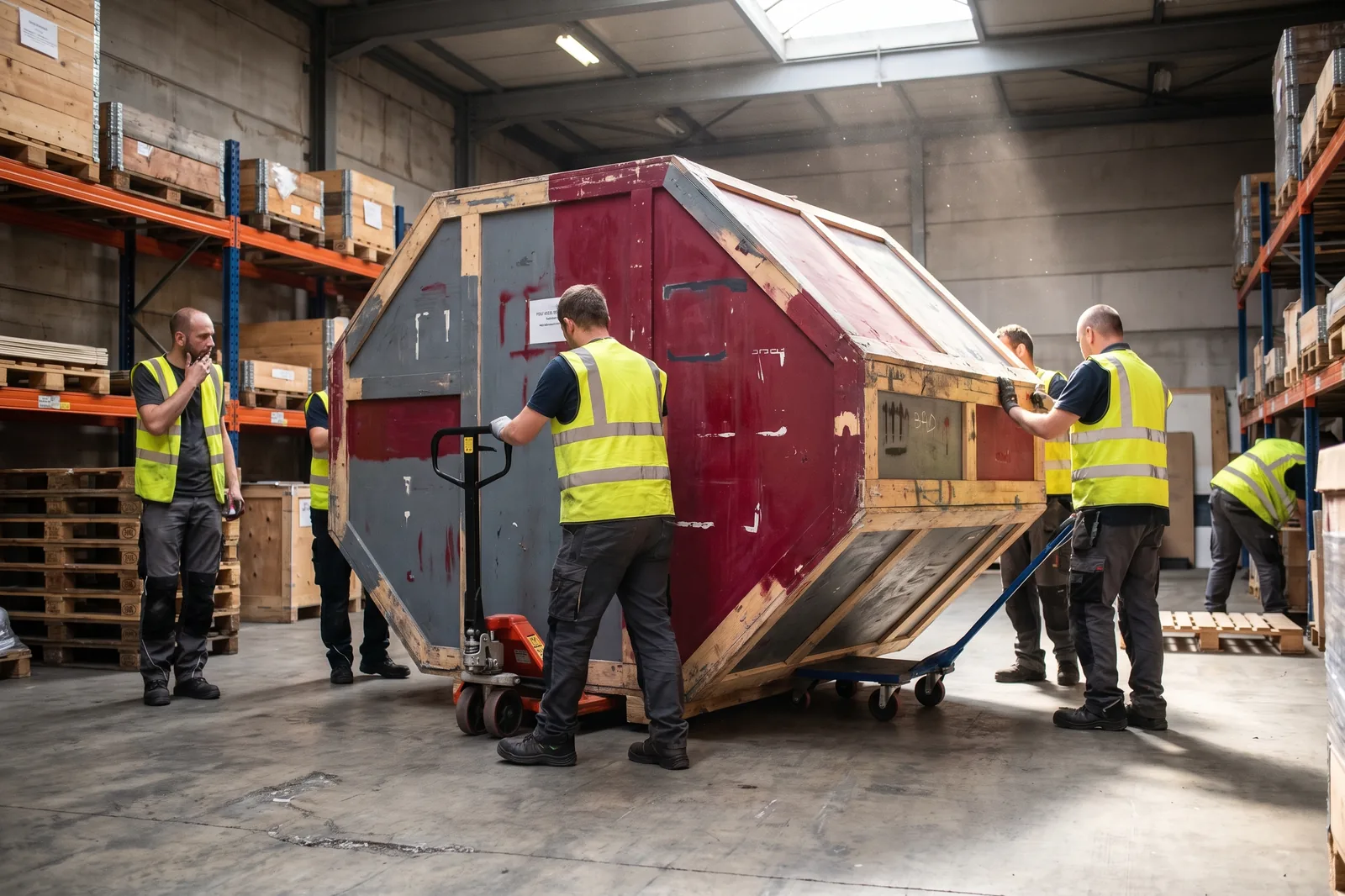
Unusual freight is anything that does not fit a standard pallet: an odd shape, a single oversized item, fragile, mixed or hand-handled goods. In our Milton Keynes warehouse we take such loads in, match the handling and securing to the specific item, rather than forcing it into a template that does not suit it.
The Polish-language version of this article is the reference one. This is an informational translation.
What do we mean by unusual freight?
- Odd shapes: long, narrow, round items, or ones with an uneven base that will not stand stably on a pallet.
- Single oversized items: one heavy or large piece that cannot be spread into layers or stacked.
- Fragile goods: brittle, sensitive to pressure, shock or damp, needing soft securing and a place of their own.
- Mixed loads: batches made of different things with different requirements that no single template handles.
- Manual handling: things a forklift cannot lift in the standard way and that must be moved, set and secured by hand.
Why others turn it away and we take it
A standard warehouse optimises for the pallet: receipt, put-away on a rack, dispatch. A load that does not fit that rhythm slows the process and demands thought, so it is easier to turn away. We work the other way round: we ask what the item needs and match the handling to it. Sometimes that is a dedicated floor spot instead of a rack, sometimes soft layer pads and hand placement, sometimes bespoke securing for a specific transport. It is work of detail, not of the conveyor. This is where a warehouse that treats each item on its own merits earns its place: the goods that would otherwise sit refused on a ramp keep moving.
How do we approach the handling?
| Load type | What we do |
|---|---|
| Odd shape, unstable base | a fitted frame or base, immobilisation, marking of the sides |
| Single oversized item | a dedicated spot, dedicated handling, a lifting plan |
| Fragile goods | soft securing, separation from heavier pallets, no stacking |
| Mixed load | splitting into groups by requirement, separate securing for each |
Securing and stacking: when yes, when no
Unusual freight is almost always non-stackable: we do not cover it with another pallet, because it will crush or lean. What may and may not be stacked is covered in the article on pallet stacking and double-stacking. When a load has to be moved onto another unit or repaired after transport, we do it within damaged pallet repair and rebuilding.
Manual handling and safety
Handling unusual items by hand is a raised risk of injury, so we do it in line with the rules. The British Health and Safety Executive (HSE) names manual handling of heavy or awkward loads as a recognised source of back and limb injury. We plan the lift, share the weight, use equipment where the mass demands it, and do not improvise with things that could crush a person.
Where do we do it?
We handle and process non-standard loads in our Milton Keynes warehouse between London and Birmingham, within our warehousing and cargo handling services. It is one of the value-added services we describe around the value-added services of the Milton Keynes warehouse. We take on what others back away from.
Step by step
- Consignment assessment. The dimensions, weight, and geometry of the incoming non-standard freight are evaluated.
- Handling method selection. Staff determine whether manual handling, forklifts, or specialized equipment are required.
- Base preparation. Suitable dunnage or custom pallet bases are arranged to fit the shape of the goods.
- Securing the load. Straps, lashing belts, and protective edge covers are applied to stabilize the consignment.
- Stability check. The secured load is inspected for safety before transfer to the outbound dispatch zone.
Definitions
- Unusual freight: Consignments with irregular shapes, oversized dimensions, or fragile items that do not fit standard pallet setups.
- Non-standard freight: Goods falling outside euro or industrial pallet specifications due to unusual dimensions, weight, fragility, or single-item status.
- Euro pallet: A standardized transport platform measuring 1200x800 mm used as a baseline for conventional warehousing systems.
- Industrial pallet: A standard loading base usually measuring 1200x1000 mm designed for larger unit loads.
The OTSL role
At OTSL, we organise the reception, manual assessment, and secure reloading of non-standard freight in our Milton Keynes facility. Our capabilities cover specialized transport options like out-of-gauge loads alongside handling procedures described in our guide on A UK warehouse with re-packing and recovery of damaged loads.
Sources
Have a load an ordinary warehouse will not accept: an odd shape, a single oversized item or something fragile? Describe it in the contact form and we will assess how to handle it and take it in where others turn it away.