 AI image
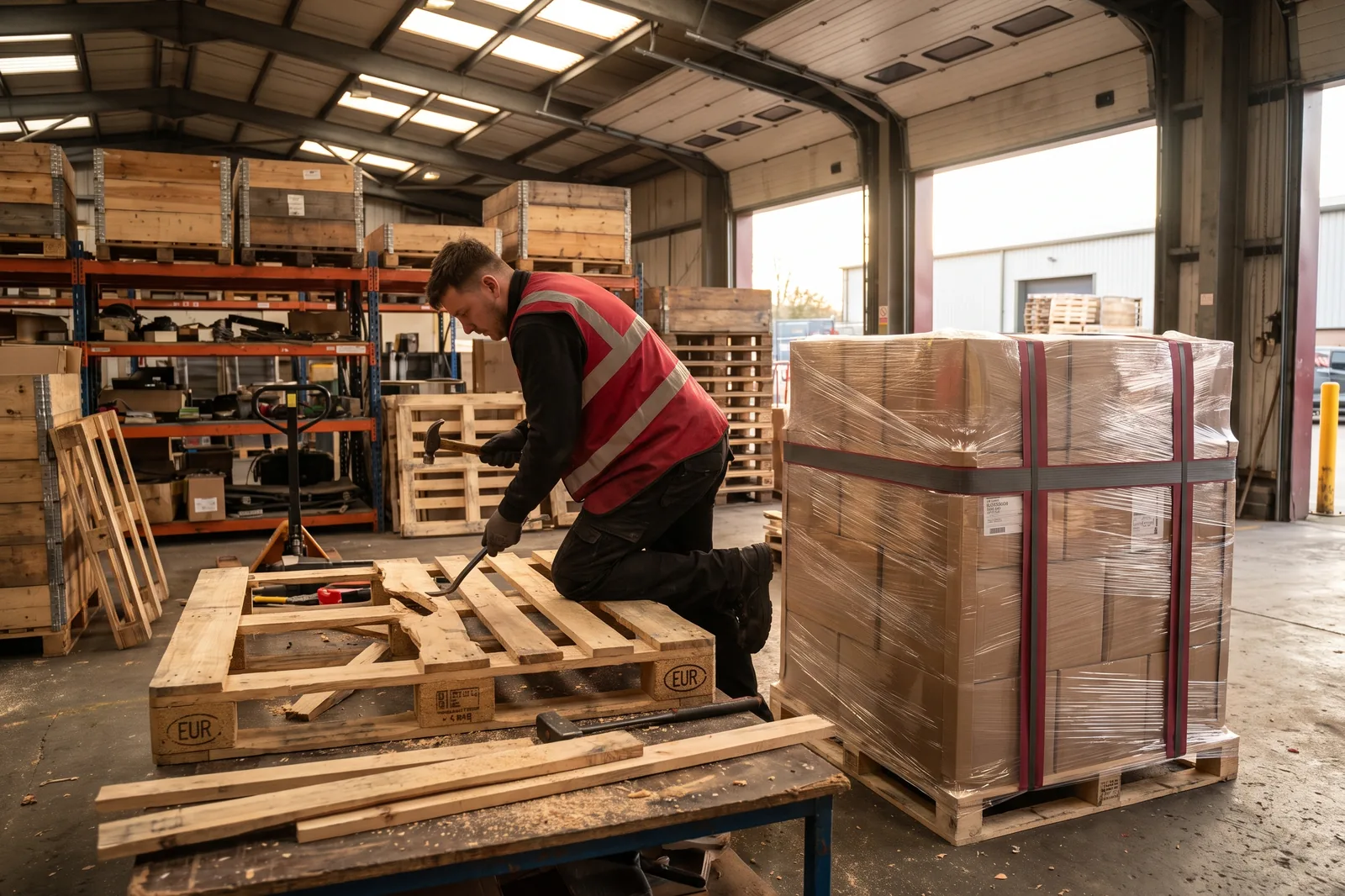
Damaged pallet repair means restoring a load to a state in which it will travel on safely: replacing cracked boards and bearers, or moving the goods onto a sound pallet, resetting the layers, re-wrapping and re-strapping. In our Milton Keynes warehouse we do it on site once the trailer arrives, so the UK consignee does not refuse a collapsed load.
The Polish-language version of this article is the reference one. This is an informational translation.
Where damaged pallets come from
A pallet rarely fails on its own. The usual culprits are overloading and poor weight distribution, a weak foundation of film and tape, hard braking on the crossing, high humidity weakening the carton and stacking heavy pallets on light ones. The result is always the same: a leaning column, a cracked load-bearing board, torn film and goods that start to slide. How to secure a load so this does not happen is covered in the article on pallets, packaging and load securing.
When a pallet is saved and when it is replaced
| Situation | What we do |
|---|---|
| A single cracked board, the rest of the structure sound | pallet repair, board replacement, re-wrapping |
| Pallet shifted, goods intact | re-palletise onto a sound pallet, reset the layers |
| Pallet wet, mouldy or crushed | replace the pallet, check the goods for damage |
| A standard pallet required (e.g. light wood, ISPM 15) | replace with a pallet matching the consignee or export requirement |
Straightening and repacking after a lean
The most common scenario is not a broken pallet but a leaning column: the goods slid, the film let go, but the cartons are whole. We then straighten the load, reset the layers, add layer pads and re-wrap. We describe the same set of steps in the article on re-palletising and straightening pallets after a lean. When a carton is breached we repack the contents, which we cover in the article on repacking in the UK warehouse.
Why we do it in the UK rather than send it back to Poland
Turning a collapsed trailer back to Poland loses two crossings, several days and the delivery window at the consignee. Saving the load on site in the United Kingdom is faster: the trailer reaches the warehouse, we straighten and rebuild the pallets, and the goods move on to the final consignee as a sound delivery. We describe this recovery model in the article on the UK warehouse and cargo recovery.
Wooden pallets and export: ISPM 15
When replacing pallets under a load that will move on beyond the United Kingdom, we watch the wood packaging. The international ISPM 15 standard requires wood packaging in international trade to be treated (fumigation or heat treatment) and marked. A pallet without a valid mark can be swapped before it becomes a problem at the border. We do not guess the destination country requirements, we check them for the specific route.
Documentation for the insurer
Pallet damage in transit is often a matter for the cargo insurer. So before the repair we photograph the state of the load, describe the extent of the damage and what was done. The consignee receives secured goods, and the sender a complete file for a possible claim. What an inspection and report in the warehouse look like is covered around the Milton Keynes warehouse.
Where do we do it?
We repair, straighten and rebuild pallets in our Milton Keynes warehouse between London and Birmingham, within our warehousing and cargo handling services. Thanks to the central location the trailer barely diverts, and the final consignee gets the delivery on time.
Step by step
- Arrival inspection. Checking the structural condition of the pallet and the stability of the load upon vehicle arrival.
- Method selection. Deciding whether to repair individual timber elements or transfer the goods onto a sound pallet.
- Structure preparation. Replacing broken boards and bearers or positioning a sound replacement unit.
- Layer re-stacking. Re-arranging cartons or items into even layers to recover proper load balance.
- Final securing. Tight wrapping with stretch film and strapping before releasing the cargo for delivery.
Definitions
- Damaged pallet repair: Restoring a load to a safe condition for further transport by replacing broken parts or transferring goods.
- Re-palletising: Moving goods from a damaged or unsuitable pallet onto a sound unit with full re-stacking and re-securing.
- Pallet rebuilding: Repairing the timber structure itself by replacing broken boards, bearers, or blocks.
- Load securing: Re-wrapping with film and re-strapping goods on the pallet to prevent shifting during transit.
When does this rule not apply?
This procedure does not apply if the structural damage has caused severe destruction to the cargo itself or when mandatory recipient seals have been broken.
The OTSL role
At our Milton Keynes warehouse, we handle shifted loads and restore pallets so that consignees do not reject deliveries. We coordinate groupage (LTL) shipments and offer support detailed in A UK warehouse with re-packing and recovery of damaged loads.
Sources
- IPPC: the ISPM 15 standard for wood packaging in international trade
- GOV.UK: wood packaging for import and export (ISPM 15)
Have a trailer with shifted pallets on its way to the UK or already on site? Describe the situation in the contact form and we will take the load into the warehouse, rebuild the pallets and send the goods on to the consignee.