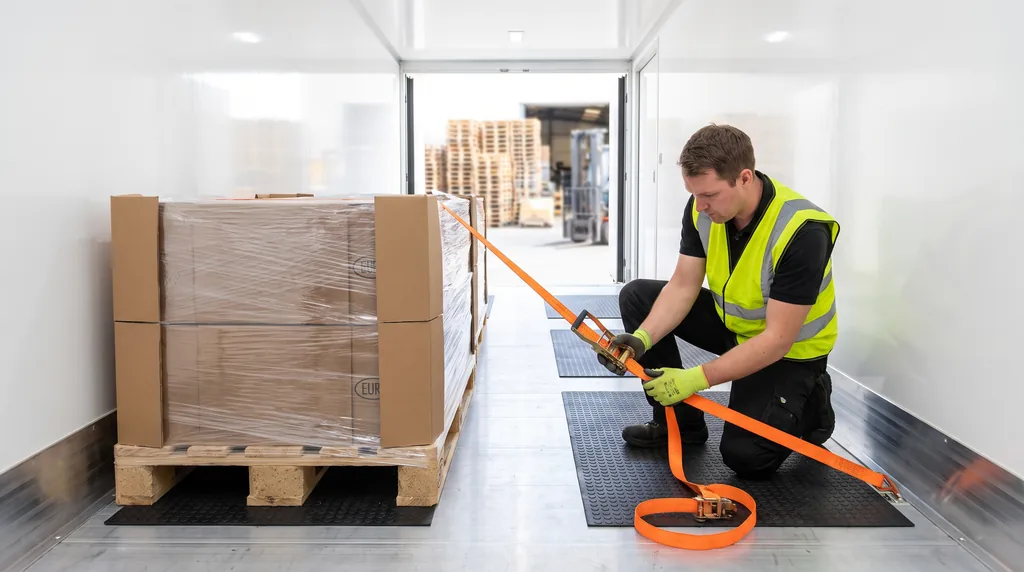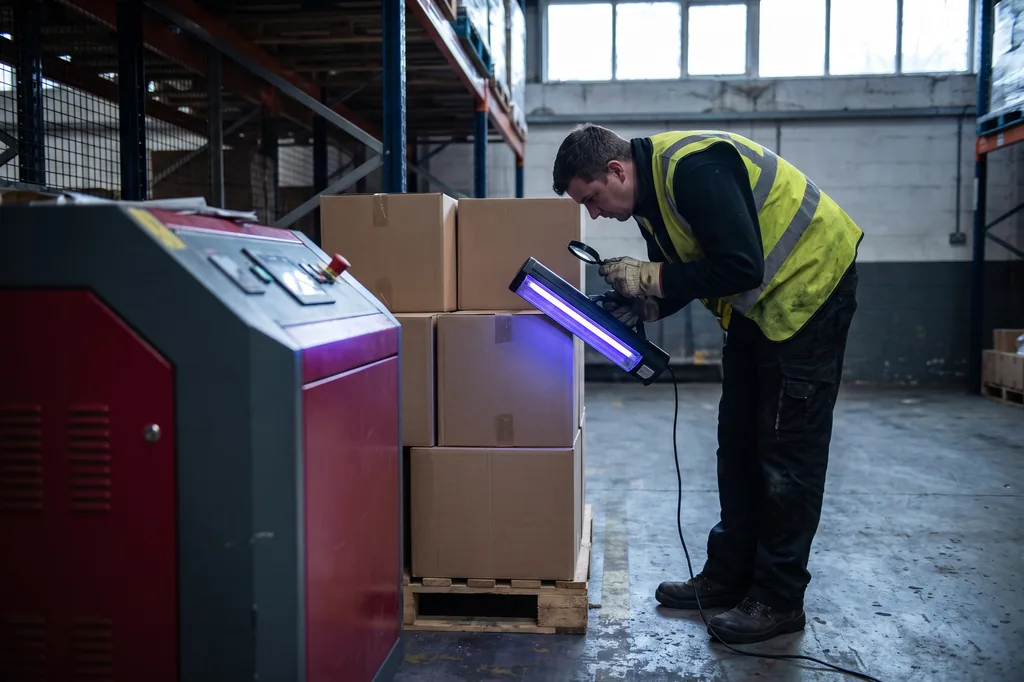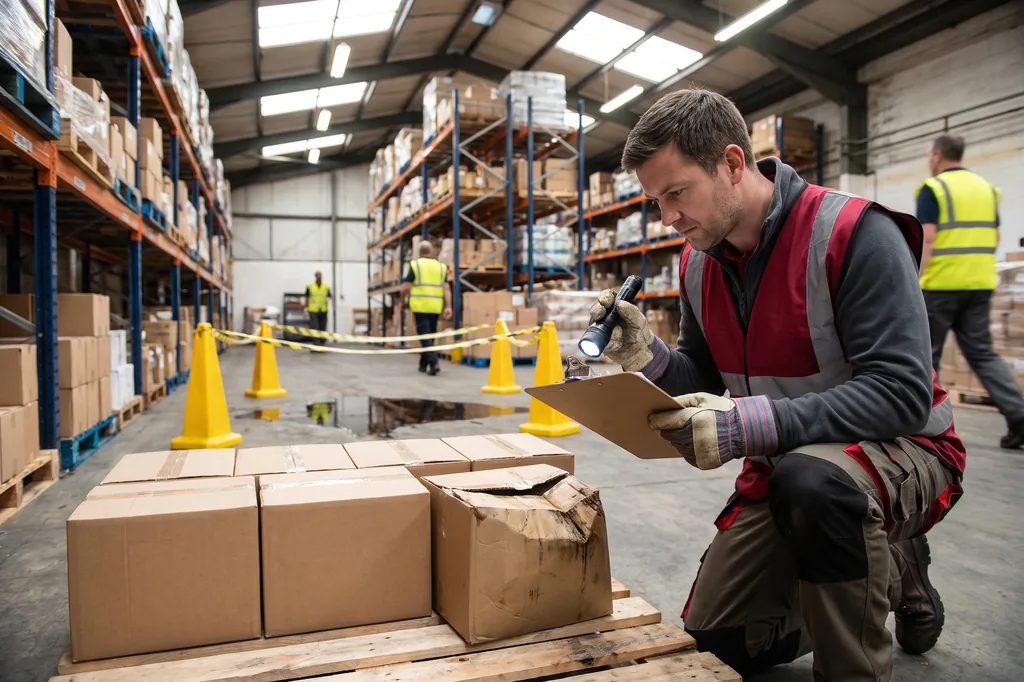
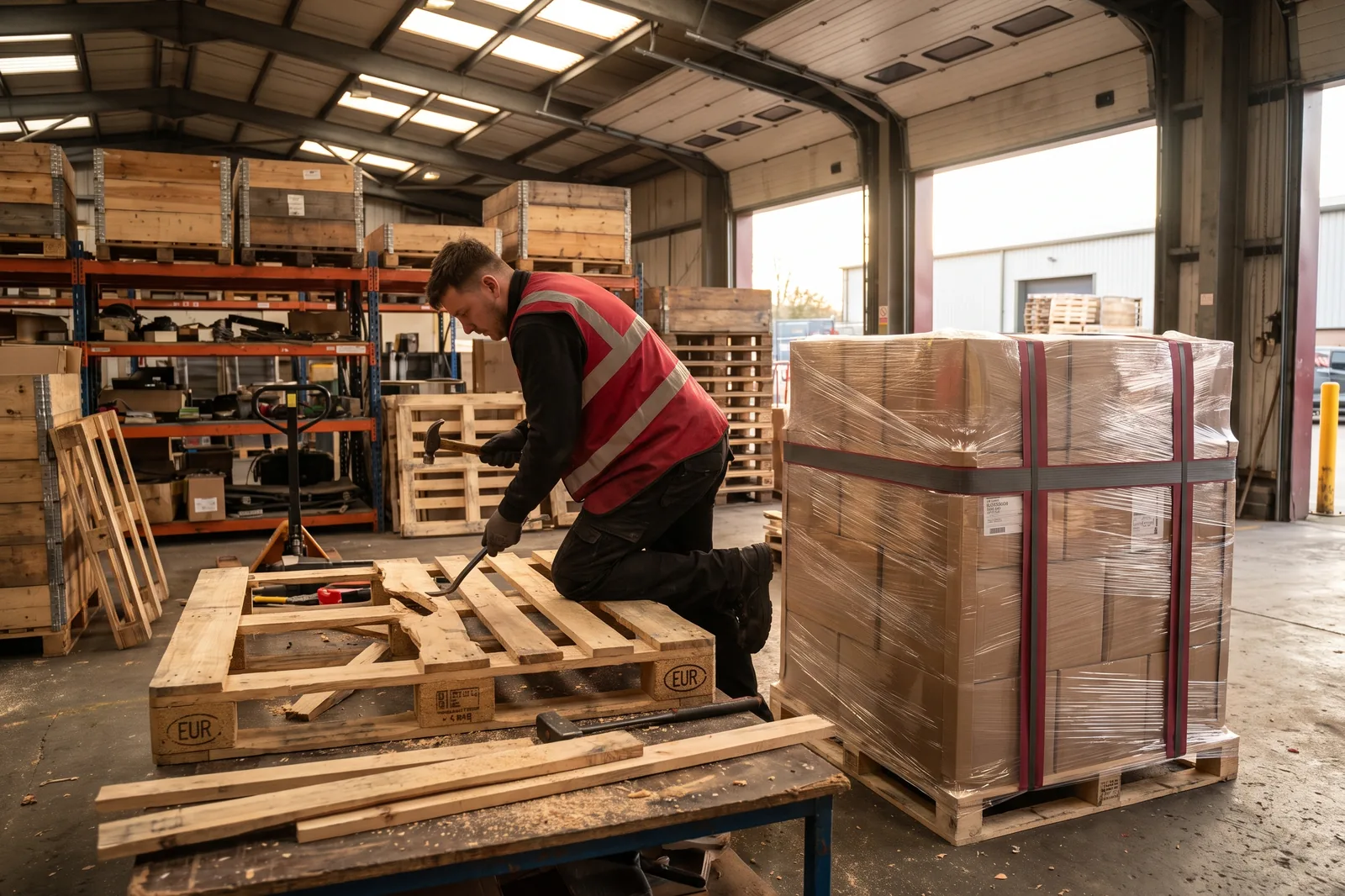
A curtain-sider with 26 pallets of sugar syrup in glass bottles reached a food distribution centre with six pallets leaning and stretch wrap partly torn after sudden braking. Syrup in glass is an awkward combination: the bottles are heavy and brittle, and when one breaks the leak spreads slowly, gluing cartons together and hiding cracks. We rebuilt 17 pallets fully and 6 partially, and 23 pallets returned to the delivery.
Situation
Glass bottles filled with dense syrup make heavy cartons on tall stacks, and the load answers hard braking the way heavy glass always does: pallets slid forward, stacks tipped into their neighbours, wrap tore. The receiving warehouse stopped the unload because of the breakage risk. With syrup there is a second concern that dry loads do not have. A cracked bottle does not announce itself, it seeps. By the time a leak is visible on the outside of a carton, the product has usually been travelling through the stack for a while.
What we did
The inspection covered stack stability, carton positions, wrap condition and any trace of leakage: staining, stickiness, the smell of exposed syrup. Then the rebuild, deliberately slow where cartons resisted separation, because a carton that sticks to its neighbour is evidence in itself. Cartons were re-laid into correct patterns, new bases went under rebuilt stacks and fresh wrap secured them.
Suspect cartons were opened and checked rather than passed on looks, and anything with cracked or leaking bottles was pulled. The trailer was reloaded with restored spacing and documented throughout with photographs and pallet reports.
Outcome
23 of 26 pallets were recovered and the shipment continued through the supply chain. Losses stayed limited to cartons with genuine breakage, each one recorded for the claim file.
What this means for shippers
Liquid in glass punishes shortcuts. A rework that only fixes geometry sends hidden leaks onward, and they surface at the worst point, on a retail shelf. The rebuild-and-screen approach is described in pallet re-stow and load rearrangement. Glass-and-liquid load gone sideways? Use the contact form, the site works 24/7.