 AI image
Germany is the largest trade fair market in Europe and a natural destination for exhibitors. Transporting a stand there requires no customs clearance, but it is governed by strict unloading slots, technical hall regulations and the ban on truck traffic on Sundays and public holidays. Whoever leaves this out of the plan finishes the build during the night before opening.
Why does German trade fairs play by their own rule?
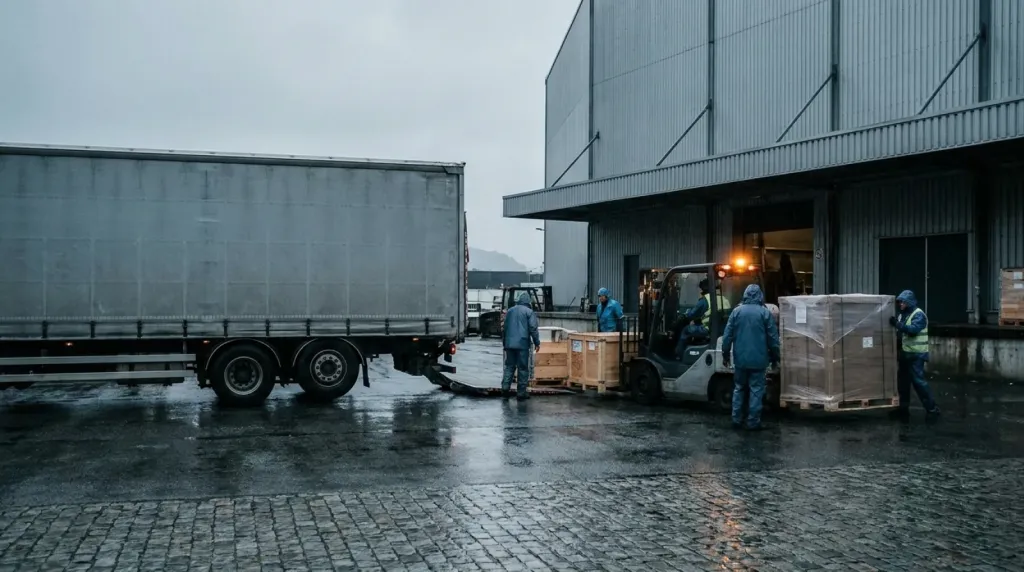
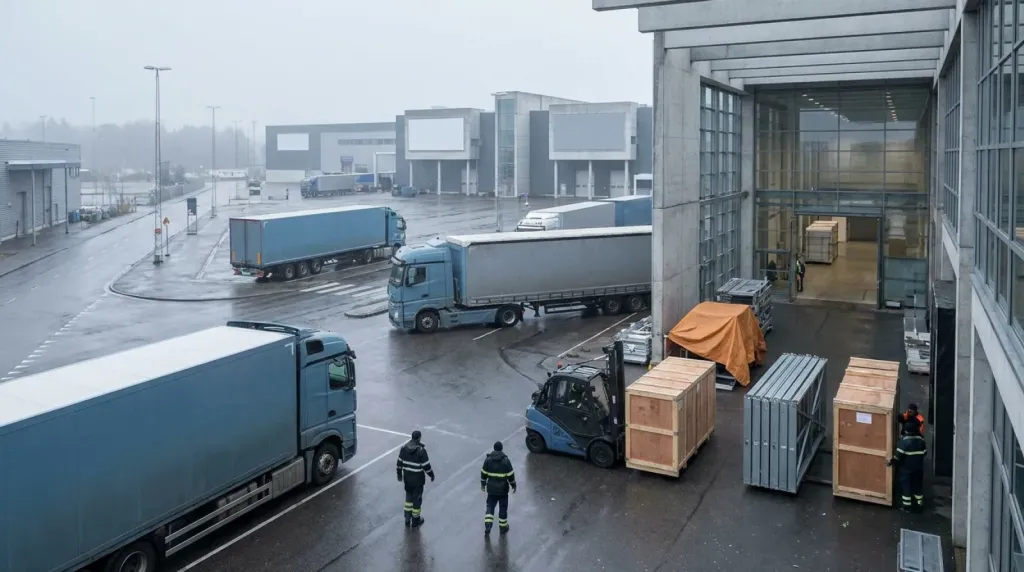
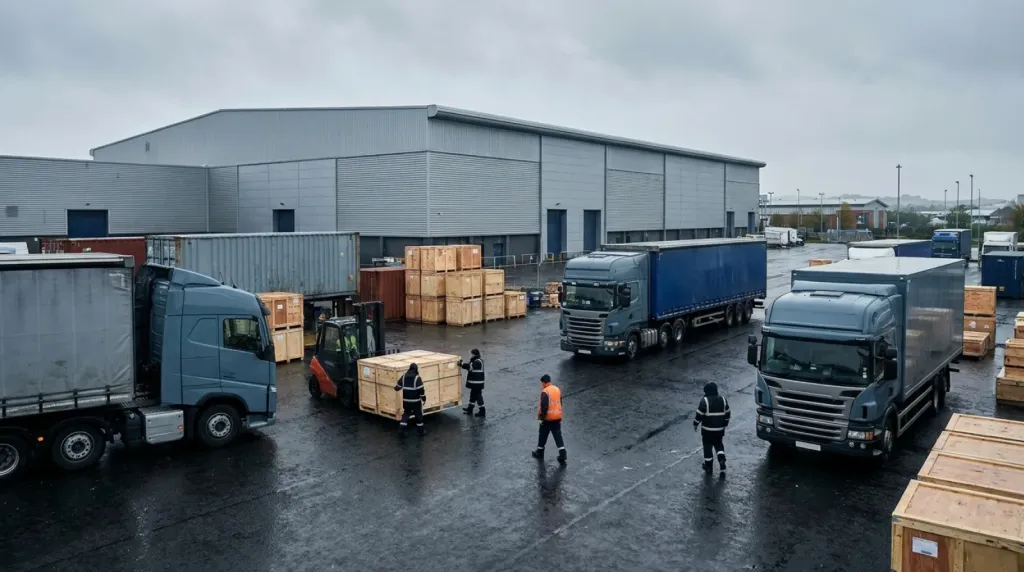
German exhibition centres are among the largest in Europe and during build-up they work like factories: hundreds of exhibitors, thousands of deliveries and a narrow window in which everything must reach the halls. To keep that traffic moving, the venues enforce their procedures firmly. A truck without notification does not enter the grounds, and unloading zones, access roads and the order of arrivals are laid out in advance. For an exhibitor this means one thing: transport to a fair in Germany is planned around the venue deadlines, not around the stand production calendar.
Unloading slots and advance notification
Build-up slots go quickly, especially at large events where several halls compete for the ramps at once. A fair forwarder books the window in advance, watches for the confirmation and makes sure the truck stands at the hall when the assembly crew is waiting, not when the build is already running without the goods.
The technical hall regulations are read before loading
Every large venue has its own technical regulations: which way trucks enter, which vehicles may work inside the hall, where empty packaging goes after unloading, how forklift traffic is organised and which passes the driver needs. These are not formalities to skim on the way. The regulations decide whether the stand has to be transferred to a smaller vehicle, whether the carrier takes the empty crates away or the venue stores them, and who lifts the heavy elements. A fair forwarder reads these documents before loading and sets the transport up to match the requirements of the specific hall.
Sundays and public holidays: the driving ban belongs in the plan
In Germany trucks are banned from driving on Sundays and public holidays. For a fair delivery this is not a curiosity but part of the calendar: build-up often starts at the beginning of the week, so a truck that leaves Poland too late spends Sunday in a car park instead of at the hall. On top of that, public holidays differ between the federal states, so a route across Germany is planned with the calendar at hand. We build this margin into the schedule from the start, so the ban does not eat the assembly window.
No customs, but an ATA (Admission Temporaire) Carnet is sometimes needed
Germany and Poland are both in the Union, so goods travel to the fair without any clearance, like every intra-EU delivery. The exception appears when the fair in Germany is only a stage of a longer route: the same exposition travels on to the United Kingdom or Switzerland. Then it is worth setting the temporary export outside the Union up on an ATA Carnet from the start, so it covers the whole exhibition loop instead of improvising customs halfway down the road.
A warehouse buffer and the way back
The unloading slot and the day the stand is ready rarely fall perfectly together. A warehouse buffer patches that gap: the goods wait ready on the Polish side of the border and set off for the hall exactly for the assigned window. Once the event closes, the second half of the work begins, the dismantling and the return of the exposition, which we describe in the text on post-show logistics. The whole process, from the first quotation to the settled return, is covered in the guide trade fair stand logistics from A to Z, and what mistakes in that process really cost in the article bad fair logistics costs more than transport. Exhibiting across the Channel as well? See our text on transport to fairs in the UK.
Planning a stand at a fair in Germany? Describe the date and the scope in the contact form and we will set the slots, the route and the buffer to the event calendar.
Market scale: according to AUMA, the association of the German trade fair industry, Germany hosted 158 national and international trade fairs in 2025, with 150,260 exhibitors, around 66% of them from abroad (source: AUMA).
Step by step
- Check venue schedules. Verify the exact assembly dates and technical rules issued by the fair organiser.
- Book an unloading slot. Register the vehicle in the venue system to obtain entry permission.
- Prepare the booth materials. Pack and secure stand components to ensure quick offloading upon arrival.
- Plan the transit. Schedule the transport route around German Sunday and holiday driving bans.
- Unload at the hall. Report to the fair check-in point precisely within the assigned time window.
Definitions
- Unloading slot: A fixed time window assigned by the trade fair organiser for vehicle entry and unloading at the venue.
- Time slot notification: The advance registration of a truck in the exhibition system to secure an entry permit.
- Technical hall regulations: Rules defining floor load capacities and safety standards during stand assembly.
- Sunday truck ban: Traffic restrictions for heavy goods vehicles enforced across Germany on Sundays and public holidays.
The OTSL role
We coordinate trade fair logistics while strictly adhering to venue booking slots and schedules. By using direct road transport (FTL), we help prevent delays and unbudgeted expenses, keeping in mind that poor exhibition logistics costs more than the transport itself. See also: Transport for stand-build crews at trade fairs: delivery so the crew does not wait and Trade fair transport to Finland: Helsinki and Messukeskus and Trade Fair Logistics at EXPO XXI Warsaw: Transport Guide. See also: Foreign Exhibitors at Kielce Fairs: Customs and Logistics and Empty Case Storage at Trade Fairs: Where Crates Go After Stand Assembly.