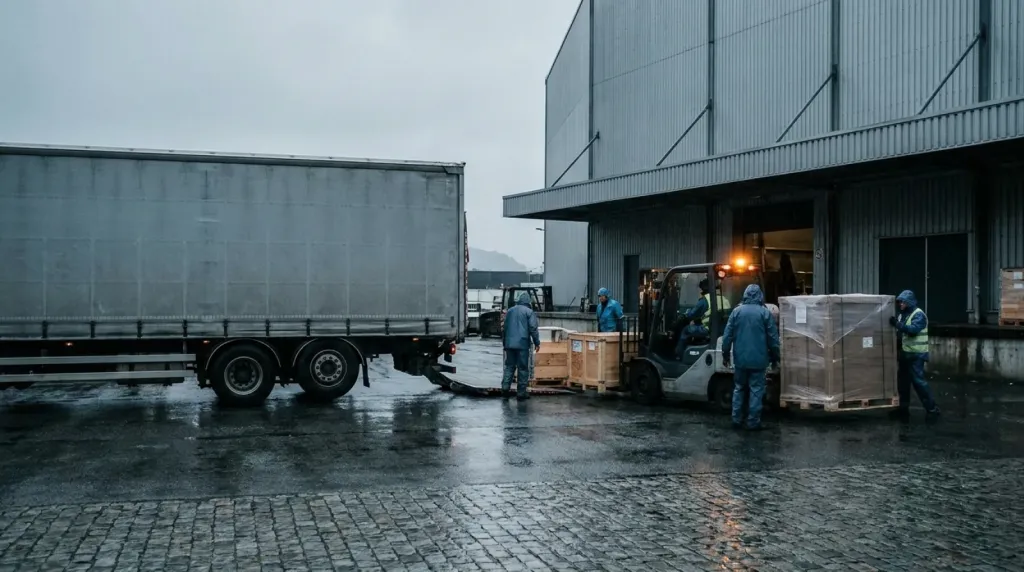
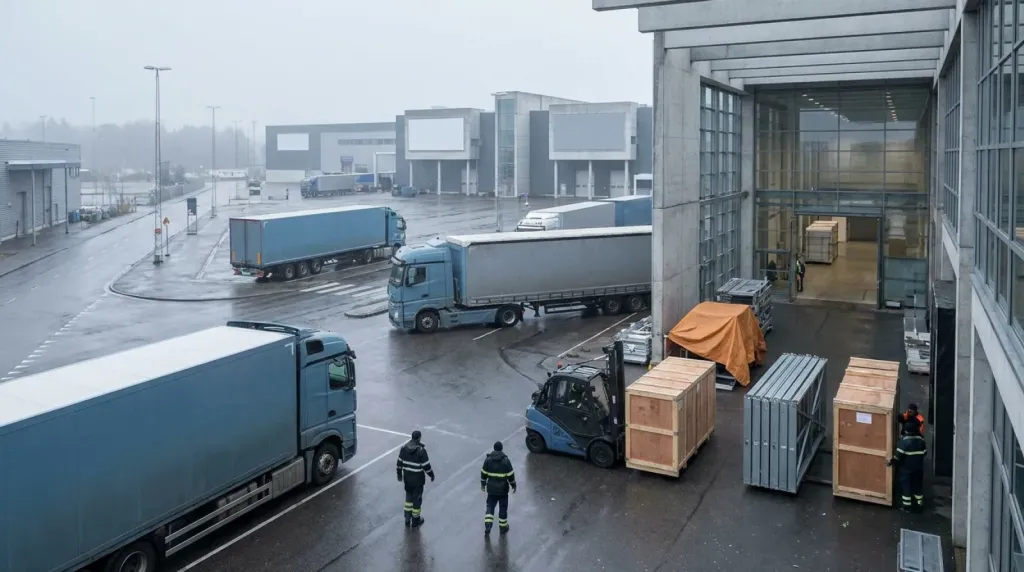
 AI image
We arrange trade fair transport to Austria: delivering stand builds and exhibits with booking-in (an entry slot agreed in advance) for build-up, and collection after breakdown. Austria is part of the European Union and its customs union, so EU goods travel without customs clearance. The short transit makes it easy to hit a narrow build-up slot, and Austria is also a stop on the way to fairs in Italy.
The Polish-language version of this article is the reference one. This is an informational translation.
Main exhibition venues in Austria
- Messe Wien (Vienna), the country's largest exhibition centre.
- Messe Graz (Graz), Austria's second city, in the south.
- Messezentrum Salzburg (Salzburg), a fair complex close to the German border.
- Design Center Linz (Linz), Upper Austria, trade events and congresses.
- Messe Dornbirn (Dornbirn), Vorarlberg, the western edge of the country near the Swiss border.
How do we run fair transport to Austria?
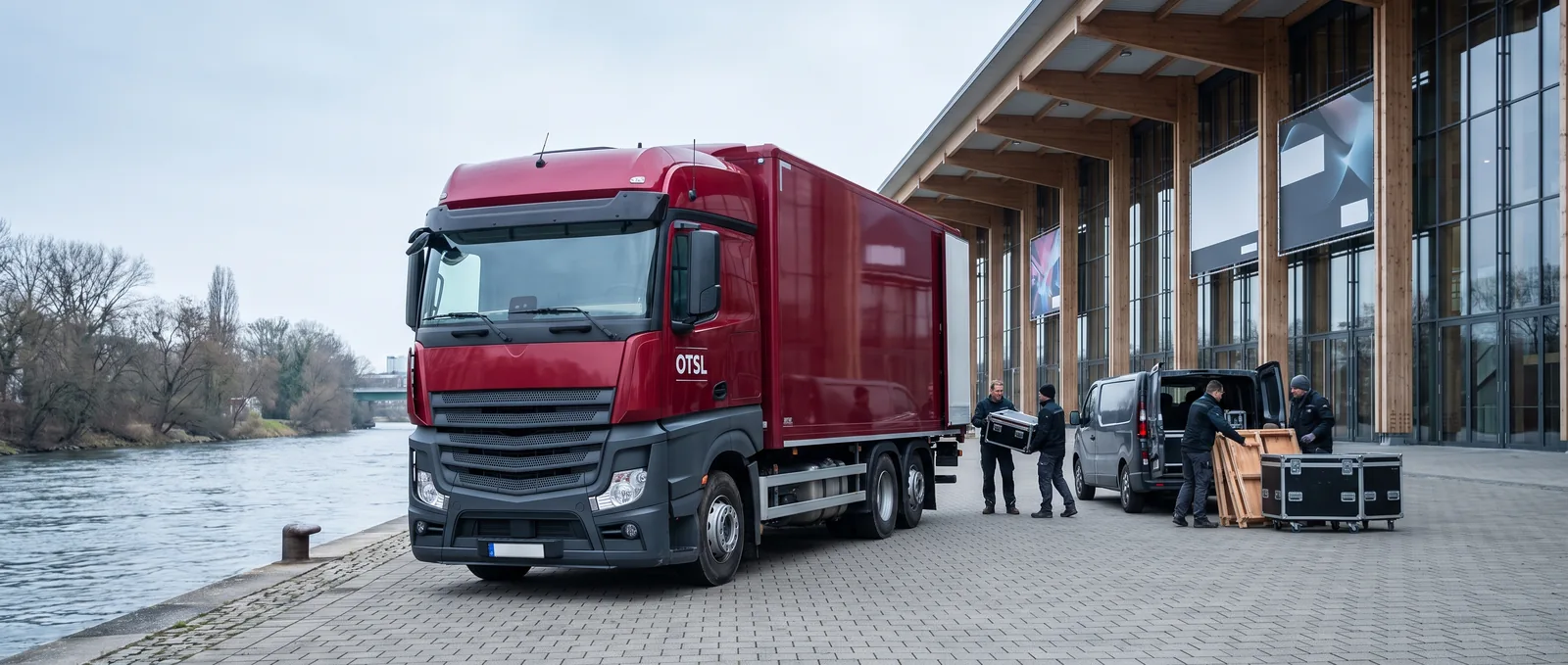
We deliver the stand and exhibits for the agreed build-up slot, then collect them after the event. Because EU goods pass no customs clearance, the planning weight shifts to logistics: dates, booking-in and entry slots, load dimensions, ADR (the Accord governing international carriage of dangerous goods by road) where applicable, and on-time build-up.
We plan the route to Austria well ahead, because the journey requires a vignette and, for trucks, the Austrian electronic toll device GO-Box. In Tyrol and on the Alpine passes there can be sectoral restrictions and night driving bans for heavy transport, so we choose the corridor and driving hours so the load reaches the hall gate within its build-up slot rather than stalling before a regional restriction. We cover the Austrian direction in more detail on the transport to Austria page, and the full offer on the exhibition logistics page.
Empty packaging and the return after breakdown
Once the exhibits are unloaded, empty crates, cages and transport packaging must not block the stand or the hall's traffic routes. We collect them and hold them in an empty-packaging store next to the fairground, then bring them back for breakdown so the stand packs down to the same standard it arrived in. After breakdown we arrange the return of the build and exhibits to the client's base or on to the next event.
Assembly crews and the schedule
We tie transport to the people on the ground. We bring the vehicle to the build-up slot agreed with the organiser and, where needed, send assembly crews who put the stand up on site and take it down once the fair closes. We build the schedule backwards from the opening date and the breakdown hour rather than from the departure from Poland, so entry slots, unloading, assembly and the return form one coherent timeline.
Exhibiting in Austria? Describe the stand, the venue and the dates in the contact form, and we will set transport around build-up and breakdown, empty-packaging handling included.
Step by step
- Slot booking. You arrange a precise booking-in time slot with the venue organisers.
- Cargo preparation. You pack the stand build components and exhibits securely for transit.
- Dispatch. You load the goods onto the vehicle to begin transit towards Austria.
- On-site delivery. The driver arrives at the exhibition grounds strictly within the allocated window.
- Return transport. You arrange post-event collection and haulage back once breakdown completes.
Definitions
- Booking-in: An agreed entry slot for a vehicle to enter the fairground for unloading or loading.
- GO-Box: The Austrian electronic toll collection device used for heavy goods vehicles on motorways.
- Messe Wien: The largest exhibition and trade fair venue in Austria, situated in Vienna.
- Messe Graz: The main exhibition centre serving the southern region of Austria.
When does this rule not apply?
The duty-free movement of goods does not apply if your shipment originates outside the European Union, such as from the UK or Switzerland, requiring standard customs formalities.
The OTSL role
When you prepare for an event in Austria, OTSL arranges reliable road transport aligned with strict venue arrival windows. Proper coordination helps you prevent financial losses because poor exhibition logistics costs more than the transport itself.