 AI image
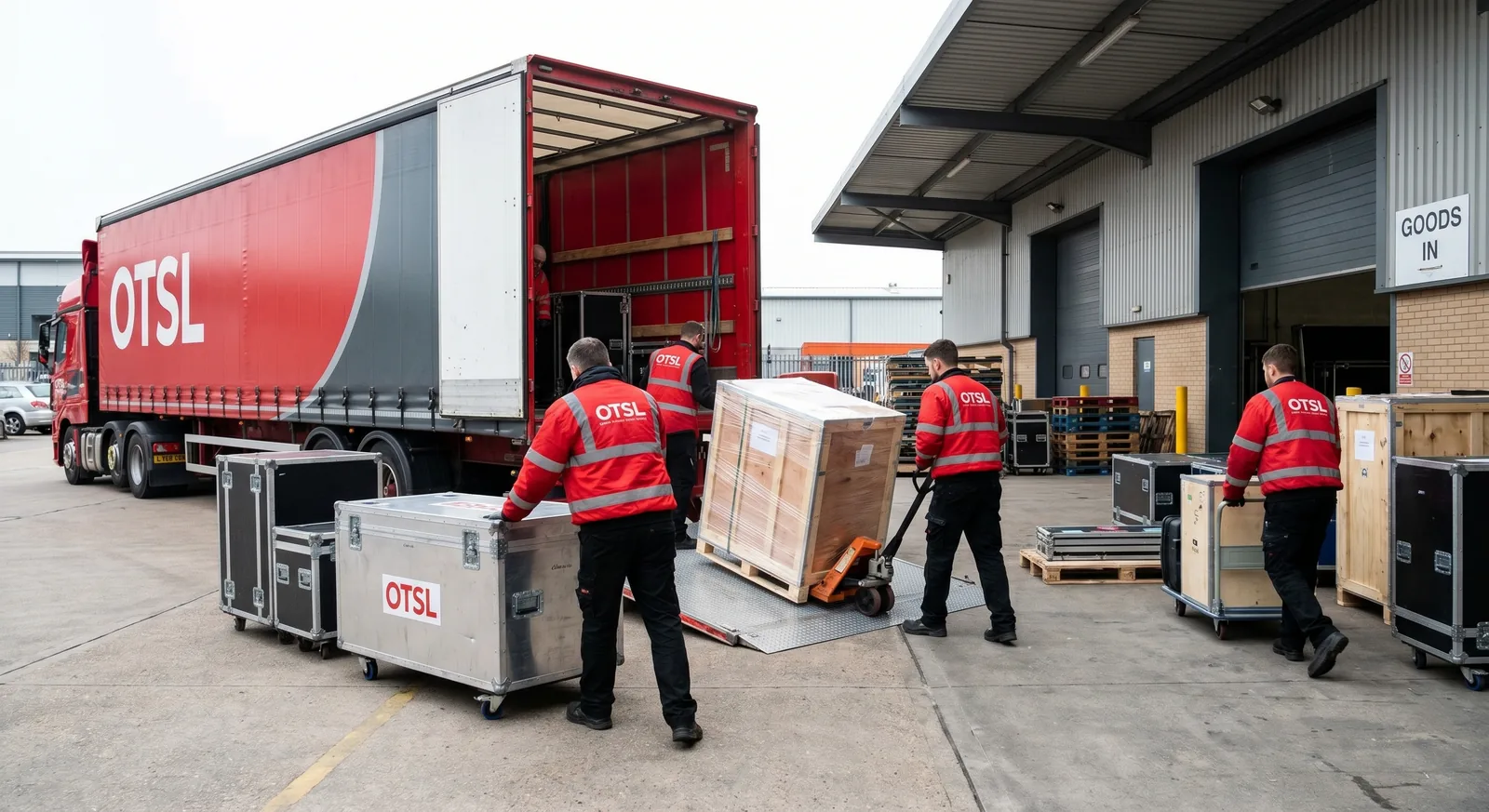
Full trade-fair stand logistics covers the whole chain: collecting the stand parts and goods, transport, customs and an ATA carnet if needed, managing slots and booking, delivery to the venue, and after the event the collection and return. At OTSL we take responsibility for the whole, not just the drive.
Stages to think about
- Collecting the stand build and goods from the builder or warehouse.
- Transport with a time buffer for venue slots.
- Customs and an ATA carnet when the event is outside the EU.
- Booking, delivery to the hall and coordination with the build.
- Post-show logistics: collection and return.
Where mistakes happen most
The joints between stages fail most often: transport planned without a buffer for slots, no ATA carnet where it was needed, or no plan for the return. That is why we look at the process as a whole and settle these points early, before they become a problem on site.
How do we work?
One responsible contact runs the whole thing, available 24/7, knowing the schedule and venue rules. We have our own customs agencies and ATA carnets, plus warehouse space for buffering. We have experience delivering to large venues, including a delivery to ExCeL London.
See exhibition logistics, ATA carnets and why poor fair logistics costs more.
How should you calculate delivery and slot times to avoid venue delays?
Freight forwarding for trade fairs requires precise mapping of time slots, because entering the marshalling yard without a confirmed slot leads to automatic redirection to the holding car park. At major exhibition venues, the unloading slot for a goods vehicle exceeding 3.5 tonnes is typically restricted to exactly 60 minutes. If your driver arrives even 15 minutes late, the reservation is forfeited, and the next available slot may not be allocated for another 6 hours. You must structure the schedule taking route geography into account: when transporting goods from Poland to the United Kingdom, add at least 12 hours of buffer for customs clearances and border controls alone. When moving goods under an ATA Carnet, the physical inspection of the cargo by customs officers takes on average between 2 and 4 hours, which directly delays the vehicle's arrival time at the hall.
Dimensions and weights of individual structural components are equally critical. Cargo items longer than 3 metres or weighing over 500 kilograms require advance notification and separate booking of heavy lifting equipment on site. If you plan a consignment of 10 pallets with a total weight of 2500 kilograms, forklift unloading time extends to roughly 45 minutes, provided the access gangways are not obstructed by other exhibitors. More than 80 percent of on-site delays result from overlapping schedules between stand construction crews and merchandise deliveries.
Key operational dependencies to consider include:
- The driver must carry a printed paper copy of the vehicle pass, as QR code scanning from mobile screens frequently fails at the marshalling gate.
- Vehicle slot bookings must specify the exact hall number and stand reference; missing details in the venue system extend security verification by at least 30 minutes.
- Empty crates and packing cases must be tagged with storage labels within 2 hours of unpacking, otherwise hall management classifies them as waste and disposes of them at your expense.
These strict time buffers and slot rules do not apply to small courier consignments under 30 kilograms delivered to the central venue drop-off point, nor to portable display stands carried manually in luggage by your own team members.
Step by step
- Collection of stand elements. Goods and stand components are collected from the builder or warehouse in advance.
- Transport planning. The journey is scheduled with a time buffer to accommodate potential delays and venue slots.
- Customs and ATA carnet. Formalities are completed whenever the exhibition takes place outside the European Union.
- Delivery and hall access. Freight arrives at the venue within the booked slot to coordinate with the build team.
- Post-show logistics. Stand components and remaining goods are collected immediately after the event for return transit.
Definitions
- ATA Carnet (Admission Temporaire/Temporary Admission): An international temporary admission document allowing duty-free export and import of exhibition goods.
- Slot booking: A reserved time window for a vehicle to enter the exhibition venue for unloading or loading.
- Post-show logistics: The process of collecting stand elements and goods after the event and arranging their return transport.
- Customs clearance: Formalities required when transporting trade fair stands and materials outside the European Union.
When does this rule not apply?
The requirement for temporary customs clearance and an ATA carnet does not apply to shipments moved strictly within the European Union.
The OTSL role
At OTSL, we manage exhibition transport by providing dependable road transport and overseeing venue arrival schedules. Learn more about event logistics in our guide on ExCeL London trade fair logistics. See also: Who unloads your stand at a trade show: you, your forwarder or the official one and Post-show logistics: dismantling, collection and getting the stand back intact.