 AI image
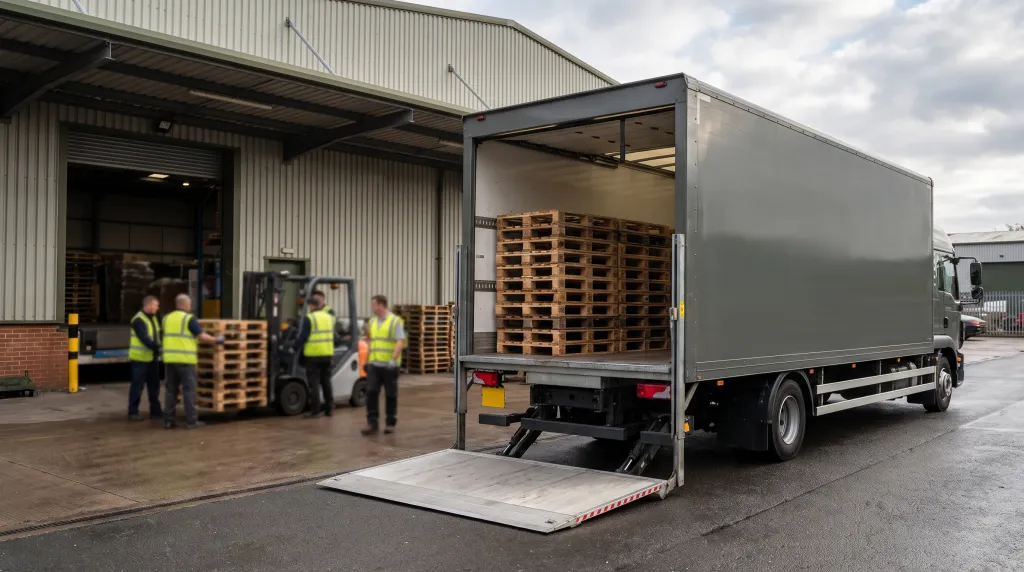
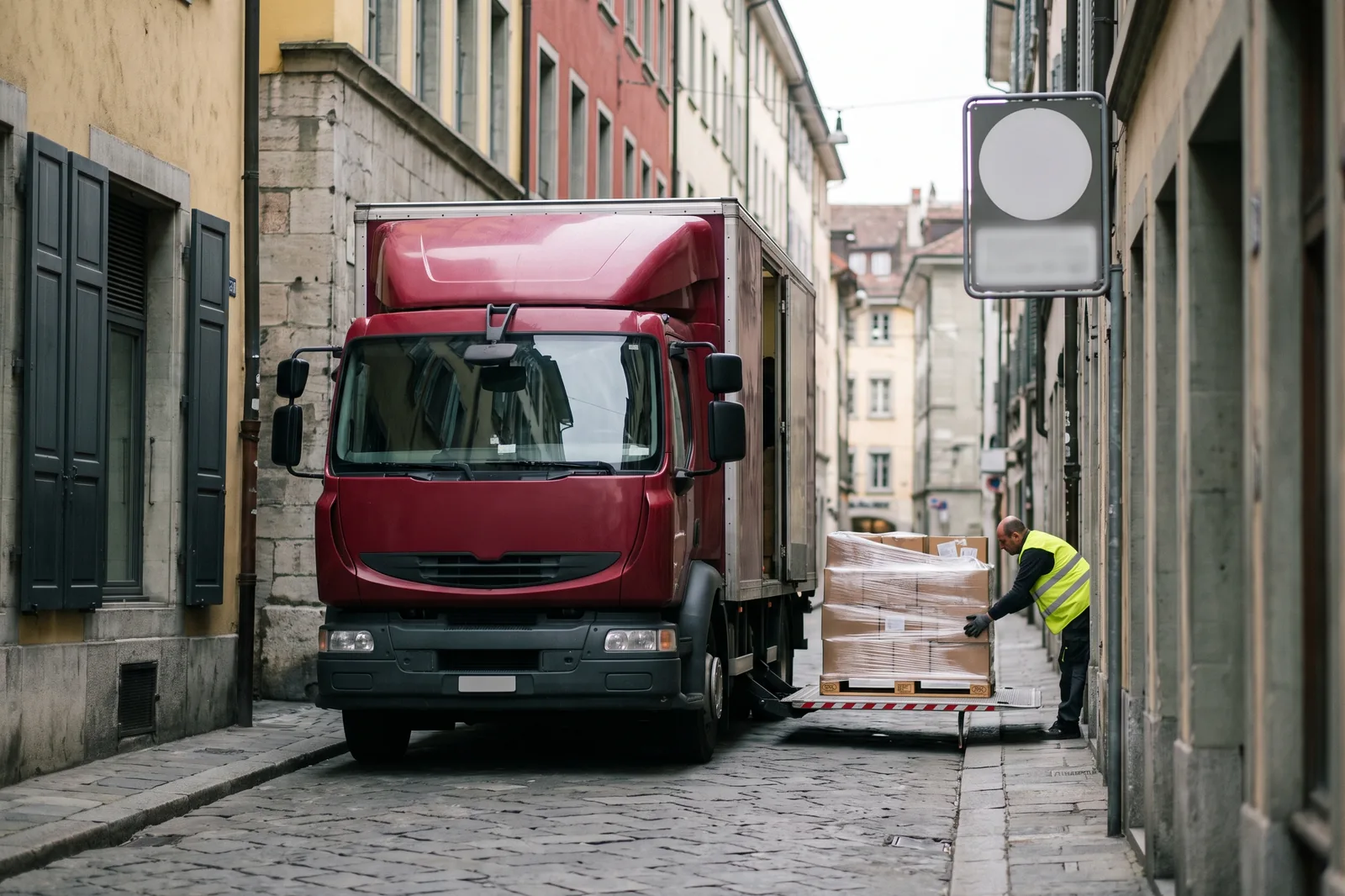
Delivery to a hard-to-reach place is unloading where there is no dock, the access is narrow or restrictions apply: low emission zones, entry charges, time windows and weight limits. We plan it in advance: we choose a vehicle with a tail lift or crane, check the zones and charges, and set the unloading window and booking-in. We take the addresses others do not want.
The Polish-language version of this article is the reference one. This is an informational translation.
What makes an address difficult
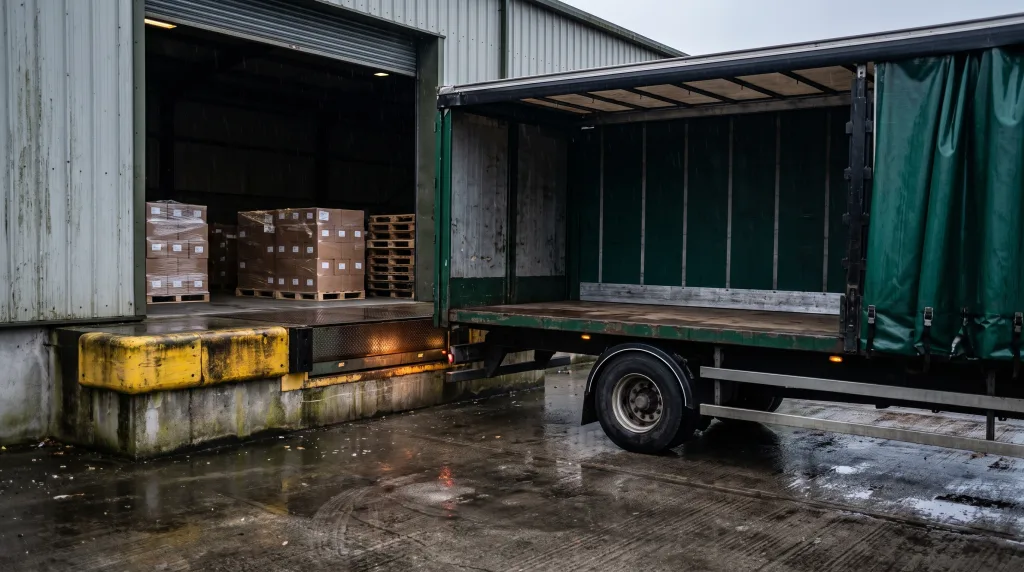
- No dock: the consignee has no loading dock, so the unloading must come down to street level.
- A narrow city centre: limited access, no room to manoeuvre a large trailer.
- Low emission zones and charges: in London the ULEZ and the congestion charge, plus local restrictions.
- Time windows and booking-in: unloading only in set hours, after prior notice.
- Weight and height limits: streets and bridges with limits a heavy combination cannot enter.
Unloading without a dock: tail lift or crane
When there is no dock, we choose a vehicle with a tail lift that lowers the pallet to street level, or with a crane when the load is heavy or has to be lifted over an obstacle. We describe the same equipment and planning around construction-site deliveries in the article on crane unloading on a building site and on the construction site deliveries service page. The key is always the same: agree the unloading method before the truck sets off, not at the address.
London: ULEZ, congestion charge and zones
Entering central London is not only about traffic. The ULEZ (Ultra Low Emission Zone) applies, where vehicles that do not meet the emission standards pay a daily charge, and for heavier vehicles a separate LEZ (Low Emission Zone) operates. On top of that there is the congestion charge for entering the congestion zone in set hours. The rates and zone boundaries are published by Transport for London (tfl.gov.uk), and it is those we check for the specific route rather than quoting amounts from memory. Choosing a compliant vehicle can decide whether the delivery is worth doing at all.
Time windows and booking-in
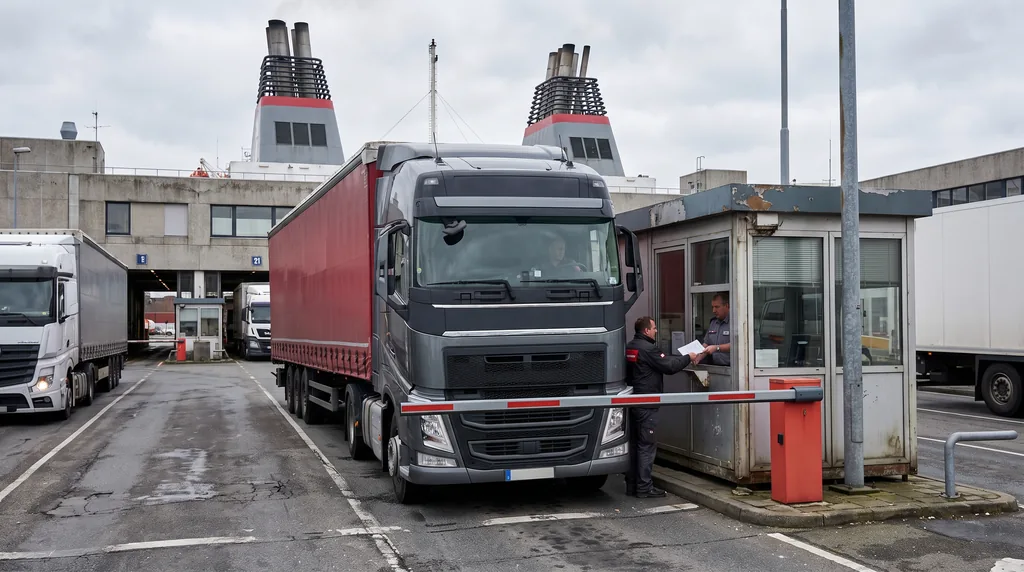
Many shopping centres, city-centre shops and premises with delivery restrictions accept goods only in set time windows and after prior booking-in. Being late or not booking in means being turned away at the gate and another day of delay. So we set the unloading window and book the delivery in advance, and route the driver to a specific slot, not "whenever they arrive".
What do we settle before departure?
| Element | What we check |
|---|---|
| Unloading method | whether there is a dock, whether a tail lift or crane is needed, who operates the equipment |
| Access and vehicle | street width, room to manoeuvre, matching the vehicle to the address |
| Zones and charges | ULEZ, LEZ, congestion charge, local entry restrictions |
| Window and booking-in | unloading hours, the requirement of prior notice |
| Limits | weight, height, restrictions on bridges and streets |
Where and how we do it
We handle difficult deliveries to the United Kingdom on the United Kingdom route, matching the vehicle and equipment to the address rather than the address to the vehicle. For staged deliveries, or when the consignee cannot take everything at once, we use the Milton Keynes warehouse as a buffer point on the island.
Step by step
- Address verification. You check access conditions, dock availability, weight limits, and entry restrictions at the unloading site.
- Vehicle selection. You choose a suitable vehicle fitted with a tail lift or crane that meets ULEZ requirements.
- Time window booking. You agree on the exact unloading time with the consignee and arrange advance booking-in.
- Charges and permits. You register the vehicle in low emission zone systems and settle the required entry charges.
- Delivery and unloading. The driver arrives at the specified time and lowers the goods directly to street level.
Definitions
- ULEZ (Ultra Low Emission Zone): An emission zone in London where vehicles not meeting specific emission standards pay a daily charge to enter.
- LEZ (Low Emission Zone): An emission control area covering Greater London designed for heavier commercial vehicles.
- HDS (Hydraulic truck-mounted crane): A crane installed on a truck that allows self-unloading of cargo without a loading dock.
- Tail lift: A mechanical platform fitted to the back of a vehicle used to lower cargo from the bed to street level.
When does this rule not apply?
This rule does not apply when the consignee has their own forklift or unloading equipment on site and the access route is free of low emission zone charges and weight limits.
The OTSL role
At OTSL, we arrange transport to restricted access zones by selecting vehicles that meet low emission standards. We use Express vans for urban deliveries and plan unloading with appropriate equipment. Learn more in our article Construction site delivery with crane unloading: how to plan it.
Sources
- Transport for London: the ULEZ zone, boundaries and daily charges
- Transport for London: the congestion charge
- Transport for London: the LEZ zone for heavier vehicles
Have a delivery to a difficult address: no dock, in a city centre or in the ULEZ zone? Describe the place in the contact form and we will match the vehicle and equipment, check the zones and charges and set the unloading window.