 AI image
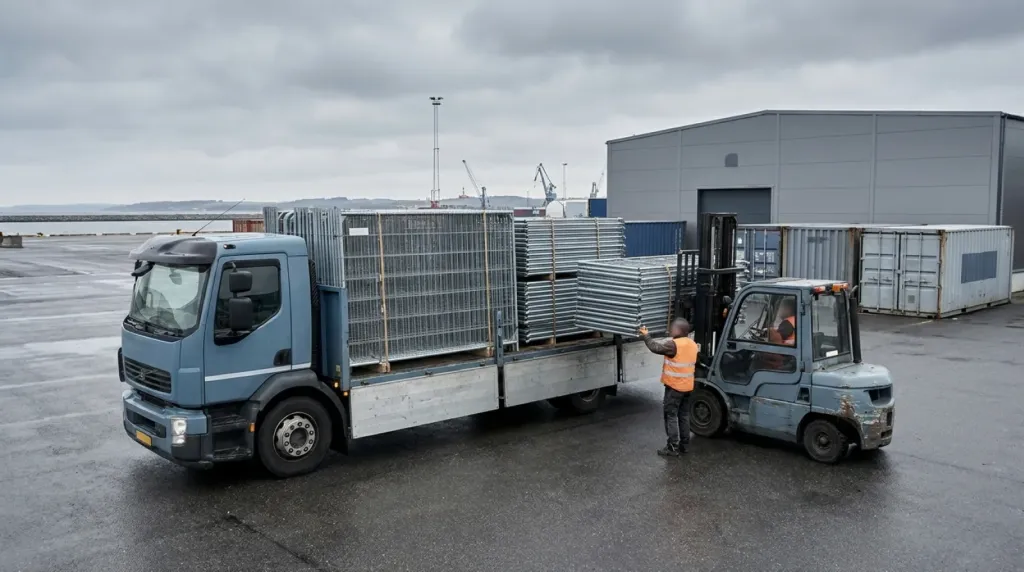
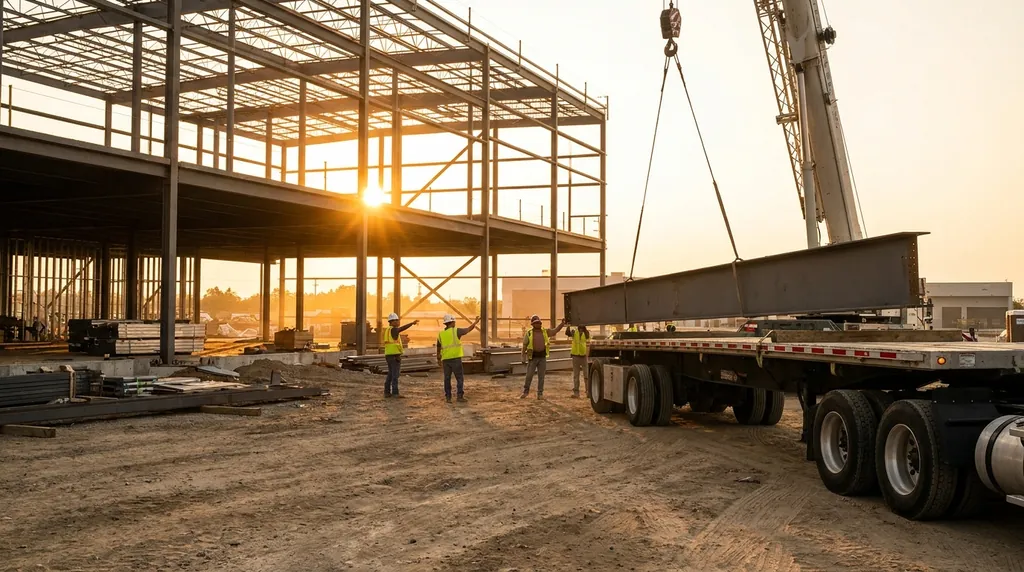
Construction site deliveries at OTSL mean transporting building materials straight to site, in step with the crews schedule. We manage notifications and time windows, organise unloading where there is no ramp, including trucks with a mounted crane, and split loads into batches so fitters never wait for material and material never blocks the access or clutters the site.
What it covers
- Transport of materials on pallets, in packs and bundles, domestic and international (Poland, United Kingdom, Switzerland, across Europe).
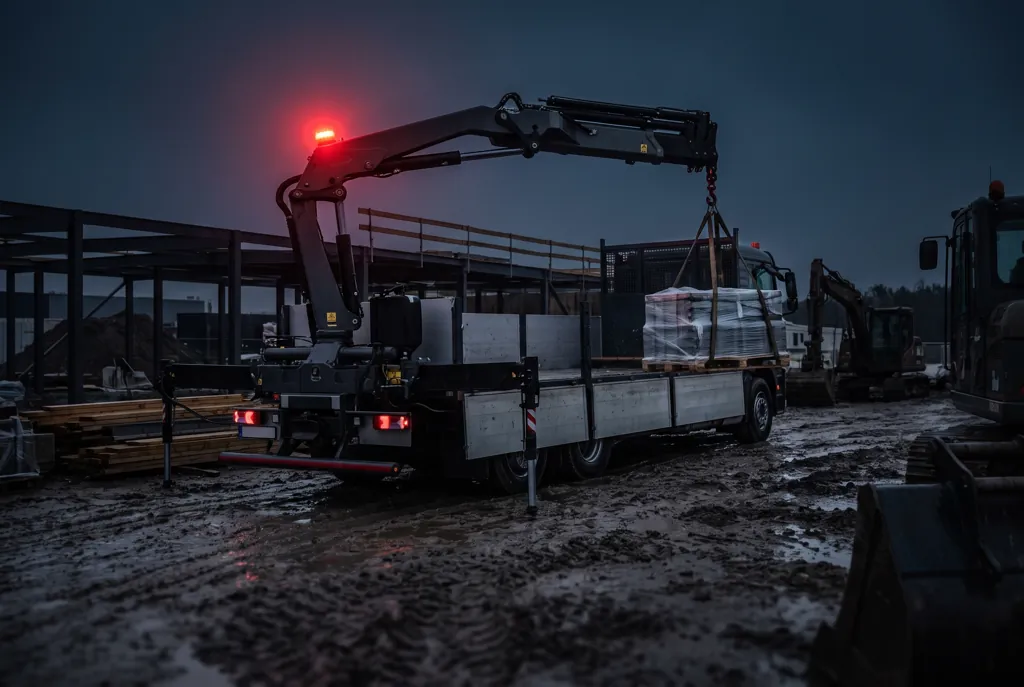
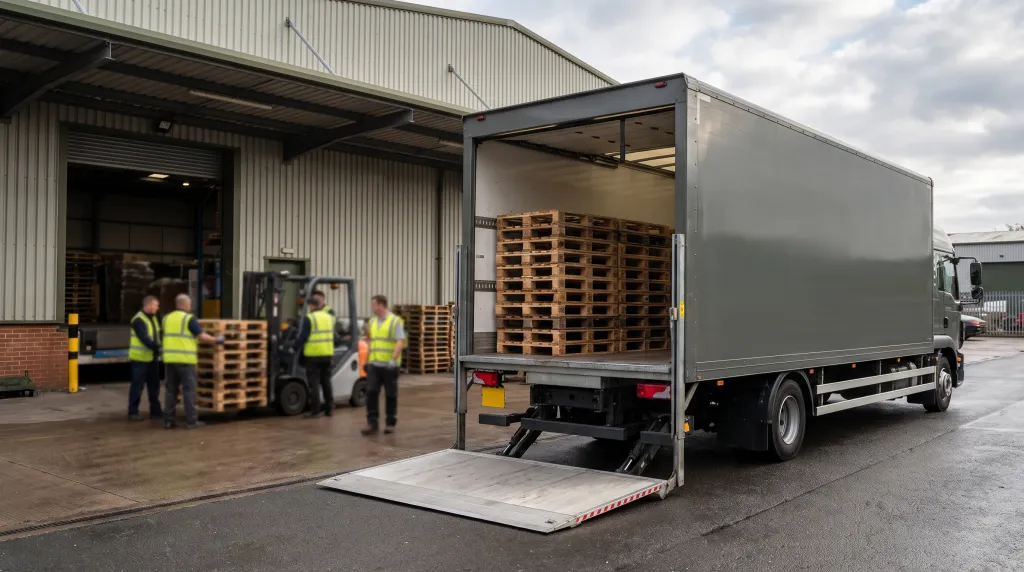
- Unloading without a ramp: a truck-mounted crane (loader crane, HDS in Poland), a tail lift, or a vehicle set up for the contractors own equipment.
- Vehicle matched to the access: full trailer, rigid, or a shorter truck for tight yards and city centres.
- Long loads and non-standard pieces, after we verify dimensions, weight and the way they are secured.
- Notification and confirmation of the time window, with staged deliveries in batches following the order of works.
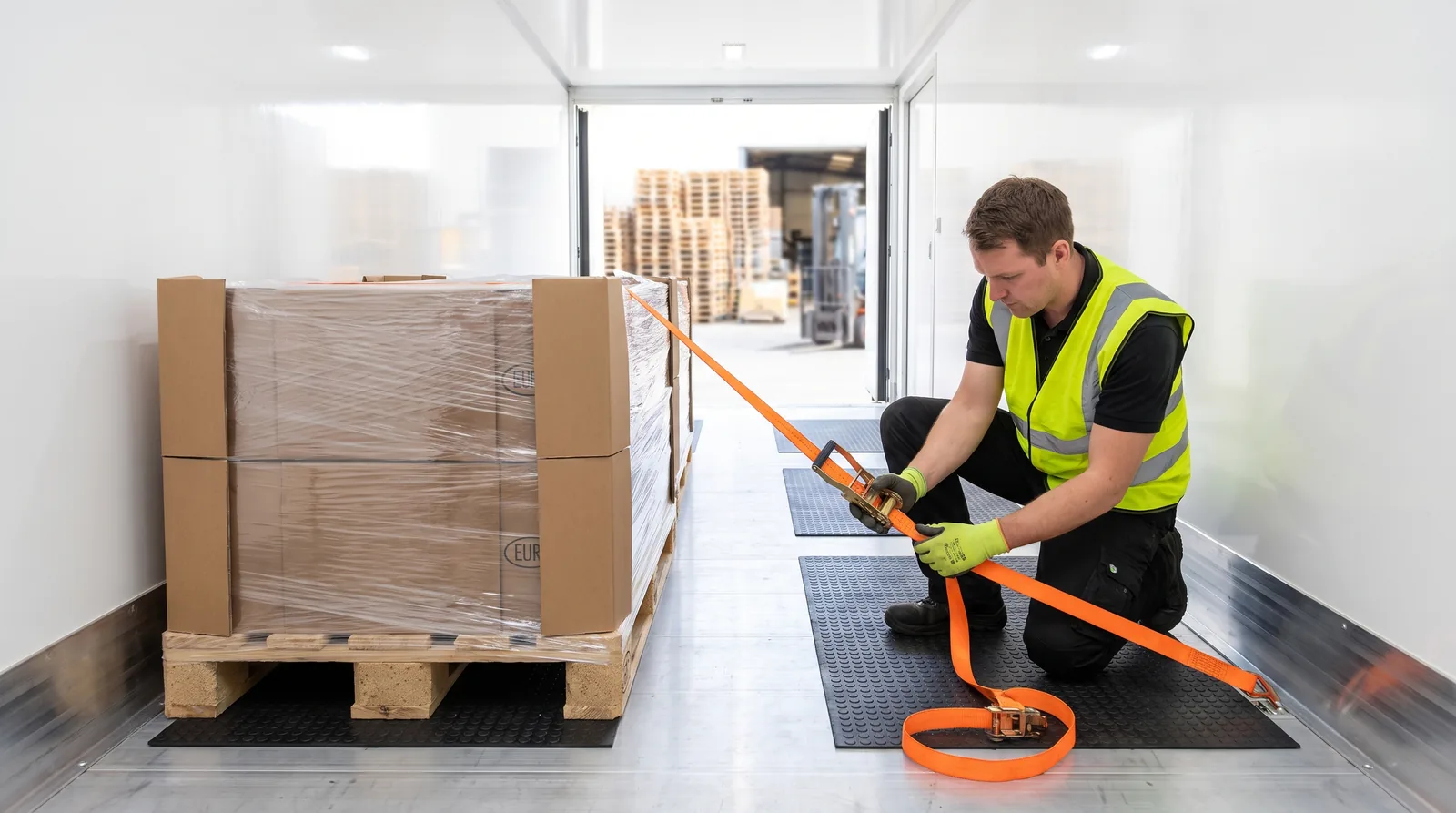
- Load securing to EN 12195, with the transport document (CMR).
- Delivery on the hour where assembly relies on a site tower crane working in a set window.
How we do it
We start by reading the unloading point. We check the access road, the tonnage the road can carry, the ground under the crane outriggers and the real working radius of the crane. The vehicle and the kit are chosen around that, so we do not find out on site that the crane cannot reach the drop point or the trailer will not clear the gate.
Then we set the transport to the schedule. We agree the time window with site management, notify the vehicle and confirm the delivery in advance. For staged assembly we split the load into batches, so only what the current stage needs is on site. When assembly has a fixed hour, we run it like an express job: with a time buffer on the route and the vehicle position confirmed as it goes.
Finally we close out the unloading and the paperwork. The driver knows the drop point, the pallet order and the spot for the crane, and the handover is confirmed on the CMR. That way the truck stays on site only as long as it has to.
Limits of the service (what it does not cover, and what to know)
We are not the main contractor or an assembly firm. We deliver and unload the material at the agreed point; we do not build it into the structure. Crane unloading needs firm, load-bearing ground for the outriggers and clear space with no overhead lines; if the site cannot provide that, unloading has to stop. Liability for loading, unloading and securing the load sits with the party named in the order, so we settle that before dispatch. The dear part of a build is waiting: a crew with no material, a tower crane booked by the hour, a truck idling at the gate. A badly planned delivery can cost more than the transport itself, because detention and a lost assembly day pile onto the freight. We do not guess dimensions or tonnage: we need them to pick the right vehicle and move the load legally, including abnormal loads.