 AI image
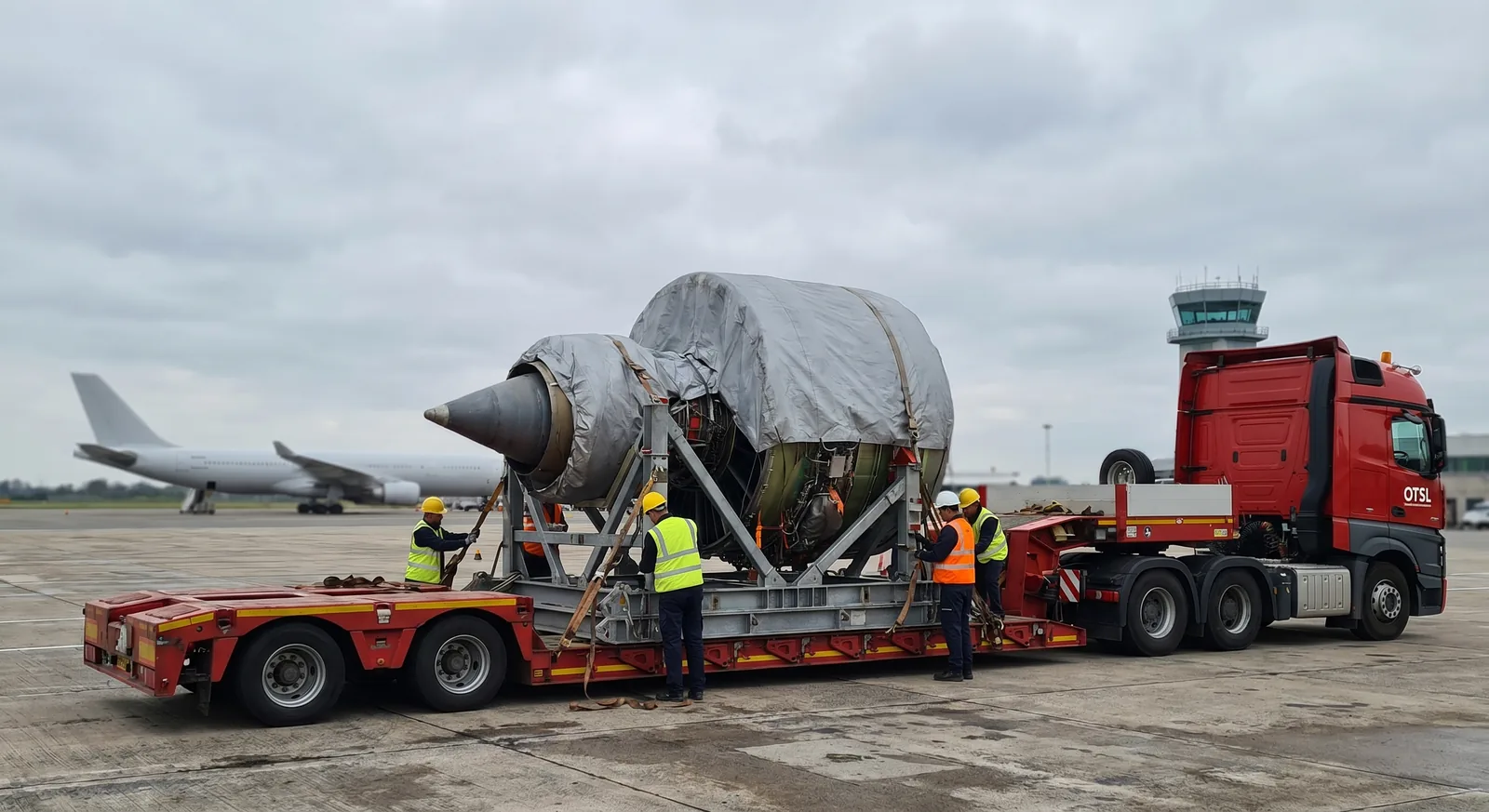
We move cargo between airports for companies that service airlines, including low-cost carriers, where timing and full coordination decide everything. Among other things we carry aircraft engines, which need mounting in a dedicated cradle and precision on the apron. We know how airports in the United Kingdom and Ireland work.
What do we handle?
- Time-critical transport between airports, planned around the flight operation schedule, not around the convenience of the road carrier.
- Carriage of aircraft engines in cradles, with securing and supervision at loading and unloading.
- Cooperation with ground handling agents and companies working for carriers.
- Movement of parts and ground equipment between maintenance bases.
Step by step
- Enquiry: route between airports, type of cargo, weight and dimensions including the cradle, deadline and time windows on both sides.
- Vehicle and securing selection according to the manufacturer instructions; for engines this usually means air-ride suspension and a smooth run without unnecessary transshipment.
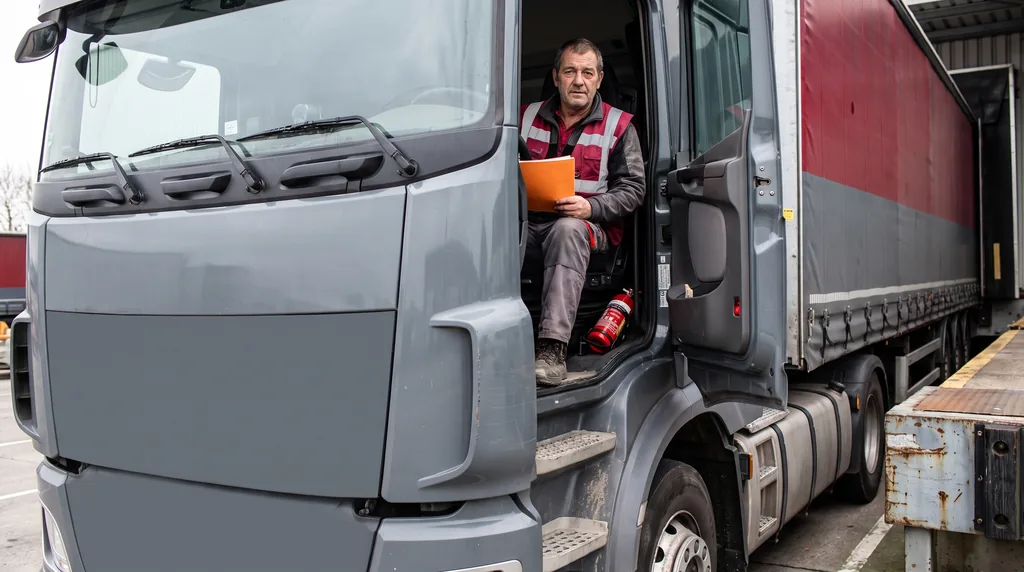
- Booking-in with the ground handling agent or cargo terminal: passes, driver documents, exact position. Procedures differ between airports, and we confirm them when the order is placed.
- Supervised loading: securing according to the manufacturer instructions and the principles of EN 12195-1.
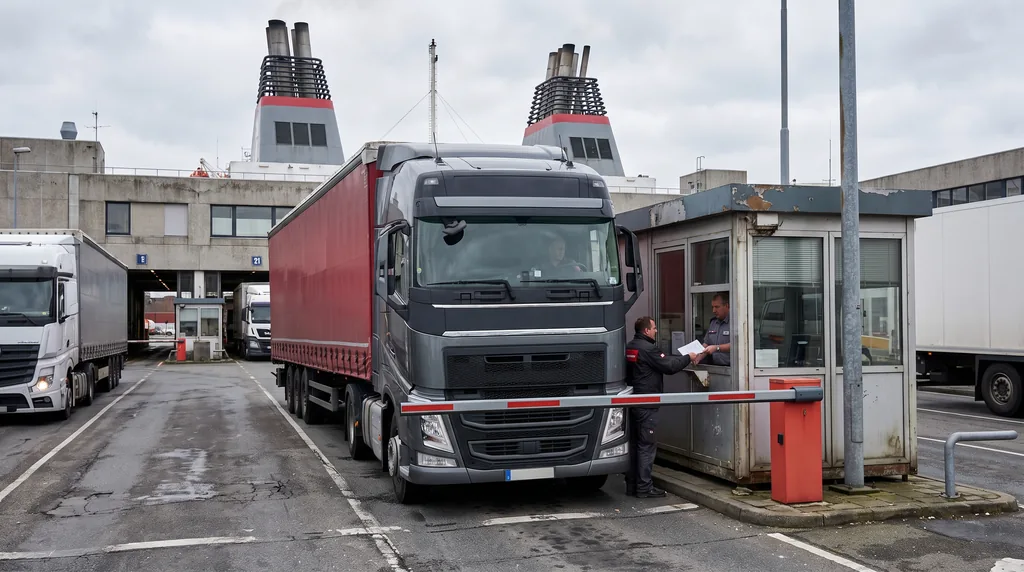
- Transit with status monitoring and updates to the client; if the route crosses a customs border, for example between Ireland and the United Kingdom, we prepare customs and border declarations in advance.
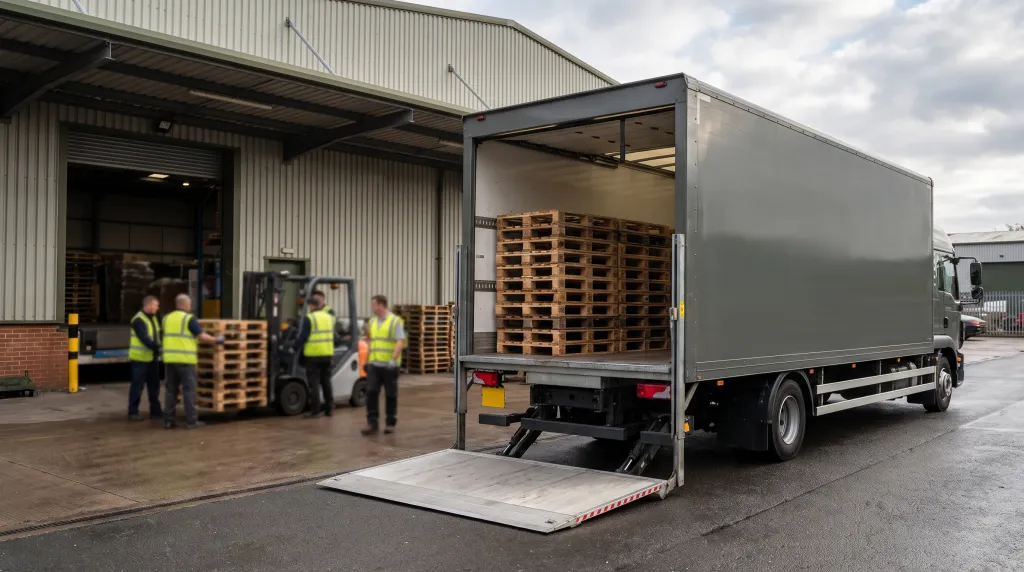
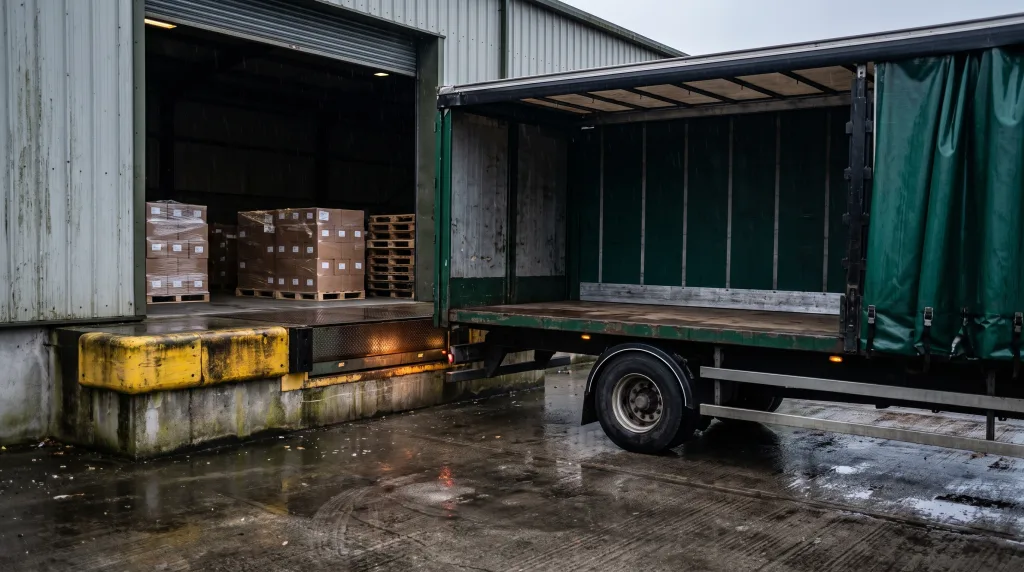
- Unloading at the destination airport, delivery confirmation and photo documentation.
Liability and insurance
Road carrier liability under the CMR Convention is limited to 8.33 SDR per kilogram (Article 23(3)). An aircraft engine is worth many times that limit, so such moves are covered with additional cargo insurance for the full value. The difference shows only when something goes wrong: without a cargo policy the owner recovers a fraction of the value.
Checklist for the client
- Dimensions and weight of the cargo together with the cradle, and the lashing points.
- The manufacturer transport instructions, if available.
- Collection and delivery windows and contact persons on both sides.
- Pass requirements and driver documents required by the airport.
- Cargo value for insurance.
- An emergency contact in case the operation schedule changes.
The OTSL role
OTSL is an international road freight forwarder: we run express vans and dedicated vehicles for time-critical jobs, provide aviation ground logistics and help choose between a van and a dedicated truck. The full list is on our services page. Send an enquiry through the contact form.
Definitions
- AOG (Aircraft on Ground): A situation where an aircraft is grounded while waiting for a critical replacement part or component.
- Cradle: A specialised mounting frame designed to secure and stabilise an aircraft engine during transit.
- Ground handling: Services and personnel responsible for operational and logistical support on the airport apron.
- Maintenance base: An airport facility dedicated to servicing, inspecting, and repairing aircraft fleets.
When does this rule not apply?
Planning road transport strictly around flight operations does not apply when customs delays or restricted apron access prevent the direct handover of cargo to ground handling teams.
Sources
- UNECE: the CMR Convention on road carriage
- CMR Convention, Article 23(3): liability limit of 8.33 SDR per kilogram.
- EN 12195-1: calculation of securing forces in road transport.
- Engine manufacturer transport instructions: requirements for carriage in a cradle.