 AI image
The sender is responsible for packaging the goods and preparing them for the road, the carrier for securing the load on the trailer. This is how transport practice divides the roles and how insurers look at damage. A badly packed pallet can survive loading and fall apart at the first hard braking. We explain how to pack for the road.
Who is responsible for what: the sender and the carrier
International transport practice, shaped by the CMR convention, divides the roles clearly. The sender is responsible for packaging: the goods must be prepared to withstand the normal conditions of road carriage, including braking, leaning on bends and the company of other pallets. The carrier is responsible for securing: the load must be placed and fastened on the trailer so it does not shift during the journey. If the damage results from a packaging defect, the liability of the carrier can fall away. That is why disputes after damage so often begin with the question of how the goods were packed, not how they were carried.
The EUR pallet and single-use pallets
A single-use pallet is lighter and cheaper, but also weaker and less predictable. It works for exports from which the packaging does not return, provided its strength matches the weight and nature of the goods. Damaged pallets, with broken boards or protruding nails, should not leave the warehouse at all: they are the first cause of trouble at unloading and the first thing the consignee will point out.
How to pack goods so they survive the road
- Stretch film ties the goods to the pallet: the wrapping must reach down and take in the pallet, not just the boxes on top. Goods wrapped without being tied to the pallet slide off it as a whole.
- Strapping: for heavier pieces film is not enough, the load is strapped to the pallet.
- Corner protectors and layer pads: protectors stiffen the edges and shield the boxes from the straps, layer pads spread the pressure between layers.
- Even weight distribution: heavier pieces at the bottom, the centre of gravity low, nothing protruding beyond the pallet footprint.
The test is simple: the pallet must withstand hard braking and leaning on a bend. Forces in transport act forwards and sideways, and packaging that holds the goods only vertically will not stop them.
What does the carrier do at loading?
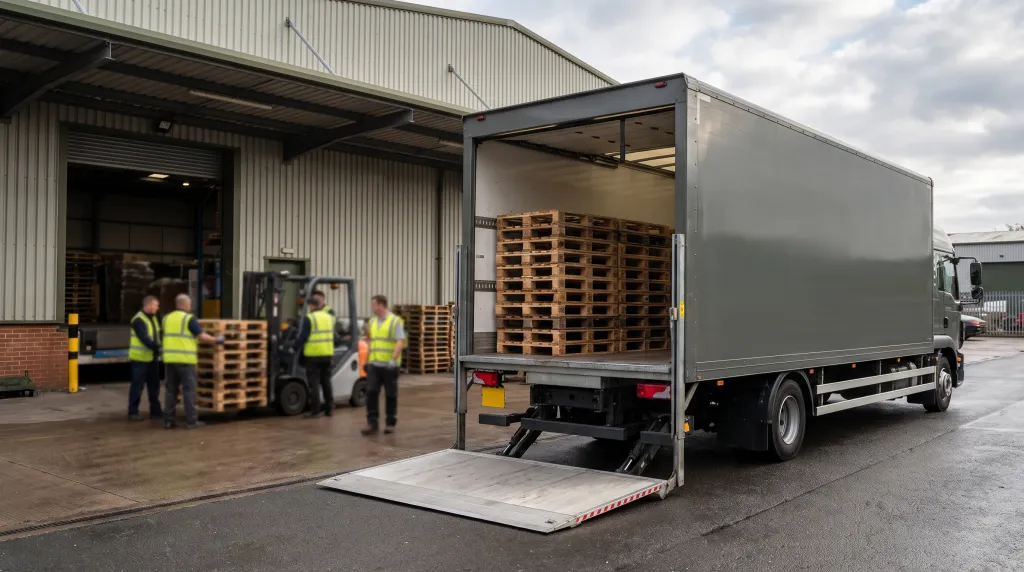
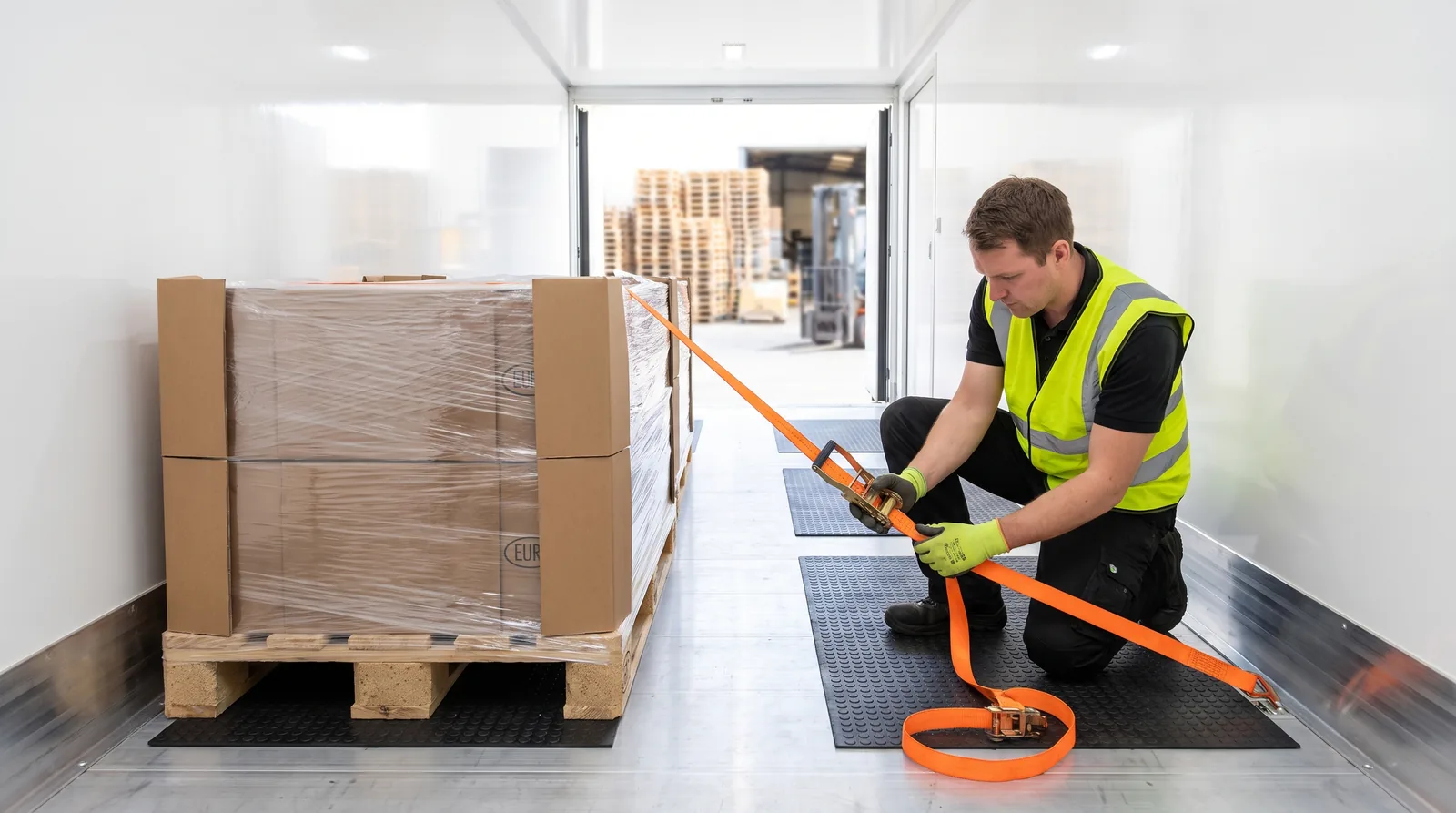
The driver places the pallets so the weight spreads evenly across the axles and secures the load: with straps, anti-slip mats and, where needed, locking bars. He also checks the condition visible from outside and notes reservations, but he will not unpack or repack the goods for the sender. The form of carriage matters too: in a part load the goods travel next to pallets belonging to others and the packaging works harder than in a dedicated vehicle, which we cover in FTL or LTL. This is how we secure loads in our road transport service.
When does the packaging fail?
The consequences of poor packing follow a predictable sequence: the goods work during the journey, the pallets lean, the consignee refuses the delivery and the insurer asks about the cause of the damage. It then turns out that the line between the liability of the sender and of the carrier runs exactly through the way the goods were packed, which we explain in the article on cargo insurance versus carrier liability. A leaning pallet can still be worked with: in our warehouses we carry out straightening and re-palletising after a tilt, and we document the condition of the goods during a cargo inspection with a report before they travel on.
Not sure your way of packing will survive an international route? Describe the goods in the contact form and we will advise how to prepare them before the truck arrives for loading.
Step by step
- Select a suitable pallet. Choose an undamaged cargo platform appropriate for the weight and dimensions of the goods.
- Stack the goods evenly. Place boxes in balanced layers, ensuring that no items overhang the edges of the pallet.
- Secure with stretch film or strapping. Wrap the load firmly to connect the goods securely to the pallet base.
- Label the shipment clearly. Attach legible address labels and handling symbols on the outer sides of the pallet.
- Verify during loading. Inspect the pallet structure before it enters the trailer and confirm the carrier fastens the lashing straps properly.
Definitions
- CMR Convention (Convention on the Contract for the International Carriage of Goods by Road): An international treaty regulating the rights, duties, and liabilities of senders and carriers in road transport.
- Pallet: A flat transport structure that supports goods in a stable fashion while being lifted by a forklift.
- Sender: The party shipping the goods, responsible for proper packaging and preparing the load for carriage.
- Carrier: The transport company responsible for correctly positioning and securing the cargo on the trailer.
When does this rule not apply?
This division of responsibility does not apply if the carrier accepts cargo with obvious packaging defects without entering reservations into the consignment note, or if the loss results directly from intentional misconduct by the carrier.
The OTSL role
At OTSL, we help organise efficient international transport between the UK, Poland, and Europe. Check our groupage (LTL) solutions for palletized freight, and read about cargo inspection and reporting to understand how cargo condition is verified at key transport stages.