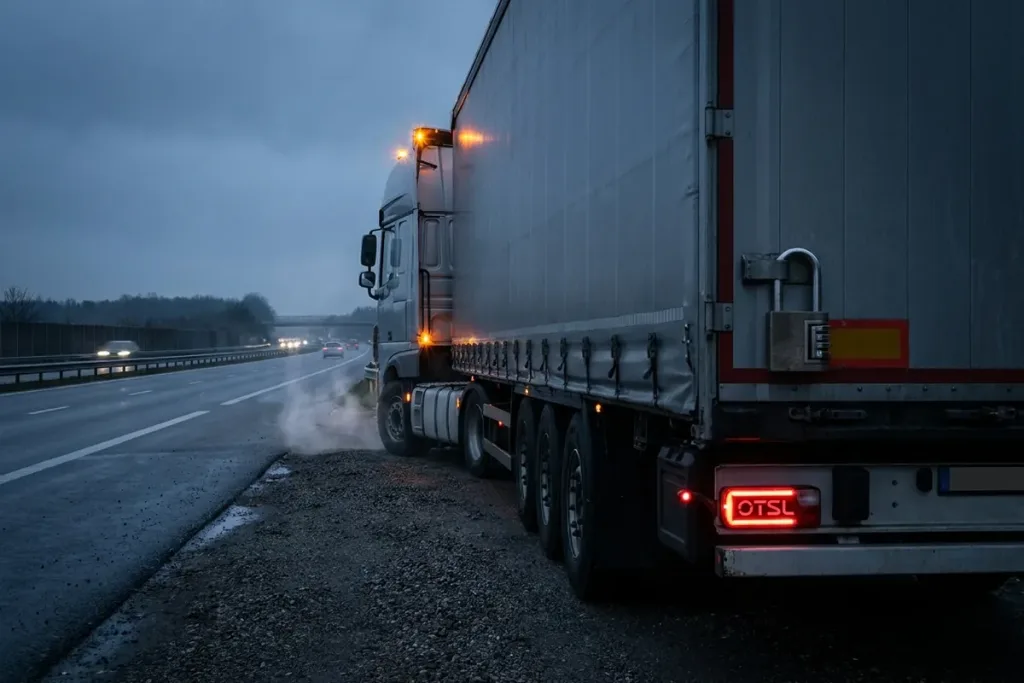
 AI image
You can tell a good forwarder on the UK corridor by how much it handles itself and how much it passes to others: customs and GMR (Goods Movement Reference, required at the UK border), vehicles, warehouses, out-of-hours contact. The fewer intermediate links between you and the driver, the fewer opportunities for error and the easier it is to point to who is responsible when something goes wrong.
A checklist before choosing a UK forwarder
- Customs and GMR: does the firm handle them in-house or send you to a separate agency? A separate agency means a second contact, a second deadline and a second chance of a misunderstanding. Why that hurts in practice is shown in choosing a customs agency matters.
- Own network or an exchange: who will actually carry your goods? If the order goes to an exchange, the carrier has often never been seen before. We describe our position in why we do not buy loads on exchanges.
- Contact outside office hours: the border and the crossings run around the clock, and so do problems. Check who answers the phone on a Saturday evening. How it works with us is described in 24/7 availability.
- Warehousing on both sides: when a slot is lost or goods need repacking, a warehouse near the route saves the deadline. Ask for specific locations, not declarations.
- Insurance: what is the carrier liability (OCP) sum and will the firm arrange CARGO for high-value goods?
- One order owner: who is personally responsible for your transport from quote to unloading?
Questions worth asking before the first order
- Who exactly will travel with my goods: an own vehicle or a regular subcontractor?
- Who will prepare the customs declarations and the GMR and what will they need from me?
- What happens if the truck misses the consignee slot?
- Who do I call when something happens at night or at the weekend?
Warning signs
A price clearly below the other offers, no clear answer about who carries the goods, customs that "will get sorted at the border" and a contact person who changes with every phone call. Each of these signals alone can be innocent. Together they add up to a transport you only hear about when something has gone wrong.
See what we drive and what we carry, or describe your load straight away in the contact form.
How should you evaluate a forwarder for UK transport?
Focus on how many processes – including customs clearance, GMR generation and warehousing – the forwarder executes directly without extra intermediaries.
Step by step
- Check customs procedures. Verify whether the forwarder handles customs entries in-house or delegates them to third parties.
- Verify transport sourcing. Find out if your load will move via a verified fleet or an open freight exchange.
- Confirm out-of-hours support. Ensure assistance is available should border delays occur overnight or during weekends.
- Prepare documentation. Gather commercial invoices and packing lists required for border processing.
- Monitor crossing clearance. Track the status of declaration completion and reference generation before boarding.
Definitions
- GMR (Goods Movement Reference): A unique reference number required to move goods across the UK border.
- GVMS (Goods Vehicle Movement Service): The UK IT system linking customs declaration references to the vehicle transporting the goods.
- FTL (Full Truck Load): A shipment type where a whole vehicle is reserved for a single sender.
- LTL (Less than Truck Load): A consolidated shipment where vehicle space is shared between multiple senders.
When does this rule not apply?
This rule does not apply to transport operations performed entirely within the European Union, where border formalities and GMR generation are not required.
The OTSL role
At OTSL, we manage transport between Poland and the UK using our facilities in Kielce and our warehouse in Milton Keynes. We provide Road transport (FTL) and apply the operational standards outlined in our guide on FTL vs LTL transport.