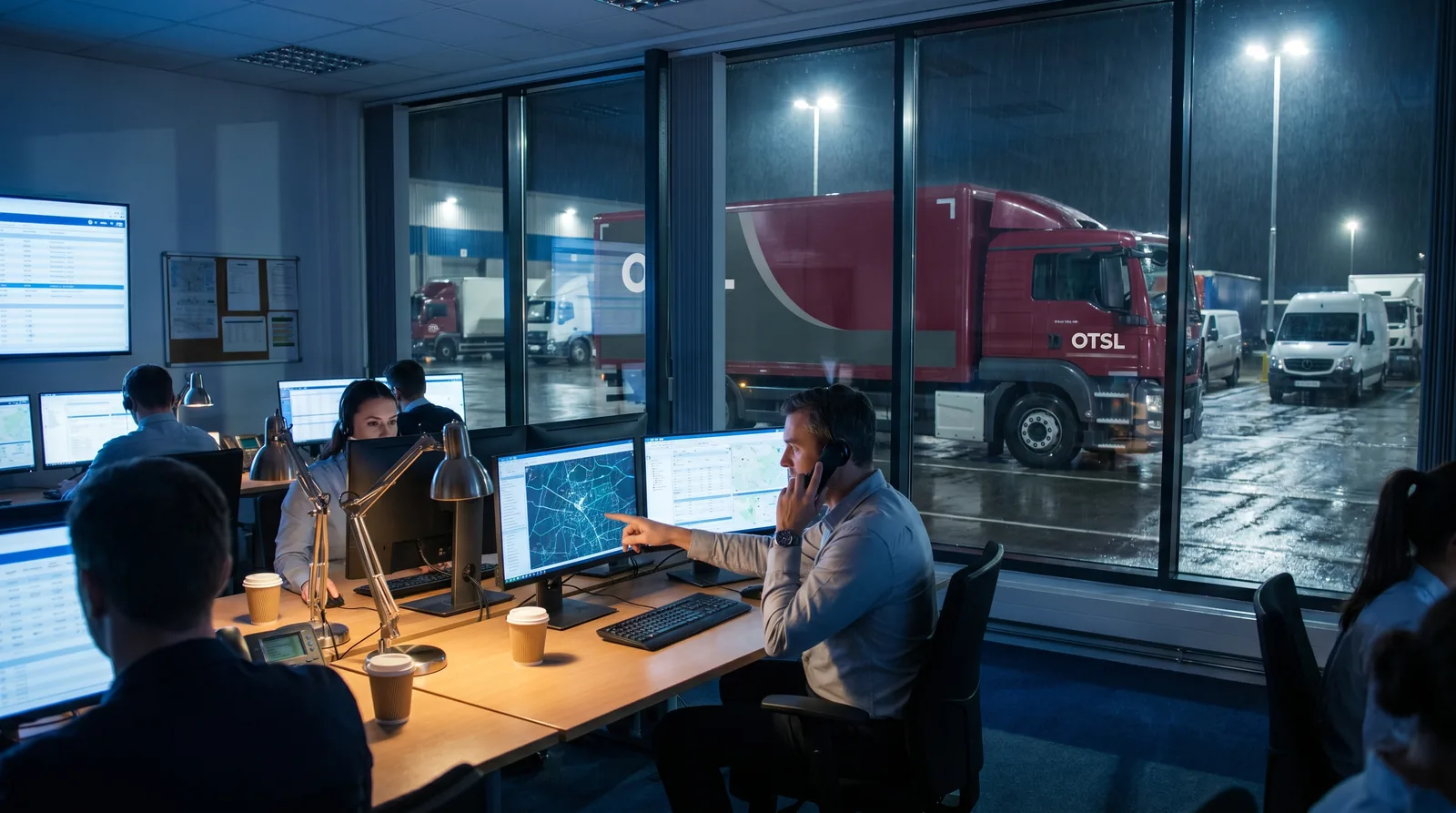
 AI image
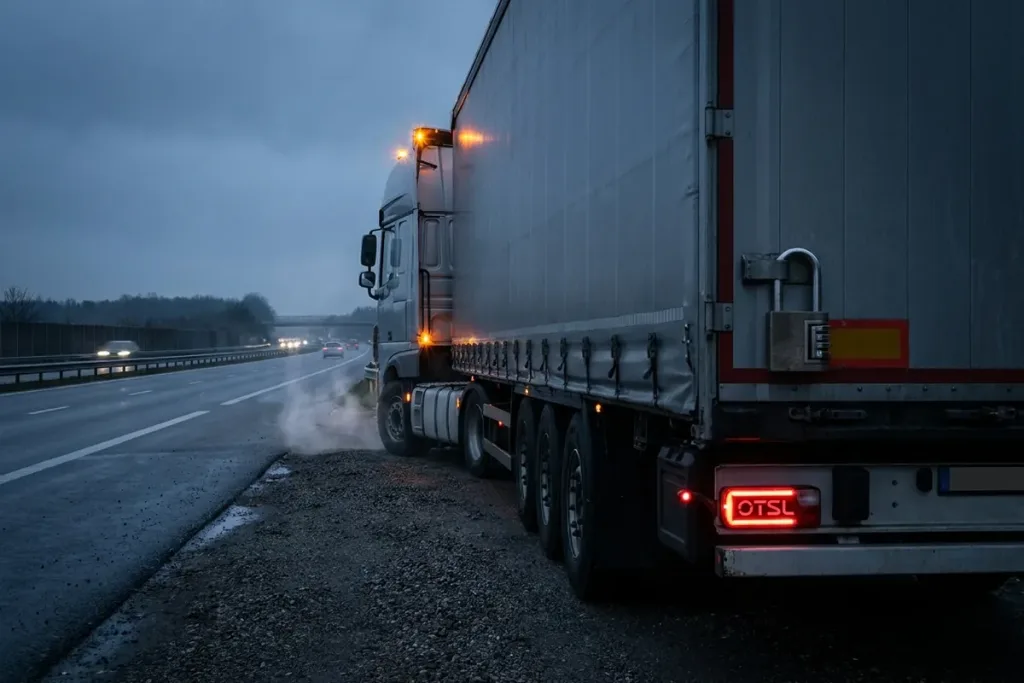
24/7 availability in forwarding means the operations team reacts at any time, including at night and at the weekend. It matters because international transport runs around the clock, and events on the road, at the border or in the warehouse do not wait for office hours. At OTSL the operations team is available 24/7, and one responsible contact runs the order.
Why does it matter?
- A driver on the road needs a decision at night, not in the morning.
- Customs or a crossing needs a reaction outside office hours.
- An event with the load must be secured at once, not after the weekend.
What does round-the-clock reaction give?
Most costly problems in transport come from a delayed reaction. When someone answers the phone at three in the morning and makes a decision, the goods move on instead of standing still. So round-the-clock availability is not a slogan but real protection of the deadline and the load.
How do we work?
The operations team is available 24/7, and every order is run by one responsible contact who knows its status. We do not pass the client between departments or make them wait until morning.
See services, contact and how forwarding works.
How does a delay in overnight customs clearance affect driver working hours and delivery continuity?
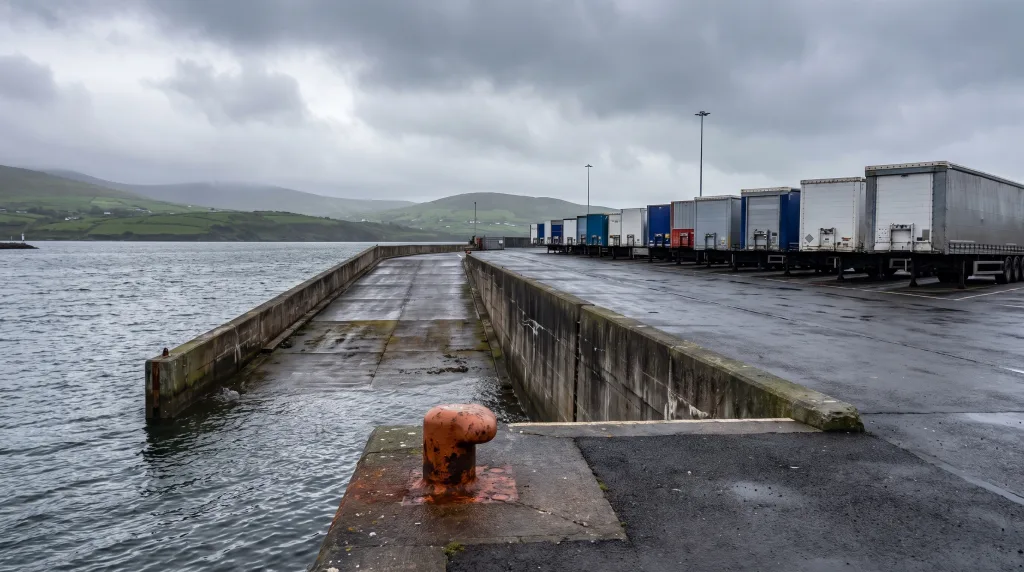
When an articulated lorry with a 13.6-metre trailer arrives at a border or port terminal during night hours, the absence of an immediate automated release in the customs system instantly triggers a cascade of operational events. On routes between Poland and the United Kingdom, customs clearance operates continuously, but a selection for physical inspection or an error in the declaration when loaded to a capacity of 100 percent (33 Euro-pallets) requires immediate data correction. If the response from the customs broker or freight forwarder does not occur within 30 minutes, the vehicle loses its designated ferry or Shuttle slot. Consequently, the HGV is directed to a buffer parking area, where maneuvering space is constrained, and dwelling time begins to impact the driver's schedule directly.
The compounding of delays stems directly from drivers' hours regulations. Following a cumulative driving period of 4.5 hours, a driver must take an obligatory break lasting a minimum of 45 minutes. If during this time the vehicle remains in a queue for inspection and needs to be moved every few minutes, the driver cannot log this duration as statutory rest. As a result, when the customs system eventually releases the cargo after 2 hours, the driver may be legally forced to commence a full daily rest period of 9 hours or 11 hours directly within the port precinct. This halts the transport for further hours, regardless of whether the paperwork is now fully compliant. Furthermore, an unrecorded weight discrepancy exceeding 150 kilograms against the manifest declaration leads to automatic system validation rejection in port platforms such as GVMS.
Boundary condition: The aforementioned operational risk mechanisms and the necessity for immediate overnight customs intervention apply strictly to transports crossing customs borders (such as trade between the EU and the UK) or goods moving under T1 or T2 transit procedures. These rules do not apply to standard intra-EU transport within the Schengen Area for neutral goods weighing under 24 tonnes, where no physical customs checkpoints exist, and potential delays depend solely on road traffic conditions, vehicle breakdowns, or warehouse delivery window constraints.
Step by step
- Reporting an incident. The driver or system notifies the operations team of an event on the route.
- Situation analysis. The responsible forwarder assesses the issue and available resolution options immediately.
- Decision making. The team selects the optimal course of action without waiting for standard office hours.
- Implementing the solution. The forwarder contacts the relevant authorities, customs points, or ferry operators.
- Feedback update. The customer receives direct information on the actions taken and the current transport status.
Definitions
- 24/7 availability: Operational readiness of the transport team to take action at any time of day or night, seven days a week.
- Operations team: The forwarding department responsible for ongoing transport management, contact with the driver, and making decisions on the route.
- Round-the-clock reaction: Immediate corrective action in the event of unforeseen incidents on the route or at the border.
- Customs clearance: Formal procedure required when moving goods across borders outside the European Union, demanding efficient document verification.
When does this rule not apply?
Constant operational availability does not apply to situations where the inability to act stems from fixed opening hours of external customs offices, loading terminals, or end receivers.
The OTSL role
At OTSL, we maintain constant supervision over transport operations, organising express vans and managing urgent situations around the clock. Our team efficiently handles operational challenges, including administrative steps like ferry booking for continuous cross-border transit.