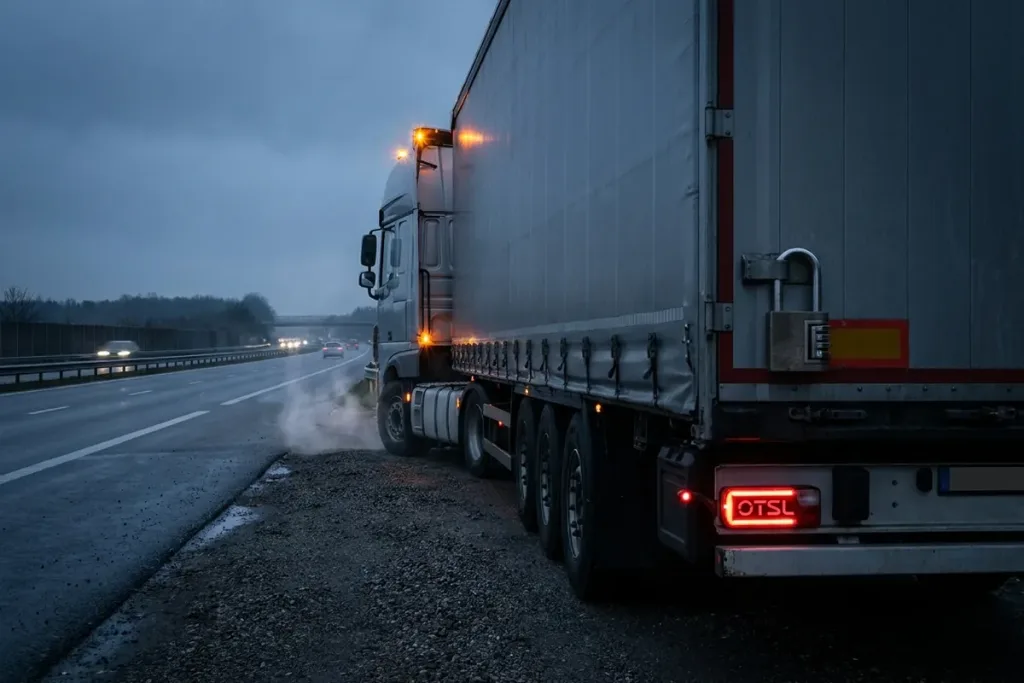
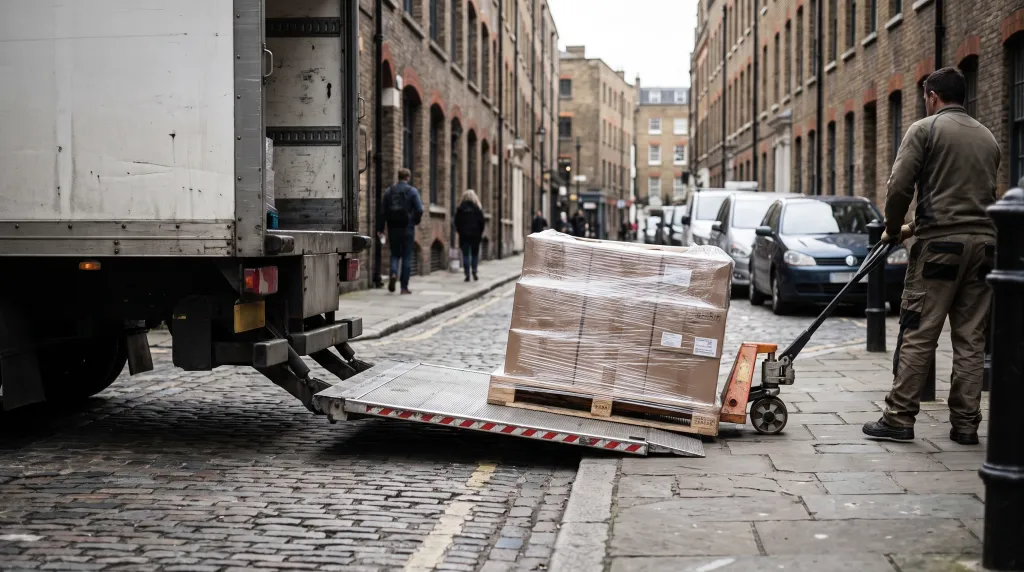
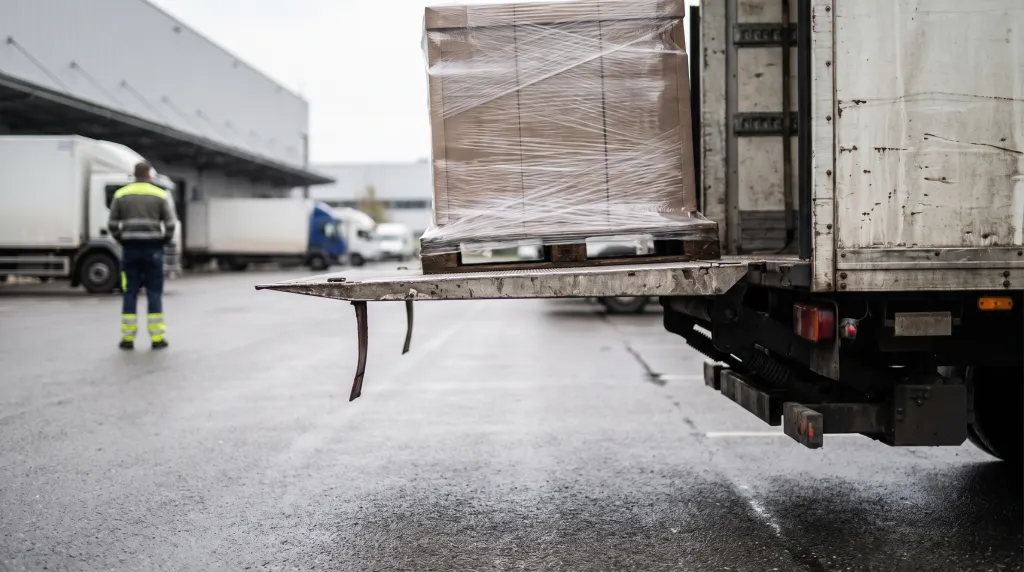
 AI image
OTSL does not trade loads on freight exchanges. We run every order individually, under the constant control of a forwarder, from acceptance to delivery. It is a deliberate choice of model: we prefer to know who really carries the goods rather than hand them to an anonymous carrier from an exchange and lose control over quality.
How the exchange model works
- A broker posts or takes an order on an exchange and sells it on.
- The goods are carried by a carrier the broker often sees for the first time.
- Control over quality and communication gets blurred across the links.
Why do we choose a different model?
When responsibility is scattered, a problem starts the passing of blame, and the client is left alone with it. We keep the order under one control, so we know who carries it, on what equipment and at what stage the delivery is. That is the basis of the principle control, detail, speed and the reason we can treat the client goods as our own.
What does it give the client?
Predictability and one responsible contact instead of a chain of brokers. Less risk that goods end up with a random carrier, and real quality control. It costs more effort on our side, but that is exactly what we are responsible for.
See services, how forwarding works and contact.
How does direct operational control affect response times during transit?
When an articulated lorry with a 13.6-metre trailer carries 33 pallets with a total mass of up to 24000 kg on a route from Poland to the United Kingdom, the delivery schedule depends directly on the continuity of operational information. In the event of an unexpected border delay, traffic congestion, or mechanical breakdown, a multi-tiered chain of intermediaries delays critical updates to the consignee by up to 4 hours. A freight forwarder maintaining direct contact with the driver verifies tachograph readings and the exact vehicle location within 15 minutes of an incident. The legal daily driving limit for a heavy goods vehicle driver is 9 hours, and the mandatory rest break after 4.5 hours of driving must last at least 45 minutes. Eliminating intermediate brokers allows for an immediate route correction or notifying the destination warehouse at least 3 hours before the scheduled unloading slot.
This direct supervision mechanism relies on precise operational data rather than filtered messages. In a standard freight exchange model, status updates pass through 3 or 4 separate sub-contractors, which operational data shows increases the risk of distorted information by more than 50%. Under direct operational management, the forwarder tracks GPS coordinates with an accuracy of within 10 metres and actively monitors waiting times at ferry ports and customs clearance terminals. If driver working hours limits are at risk of being breached, the decision to dispatch a relief driver or a replacement tractor unit is executed immediately without lengthy rate renegotiations across multiple brokerage layers.
- Verification of vehicle registration documents and trailer MOT validity within 30 minutes prior to bay allocation.
- Monitoring axle weight distribution for payloads exceeding 18000 kg to prevent exceeding the legal maximum gross weight of 40 tonnes.
- Continuous temperature monitoring inside refrigerated trailers with an accuracy of 0.5 degrees Celsius every 20 minutes.
This rule of direct individual supervision does not apply to groupage consignments weighing under 100 kg or occupying less than 1 pallet position that enter standard hub-and-spoke distribution networks. For such small shipments, cargo passes through automated sorting depots across 2 to 4 transit hubs, where tracking is managed entirely by automated barcode scanning rather than an assigned transport manager.
Step by step
- Order acceptance. You analyze cargo parameters alongside route and delivery requirements.
- Carrier verification. You select a trusted partner from a directly verified fleet database.
- Forwarder assignment. A single contact takes full responsibility for monitoring the shipment.
- Route supervision. You track the transport status from loading through customs to unloading.
- Delivery completion. You receive confirmation that the goods have arrived safely at the destination.
Definitions
- Freight exchange: A digital platform used for matching available loads with vehicles open to the public.
- Freight forwarder: A specialist responsible for organising and supervising the entire cargo transport process.
- Carrier: The entity performing the physical transport of goods using vehicles.
- Broker: An entity that passes a transport order further along to other subcontractors.
The OTSL role
We arrange direct road transport without using freight exchanges, ensuring total control over every stage of the shipment. To learn more about our operational setup, read our article on FBA or FBM logistics and costs. See also: Free zone (free-trade zone): how it works and when it pays off.