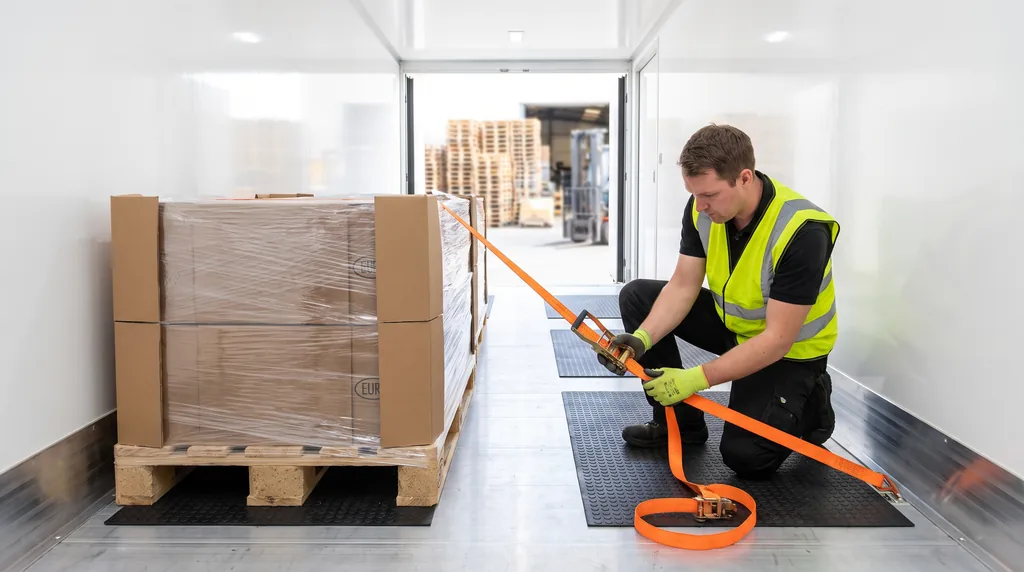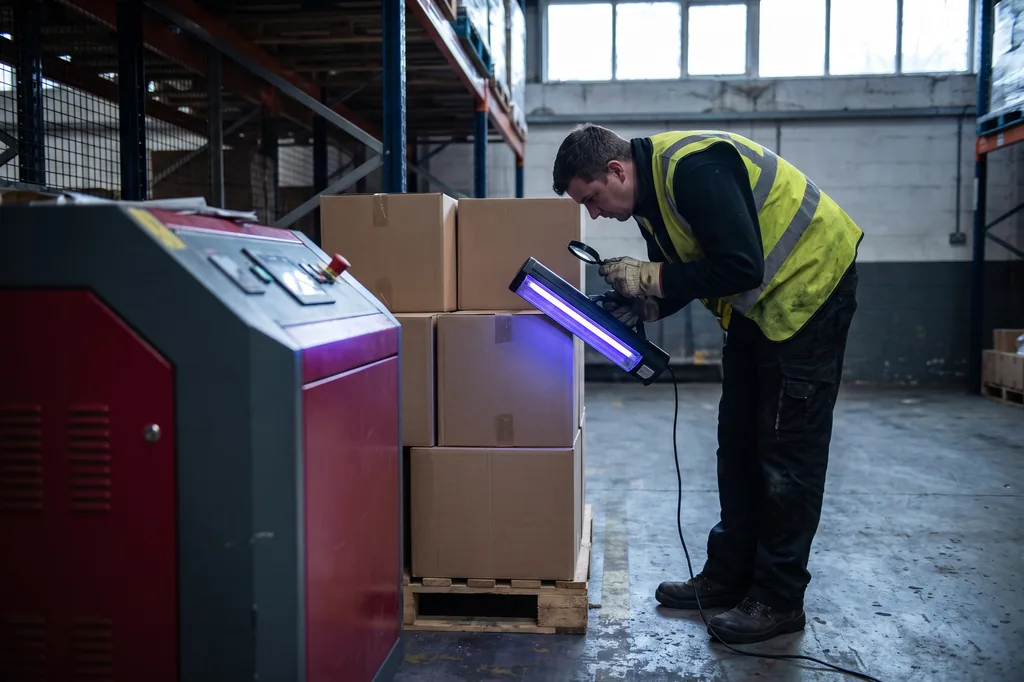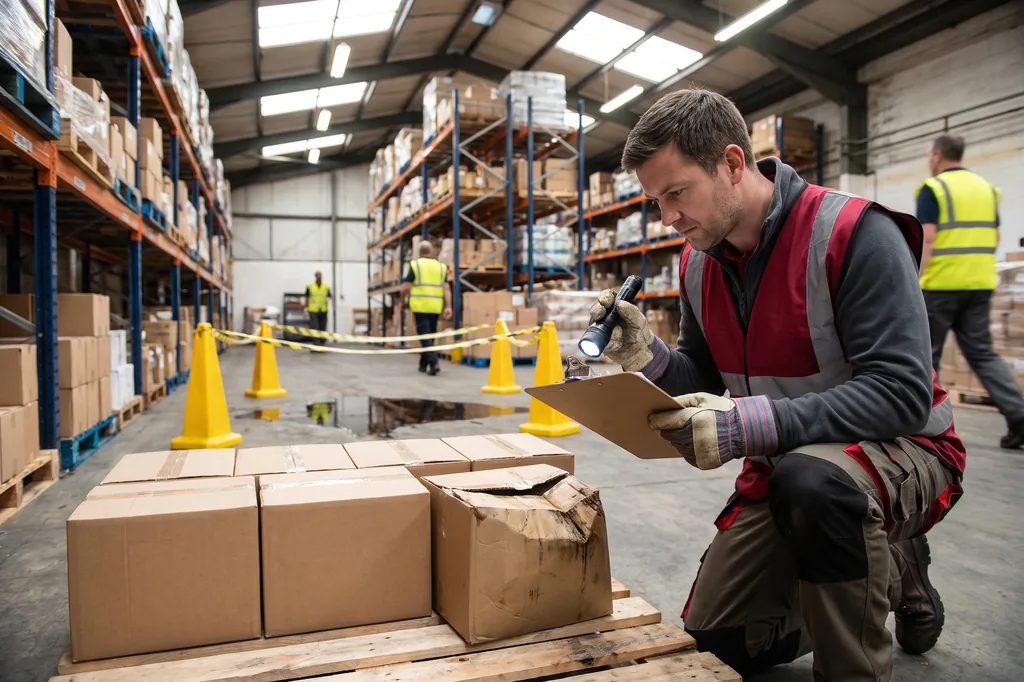
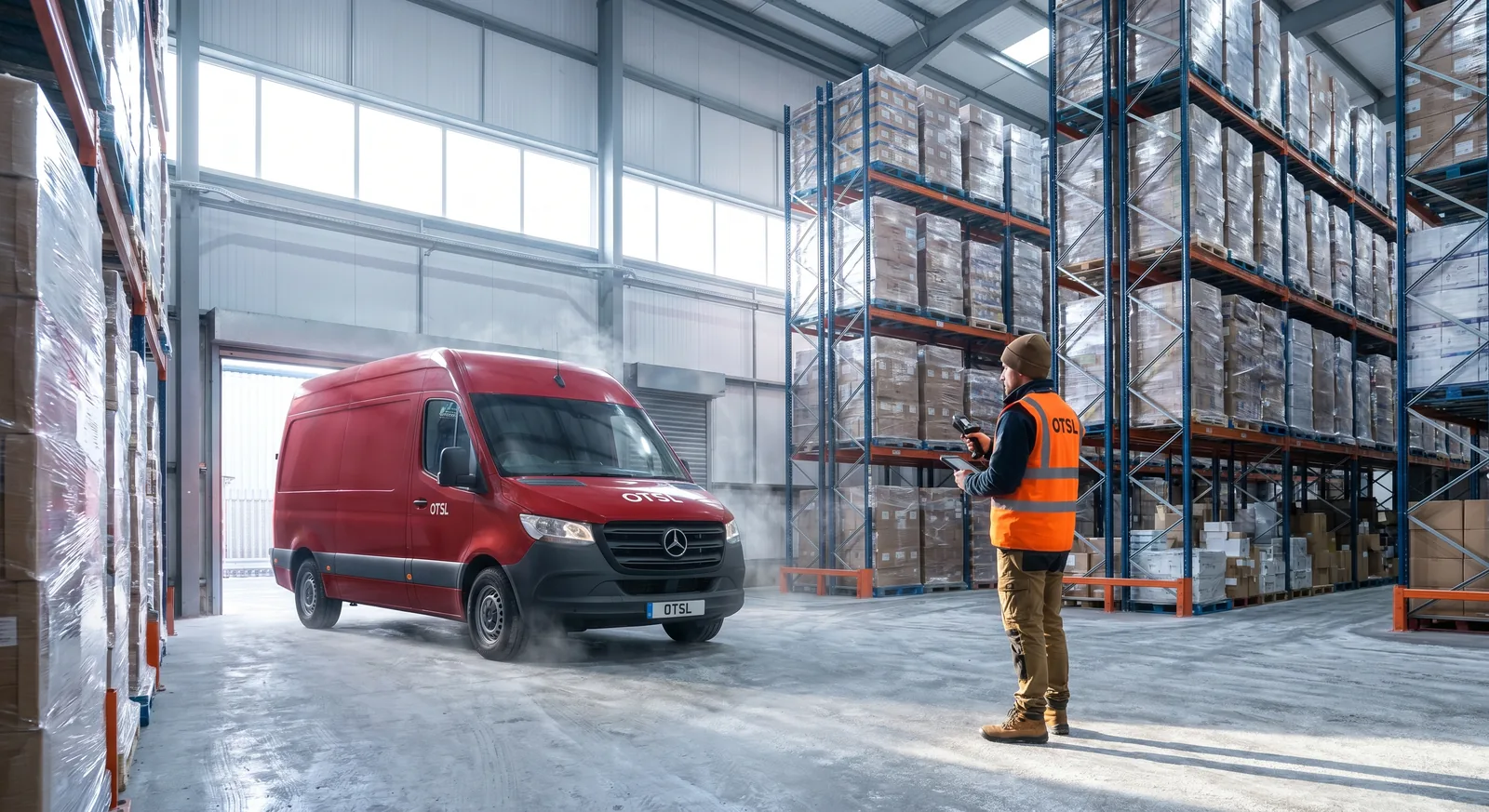
A refrigerated trailer holding about +2 degrees Celsius arrived at a UK distribution centre with 33 pallets of yoghurt, many of them leaning, wrapped in torn film after braking in transit. Yoghurt gives a recovery team two hard limits: a chilled band that must not break and a shelf life that is burning down while the trailer stands. We rebuilt 19 pallets fully and 9 partially inside a +2 degree environment, and the load went back into its chilled schedule.
Situation
Chilled trailers carry an assumption: the pallets inside will come out the way they went in. When they do not, the receiving site faces a load it cannot unload safely and cannot let stand either, because every hour of delay makes the retailer less likely to accept short-dated stock. Unloading was halted the moment staff saw stacks leaning against each other, and the operator needed a recovery site that could work chilled product immediately rather than book it in for the next business day.
What we did
The rework moved into a temperature-controlled area held at roughly +2 degrees, matching the trailer set point, so the product never left its band while pallets were open. Damaged film came off, cartons were re-laid into stable layers and correct patterns, and rebuilt pallets were wrapped fresh. 5 pallets needed no intervention.
The product inspection looked for crushed cartons and compromised packaging, the kind of damage that lets chilled product spoil quietly, and isolated anything doubtful. The trailer was then reloaded with even spacing for the destination unload.
Outcome
The overwhelming majority of the 33 pallets returned to distribution within their temperature range, documented with inspection records and photographs. Losses were confined to visibly damaged stock, and the retailer received the delivery instead of a rejection.
What this means for shippers
Short-dated chilled goods are the clearest case for 24/7 recovery: a rework booked for tomorrow morning is worth a fraction of one that starts now. Chilled capability sits within our multi-temperature storage, and the rebuild itself is described in pallet re-stow and load rearrangement. Chilled load waiting at a gate? Use the contact form now.