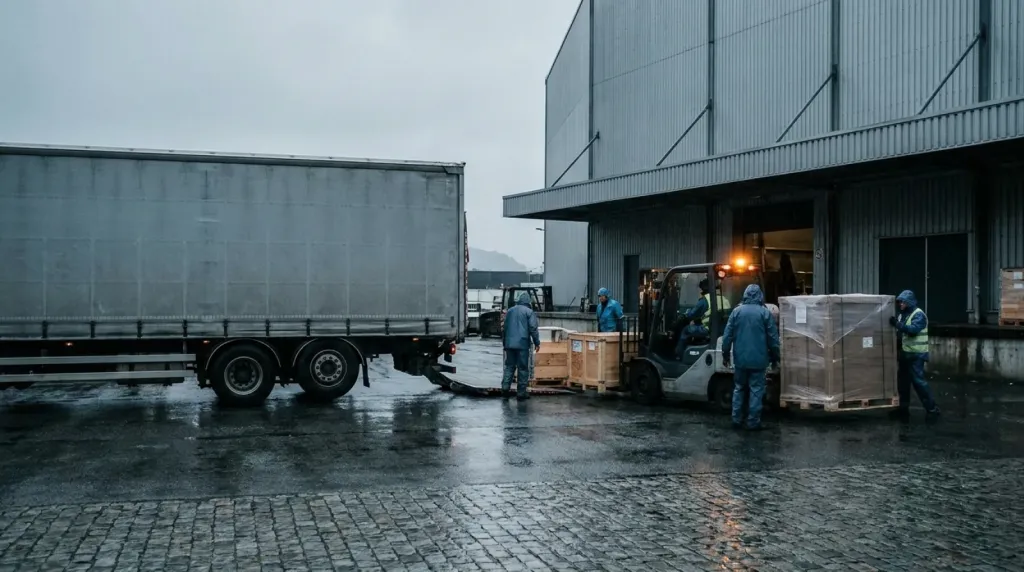
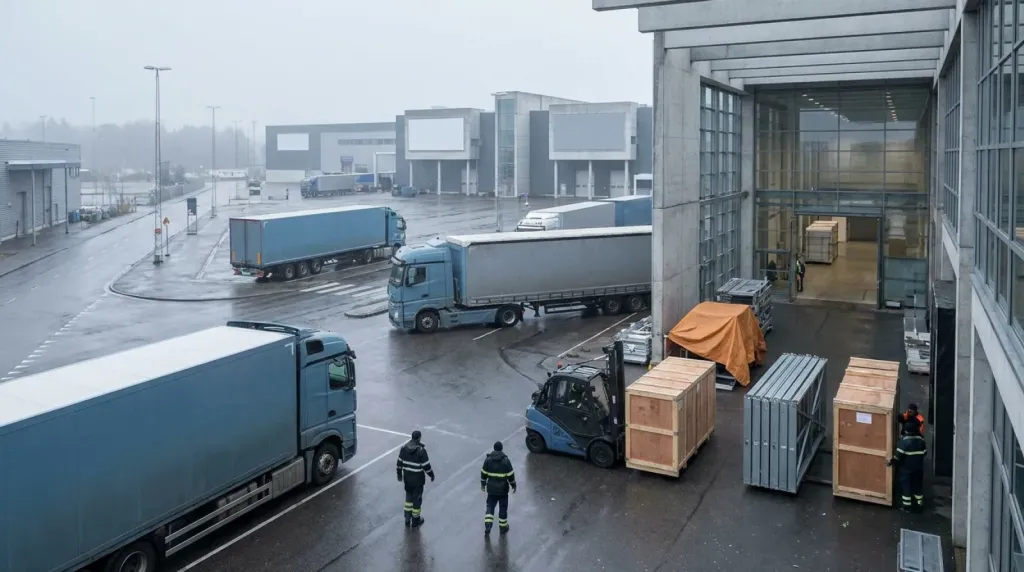
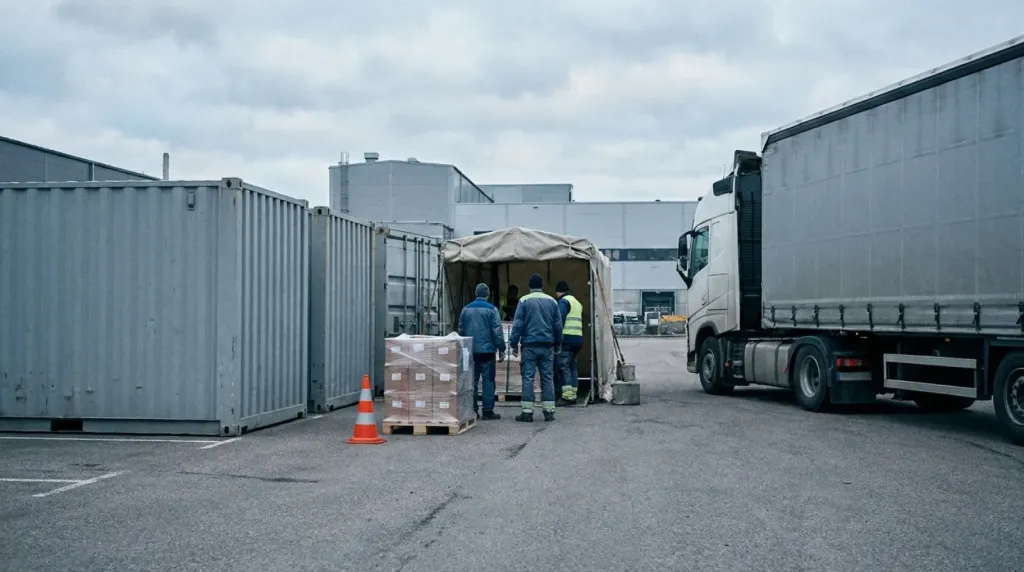
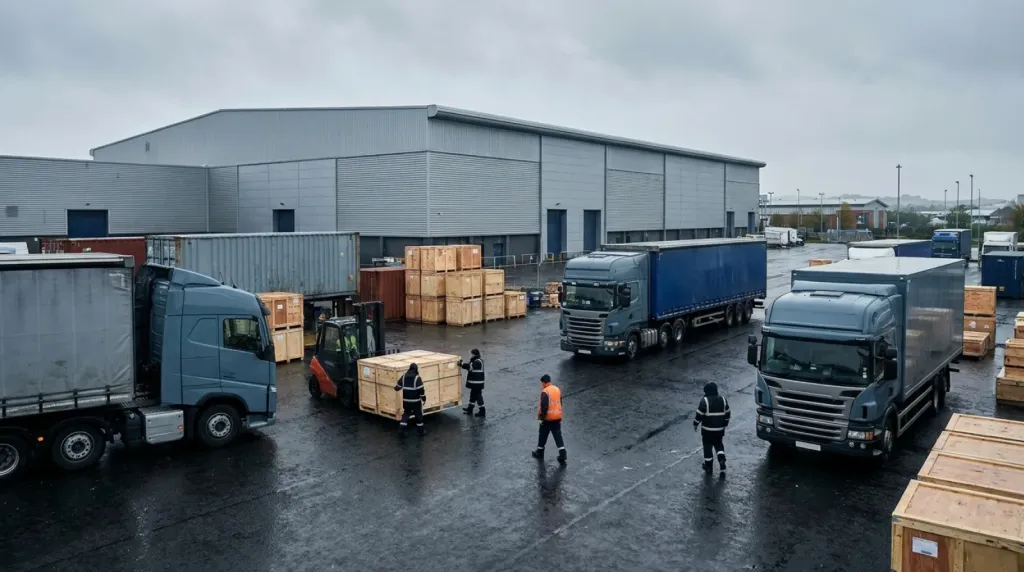
 AI image
So the build crew does not wait, delivery of the stand build and materials is planned backwards from the build-up window on the fairground: first the unloading slot and booking-in, then the transport, and finally a warehouse buffer that absorbs any slippage. The material must be on site when the fitters start work, neither too early (nowhere to store it) nor too late (expensive hands standing idle). The key is one schedule shared by transport and crew.
The Polish-language version of this article is the reference one. This is an informational translation.
Why a waiting crew is the most expensive downtime at a fair
A stand build is a window counted in hours, often at night or just before opening. The build crew is a team of specialists billed for their time on site, frequently on travel with transfers and accommodation. When the build has not arrived, the fitters have nothing to do while the clock keeps ticking. On top of that comes the risk that the build-up window closes and the stand is not ready for opening. That is why at a fair the first thing that costs is not transport, but poorly synchronised transport. We lay out the whole stand logistics in the article on trade fair stand logistics from A to Z.
Build-up slots and booking-in: the calendar rules
A fairground is not a warehouse you drive into whenever you like. Organisers set build-up and breakdown windows, and entry to the site and unloading happens in allocated slots after the vehicle is booked in. A late vehicle loses its slot and lands at the back of the queue, which translates straight into a waiting crew. That is why we read the build-up dates and entry rules from the regulations of the specific fair before we plan the route, not afterwards at the gate. How booking-in and slots work, on the example of consignees in the United Kingdom, is shown in the article on booking-in for UK deliveries.
Planning backwards: from opening to loading
| Reference point | What we set |
|---|---|
| Fair opening | the date and time by which the stand must be ready. |
| Build-up window | when the crew has access to the hall and how many hours build-up lasts. |
| Unloading slot | the allocated entry window and vehicle booking-in. |
| Transport | the route and driving time with a margin for checks, the border and traffic. |
| Warehouse buffer | where the material waits ready if the slot is later than the arrival. |
| Loading | the departure date derived from the above, not the other way round. |
Dedicated transport or a buffer: two roads to on time
There are two ways to get the material onto the stand to the hour. The first is dedicated transport: one vehicle carries only that build, without part-loads or transfers, so the arrival time is predictable and can be matched to the slot. The second is a warehouse buffer close to the fairground: the material arrives earlier, waits secured and moves to the hall exactly in the build-up window on a short shuttle run. A buffer saves the situation when the unloading slot falls later than the real arrival time or when the route is long and sensitive to delay, for example with a clearance on the British lane.
When clearance enters the picture: one more clock
For fairs outside the Union or from the EU to the United Kingdom there is clearance and often an ATA carnet for the temporary export of the build. That is another window that must close before the build-up window, because a rig with the build stopped at the border is the same waiting crew, only for a different reason. How clearance can overturn the build schedule and how to prevent it is described in the article on botched customs and a crew that waits. That is why for foreign fairs we tie transport, buffer and clearance into one plan, not three separate ones.
The role of the buffer warehouse in Kielce
For fairs in the Swietokrzyskie region, including Targi Kielce, the buffer is often our warehouse near Kielce. The build and materials arrive in advance, wait secured and reach the hall on a short, dedicated shuttle run exactly in the build-up window. This way the build crew starts work with the complete material at hand, and slippage on the route from the factory or from abroad does not translate into downtime on the stand. How this transshipment and cross-dock works is shown in the article on the Kielce warehouse and cross-dock transshipment.
What do we agree with the client before transport starts?
- The opening date and time and the hard deadline for the stand being ready
- The build-up window and entry rules from the regulations of the specific fair
- The unloading slot and the data for vehicle booking-in
- The choice between dedicated transport and a warehouse buffer close to the site
- For foreign fairs: clearance and any ATA carnet in the same plan
- A contact for the build crew leader, so the shuttle and the build match to the hour
The stake is simple: a well-synchronised delivery means a crew that builds from the first minute rather than waits. A poorly synchronised one means expensive fitters staring at an empty floor and a stand chased right up to opening. More on the trade fair hub is on the trade fair logistics page.
Step by step
- Fix the assembly schedule. You define the exact time the build crew needs the stand materials on site.
- Book the unloading slot. You secure the exact delivery window from the exhibition organiser.
- Set up a warehouse buffer. Deliver materials in advance to a nearby warehouse to cushion transit delays.
- Deliver to the stand. Move items from the warehouse to the hall precisely when required.
- Start construction. The fitters begin work immediately after unloading without any downtime.
Definitions
- Transport for a build crew: Delivery of stand elements and equipment synchronised directly with the fitters' work schedule.
- Build-up window: A specific period allowed by the fair organiser to construct the stand inside the hall.
- Unloading slot: A strictly assigned time for the delivery vehicle to enter the unloading area at the fairground.
- Warehouse buffer: Temporary storage space that absorbs potential delays along the transport route.
When does this rule not apply?
This rule does not apply when the fair organiser allows open access to the venue without fixed booking-in slots or strict arrival schedules.
The OTSL role
OTSL coordinates exhibition logistics using its warehouse in Milton Keynes and facilities in Kielce. We arrange express vans to ensure materials arrive on time, preventing costly issues explained in Poor exhibition logistics costs more than the transport. See also: Missing your build-up slot at a trade show: what actually happens and Trade Fair Logistics Hala Stulecia Wrocław: Transport & Delivery. See also: Emergency trade fair delivery: bringing missing stand parts.
Sources
- AUMA (Association of the German Trade Fair Industry): organising fair participation, build-up and breakdown
- ICC: the ATA carnet (temporary export of stand build and fair equipment)
- GOV.UK: taking goods out of the UK temporarily, including to fairs
Preparing a stand build for a fair in Poland or abroad? Describe the date, the site and the crew in the contact form and we will arrange delivery around the build-up window so the fitters start work with the material ready on the stand.