 AI image
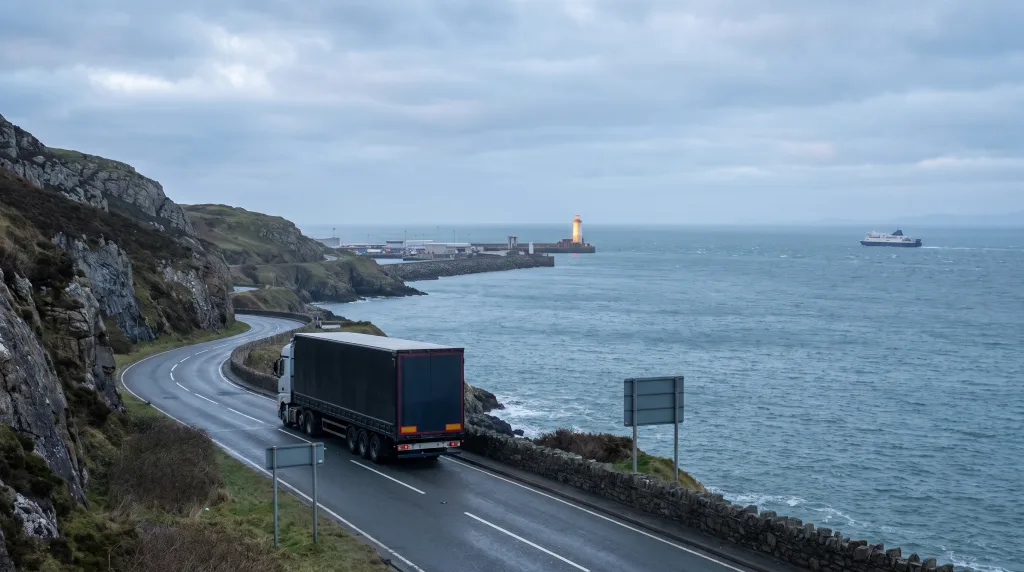
A truck can reach Ireland on a direct ferry from France or take the landbridge through Great Britain: a short Channel crossing, a drive across England and Wales, then a ferry over the Irish Sea. The direct ferry means no customs formalities, the landbridge means T1 transit, GMR (Goods Movement Reference, required at the UK border) and PBN, but usually a shorter door-to-door time.
The Polish-language version of this article is the reference one. This is an informational translation.
Two ways to Ireland
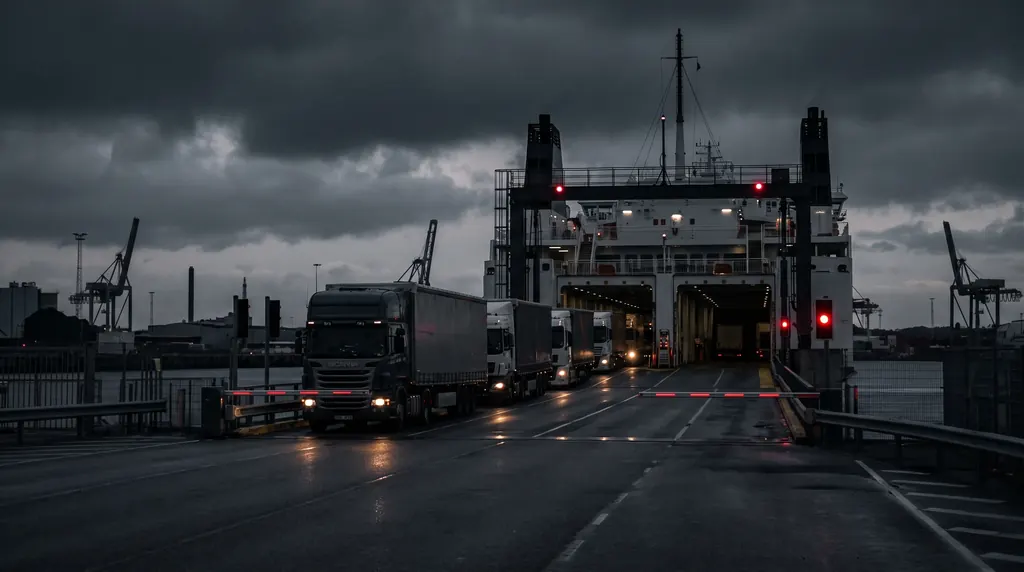
Ireland is in the European Union, but since Brexit it has no land connection through Union territory. A truck from Poland therefore has two options. The first: driving to a port in France and taking a long direct ferry, for example Dublin-Cherbourg with Irish Ferries or Rosslare-Cherbourg with Stena Line. The second: the landbridge, that is a Calais-Dover or Dunkirk-Dover crossing, a drive across England and Wales and the Holyhead-Dublin ferry. The choice is always a calculation of time, formalities and risk, not a dogma.
Direct ferry from France: no customs, more hours at sea
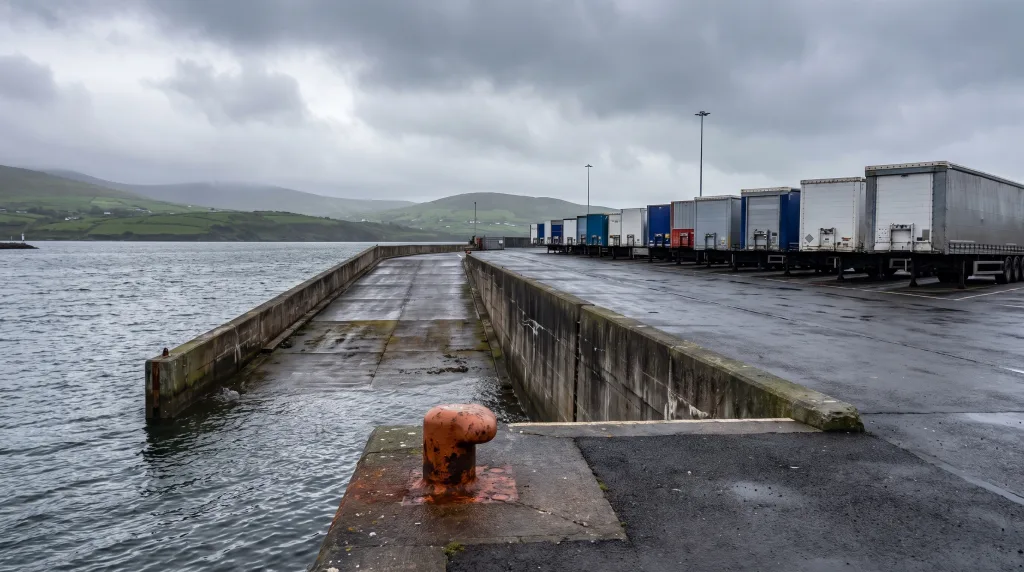
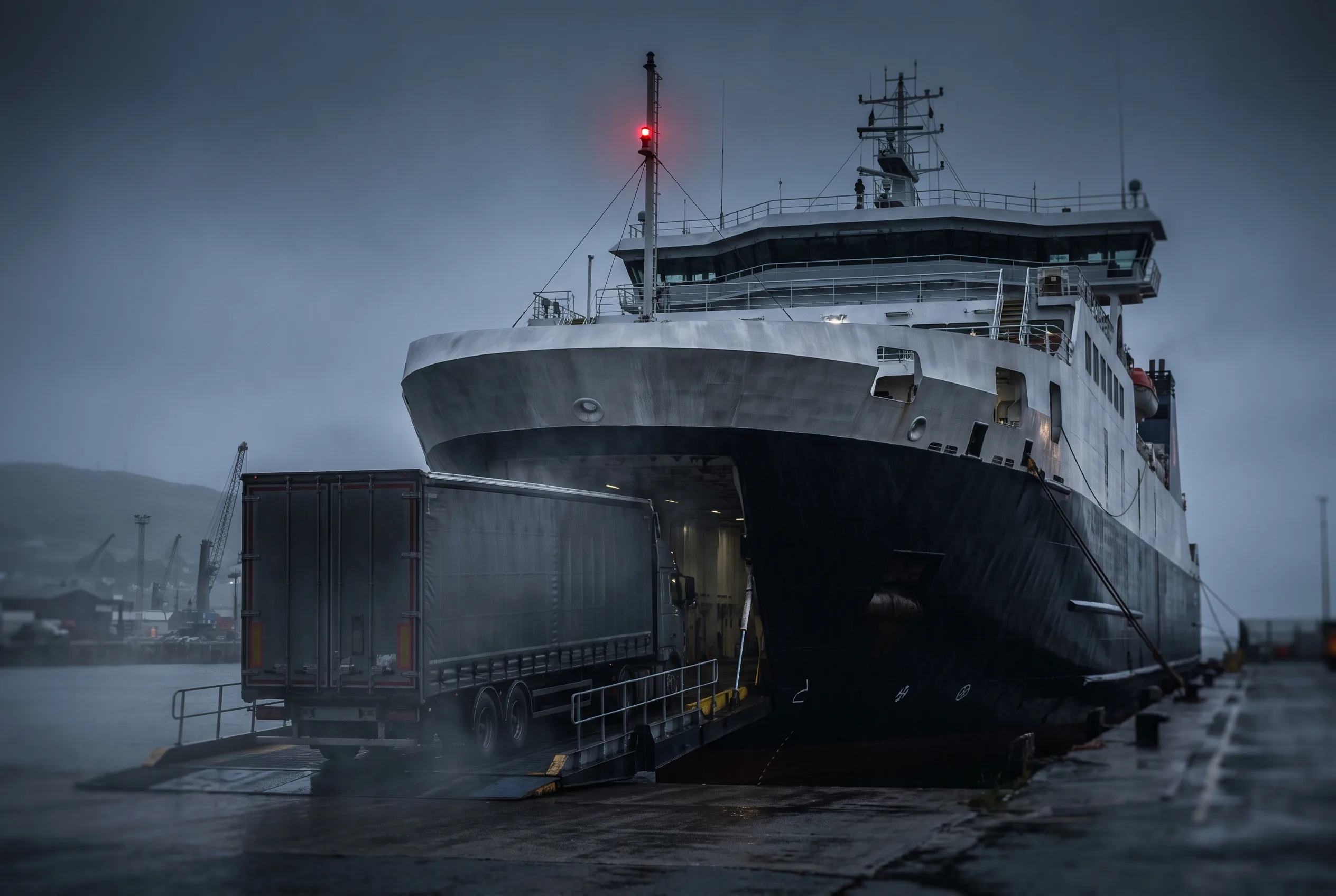
France and Ireland are in the EU and the customs union, so Union goods sail without customs declarations, without transit and without a PBN. According to the Irish Ferries timetable the Dublin-Cherbourg crossing takes roughly 18-20 hours, depending on the direction and the ship. The long crossing has its advantages: the driver can use it for rest and the vehicle adds no mileage on British roads. The downsides are fewer departures than on the Channel and sensitivity to weather on the open sea: a storm can shift a sailing by many hours, and the next free slot may be days away.
The landbridge: less time at sea, more formalities
On the landbridge the crossings are short and frequent: ferries cross the Channel many times a day, and the Holyhead-Dublin sailing takes about 3.5 hours according to Irish Ferries. Door to door this option is often faster, especially when the delivery window is rigid. The price for the pace: Union goods cross a third country.
The common transit procedure (T1) allows goods to move through Great Britain without UK duty and VAT. The transit declaration is created in the NCTS system, the TAD document travels with the vehicle, and the transit MRN must be entered into a GMR in the British GVMS system, for both legs: entry into the UK and exit towards Ireland. The procedure is closed once the goods reach their destination. How the crossings themselves are reserved, we describe in the article on ferry booking.
PBN: the electronic envelope before the Irish ferry
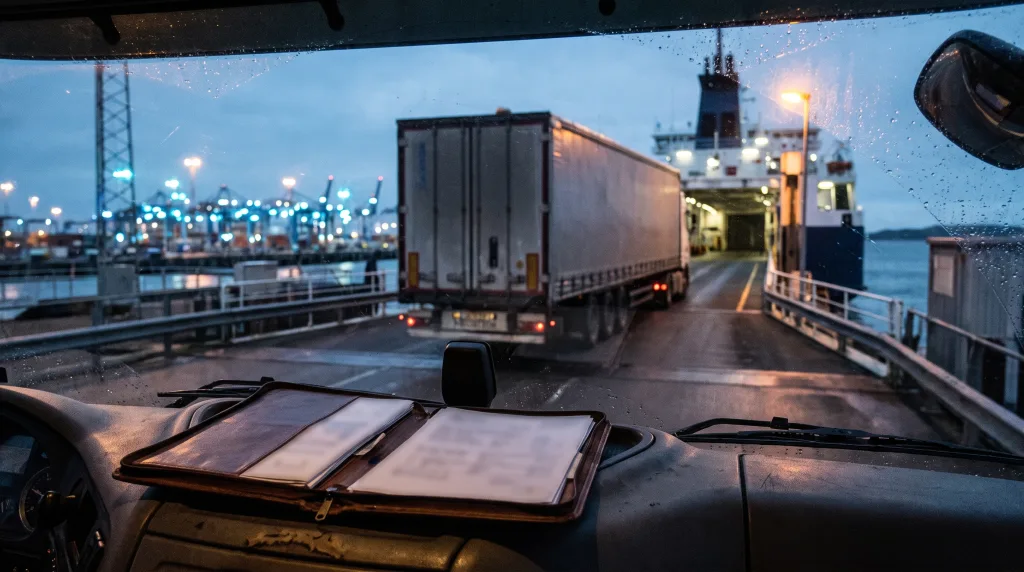
On ferry routes between Ireland and Great Britain the Irish Revenue requires a PBN, the Pre-Boarding Notification. It is an electronic envelope that collects the MRN numbers of all customs and transit declarations for the goods on the vehicle. The haulier is responsible for creating it, though the task can be delegated, for example to a customs agency. Without a PBN with the status Good to proceed to Check-In the vehicle will not be allowed to board the ferry and will be told to leave the port area. On the landbridge the PBN is therefore prepared before reaching the port, not at the check-in ramp.
When does each option pay off?
- Urgent, fresh and just-in-time loads: usually the landbridge, a shorter door-to-door time and more departures per day
- Less time-critical loads: the direct ferry, no customs formalities and a lower risk of border delays
- Non-Union goods or goods under customs procedures: the calculation gets more complex, do it together with a customs agency
- Storm season and traffic peaks: keep a plan B on the other option
The stake is concrete. A badly chosen option is not just a longer transport: it is a missed booking window at the consignee, a driver running out of working time outside the port, and goods waiting for the next free ferry.
Step by step
- Route selection. You choose between a direct ferry from France and the landbridge option based on delivery timelines.
- Document preparation. You issue the T1 transit document and generate GMR and PBN references when routing via Great Britain.
- Ferry booking. You book tickets for the direct sea crossing or both ferry legs along the landbridge route.
- Transit execution. The driver completes the journey and presents reference numbers at the respective port check-ins.
- Transit discharge. Upon arrival in Ireland, the T1 procedure is closed before final delivery to the consignee.
Definitions
- Landbridge: The land-and-sea route connecting continental Europe with Ireland via Great Britain.
- T1: A customs transit document enabling the movement of goods through a third country without immediate payment of duties.
- GMR (Goods Movement Reference): A reference number issued by the UK Goods Vehicle Movement Service required at the British border.
- PBN (Pre-Boarding Notification): An electronic customs notification required by Irish authorities prior to boarding a ferry to Ireland.
- Direct ferry: A direct maritime route connecting continental ports in France directly with Irish ports.
When does this rule not apply?
The requirement for transit declarations and obtaining GMR or PBN numbers does not apply to shipments moved on direct ferry services between European Union ports and Ireland.
The OTSL role
OTSL organises freight transport to Ireland by selecting suitable transit options and managing the required port documentation. You can use our Ferry booking service to secure places on direct or landbridge ferry routes. You can also read about Express vans and time-critical transport in Europe | OTSL when your cargo requires rapid delivery. See also: Goods from Ireland to Poland via Great Britain: T2 transit and T2L and The UK landbridge to Ireland step by step: Dover, Holyhead, Dublin and Landbridge is transit, not import: why there is no UK duty or VAT.
Sources
- Revenue (Ireland): Pre-Boarding Notification (PBN)
- Revenue (Ireland): Customs Roll-on Roll-off Service
- GOV.UK: Get a goods movement reference (GVMS)
- Irish Ferries: Dublin-Cherbourg route
- Stena Line Freight: route network
We carry to Ireland both ways and match the route to the load, not the other way round. See transport to Ireland, the article on organising transport to Ireland and customs clearance, or describe the load in the contact form.