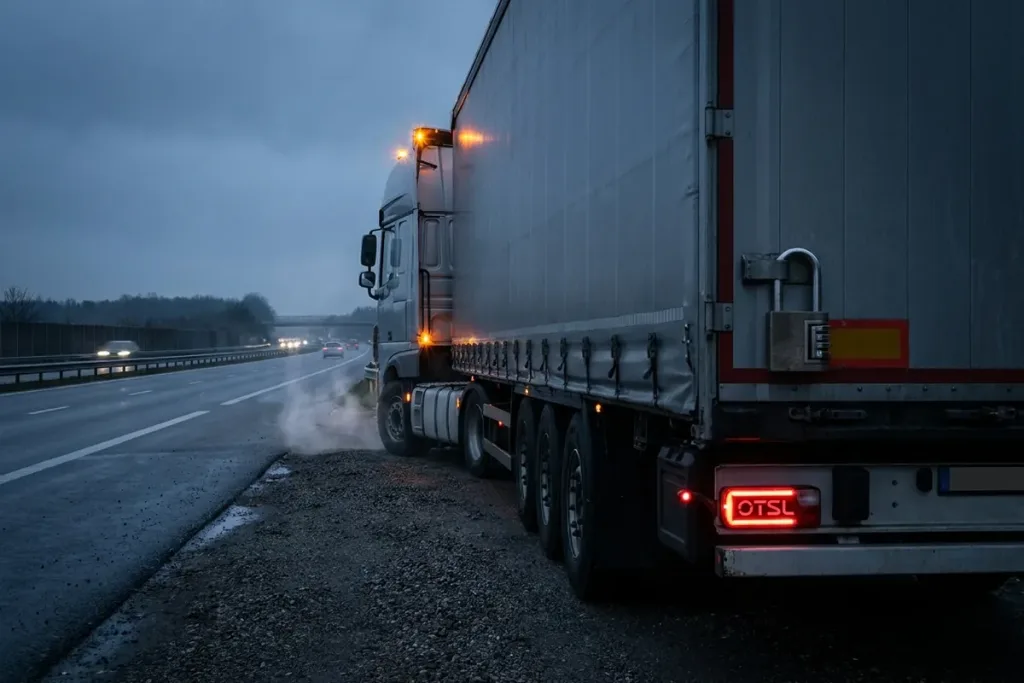
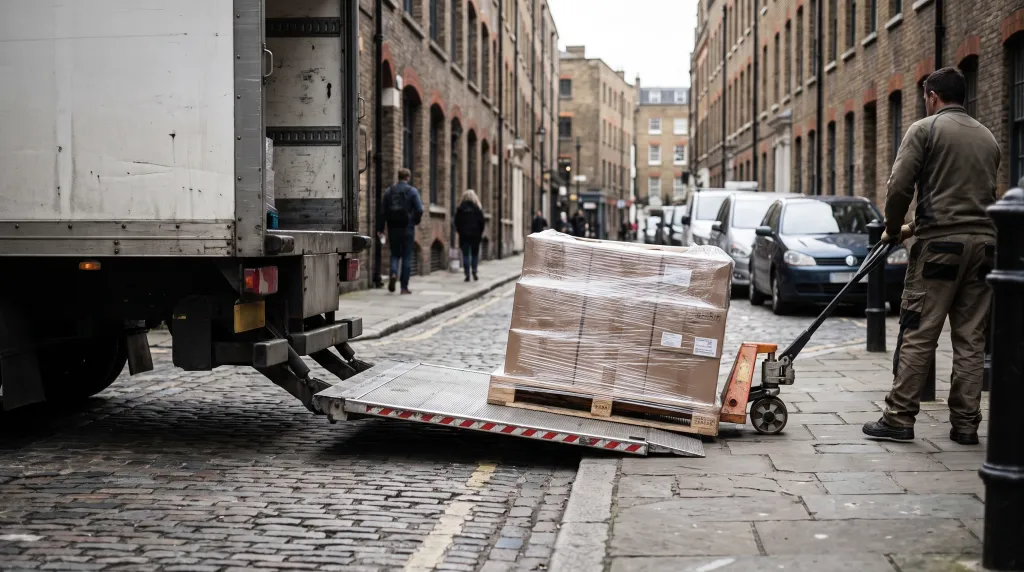
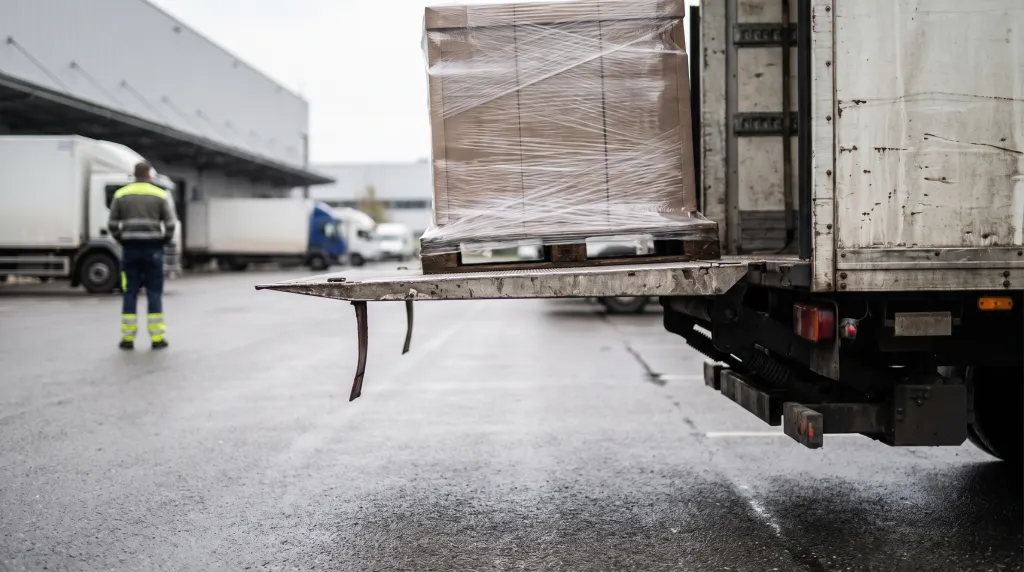
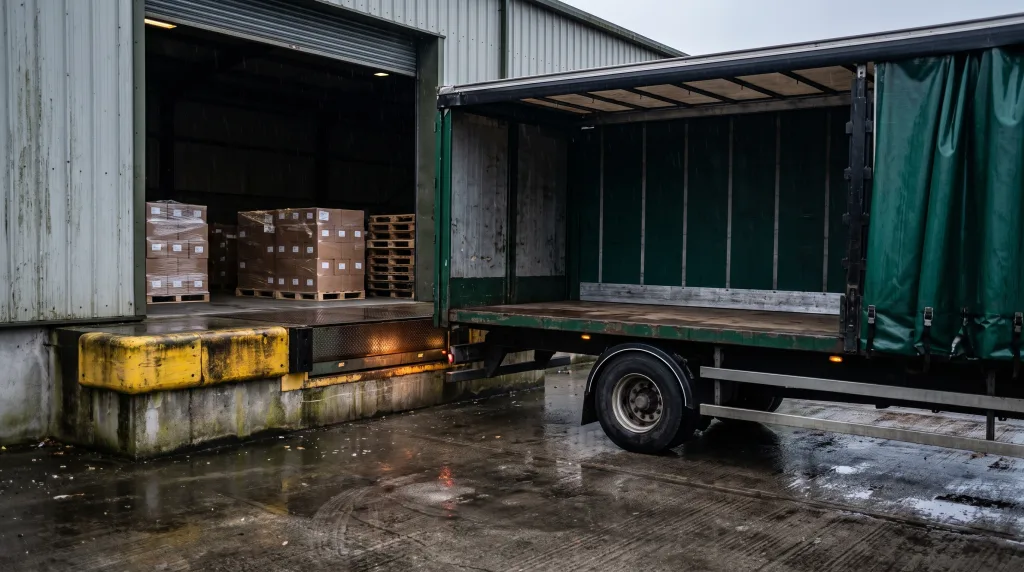
 AI image
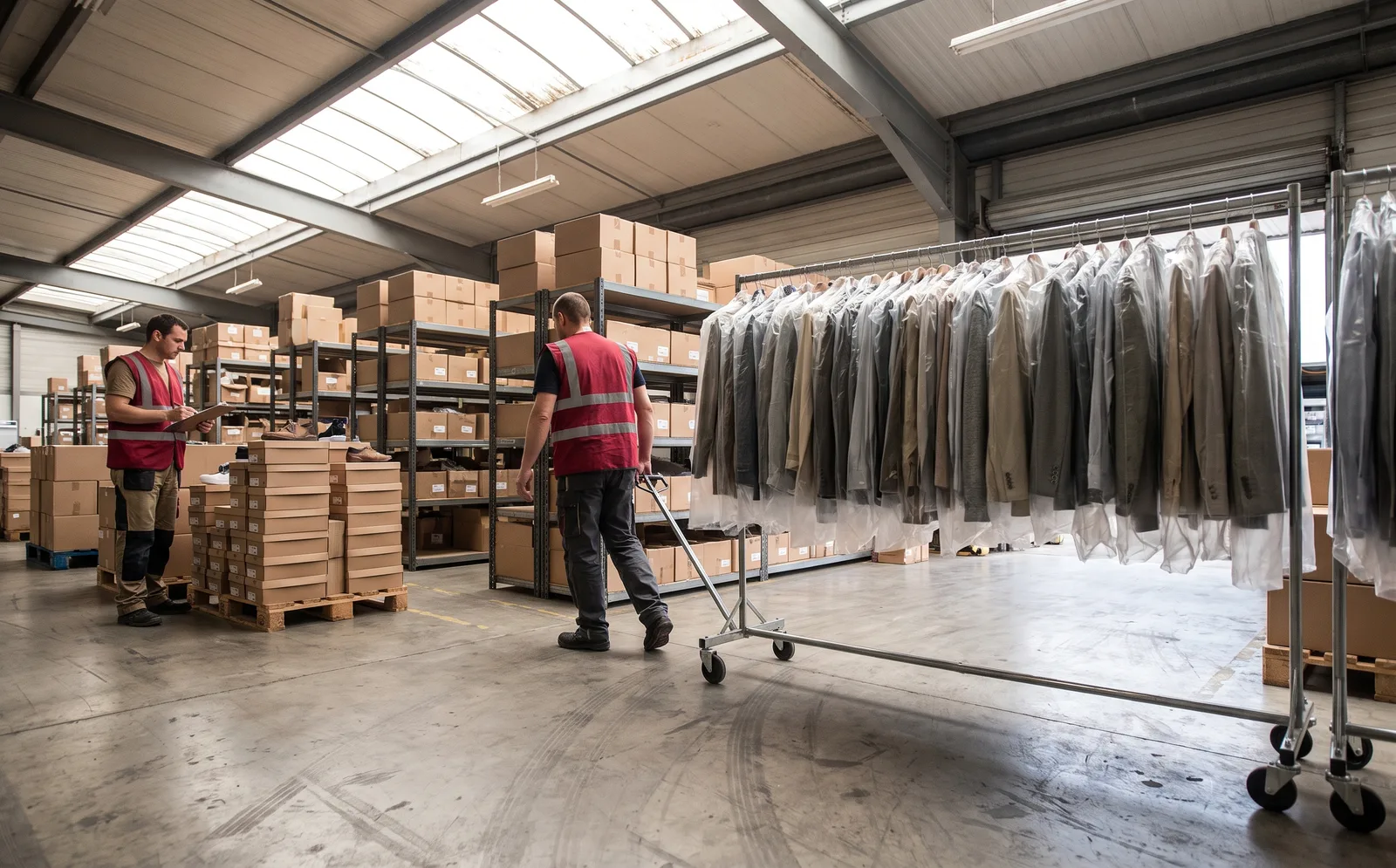
Clothing and footwear move in two ways: in cartons on pallets or as garments on hangers (GOH) on rails in the trailer. Cartons win for knitwear, jeans and shoes, GOH for suits, coats and dresses that must arrive uncreased, ready for the shop rail. The rest is decided by the collection calendar: retail delivery windows and season launches do not wait for a late trailer.
The Polish-language version of this article is the reference one. This is an informational translation.
Cartons or GOH
A carton on a pallet is cheaper in load space and simpler to handle, which is why most e-commerce clothing and fold-resistant assortment travels that way. GOH is chosen where a crease destroys the value of the product: formalwear, outerwear, gowns. A trailer with rails takes fewer pieces per cubic metre, but saves the cost of pressing and complaints on the consignee side. The decision is made per collection, not once and for all.
Protection from moisture and crushing
Clothing is sensitive to two things: water and pressure. In practice this means sealed polythene bags or covers on hanging pieces, cartons with a stacking strength matched to the load plan, layer pads between tiers and a ban on placing heavy pallets on top of textile freight. The trailer must be dry and clean; condensation after washing the tarpaulin or loading in the rain can leave marks across a whole batch. We cover load securing in more depth in the article on pallets, packaging and load securing.
Season cycles and delivery windows
Fashion lives by seasons: a collection that misses its launch hangs on the sale rail from day one. Clothing transport is therefore planned backwards from the launch date: the delivery window at the distribution centre, the crossing, the loading, the production. Retail chains enforce booking-in and unloading slots, and a late trailer sometimes goes to the back of the queue. How booking-in works with British consignees is explained in the article on booking-in for UK deliveries.
Deliveries to retail chains and distribution centres
Distribution centres of clothing retailers have rigid requirements: a specific pallet type, stacking height, carton labels matching the specification, delivery documents complete. Non-compliance ends with a refused delivery or a paid non-standard handling. That is why we read the consignee requirements before loading, not at the ramp.
E-commerce and returns
Online clothing sales generate a large stream of returns, and after Brexit a return from the United Kingdom to Poland is formally a separate customs clearance. The goods come back with documents that allow customs charges to be recovered, which we describe in the article on returning goods from the UK to Poland. Consolidating returns in a warehouse on the British side reduces the number of crossings and keeps the documents in order.
Exporting clothing to the United Kingdom
Shipping a collection to the UK means a full export and import clearance: invoice, specification, customs declarations and a GMR (Goods Movement Reference, required at the UK border) for the crossing, which we run within our customs clearance service. Clothing loads are also a target for people trying to hide in trailers on routes across the Channel; what a cargo inspection after such an event looks like, we describe in the article on cargo inspection after unauthorised people.
Repacking and relabelling in Milton Keynes
In our Milton Keynes warehouse between London and Birmingham we prepare clothing for the requirements of British consignees: pallet exchange, new carton labels, splitting batches for several distribution centres, building size mixes. This way one trailer comes from Poland in a single run, and differences between retailer specifications are resolved on site. How the service works is shown in the article on repacking in the UK warehouse.
Why is the choice between cartons and hangers crucial for garment delivery?
The choice directly impacts load space efficiency and the time required to get items onto the retail floor, as hanging garments arrive uncreased and ready for display without requiring ironing or unpackaging.
Step by step
- Choosing the packing method. You determine whether the clothing requires GOH transport or if cartons on pallets are sufficient.
- Trailer preparation. You adjust the vehicle equipment by installing garment rails or arranging space for pallets.
- Loading the goods. You place garments on the rails or stack sturdy cartons onto pallets.
- Securing the load. You check the stability of the hangers or secure the pallets with straps before transit.
- Delivery to the recipient. You deliver the goods directly to the store or distribution centre within the designated delivery window.
Definitions
- GOH (Garments on Hangers): The carriage of hanging garments on special rails in a trailer without folding clothes into cartons.
- Carton on a pallet: A standard method of packing folded clothing or footwear to make maximum use of load space.
- Delivery window: A specific time frame set by a retailer during which the shipment must arrive at the recipient warehouse.
- Distribution centre: A logistics facility that receives goods from suppliers and prepares them for further dispatch to retail stores.
When does this rule not apply?
The distinction between cartons and garments on hangers does not apply when the retailer mandates a single specific packaging standard regardless of fabric type, unless the parties agree on modified terms prior to delivery.
The OTSL role
We organise efficient transport of textiles and footwear, connecting our facility in Kielce with our warehouse in Milton Keynes. We help plan road transport tailored to the specific needs of your collection, and if launch deadlines are tight, you can also learn about urgent shipments in our article on express vans and time-critical transport.
Sources
- GOV.UK: export goods
- GOV.UK: import goods into the UK
- GOV.UK: clandestine entrant civil penalty scheme
Preparing a collection for the new season or deliveries to UK retail chains? Describe the assortment in the contact form and we will choose cartons or GOH and plan the delivery windows around your calendar.