 AI image
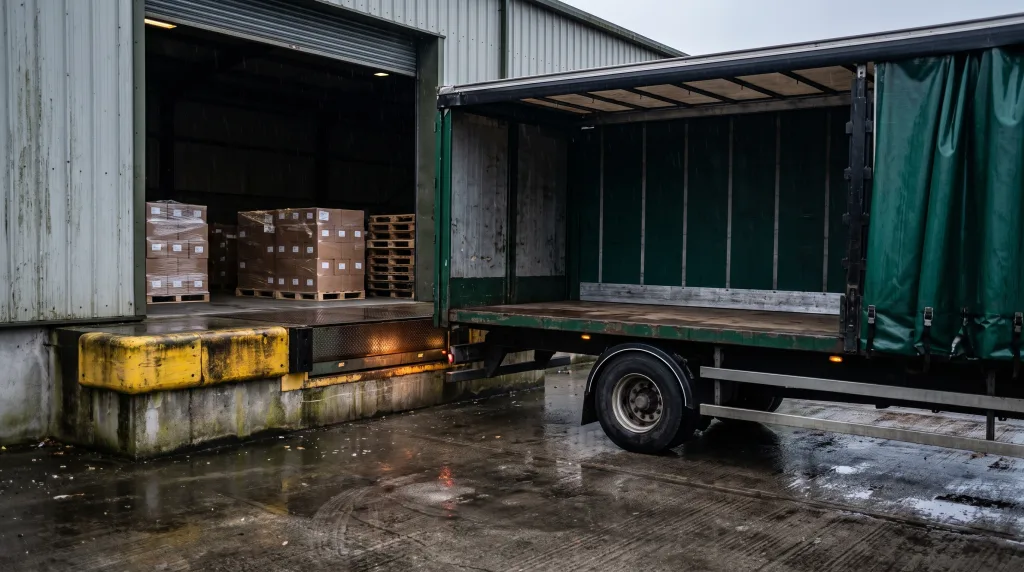
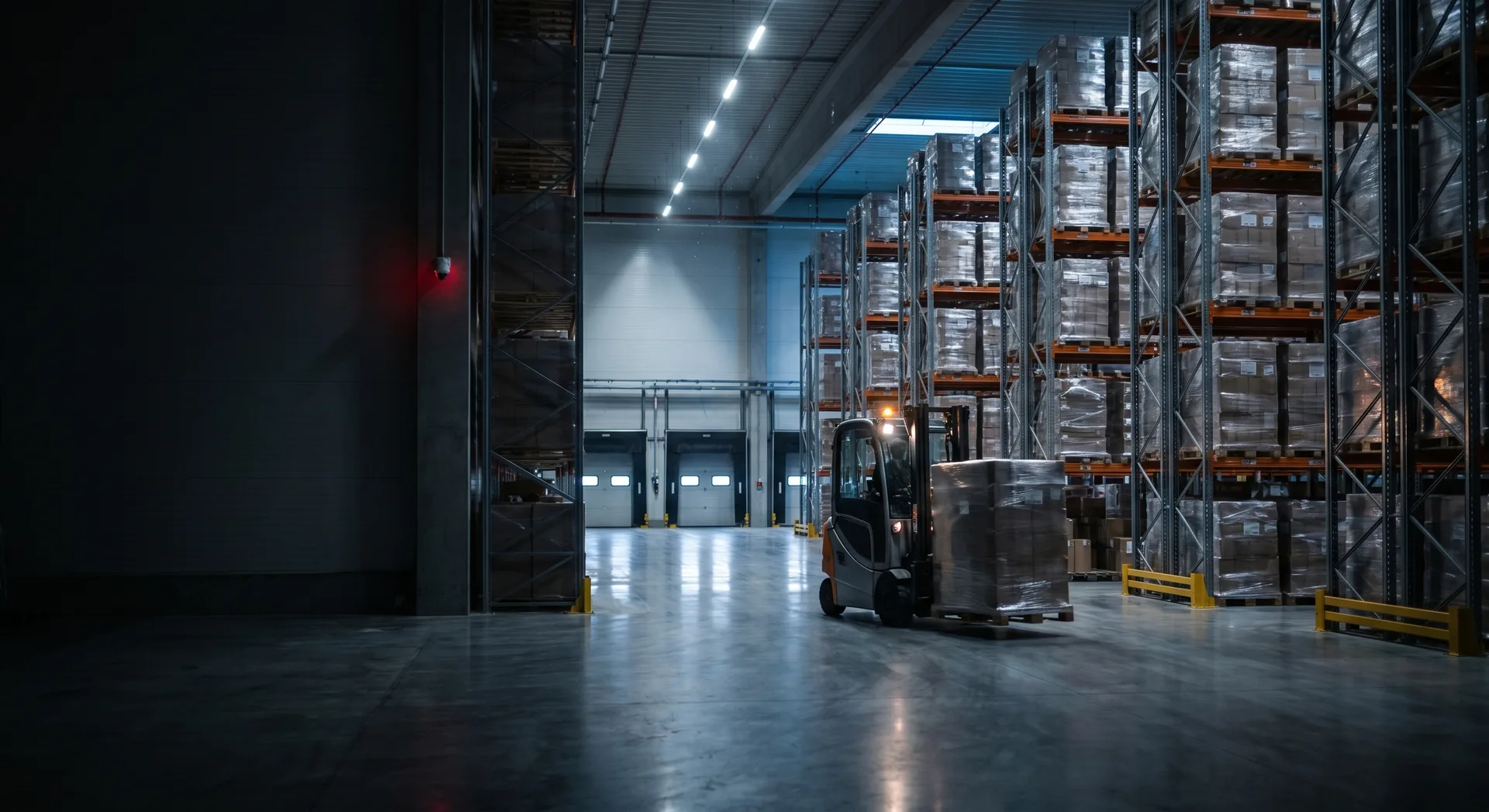
The OTSL warehouse in Milton Keynes in the UK runs 24/7 and combines pallet storage, cross-docking, transhipment, re-packing and recovery of damaged loads. So when something happens to goods on the UK market, assessment and repair happen on the spot, without hauling them back and forth.
What does the facility cover?
- Pallet and short-term storage.
- Cross-docking and transhipment between vehicles.
- Re-packing, straightening and rebuilding pallets after a tilt.
- Recovery of damaged loads and inspection after a trailer breach.
- Temperature-controlled space.
Why does a warehouse on the spot matter?
When an event concerns goods already in the UK, the worst idea is to haul them across the channel and back just to assess the damage. A facility on the UK market allows a fast reaction: assess, document, re-pack and prepare for onward travel or return. The same facility also handles returns and complaints.
How do we work?
The warehouse is part of one process together with transport and customs, run by one responsible contact. We also offer labelling, goods monitoring and quality and quantity checks on entry and exit.
See warehousing, inspection and recovery and re-palletising.
When does straightening a tilted pallet make operational sense, and when must you restack the goods from scratch?
When you notice a pallet leaning more than 10 degrees off vertical during cargo inspection, stretch film with a thickness of 23 microns alone will not prevent further slippage. Shifting the centre of gravity by more than 15 cm from the longitudinal axis increases the risk of tipping during braking forces above 0.8 g. Mechanical straightening is carried out using hydraulic or pneumatic clamps, adjusting the force so as not to crush the outer cartons. The entire process typically takes up to 2 hours per handling unit and requires reducing the stack height below 1.8 metres to restore structural stability.
However, you must know where the operational boundary lies. This straightening rule does NOT apply if the compression damage to the bottom layer of cartons exceeds 25% of their original height, or if the pallet weight exceeds 900 kg while the strapping is snapped. In these cases, the vertical load-bearing capacity is lost, and mechanical realignment provides only temporary stability. You must perform a complete manual restack: remove the goods layer by layer, replace crushed outer cartons, and rebuild the load on a fresh pallet.
- For unit loads exceeding 800 kg, you must apply heavy-duty cardboard edge protectors with a minimum thickness of 4 mm along all four vertical corners.
- The pre-stretch level of the wrapping film must reach at least 150% to prevent relative movement between carton layers during road haulage.
- Any overhang exceeding 20 mm beyond the Euro pallet perimeter reduces the stacking strength of the load by more than 30%.
Keep in mind that you have a window of maximum 24 hours from detecting the tilt to complete the corrective action in the warehouse. Beyond this point, tilted paperboard undergoes permanent creep deformation under its own weight, making recovery without full repacking impossible. Understanding this physical dependency allows you to choose the correct corrective action the moment the trailer berths at the bay.
Step by step
- Event reporting. You notify us about a damaged load or transhipment requirement within the UK market.
- Receiving cargo. The vehicle arrives at the Milton Keynes facility for controlled unloading and handling.
- Damage inspection. Specialists examine the cargo condition to determine necessary repair and restacking actions.
- Restacking and repacking. The team straightens tilted pallets, replaces damaged boxes, and secures the unit loads.
- Onward dispatch. Restored pallets are reloaded onto the destination trailer to complete the delivery route.
Definitions
- Cross-docking: Transferring goods directly from one vehicle to another with minimal or no intermediate storage.
- Pallet storage: Holding palletised goods inside a warehouse facility for a short or extended duration.
- Load recovery: Corrective measures applied to restore shifted or damaged cargo so it can continue transit safely.
- Repacking: Replacing or repairing damaged outer packaging and rebuilding unstable pallet structures.
The OTSL role
OTSL organises freight forwarding operations across Europe, combining services such as road transport with UK facility support. Detailed procedures regarding cargo recovery and trailer breach inspections are covered in our article on Milton Keynes warehouse recovery services.