 AI image
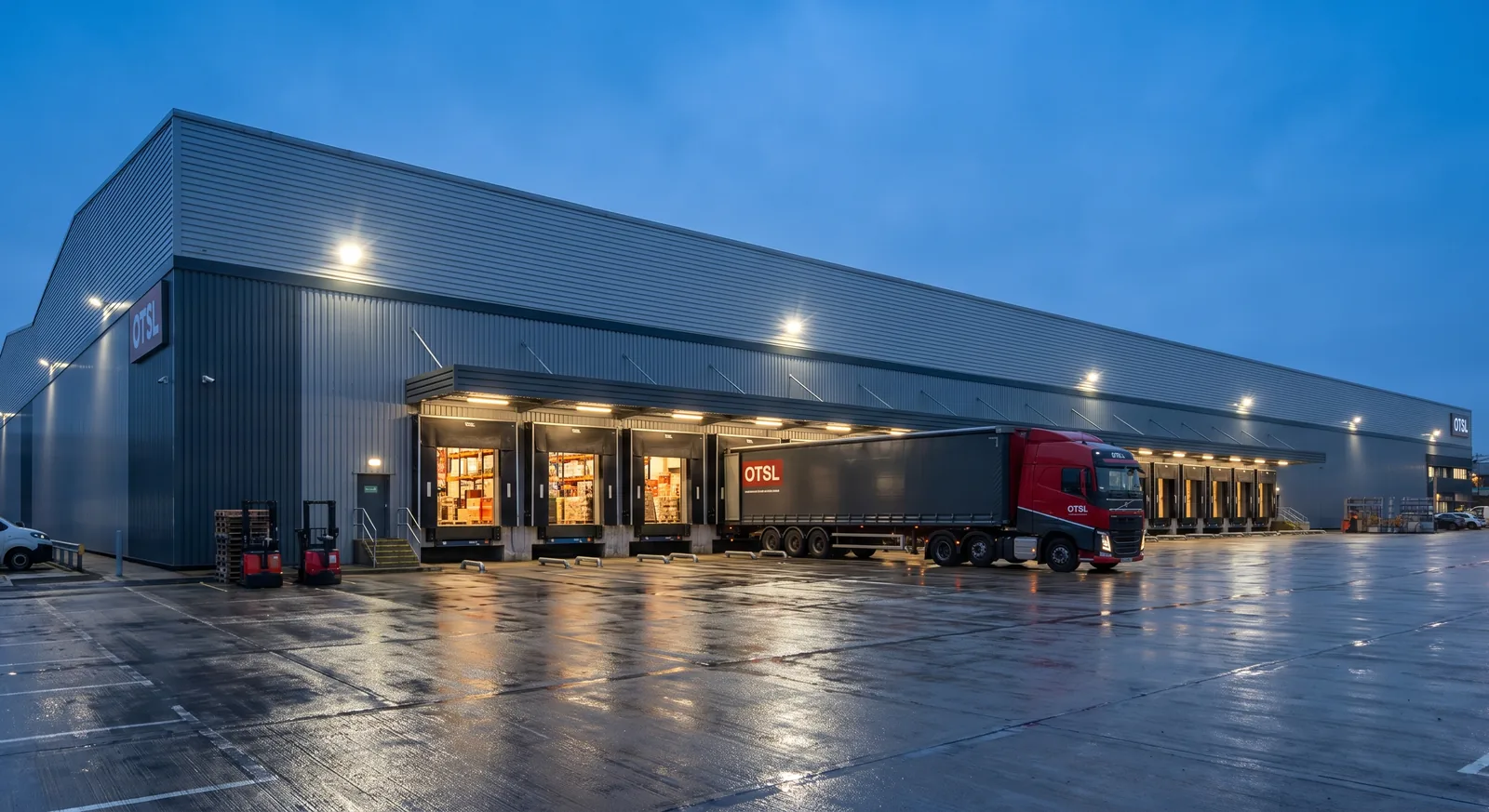
Our Milton Keynes warehouse sits in the heart of the UK Golden Triangle and runs 24/7. It is a recovery base for urgent and sensitive cargo: pallet re-stacking and repack, contaminated load inspection, cross-docking, temperature-controlled storage and UVC light decontamination. Here is how the process works, from the first notification to the report.
What we do in Milton Keynes
- Re-stacking and repacking of pallets damaged or leaning after transit, before the receiver rejects the whole delivery.
- Five-step inspection of contaminated loads, with photo documentation and a report for the insurer.
- Cross-docking and transshipment with a fast vehicle turnaround when the goods need to move on, not sit.
- Chilled and temperature-controlled storage.
- UVC decontamination and work to food-safety standards (EHO, HACCP).
Step by step: a recovery load in Milton Keynes
- Notification through the contact form or from the forwarder running the job: description of the incident, CMR number, photos, temperature requirements.
- Confirmation of acceptance and an unloading window. The warehouse runs 24/7, so the truck does not wait until morning.
- Unloading and the five-step inspection, pallet by pallet, with photo documentation.
- Decision agreed with the client and the insurer: repacking, re-stacking, UVC decontamination, storage, or disposal through a licensed partner.
- Inspection report: the condition of every pallet, the work done, recommendations.
- Onward movement: delivery to the receiver, cross-dock onto another vehicle, or return.
Why does it matter?
In deliveries to UK retail chains, damaged pallets or traces of contamination usually mean the whole delivery is rejected. The goods go back or wait for a decision, and every day costs standing time and value, especially with food. The CMR Convention gives the receiver short deadlines for reservations: apparent damage must be noted at delivery at the latest, non-apparent damage within 7 days (Article 30). A fast inspection and a warehouse report save part or all of the load and document the damage before the deadlines pass.
Checklist: what to prepare before sending a load in
- CMR number and carrier details.
- Description of the incident: leaning pallets, a breached curtain, a broken cold chain, a collision.
- Photos from the scene or from the driver.
- Required temperature and, if available, the recorder printout.
- Contact to the insurer or loss adjuster.
- A decision on who covers the inspection and follow-up work.
The OTSL role
Milton Keynes is one of three OTSL warehouses, alongside Kielce and Legnica in Poland. It supports our own vehicles and third-party carriers on routes between Poland, the EU and the UK. See OTSL warehousing, cargo inspection, the inspection process with a report, cross-docking in Milton Keynes and the value-added services of the site, or write through the contact form.
The warehouse operates at 36 Clarke Road, Bletchley, Milton Keynes, MK1 1LG, with 24/7 access.
Definitions
- Re-stacking: The process of rebuilding damaged or shifted pallets to restore structural stability and correct transit dimensions.
- Cross-docking: A logistics procedure where cargo is transferred directly from an inbound vehicle to an outbound vehicle with minimal storage time.
- UVC (Ultraviolet C): Ultraviolet C light technology used for effective surface decontamination and disinfection of sensitive loads.
- HACCP (Hazard Analysis and Critical Control Points): A preventive food safety system designed to identify and control potential biological, chemical, or physical hazards.
- EHO (Environmental Health Officer): An Environmental Health Officer responsible for monitoring and enforcing health and food safety standards in the United Kingdom.
When does this rule not apply?
This standard recovery procedure does not apply to cargo that has suffered complete structural or biological destruction beyond safe repacking or decontamination capabilities.
Sources
- UNECE: the CMR Convention on road carriage
- CMR Convention, Article 30: deadlines for reservations for apparent and non-apparent damage.
- Regulation (EC) No 852/2004 on the hygiene of foodstuffs, Article 5: procedures based on HACCP principles; applied in the UK as assimilated law after Brexit.
- Food Standards Agency (food.gov.uk): HACCP guidance for food businesses.