 AI image
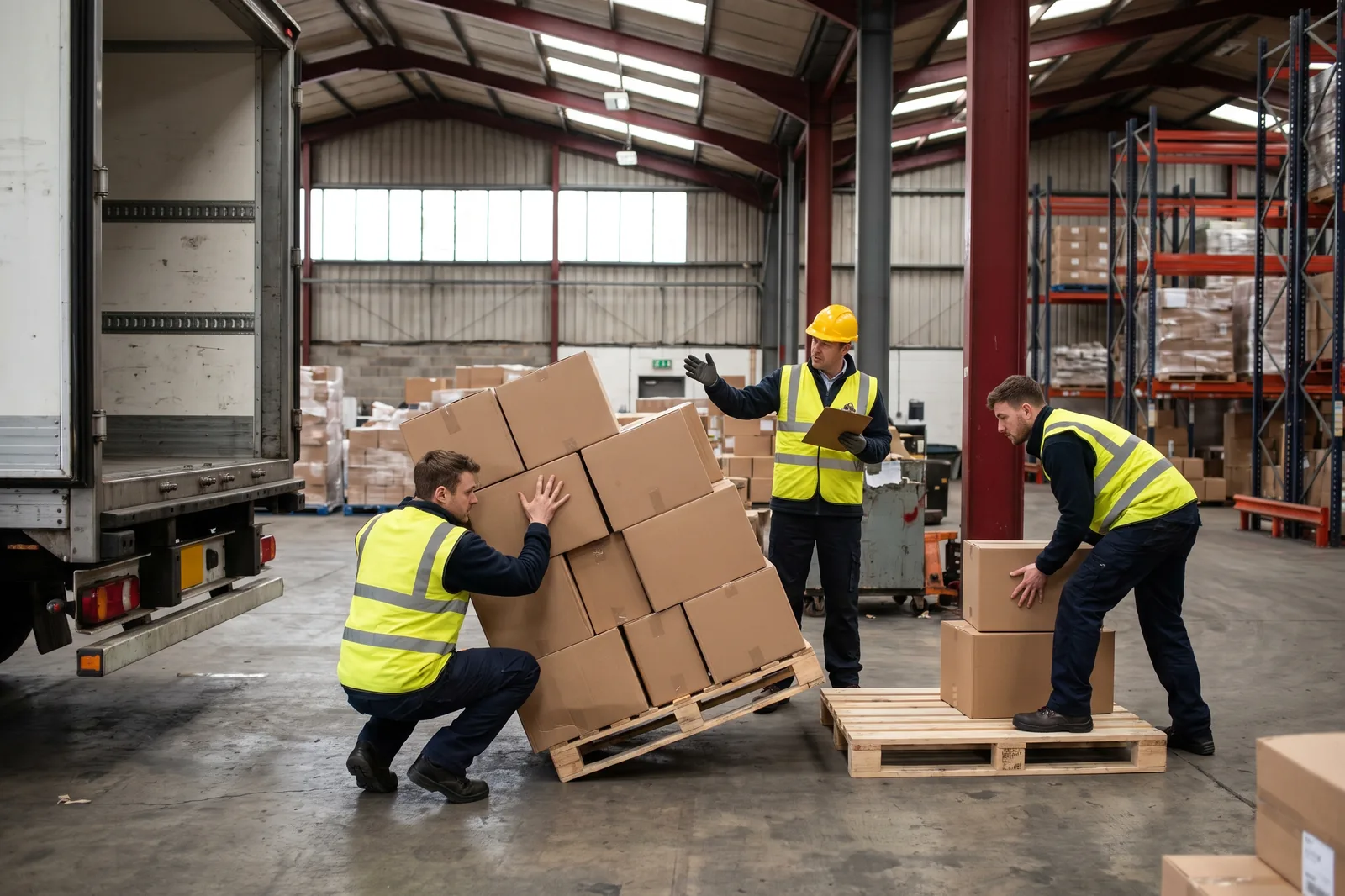
Distressed load management is the recovery of a load that has been damaged, destabilised or rejected, most often turned away at a supermarket regional distribution centre. In our Milton Keynes warehouse we take the trailer in 24/7, stabilise the load, inspect it pallet by pallet, decide fit or unfit against the retailer standard, restack and re-work the good stock, and arrange documented disposal for the rest.
The English-language version of this article is the reference one for the UK cluster.
Why a rejected supermarket load is an emergency
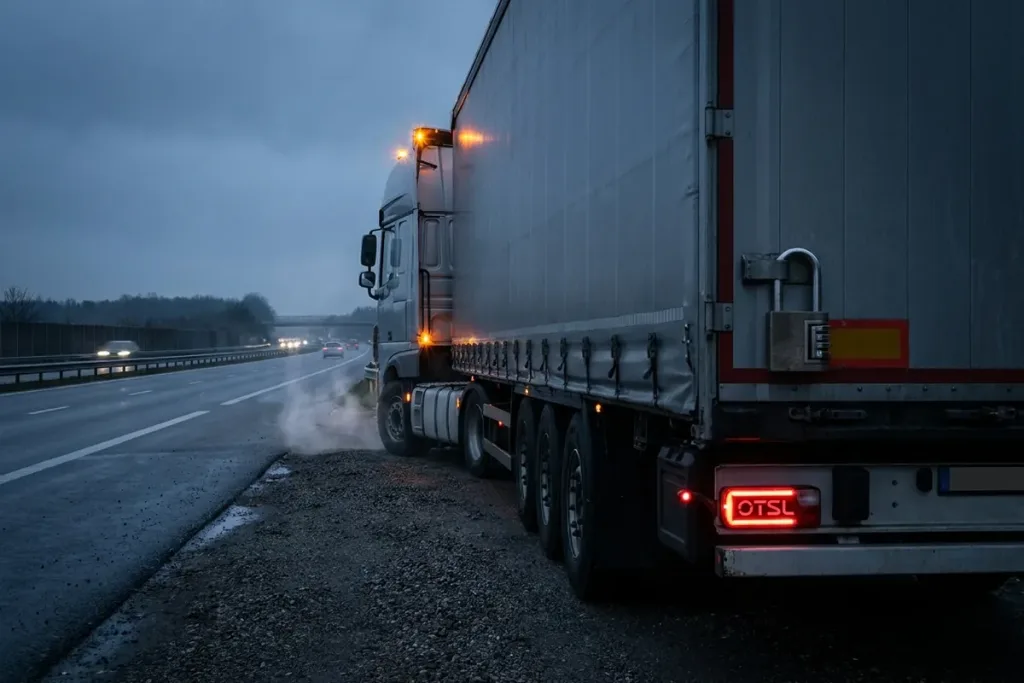
UK grocery retailers run tight goods-in standards, and their regional distribution centres reject on the spot. A leaning stack, a broken pallet, a torn outer, a label that will not scan, a temperature reading out of range or a missed booking slot can send a whole trailer back through the gate. The moment that happens the driver is stranded with a full load, the sender is thousands of miles away, and every hour the trailer sits idle adds demurrage and pushes the goods closer to their shelf-life cliff. Turning the trailer back to the continent means two more Channel crossings and days lost, by which time chilled or short-dated stock is worthless. The load needs somewhere to go now, not next week, and that somewhere has to be able to sort the good from the bad and act on both.
What we do with a distressed load
The point is to salvage everything that can be salvaged and dispose of the rest properly, all from one site, without bouncing the load around. Because our Milton Keynes warehouse runs 24/7, a trailer rejected at four in the morning is worked at four in the morning.
1. Stabilise and make safe
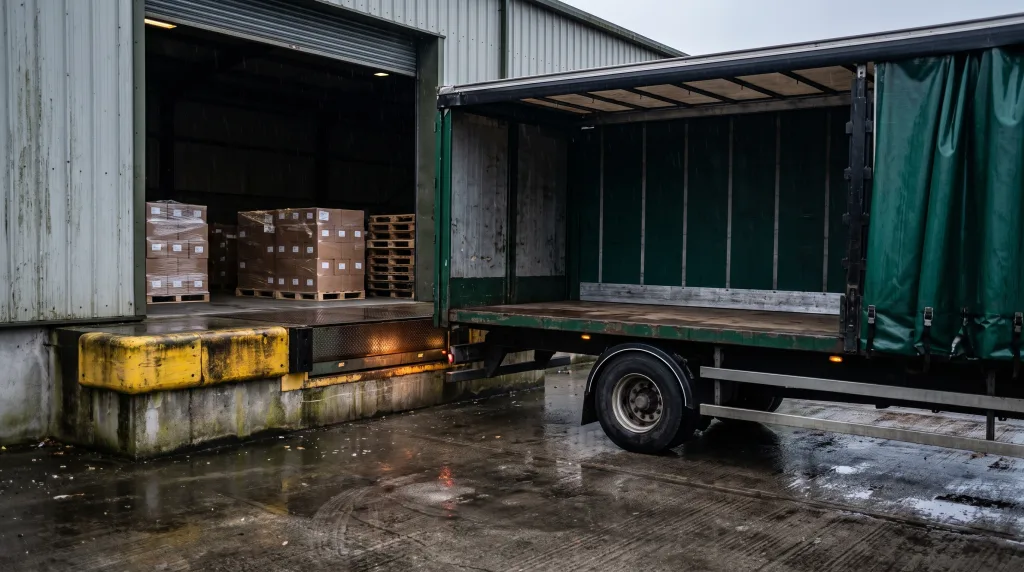
A distressed trailer is opened carefully, because a shifted or collapsed load can fall the moment the doors swing. We stabilise what is still standing, secure anything leaning against the curtain, and get the load into a state where it can be handled without damaging it further or injuring anyone.
2. Inspect pallet by pallet
Each pallet is assessed against the reason for rejection and the retailer standard: is the outer sound, is the product intact, has it been contaminated, is the pallet itself safe, does the label scan, is the temperature within range. This is where a distressed load stops being one undifferentiated problem and becomes a stack of clear yes or no decisions. Where contamination is suspected we run a full cargo contamination inspection before anything is passed as fit.
3. Decide fit or unfit
Every pallet lands in one of two piles: fit for re-presentation to the retailer, or unfit. We do not guess and we do not quietly pass marginal stock, because a second rejection is worse than the first. The decision is recorded pallet by pallet so the sender and the retailer can see exactly what was judged and why.
4. Restack, re-work and re-present the good stock
The fit stock is put back into a state the retailer will accept: restacked to the correct pattern and height, re-wrapped, damaged pallets swapped for sound ones, outers replaced where they are breached, and labels reprinted where they will not scan. Restacking and re-wrapping draw on our pallet re-stow work, breached outers on repacking and recovery, and broken pallets on damaged pallet repair. The re-worked stock goes back out for redelivery, so most of the value in a rejected load is recovered rather than lost.
5. Dispose of the unfit stock, documented
What genuinely fails is not dumped. We separate the unfit stock and arrange its disposal through a licensed, registered waste carrier, with the waste transfer note that proves it left our hands lawfully. We organise that disposal through licensed operators, we are not a disposal plant ourselves, and the full documented process is covered in the article on certified disposal of rejected and damaged goods.
Why 24/7 and same-day matter here
Distressed loads do not wait for office hours, and neither can the response. A rejected trailer costs money by the hour in demurrage, and chilled or short-dated stock loses value with every hour off temperature. Our Milton Keynes site works around the clock, so the trailer is unloaded, inspected and sorted when it arrives, the good stock is turned for redelivery the same day where the schedule allows, and the driver is not left parked outside a closed gate. The location helps: Bletchley sits on the M1 corridor between London and Birmingham, roughly central to the UK grocery RDC network, so a rejected trailer rarely has far to divert.
The honest position on recovery rates
How much of a load is saved depends entirely on what went wrong. A load rejected on a paperwork or labelling failure may be almost fully recoverable, while a load that lost temperature or was contaminated may be largely unfit. We do not promise a fixed recovery percentage, because promising one would mean guessing before we have opened the trailer. What we promise is an honest pallet-by-pallet decision and a documented outcome for every pallet, fit or unfit.
Where do we do it?
We manage distressed and rejected loads in our Milton Keynes warehouse, running 24/7 between London and Birmingham, within our warehousing and cargo handling services. Distressed load management pulls together inspection, re-stow, repacking and disposal as one recovery, part of the full Milton Keynes value-added service.
Step by step
- Trailer arrival. You route the turned-away trailer directly to the Milton Keynes facility.
- Detailed inspection. Operatives check every pallet individually against the relevant retail standard.
- Sorting and restacking. Good stock is separated, restacked, and secured onto sound pallets.
- Documented disposal. Damaged or unfit products are sent for certified waste processing with photo proof.
- Re-delivery setup. The recovered, fully compliant trailer is dispatched to the distribution centre under a new booking.
Definitions
- Distressed load: Cargo that has shifted, leaned, or suffered damage during transit and cannot be accepted as a normal delivery.
- RDC (Regional Distribution Centre): A regional distribution hub of a retail chain operating under strict goods-in acceptance standards.
- Load recovery: The process of inspecting, restacking, and reworking rejected cargo to meet receiver specifications.
- Booking failure: A mismatch or missed slot regarding a pre-arranged delivery appointment at a distribution centre.
- Fit or unfit decision: The evaluation of each pallet determining whether the stock meets retailer rules or requires disposal.
When does this rule not apply?
This procedure does not apply when cargo suffers severe biological or chemical contamination that legally prevents handling inside the warehouse facility.
The OTSL role
At OTSL, we manage rejected cargo situations across the UK and Europe using our specialized infrastructure. Learn more about our road transport coverage and see details regarding our Milton Keynes warehouse recovery and inspection base.
Sources
- GOV.UK: your responsibilities for business waste, duty of care and waste transfer notes
- Food Standards Agency: HACCP and food safety for businesses
- HSE: warehousing and logistics, safe handling and stacking
Have a load rejected at an RDC, a distressed trailer with nowhere to go, or damaged stock that needs sorting fit from unfit? Describe it in the contact form and we will take it into Milton Keynes, recover what can be recovered and document the rest.