 AI image
Pallet exchange is swapping the pallets under a load for sound ones of the required type, and keeping the count balanced: EUR pallets at 1200 by 800 mm, UK pallets at 1200 by 1000 mm, damaged for sound. In our Milton Keynes warehouse we exchange, manage the pool balance and document each swap so the consignee accepts the delivery and no pallets go missing.
The English-language version of this article is the reference one for the UK cluster.
Why pallets need exchanging at all
A load built on the continent usually arrives on EUR pallets. A UK retailer or distributor often works to the UK 1200 by 1000 mm footprint, and its racking, conveyors and delivery slots are cut for it. A load on the wrong footprint can be refused at the door or slow the receiving line to a crawl. On top of that, pallets take a beating in transit: a cracked or splintered pallet is a safety and handling problem the consignee will not accept. Exchange solves both: the right format under the load, and a sound pallet in place of a damaged one.
What we do at the exchange point
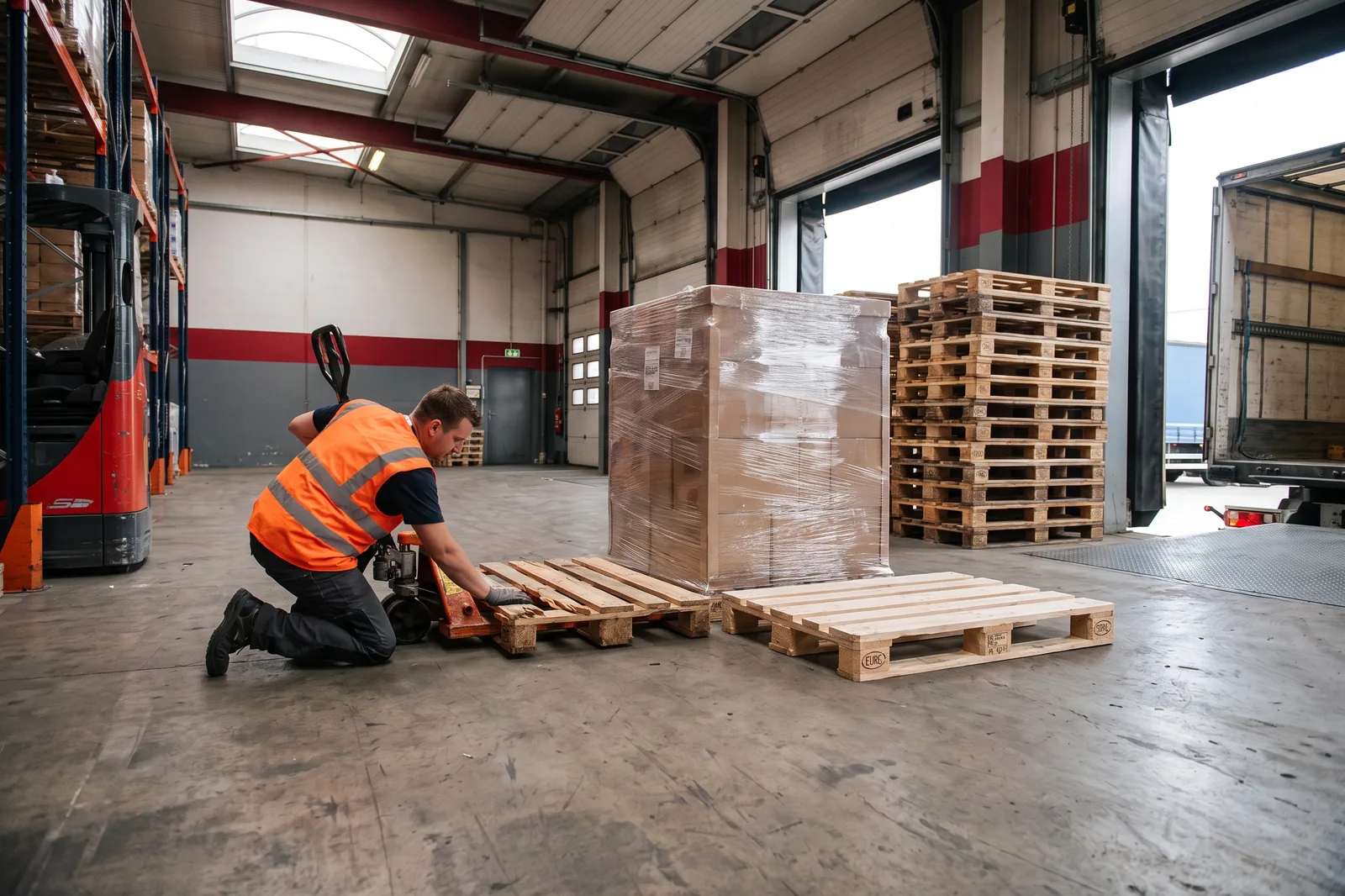
- Swap a damaged or splintered pallet for a sound one, moving the goods across with the layers reset.
- Exchange between the EUR and UK pool where the consignee requires a specific footprint.
- Grade incoming pallets, separating sound, repairable and scrap so the pool does not fill with unusable stock.
- Keep the count even, recording pallets in and out so your pallet account with the consignee balances.
- Set aside repairable pallets for rebuilding rather than scrapping them, which we cover in the article on damaged pallet repair.
Managing the pool balance
Pallet pools run on trust and paperwork. Every pallet handed over is one that has to come back, and an account that drifts out of balance turns into a real cost, because someone eventually pays for the missing stock. We treat the pool like a ledger: pallets in and pallets out are counted and recorded at each exchange, sound and damaged are kept separate, and the running balance is visible. That way an exchange is not a place where pallets quietly disappear, but a controlled handover with a number on it.
| Format | Footprint | Typical role |
|---|---|---|
| EUR pallet | 1200 by 800 mm | European pool, most inbound continental loads |
| UK standard pallet | 1200 by 1000 mm | UK retail and domestic distribution |
| Damaged pallet | either format | swapped for sound, then graded for repair or scrap |
Documentation for the exchange
Every exchange leaves a record: how many pallets came in, how many went out, in which format and condition, and where the load moved from a damaged pallet to a sound one. The consignee gets a delivery on the pallet it can accept, and the sender gets a document that keeps the pallet account straight and settles any dispute over missing or damaged pallets. Where a swap happens alongside a re-stow or repair, it goes into the same warehouse record, described around the Milton Keynes warehouse.
Where do we do it?
We exchange and manage pallets in our Milton Keynes warehouse, running 24/7 between London and Birmingham, within our warehousing and cargo handling services. Pallet exchange sits alongside re-stow and stacking as part of the full Milton Keynes value-added service.
Step by step
- Cargo inspection. Inspect the physical condition and dimensions of the pallets at the collection point.
- Balance recording. Record the number and type of issued and received pallets in the transport paperwork.
- Hub handling. Transfer the cargo to the Milton Keynes facility for pallet format swapping.
- Unit exchange. Receive an identical quantity of sound pallets matching the destination standard.
- Pool reconciliation. Confirm balance alignment and hand the updated documentation to the consignee.
Definitions
- EUR pallet: a standard wooden pallet measuring 1200 by 800 mm used across continental Europe.
- UK pallet: an industrial timber pallet measuring 1200 by 1000 mm standard in Great Britain.
- Pallet pool: a shared inventory of standardized units exchanged across supply chains without purchase.
- Pallet exchange: the physical swap of loaded or empty pallets for sound units of equivalent specification.
When does this rule not apply?
The physical exchange rule does not apply when consignees require non-returnable single-use pallets or when commercial agreements specify monetary compensation instead of physical swaps. The requirement also depends on whether goods are secured on non-standard custom platforms.
The OTSL role
At our Milton Keynes warehouse and Kielce hub, we manage pallet pool balances and execute swapping during regular groupage transport operations. Our team maintains accurate balance accounting across borders and coordinates services such as pallet repair in our UK warehouse. See also: Pallet deposits and pallet vouchers: what EUR pallet exchange really costs.
Sources
- GOV.UK: load securing, vehicle operator guidance
- HSE: warehousing and logistics, safe manual handling and workplace transport
- GOV.UK: wood packaging for import and export (ISPM 15)
Have a load on the wrong pallet, damaged pallets to swap or a pallet account to keep straight in the UK? Describe it in the contact form and we will exchange the pallets, balance the pool and document every swap.