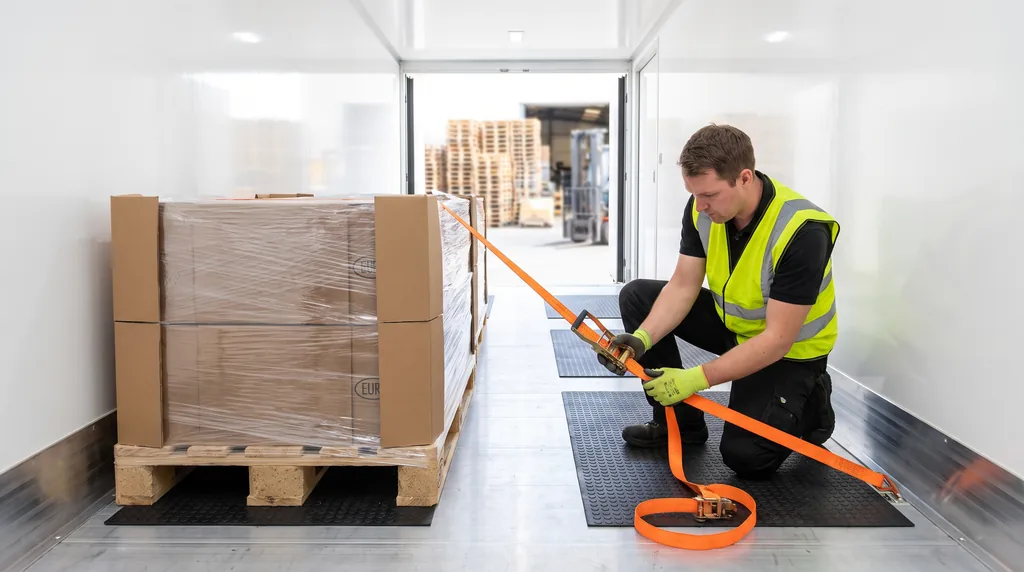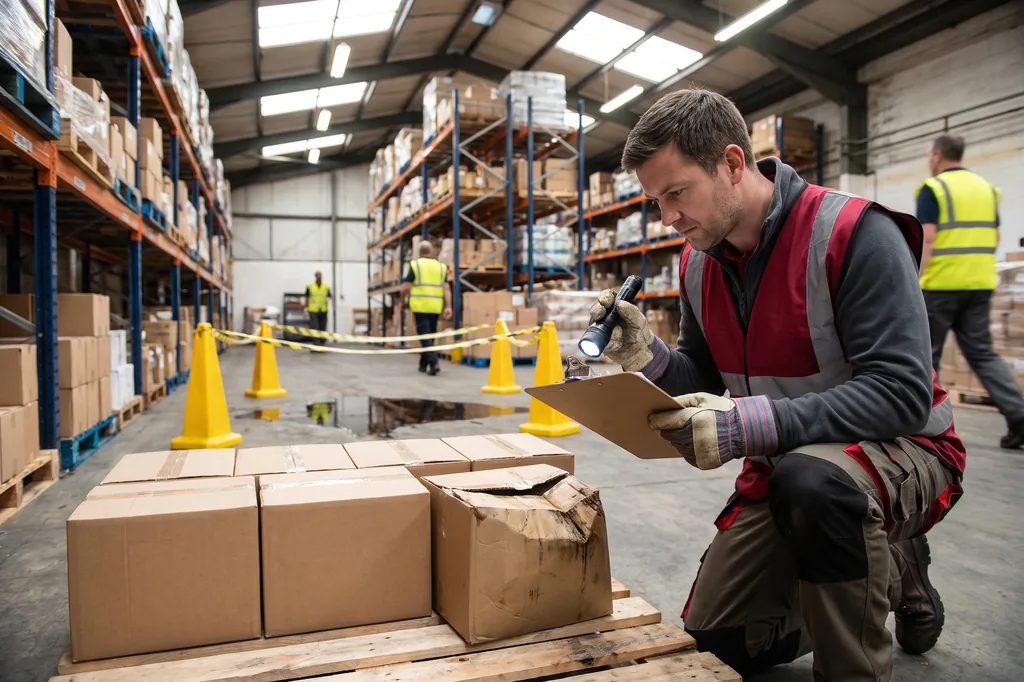

A refrigerated trailer carrying 33 Euro pallets of chilled dairy arrived at a UK facility with leaning stacks and torn wrap after motorway braking. The refrigeration had done its job, the pallets had not. We rebuilt 21 pallets fully and 8 partially inside a temperature-controlled environment held at about +3 degrees Celsius, so the products never left their safe range while the load was open.
Situation
Chilled dairy is a double problem when it shifts. The structural issue is the same as any palletised load: stacks leaning, wrap torn, cartons off position, unloading halted. The second issue is the one that decides the value of the load: dairy must stay within a tight chilled range, and the moment the doors open on a warm dock, the clock on the cold chain starts running. A rebuild done in the wrong place would have saved the pallets and lost the product.
What we did
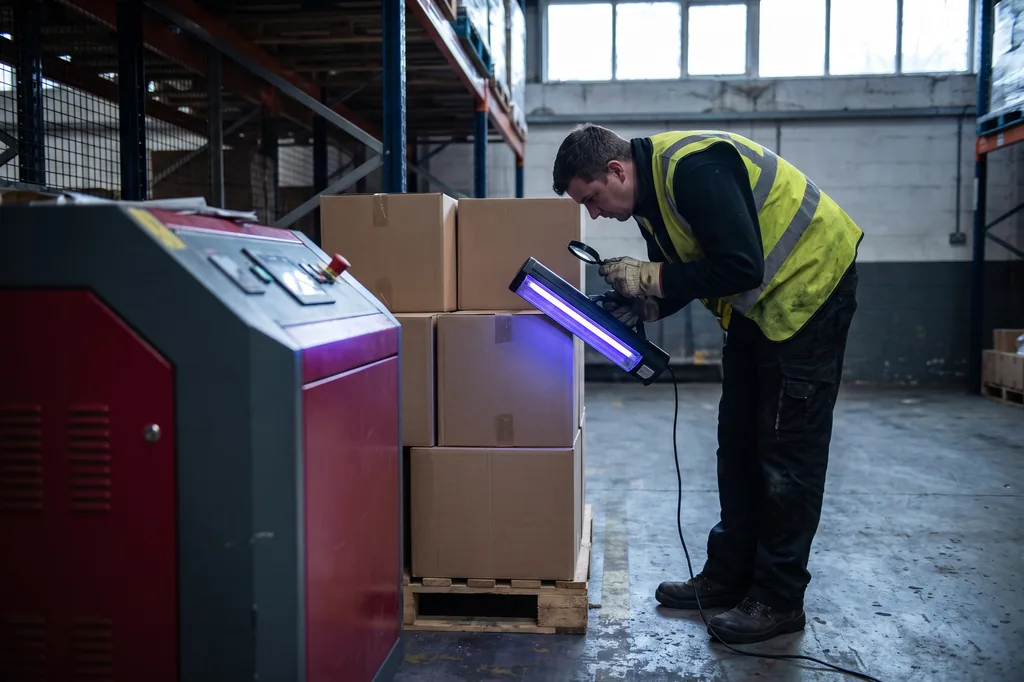
The trailer was inspected stack by stack for stability, carton alignment, wrap condition and packaging damage. Then the rework moved into a chilled chamber held at roughly +3 degrees Celsius, matching the trailer set point. Inside it, damaged wrap came off, cartons were re-laid into stable layers, stacks were rebuilt to the correct pattern and every pallet was freshly wrapped.
After the rebuild came a product inspection: damaged cartons, compromised packaging, anything that could put unsafe product into the chilled chain was isolated. The pallets went back into the trailer with proper spacing for safe forklift work at the destination.
Outcome
The overwhelming majority of the 33 pallets returned to the chilled distribution schedule, with 4 pallets never needing intervention. The consignee received the load stable, in range and documented, instead of a rejection notice.
What this means for shippers
For chilled goods, ask one question before anyone touches a shifted load: at what temperature will the rework happen? Working chilled is part of our multi-temperature storage capability, and the rebuild process itself is described in pallet re-stow and load rearrangement. Chilled load in trouble? Use the contact form, we run 24/7.