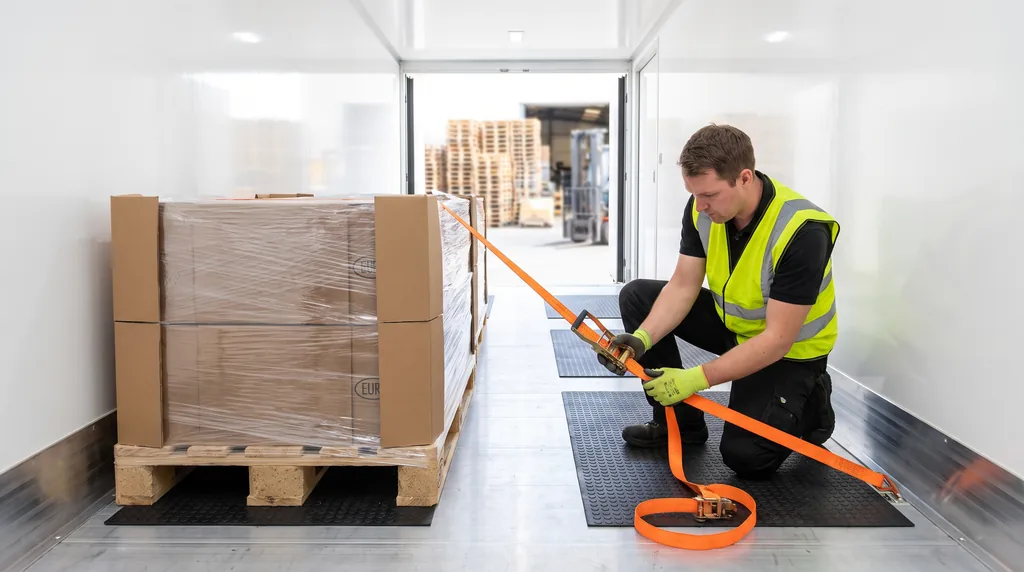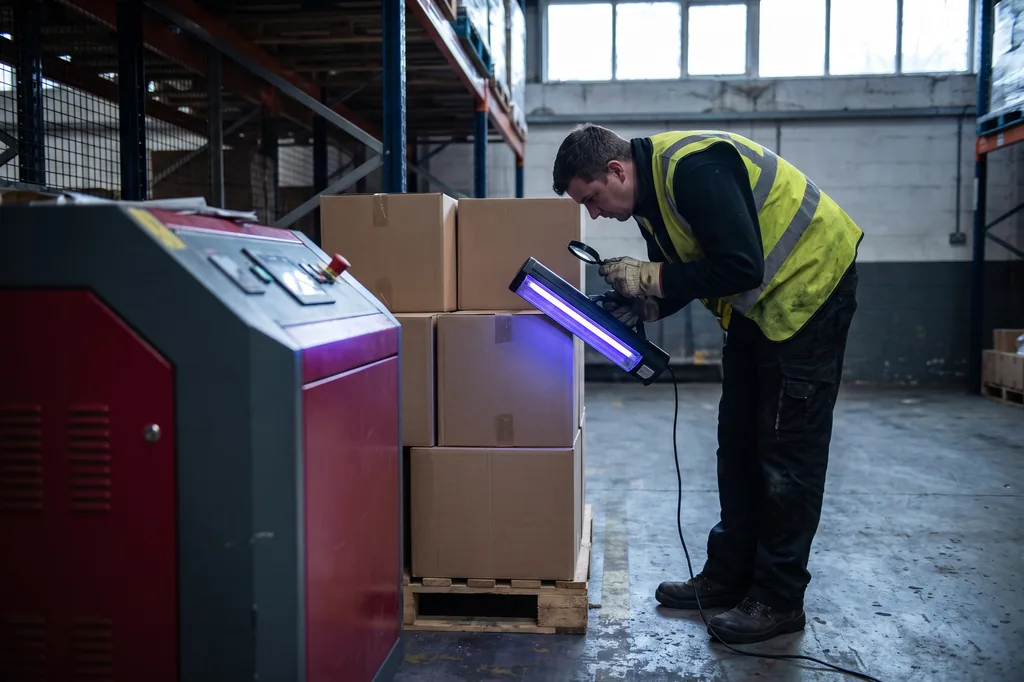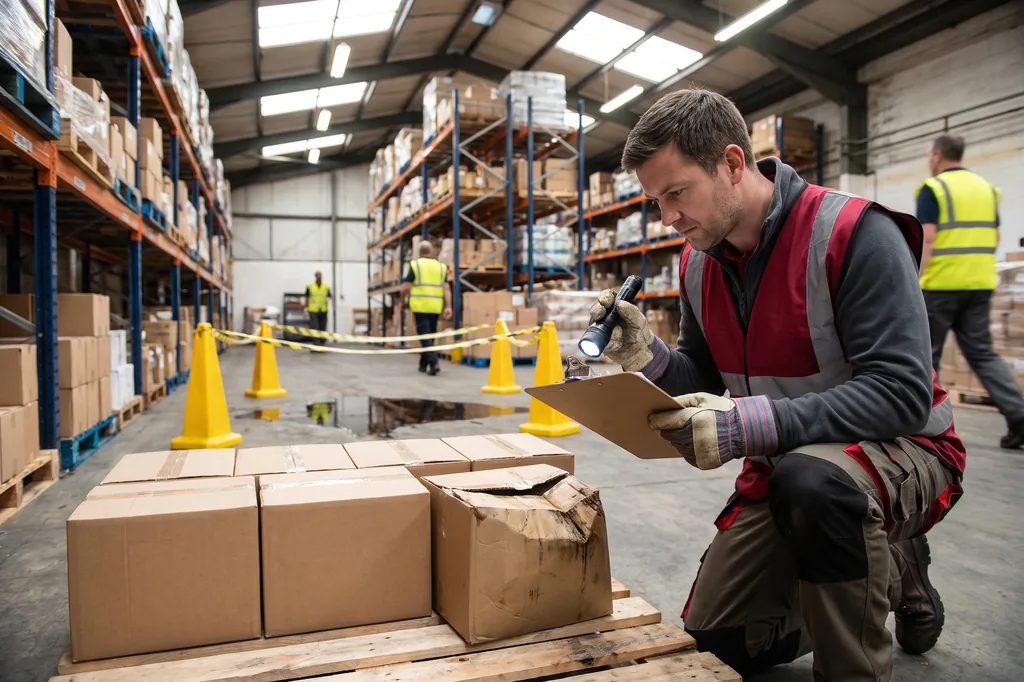
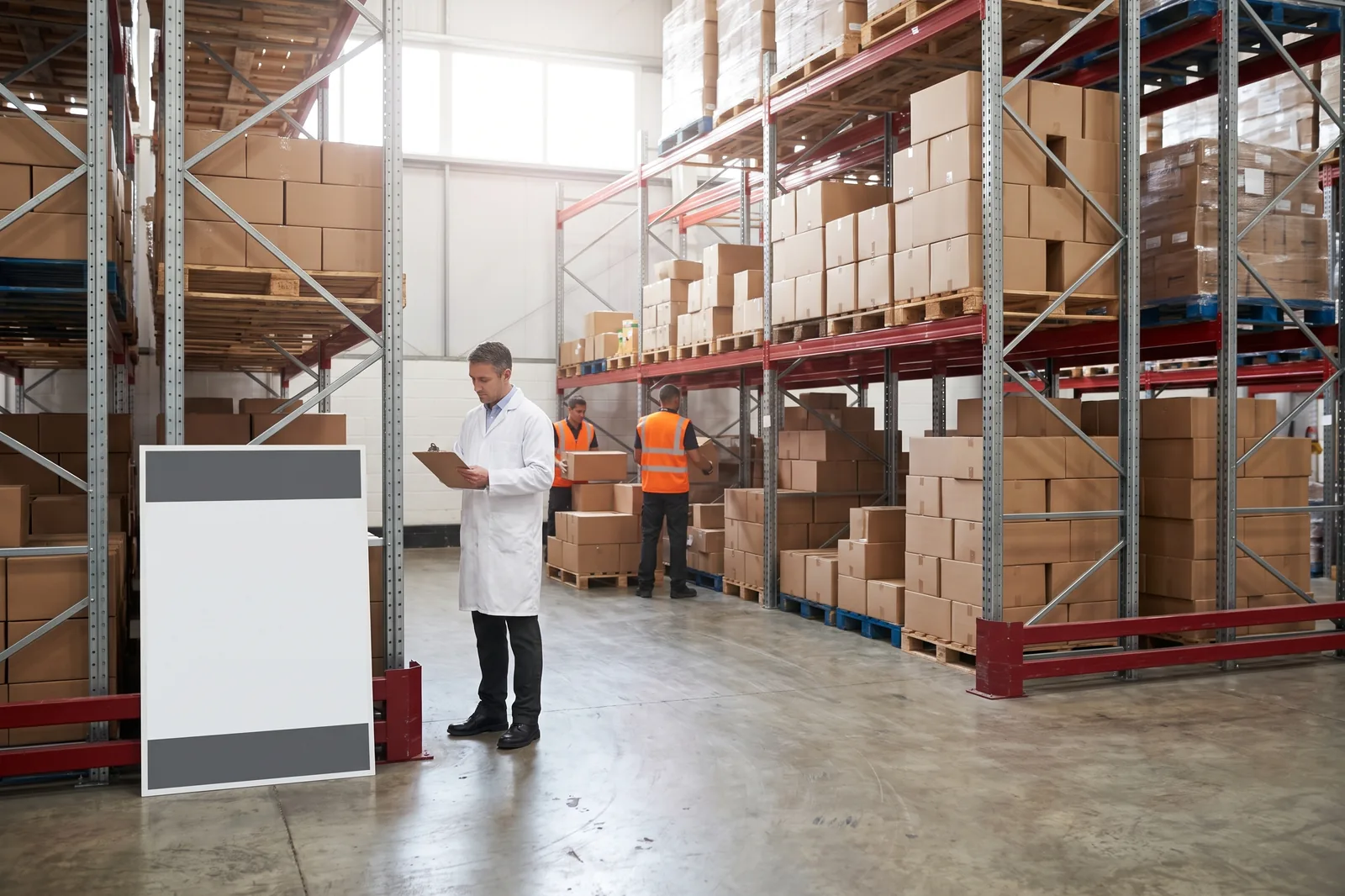
A curtain-sider carrying 52 double-stacked pallets of boxed chocolate arrived at a distribution centre with leaning stacks, torn wrap and sliding cartons. Chocolate adds a constraint most loads do not have: warm it up and it is ruined even if no carton is dented. We rebuilt 44 pallets fully and 4 partially in a controlled environment at about 16 degrees Celsius, and all 52 pallets returned to distribution.
Situation
The load came from a confectionery manufacturer, shrink-wrapped and double-stacked, which is exactly the configuration that folds when a trailer brakes hard. Several stacks were leaning, wrap had torn, and the receiving warehouse refused to unload for fear of falling cartons. The product itself was largely intact. The problem was structural, but any fix that let the chocolate sit in a warm yard would have traded one loss for another.
What we did
The inspection separated loose cartons and displaced trays, then mapped which pallets needed what: 44 full rebuilds, 4 partial, 4 untouched. The restacking itself was standard discipline, correct patterns, fresh pallet bases where needed, new industrial wrap.
What made this job different was the environment. Chocolate that warms and cools again develops bloom, the grey surface film that makes retail stock unsellable even though it is safe to eat. The entire rework therefore ran in a controlled space held at roughly 16 degrees Celsius, cool enough to protect the product for the whole time the pallets were open.
Outcome
All 52 pallets were recovered, unloaded safely and sent on through the supply chain, with photographic records and pallet reports for the logistics provider. No bloom, no melt, no rejection.
What this means for shippers
Confectionery sits in a narrow band: too fragile to ignore a load shift, too heat-sensitive to fix in a yard. Ask where the rework will physically happen before you book it. Temperature-controlled handling is part of our multi-temperature storage setup, and the mechanics of a rebuild are covered in pallet re-stow and load rearrangement. Shifted confectionery load? Describe it in the contact form.