 AI image
A cargo hold is stopping a doubtful load so it moves no further until a decision is made. Quarantine is keeping that load physically apart from clean stock. Release is the controlled handover once the goods are cleared. Throughout, we build a photo condition report as documented proof of the state of the goods. In our Milton Keynes warehouse we run all four, around the clock.
Why a hold exists at all
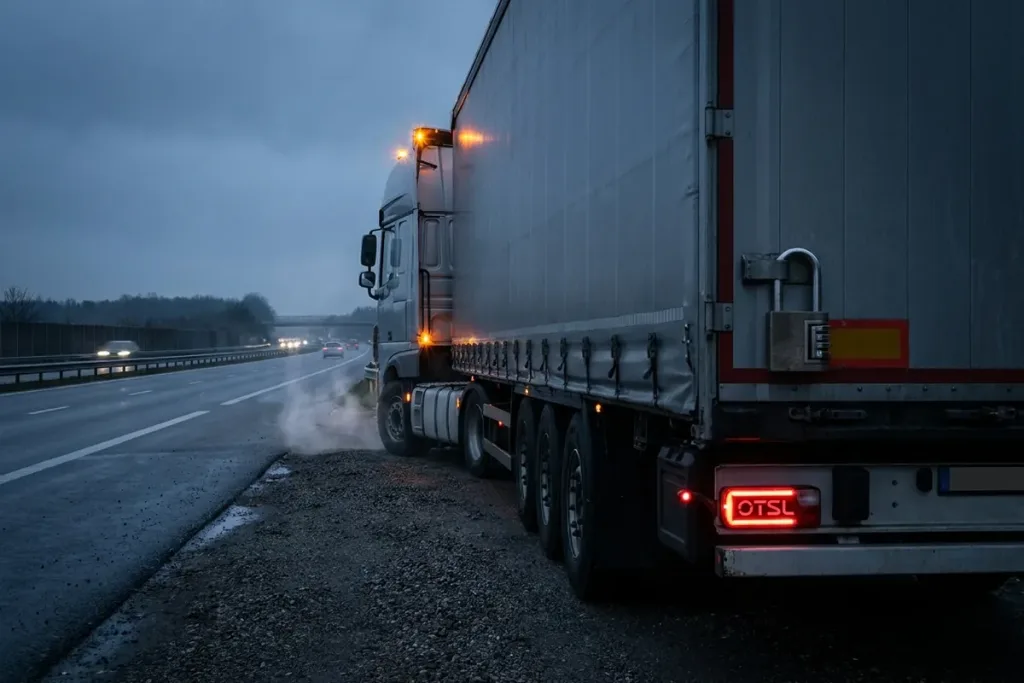
Goods arrive that no one should send onward blind. A seal was broken, a trailer was breached, a carton is crushed, a chilled load may have warmed, or a batch simply looks wrong. Shipping such a load to the final consignee risks a refused delivery, a rejected batch, or a much larger claim once the problem spreads down the chain. A hold buys the one thing every party needs: time to decide with facts instead of guesses. It converts a moving problem into a controlled one.
Hold: stopping the load in a controlled way
When a load is placed on hold in our Milton Keynes warehouse, it stops moving and it stops shipping. We log why the hold was raised, who raised it, and when. Nothing leaves that pallet or batch until an authorised decision is recorded. This matters because the most expensive mistakes happen when a doubtful load slips back into the flow and reaches a customer before anyone has looked at it. A hold is a deliberate pause with a name and a timestamp on it.
Quarantine: keeping doubt away from clean stock
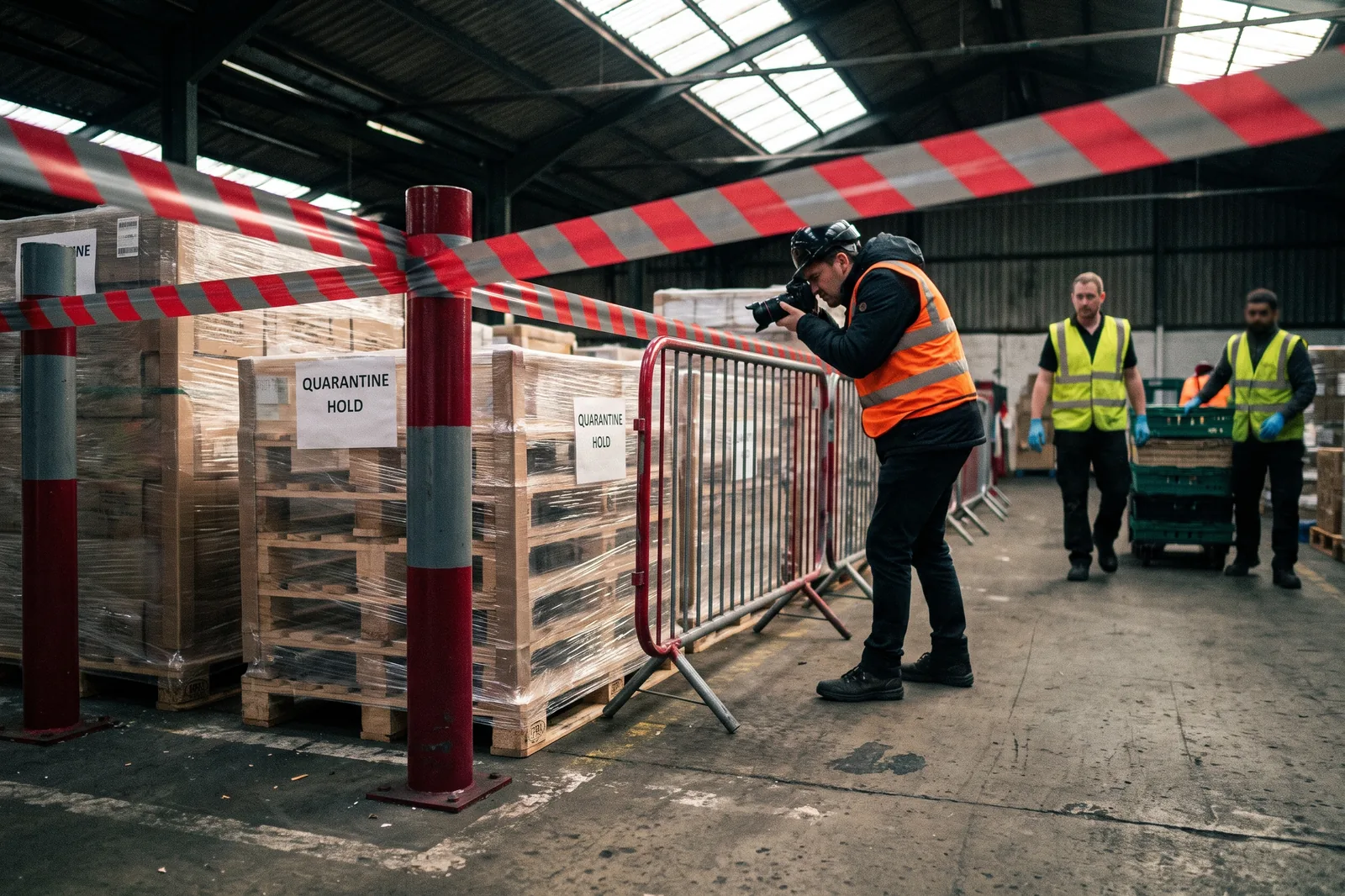
A hold on paper is not enough if the goods still sit next to clean, sellable stock. Quarantine is the physical answer: the suspect load goes to a separated area, clearly marked, apart from stock that is fine. This protects two things at once. It stops any contamination, damp, odour or pest issue from reaching good stock, and it removes the risk of someone picking and shipping the wrong pallet. For hygienically sensitive or food-grade goods this separation is not optional, it is the point. We cover the food side in the article on food-safe storage and handling in the UK.
Inspection while on hold
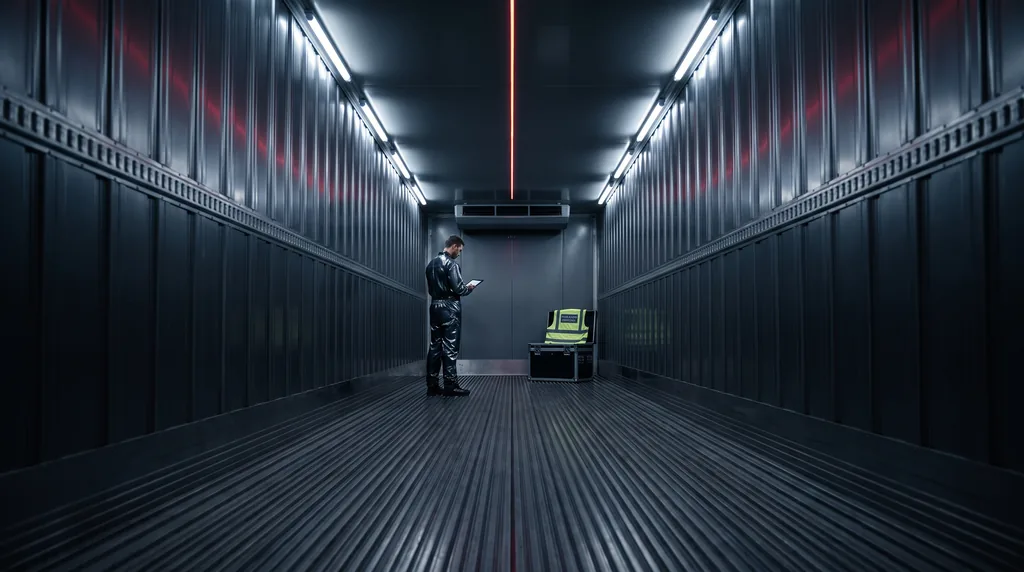
A held load is not a forgotten load. While it sits in quarantine we inspect it: seals and signs of entry, packaging integrity, whether the goods were moved, and any trace of contact or contamination. For a food load after a trailer breach we follow the approach in the article on sanitary inspection of food cargo after a breach, and where contamination is suspected we draw on cargo contamination inspection in the UK. The inspection answers the only question a hold really asks: is this fit to move on, and in what condition.
Release: the controlled handover
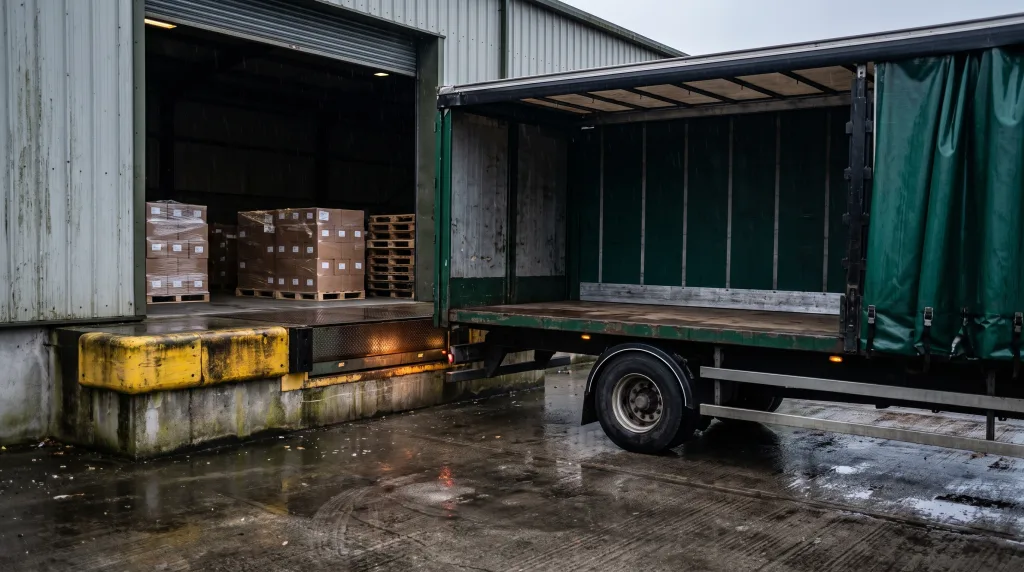
Release is where a hold ends, and it ends on a decision, never by default. Once the inspection is done and the responsible party has decided, the load is released in a controlled way: the reason for release is recorded, the goods are re-secured if needed, and the batch rejoins the flow to the consignee as a documented delivery. If part of the batch is fit and part is not, we split it: sound goods are released, doubtful goods stay in quarantine. The related question of what stays sellable after tampering is covered in the article on whether goods are fit for sale after tampering.
Photo condition reporting: proof, not opinion
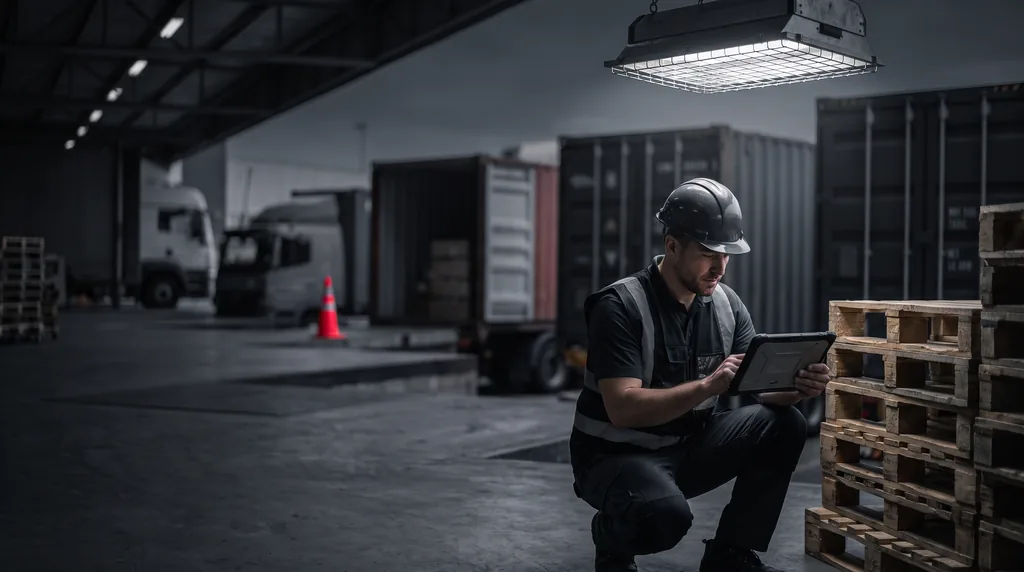
A condition report turns "the goods looked damaged" into evidence. From the moment a load arrives we photograph its state: the outer packaging, seals, any breach point, visible damage, and, where relevant, temperature readings and labels. Each image is dated and tied to the batch. If the goods are held, we photograph them in quarantine and again at release. The result is a timeline a consignee, sender and cargo insurer can all read the same way. This is what makes a claim defensible: proof of damage recorded at the point it was found, not reconstructed weeks later from memory.
What does a condition report typically capture?
| Stage | What we record |
|---|---|
| Arrival | overall load, seals, packaging, any visible breach or damage |
| On hold | reason for hold, who raised it, date and time |
| Quarantine | separated location, marking, inspection findings, close-up photos |
| Decision | who decided, on what basis, what happens to the batch |
| Release | condition at release, re-securing done, dispatch details |
Around the clock
Doubtful loads do not arrive on a schedule. A breached trailer or a warmed chilled load reaches the yard when it reaches it, often outside normal hours, and every hour of indecision costs money or spoils goods. That is why hold, quarantine and condition reporting run around the clock. A load can be stopped, separated and photographed the moment it arrives, so the decision starts on solid evidence rather than waiting for the next working day.
Where do we do it?
We run hold, quarantine, controlled release and photo condition reporting in our Milton Keynes warehouse between London and Birmingham, within our warehousing and cargo inspection services. These steps sit alongside the wider set of value-added services described in the article on the Milton Keynes warehouse and value-added services. For chilled loads we combine the hold with cold chain control, covered in the article on the cold storage warehouse in the United Kingdom.
Step by step
- Identifying the issue. Discrepancies, broken seals, or damages are flagged immediately upon arrival.
- Placing the hold. Systemic flags are set so that the cargo cannot be moved or dispatched further.
- Moving to quarantine. The affected load is relocated to a designated, secure isolation area within the warehouse.
- Creating the condition report. Staff take detailed photographs of seals, packaging, and any visible damage.
- Issuing the release. Once formal clearance is received from the insurer or client, the load is returned to active inventory.
Definitions
- Hold: An instruction to stop any further movement of a cargo load until a formal decision is reached.
- Quarantine: The physical separation of a suspicious or damaged load from clean stock to prevent cross-contamination or accidental shipment.
- Release: The controlled handover of goods following a documented approval decision.
- Condition report: A dated, photographed record documenting the physical state of the goods upon arrival and throughout handling.
When does this rule not apply?
This quarantine and hold process does not apply if the cargo is cleared directly at the port of entry unless an immediate disposal instruction is mandated on site by regulatory authorities.
The OTSL role
At our Milton Keynes hub and Kielce support centre, we manage cargo holds and quarantine procedures seamlessly. We combine these warehouse operations with services such as groupage (LTL), while ensuring full compliance as detailed in our guide on cargo inspection and reporting.
Sources
- FSA (food.gov.uk): hazard analysis and critical control point (HACCP)
- European Commission: food safety (hygiene and controls)
Have a load that should be stopped and checked before it reaches your customer? Describe the situation in the contact form and we will hold it, quarantine it, inspect it and give you a documented condition report to decide on.