 AI image
Food-safe storage means keeping food goods clean, separated and at the right temperature, handled by trained people under HACCP-based controls. Our Milton Keynes warehouse passed its UK environmental health (food hygiene) inspection with the top rating, so we operate to food-safe handling standards that have been checked in practice. A formal food-storage certification is the next step and is still in progress. Below we explain hygiene, separation, temperature and the checks that make food-grade operations work.
The English-language version of this article is the reference one. This is the source text for the translations.
Hygiene: the floor a food operation stands on
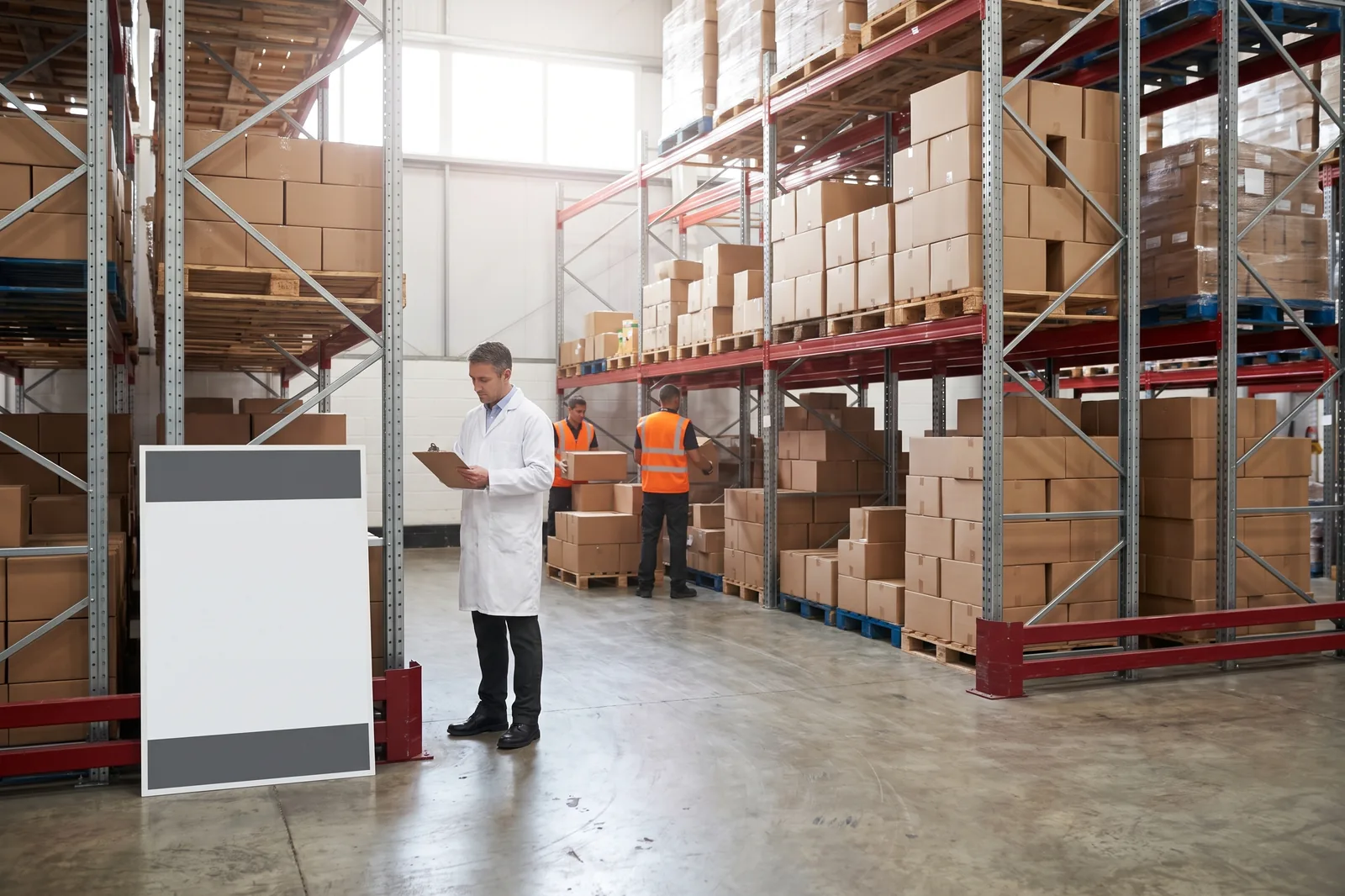
Food-safe handling starts with cleanliness that is planned, not hoped for. Surfaces and equipment that touch food or its packaging are cleaned on a schedule, with records. Staff follow hygiene rules on clothing, handwashing and reporting illness. Waste is controlled so it never sits near stored food. Pest control is active and monitored, because a single infestation can condemn a batch. None of this is glamorous, and that is the point: food safety is built from routines done the same way every day, not from a single grand measure.
Separation of goods: keeping food apart from risk
The fastest way to ruin food in a warehouse is to store it next to the wrong neighbour. Food-safe operations separate goods: food away from non-food, especially anything with strong odours, chemicals or cleaning agents that could taint it; allergen-bearing goods managed so they do not cross-contaminate others; raw and ready-to-eat kept apart where both are handled. Separation is physical and procedural at once, using marked areas and a picking discipline that stops the wrong pallet moving. It is the same discipline a hold and quarantine rely on, covered in the article on quarantine, hold and release.
Temperature control: the chain that cannot break
Much food is only safe within a temperature range, and every hour outside it counts. Chilled and frozen goods need the cold chain held from arrival, through storage, to dispatch, with readings recorded so a gap is visible rather than guessed. We run temperature-controlled storage and cold chain checks as described in the article on the cold storage warehouse in the United Kingdom. Ambient food still needs a stable, dry, controlled environment: heat, damp and condensation spoil dry goods and packaging just as surely, only slower.
HACCP: controlling hazards, not reacting to them
Food-safe handling is organised around HACCP thinking. Instead of inspecting problems after they happen, we identify where hazards could enter (contamination, temperature loss, pests, foreign bodies, allergen cross-contact), decide the points where each must be controlled, set what "under control" looks like, and record that it was held. When a control point fails, there is a defined response rather than improvisation. The UK Food Standards Agency sets out this HACCP-based approach for food businesses, and it is the backbone of how a food-grade operation is run and evidenced.
Handling: repacking and recovery without breaking food safety
Food often needs work in the warehouse, not just storage: repacking into new outer cases, re-palletising, relabelling, or recovering a load after a transport problem. Doing this to food-safe standards means clean handling areas, controlled materials and no shortcut that could contaminate the product. Food-grade repacking is covered in its own article on repacking in a food-grade UK warehouse. Where a food load arrives after a trailer breach, the sanitary inspection in the article on sanitary inspection of food cargo after a breach decides what stays in the food chain.
Hygiene inspections and our top rating
In the UK, food businesses are inspected on hygiene by environmental health, and the Food Standards Agency food hygiene rating scheme expresses the result of official inspections as a public rating. Our Milton Keynes warehouse passed its UK environmental health (food hygiene) inspection with the top rating. That result is an achieved fact, not a plan: it is the outside confirmation that our day-to-day food-safe routines hold up under an official check. We describe our position honestly: we run food-grade operations, we passed our hygiene inspection with the top rating, and a formal food-storage certificate is the next step we do not yet hold.
Honest position on certification
We state this plainly so no one is misled: OTSL operates to food-safe handling standards and our Milton Keynes facility passed its UK environmental health (food hygiene) inspection with the top rating. That inspection result is achieved and real. A separate formal food-storage certification is the next step, still in progress and not yet issued. Until it is, we do not present ourselves as certified for food storage. When the certification is granted, this article will carry the real number and rating in the placeholder above, so what you read here always matches reality.
Where do we do it?
We run food-safe storage and handling in our Milton Keynes warehouse between London and Birmingham, within our warehousing and cargo handling services. It sits alongside the wider value-added services in the article on the Milton Keynes warehouse and value-added services, and connects to inspection work such as cargo contamination inspection in the UK when a food load needs checking before it moves on.
Step by step
- Delivery verification. You inspect package integrity and food temperature upon vehicle arrival.
- Quarantine and logging. You enter the batch into the warehouse system and place it in the designated receiving area.
- Proper placement. You move the cargo to the appropriate zone ensuring full physical separation from other items.
- Continuous monitoring. You monitor and record ambient conditions and hygiene levels in the storage area.
- Dispatch and loading. You prepare goods for shipping inside a clean cargo hold.
Definitions
- HACCP (Hazard Analysis and Critical Control Points): A systematic approach to identifying, evaluating, and controlling food safety hazards.
- Food-safe: Standards of handling and storing food products to ensure they remain safe for human consumption.
- Food-grade: The quality level required for materials and equipment coming into contact with food items.
- UK Environmental Health Inspection: Official British regulatory inspection assessing food hygiene and warehouse handling safety.
When does this rule not apply?
This standard food handling procedure does not apply to non-food items or deep-frozen goods requiring negative temperature regimes, unless separate operational parameters have been established.
The OTSL role
OTSL manages food cargo operations at its Milton Keynes facility, ensuring proper storage standards are maintained. For international movements requiring stable climate control, OTSL provides temperature-controlled transport, while operational details on preventing contamination are discussed in our article on cross-contamination in a food-grade warehouse.
Sources
- FSA (food.gov.uk): hazard analysis and critical control point (HACCP)
- FSA (food.gov.uk): the food hygiene rating scheme
- European Commission: food safety (hygiene and controls)
Need food goods stored and handled to food-safe standards in the UK? Describe your load in the contact form and we will explain how we would store it, hold the temperature, keep it separated and document the handling.