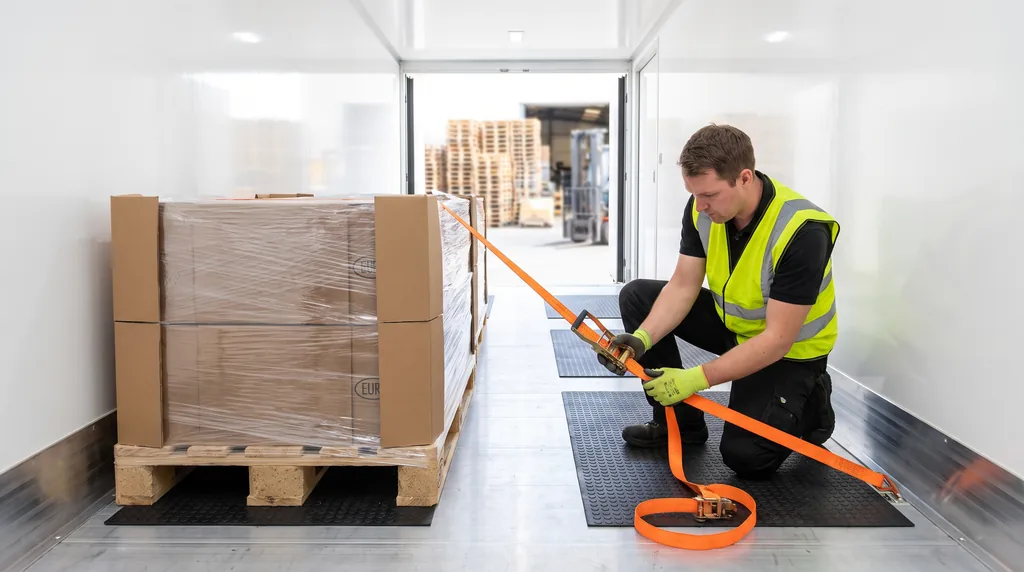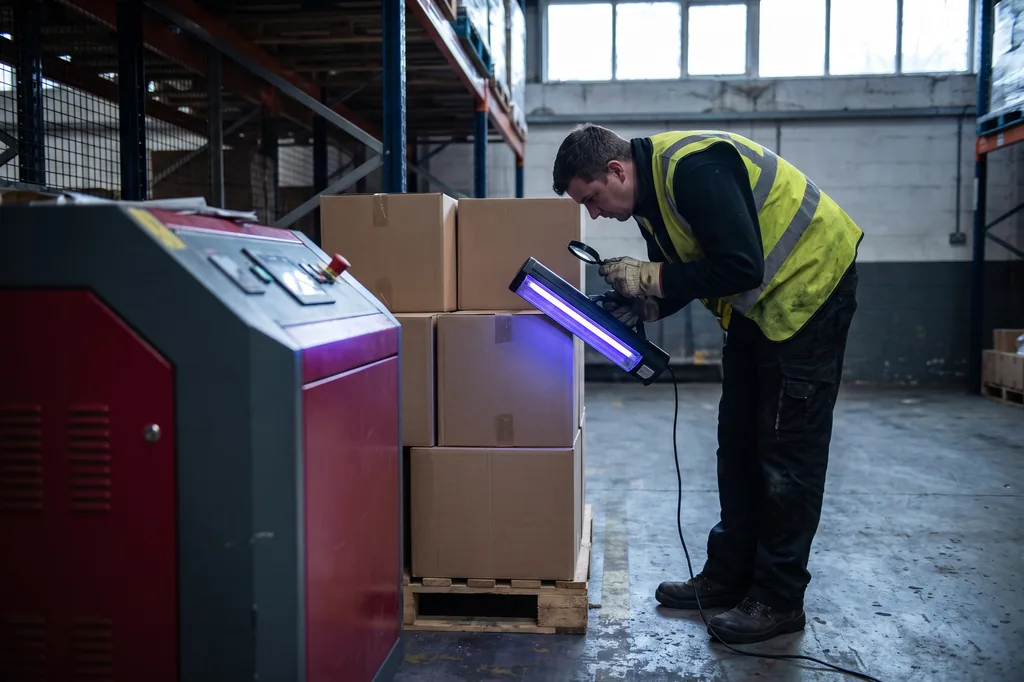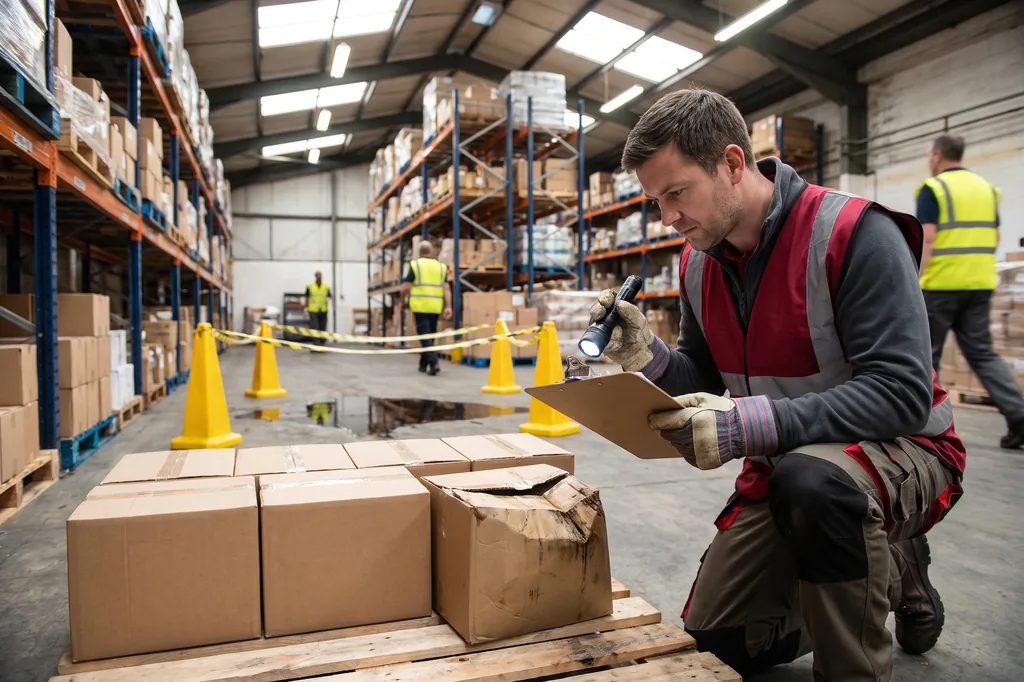
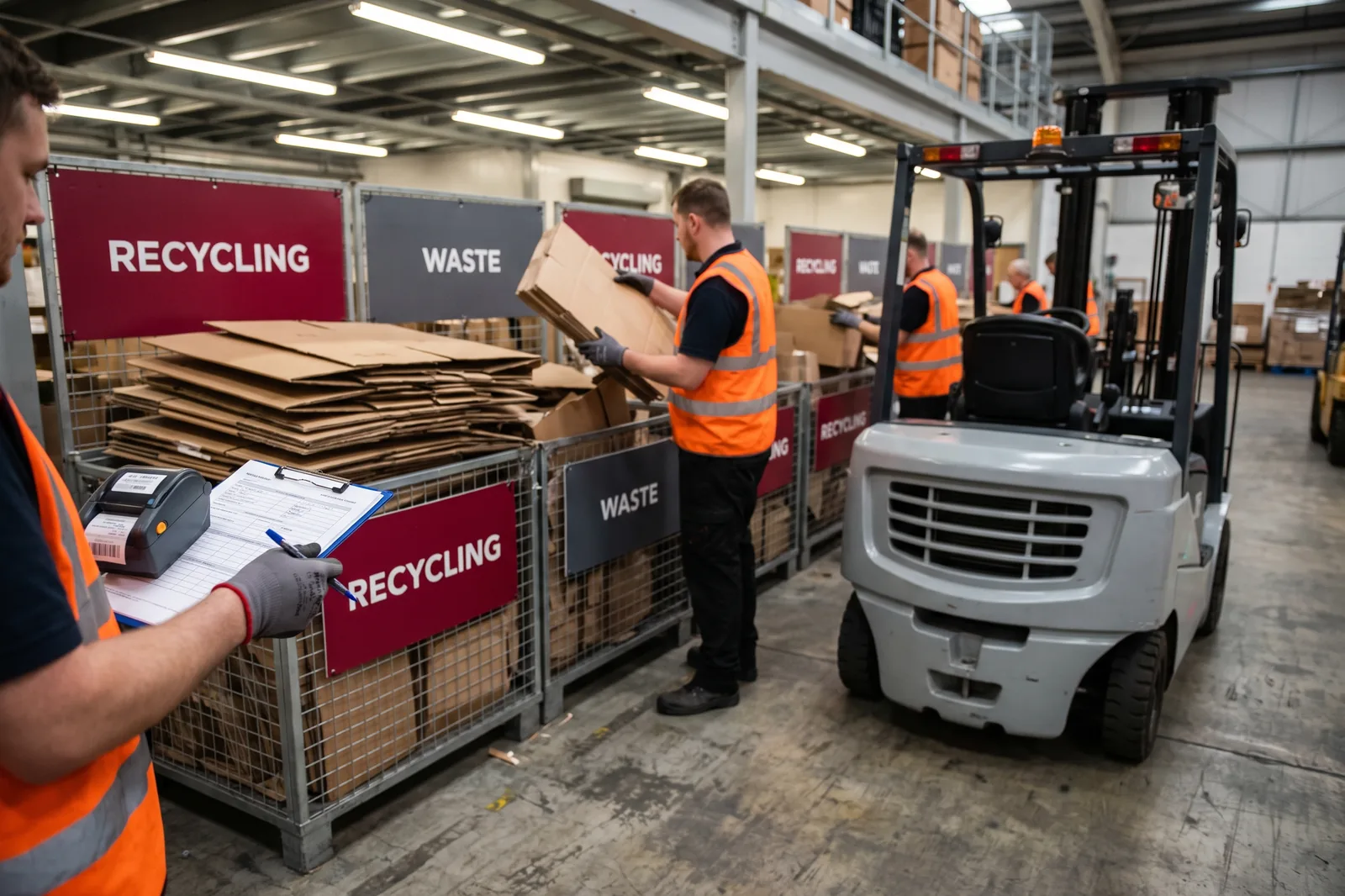
A curtain-sider arrived at a UK facility with a stillage of 16 granite slabs leaning after a shift in transit, and inspection found several slabs cracked. This is the case in this series where the product could not be saved. Stone does not restack like cartons, and a cracked slab destined for worktops is scrap. What we delivered instead was safety: stabilisation, controlled unloading and certified disposal with a certificate for the client.
Situation
Granite travels vertically on A-frame stillages, and its two defining properties work against each other in an incident: enormous weight and surprising brittleness. Braking had shifted the stillage, straps were displaced and slabs were leaning inside the frame. Unloading was halted at once, correctly, because a slab that tips from a frame is not a product loss, it is a potential fatality. And unlike shifted cartons, cracked stone cannot be rebuilt into a deliverable load: a hairline crack in a worktop slab condemns it.
What we did
The inspection assessed slab positions, frame alignment, strap tension and the extent of cracking, and confirmed several slabs were unfit for delivery or installation. The first physical step was making the load safe: securing the stillage and realigning the frame so the stone could be approached at all.
Then came controlled unloading with lifting equipment suited to heavy stone, focused on safe removal rather than rescue. Because the damaged slabs could not return to the supply chain, we arranged their certified disposal through approved waste handling, and a disposal certificate was issued to the client confirming the stone was removed and disposed of properly.
Outcome
The unstable stillage was unloaded without injury or further damage, the unusable stone left through a documented disposal route, and the client received the paperwork that closes an insurance claim cleanly. No one pretended the slabs were saveable, and that honesty is part of the service.
What this means for shippers
Not every distressed load ends in recovery, and a partner who tells you that early saves you money and risk. When goods are genuinely beyond saving, documented disposal is the correct product, as described in our article on certified disposal of rejected and damaged goods. For loads that can be saved, see pallet re-stow and load rearrangement. Shifted heavy or awkward load? Use the contact form.