 AI image
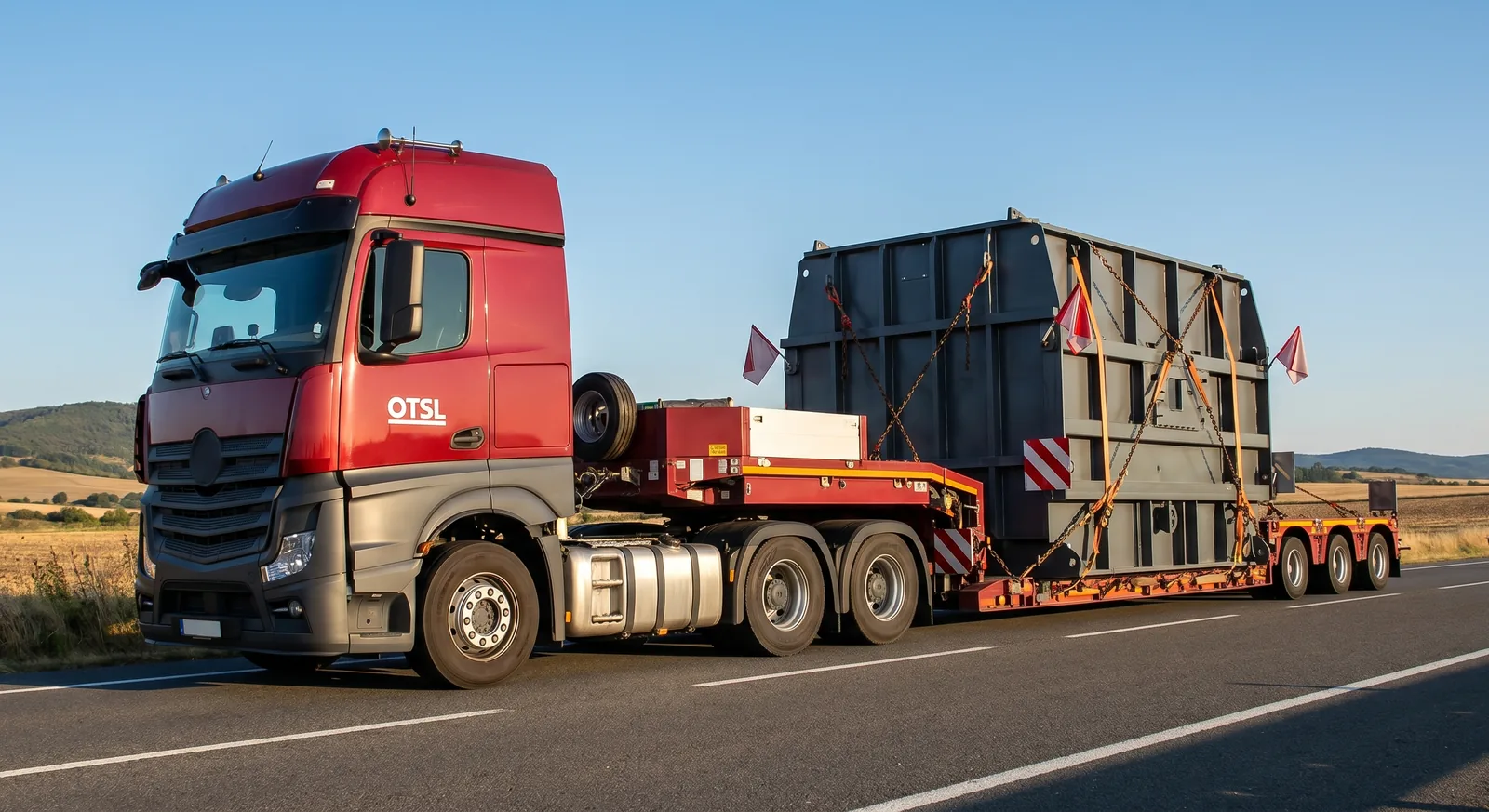
An out-of-gauge load is cargo that exceeds the standard dimensions or weight of the vehicle, for example a machine or a steel structure. This kind of transport is a project: it needs the right equipment, sometimes permits and route planning. At OTSL we run out-of-gauge and special loads on platforms and low-loader trailers.
Why is it a project, not a routine move?
- Dimensions decide the route, because not every bridge or roundabout will pass them.
- A permit may be needed, and sometimes an escort or assistance.
- Loading and securing an unusual item needs its own plan.
What do we settle before departure?
We start from exact dimensions, weight and lashing points, because they drive the choice of trailer, for example a platform or a low-loader. We plan the route around real infrastructure limits and check whether permits are needed. Better to clear this calmly in advance than to stop the transport on the road.
How do we work?
Every out-of-gauge move is run by one responsible contact, available 24/7, because with special loads the detail decides success. On the UK lane we add customs and the crossing in the same process. We say plainly what is feasible and where the limits are.
See out-of-gauge loads, road transport and the full list of services.
When do you need escort vehicles and how do cargo parameters affect transit time?
When your shipment exceeds a width of 3.00 m or a height of 4.00 m, it moves into strict permit regimes across Western Europe and the UK. A gross combination weight exceeding 40000 kg requires exact axle load verification, which for indivisible loads necessitates heavy haulage trailers with hydraulic suspension. Obtaining standard abnormal load movement permits in Germany typically takes from 7 days to 21 days, whereas in the UK, submitting an ESDAL notification requires at least 48 hours advance notice prior to entering the road network.
Escort vehicle requirements depend directly on the physical envelope and route geometry. If the overall load width is between 3.00 m and 3.50 m, at least one private escort vehicle is mandatory. Exceeding 3.50 m in width or 30.00 m in combination length requires two escort vehicles, and on designated critical sections, an official police escort.
Operational constraints linked to physical parameters include:
- Width above 3.20 m – restriction from passing key bridge bottlenecks and urban corridors during peak morning hours (from 06:00 to 09:00).
- Height above 4.30 m – mandatory route survey or overhead obstruction check completed at least 14 days prior to dispatch.
- Road gradients exceeding 8% – requirement for a secondary push vehicle when the total gross weight exceeds 60000 kg.
These notification steps, permit procedures, and mandatory escort rules DO NOT apply if the entire haulage movement takes place on private, enclosed grounds (such as port terminals, manufacturing plants, or off-road construction sites without entering public highways) or when the cargo dimensions stay within standard limits (width up to 2.55 m, height up to 4.00 m, and gross weight up to 40000 kg).
Step by step
- Specifying load parameters. You establish exact dimensions, weight and lashing points of the cargo.
- Selecting suitable equipment. You choose the right trailer or platform adapted to the cargo specifications.
- Route analysis and planning. You check restrictions of bridges, roundabouts and road infrastructure.
- Obtaining permits and escorts. You arrange required documents and potential escort vehicles for the move.
- Loading and securing. You execute a dedicated lashing plan for the item before departure.
Definitions
- Out-of-gauge load: Cargo that exceeds the standard dimensions or weight of the vehicle.
- Low-loader trailer: Specialised equipment used for carrying items of unusual height or significant weight.
- Loading gauge: The permitted outline of the load together with the vehicle including width, height and length.
- Load beyond the gauge: Cargo exceeding the allowed outline of the vehicle, requiring specific travel conditions.
- Escort: An assistance vehicle ensuring safety along the transport route.
When does this rule not apply?
This rule does not apply to cargo that fits within standard vehicle dimensions and weight limits, where special permits or escort planning are unnecessary.
The OTSL role
At OTSL, we organise special transport and out-of-gauge loads backed by our facilities in Kielce and a warehouse in Milton Keynes, matching the right low-loader equipment and planning safe routes. In a similarly structured way, we also handle other demanding moves, such as ADR transport, moving dangerous goods step by step across Europe.