 AI image
France is one of the largest consumer and industrial markets in the European Union and a core destination for goods moving out of Poland and Central Europe. Carriage runs without customs clearance, but the lane has its own discipline: strict booking-in slots, weekend driving bans for trucks and low emission zones in the cities. OTSL organises FTL and LTL transport to every region of France with one forwarder responsible for the whole order, from loading in Poland to a confirmed delivery.
Road corridors from Poland to France
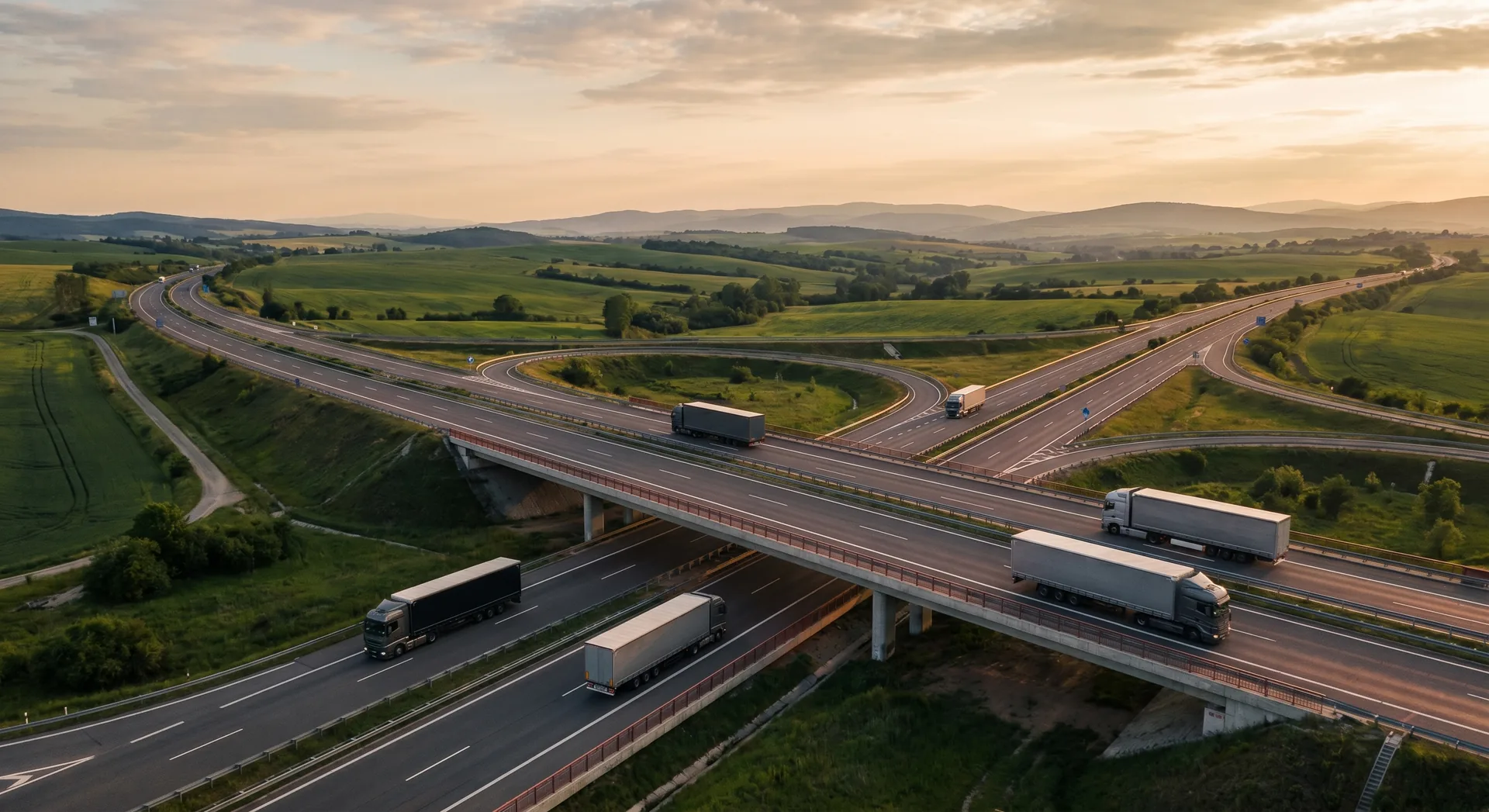
Loads from Poland run to France along two main corridors:
- Southern corridor via Germany: the A4 motorway through Wrocław and Zgorzelec, then the German motorway network towards Frankfurt and Saarbrücken, entering France near Forbach or via Strasbourg. The natural route for Alsace, Lorraine and the whole Grand Est region, and onwards for Lyon and the south.
- Northern corridor via Germany and Belgium: the A2 motorway, Hanover, the Ruhr area, then Belgium and entry into France near Lille. This is the route for Paris and Île-de-France, Normandy and the Channel ports.
From central Poland to Paris it is over 1500 km by road. Yet transit time is governed less by distance than by the driving time rules of Regulation (EC) 561/2006, by driving bans and by the booking slot at the consignee. Eastern France is the quickest to reach, Île-de-France usually takes a day more, and the Atlantic coast and the south west are the longest relations. The forwarder confirms a firm delivery date at quotation, together with a routing plan built around bans and the unloading slot.
Driving bans in France: weekends and public holidays
France keeps some of the strictest truck traffic restrictions in Europe. The general rule of the French decree on traffic bans for goods vehicles over 7.5 t GVW: no driving from Saturday 22:00 until Sunday 22:00, and likewise before and on public holidays. On top of that, a calendar of additional bans is published every year, including selected Saturdays in the summer and winter seasons. We check the exact dates for every departure, because they change from year to year.
Two rules apply regardless of that calendar:
- Loi Montagne: from 1 November to 31 March, vehicles in designated mountain municipalities (Alps, Pyrenees, Massif Central, Jura, Vosges) must carry winter equipment such as chains or suitable tyres. For winter deliveries into mountain areas we match the equipment to the route.
- ZFE zones: French cities operate low emission zones based on Crit'Air stickers. For city centre deliveries, especially Paris and Lyon, this means selecting a vehicle with the right emission class.
A badly planned weekend is a measurable loss: a truck that does not make it before Saturday evening stands until Sunday 22:00, while the consignee moves the slot. So end-of-week departures get a buffer, and for urgent shipments we offer a van up to 3.5 t, which falls outside the weekend ban for vehicles over 7.5 t.
What makes the French market specific
- Retail chains and logistics platforms: rigorous booking-in, pallet condition checks at goods-in and formalised refusal procedures. Reservations entered on the CMR note at unloading get priority treatment, because under the CMR Convention they decide whether a later claim holds.
- Automotive and industry: slot deliveries to plants and component suppliers, with notification and returnable packaging handled to the plant standard.
- Food and drink: temperature-controlled carriage runs on equipment compliant with the ATP agreement, with a temperature record on request. A broken cold chain means unsellable goods, so parameters are watched for the whole run.
- EUR pallets: pallet exchange is not automatic in France. It works only when agreed in the order and confirmed with a pallet voucher; without that agreement, the deposit dispute starts after delivery.
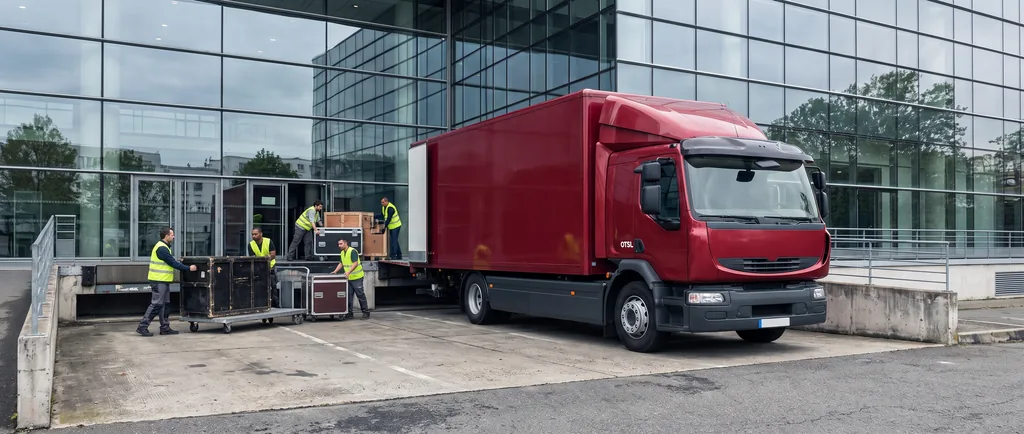
- Trade fairs: Paris ranks among the leading exhibition hubs in Europe. We carry stand builds and exhibits to fairs in France, planned around build-up and dismantling windows.
France as a corridor to the United Kingdom
For exporters, France is not only a market but also the transit corridor to the UK: via Calais and the Eurotunnel, and via the port of Dunkirk. We arrange ferry and tunnel crossings within the order, and for products of animal or plant origin entering the EU from the UK we handle the formalities at the French SIVEP border control posts. A truck scheduled for a crossing is subject to the same French driving bans, so both are planned as one schedule.
FTL, LTL and special cargo
- FTL, full loads: curtainsiders and full sets on regular export and import relations.
- LTL and groupage: part loads from a single pallet, consolidated on the French lane.
- ADR: dangerous goods with full documentation and trained drivers.
- Reefer: food and sensitive goods in controlled temperature.
- Oversized loads: machinery and structures, with permits where required.
- Express vans: urgent shipments up to 3.5 t, including dates covered by truck driving bans.
What OTSL organises on the French lane
An order starts with an enquiry describing the goods, dimensions, weight and the loading and delivery points. The forwarder confirms the quotation and a realistic date that accounts for driving bans and booking-in. On our side: vehicle selection, CMR transport documents, booking the slot with the consignee, status updates during carriage and a complete set of confirmations after delivery. We also run the reverse direction, imports from France to Poland, including LTL back loads. While cargo is on the road we are available around the clock. The fastest way to a quote is the contact form.
What goes wrong on deliveries to France
- Missing the booking slot can turn a truck away from the ramp and push delivery back by days.
- An ignored weekend ban parks the vehicle for a full day while the queue at the consignee grows.
- Pallet deposits without a voucher are close to impossible to recover; the paper signed at unloading is the only proof that counts.
- A temperature deviation discovered only at the consignee's warehouse kills the claim; the reservation has to go on the documents while the truck is still at the ramp.
- Missing winter equipment in Loi Montagne zones risks the vehicle being stopped at the worst point of the route.
See also
- Trade fair transport to France: Paris and national events
- HGV driving bans in Europe
- Driver hours, tachograph and the delivery deadline
- FTL or LTL: full load or groupage
- Groupage and part loads across Europe
- Deliveries to automotive plants: booking and slots
- Pallet deposits and vouchers: EUR pallet exchange
- SIVEP: French veterinary border checks
- Ferry or Eurotunnel: how we choose the crossing
- Road transport FTL
- Groupage LTL
- Express vans