 AI image
Transport to Italy is decided in the Alps: the corridor, the timing and the driving bans are planned before departure, not on the road. Italy is a European Union member, so goods move without customs clearance, yet the ban calendar, the mountain passes and the ZTL zones in city centres can cost a full day of delay. OTSL organises FTL and LTL between Poland and Italy in both directions, with one forwarder running the order from loading to delivery.
Road corridors from Poland to Italy
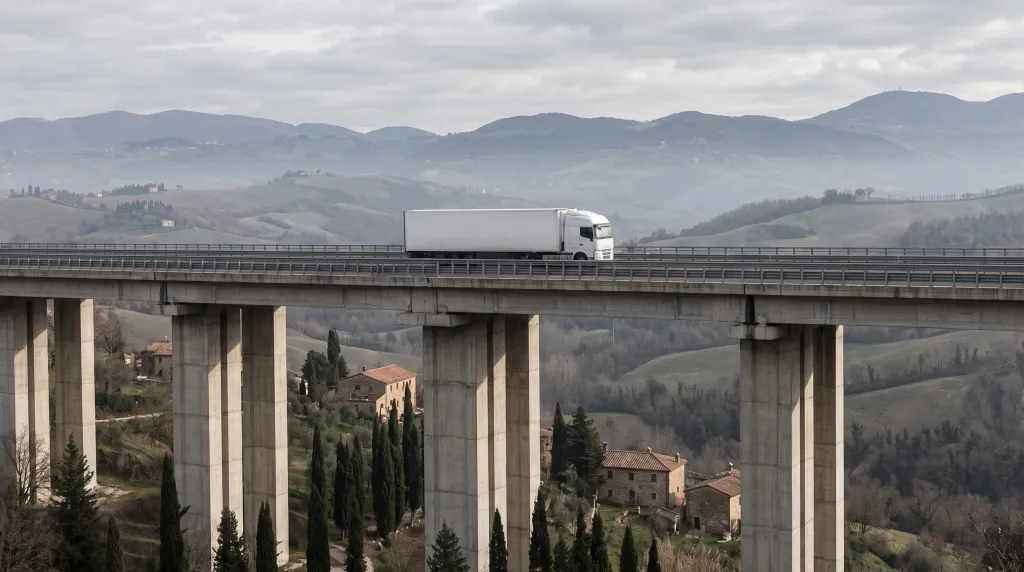
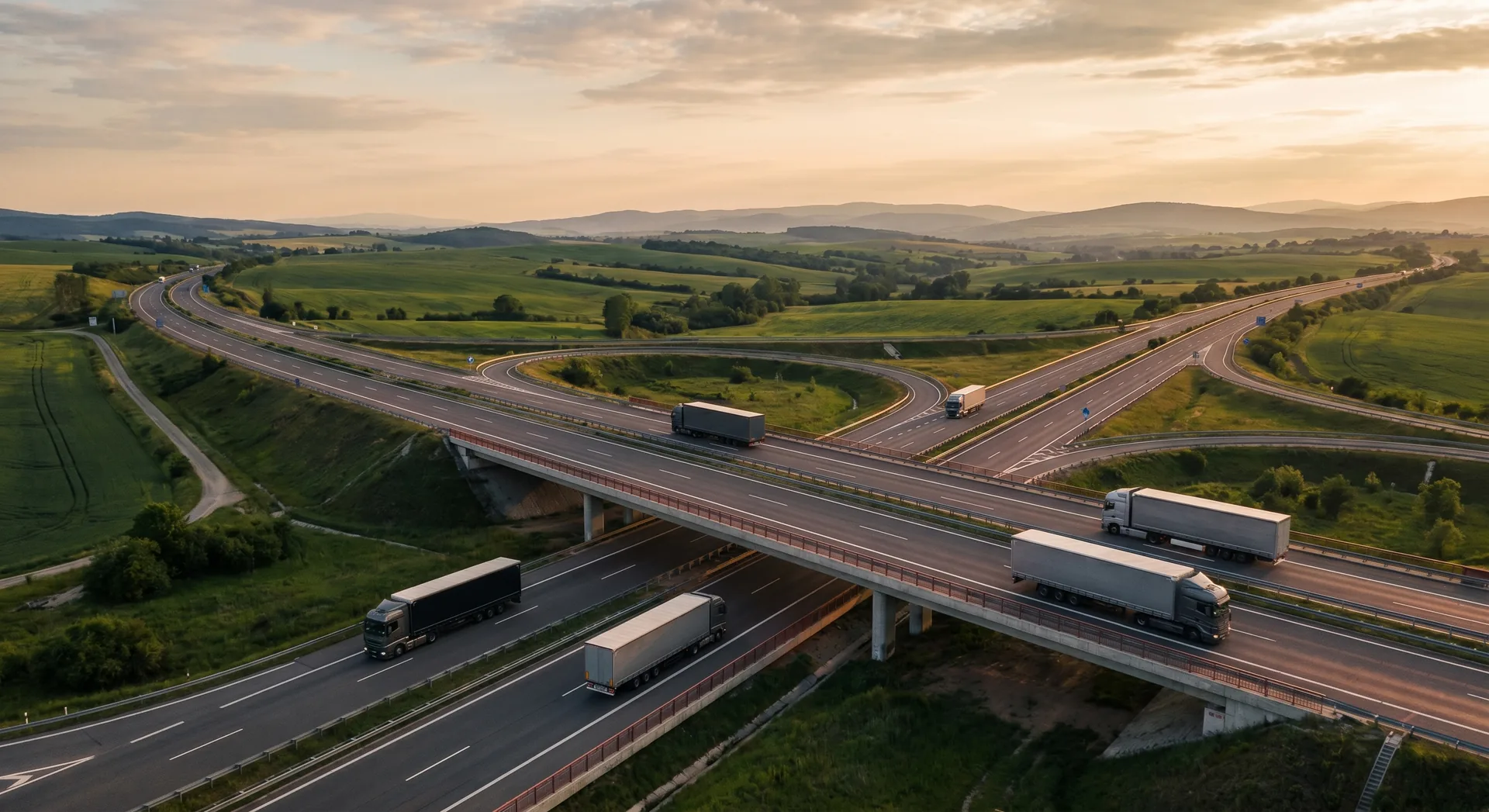
Three main corridors lead to Italy, and choosing between them is an operational decision made per order:
- Via Czechia and Austria over the Brenner Pass: the main axis for Milan, Turin, Verona and the whole Po Valley. The shortest way to the industrial north, but also the busiest: the Austrian section adds its own restrictions on heavy traffic, including night limits, and capacity on the axis is sometimes metered.
- Via Vienna and the Tarvisio crossing: the option for the eastern side of the country, Venice, Bologna and further south along the Adriatic. It wins when the Brenner axis is congested or when the receiver sits on the Adriatic side of the peninsula.
- Via Switzerland through the Gotthard: tempting on the map, but Switzerland lies outside the EU customs territory, so the passage means a customs transit procedure plus the Swiss night and Sunday driving bans. We use this route only when the time and cost calculation genuinely holds.
The corridor is matched to the delivery point, the ban calendar and the situation on the passes; sticking rigidly to one route regularly costs a day at the foot of the Alps.
Transit times and driving bans
Driver working time is governed by Regulation (EC) 561/2006, and together with driving bans it sets the realistic delivery date. A full load from Poland typically reaches northern Italy in 2-3 working days, central and southern Italy take longer, and groupage adds consolidation time. The forwarder confirms the realistic date at quotation.
The calendar has to be read in two countries at once:
- Italy publishes an annual calendar of driving bans for heavy goods vehicles: it covers Sundays and public holidays and is extended in peak travel periods. A truck that arrives at a ban waits until it ends.
- Austria adds its own weekend and holiday bans plus night restrictions on transit routes. A badly timed departure from Poland turns into many hours of waiting before the Alps.
Planning therefore starts from the delivery window at the receiver and counts backwards, through bans and driver rest periods, to the loading time.
What makes the Italian market specific
Trade between Poland and Italy is built on industry: automotive parts and components, machinery and production lines, furniture and metal products, and on the return leg also food under controlled temperature. The economic weight sits in the north: Lombardy with Milan, Piedmont with Turin, Emilia-Romagna with Bologna and Veneto are the most frequent loading and unloading addresses.
- Production plants: deliveries run on booked slots and time windows; a late truck goes back to the end of the queue and the production line of the receiver does not wait.
- Food and reefer: carriage of perishable foodstuffs is governed by the ATP agreement, and the temperature record from the journey is often the only evidence in a dispute over the condition of the goods.
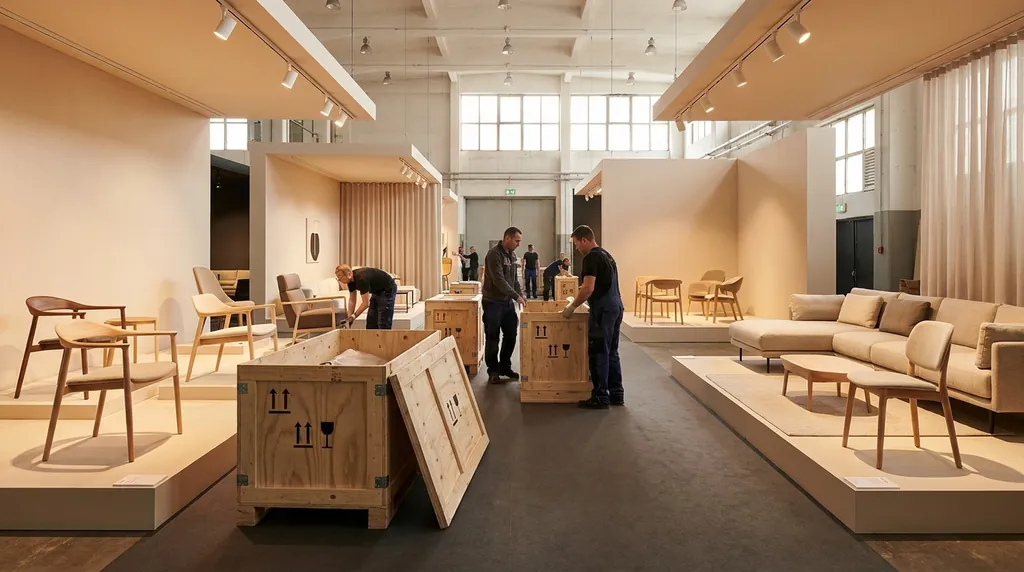
- Trade fairs: Milan, Bologna, Verona and Rimini have a dense exhibition calendar; stand build-up windows do not wait for a late truck. We cover this separately under trade fair logistics.
- City centres and ZTL: the last mile is planned around restricted traffic zones, delivery hours and realistic access to the ramp.
FTL or LTL on the Italian lane
A full truck travels without transhipment and wins on lead time and control over the cargo. Groupage makes sense from a single pallet upwards: the goods travel consolidated on the same lane and the client pays for the space used, not for the whole trailer. The break-even point depends on weight, dimensions and deadline, so we price both options at quotation. How to choose is covered in FTL or LTL, full load or groupage.
What OTSL organises on the Italian lane
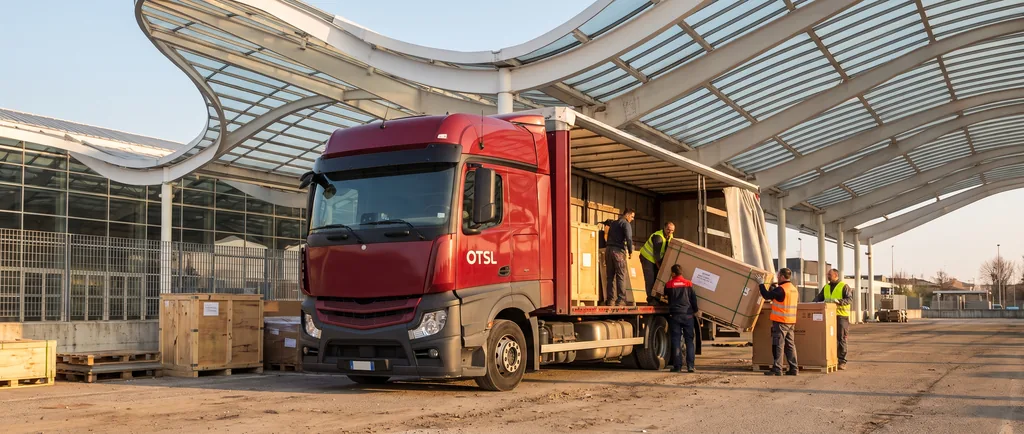
- FTL, full truck loads: curtainsiders and full sets on regular export and import lanes.
- LTL and groupage: part loads from a single pallet, consolidated on the Italian lane.
- Reefer: food and other cargo under controlled temperature, in line with the ATP agreement.
- Out-of-gauge cargo: machines and structures, with permits where they are required.
- Express vans: urgent batches and top-up deliveries when every hour counts.
- Cargo insurance: cover for the cargo value beyond the carrier liability limits of the CMR Convention.
The lane works both ways: we also handle imports from Italy to Poland, from industrial components to refrigerated food. Other European lanes are listed under destinations.
Checklist before shipping to Italy
- Confirm the receiver and the delivery point, including slot booking, the time window and whether the address sits inside a ZTL zone.
- Provide dimensions, weight and pallet count; this drives the FTL versus groupage decision and the rate.
- Prepare the CMR consignment note with a consistent description of the goods; international carriage is documented under the CMR Convention.
- Secure the cargo on pallets: film, straps and corner protectors cost a fraction of a damage claim on an Alpine route.
- Define the temperature regime for food and state whether a temperature record from the journey is required.
- Set the deadline backwards from the delivery window, with a buffer for driving bans en route.
What to watch on shipments to Italy
- An ignored ban calendar pushes delivery back a full day while the truck stands a few dozen kilometres from the ramp.
- Entering a ZTL zone without a permit means a fine and a failed delivery; city centre delivery windows are short.
- A broken cold chain can turn a full trailer of food into unsellable goods.
- A vague description of the goods in the CMR note weakens the position of the shipper in damage claims.