 AI image
Organising the delivery of exhibition stands and displays to the Citywest Hotel, Convention and Event Centre in Dublin requires careful route planning along the N7 on the south-western outskirts of the city. While EU free movement applies between Poland and Ireland, unloading schedules, access rules and site regulations depend directly on the rules specified in the exhibitor manual for the event.
How to organise the transport of stand structures and exhibits to Citywest Hotel, Convention and Event Centre in Dublin?
Delivering event infrastructure and products to this congress facility located off the N7 main road on Dublin's south-western perimeter requires selecting an appropriate maritime or land-sea transport route. Road freight from mainland Europe to Ireland can be conducted either via direct ferry connections or via a transit route through the United Kingdom. The venue's location outside the city centre facilitates heavy goods vehicle access, but entry to the unloading area requires strict adherence to assigned time slots.
Specific technical requirements, including vehicle height limitations, floor load limits within the congress halls, and ramp availability schedules, depend on the agreement made with the event organiser. These instructions are detailed in the official exhibitor manual provided prior to the event. Transport operators must confirm whether a pre-booked delivery slot is mandatory before dispatching vehicles to the venue.
Which customs and transport procedures apply when shipping to events in Ireland?
Because Ireland is an EU Member State, shipments originating in EU countries do not undergo standard customs clearance provided they remain within the EU customs territory. However, if the transit route passes through the United Kingdom, appropriate transit arrangements must be used, such as the EU T2 transit procedure or an ATA (Admission Temporaire, the temporary admission document) Carnet for goods temporarily exported for exhibition purposes.
The transport documentation must include an international consignment note (CMR), a packing list detailing all stand components, and documents confirming the customs status of the items. The required setup depends on the selected transit path and whether the materials will return to their origin or remain in Ireland.
Step-by-step event delivery process
- Examine the exhibitor manual. Review the operational rules and unloading schedules established for the event at Citywest Hotel, Convention and Event Centre.
- Determine the transport route. Select direct sea freight or a landbridge route through third-country territory based on transit time constraints.
- Prepare shipping paperwork. Issue the CMR consignment note, compile a detailed packing list, and set up transit documents if passing through non-EU regions.
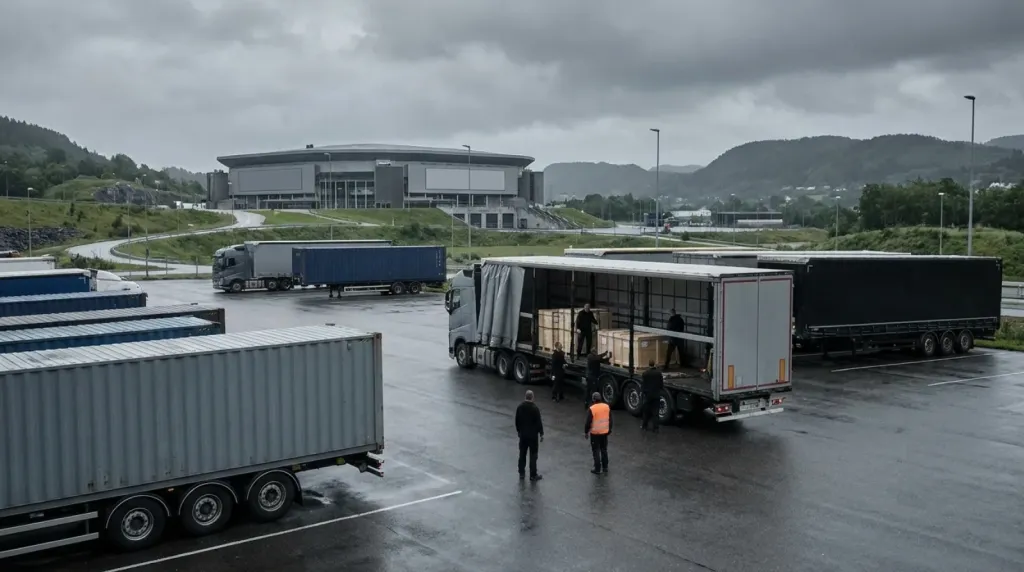
- Book delivery time slots. Register the vehicle with the event organiser's logistics system if slot allocation is enforced for the N7 access gates.
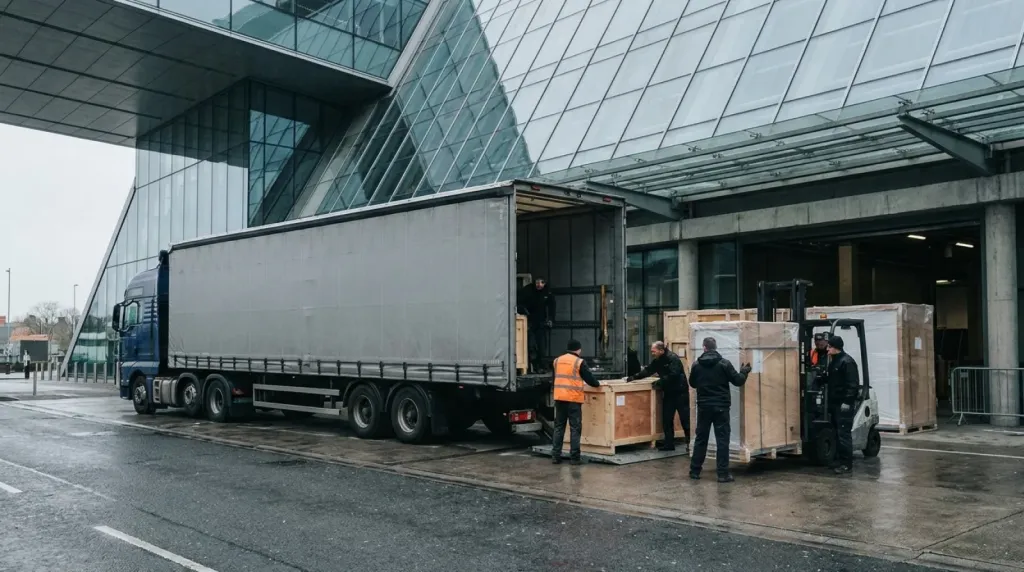
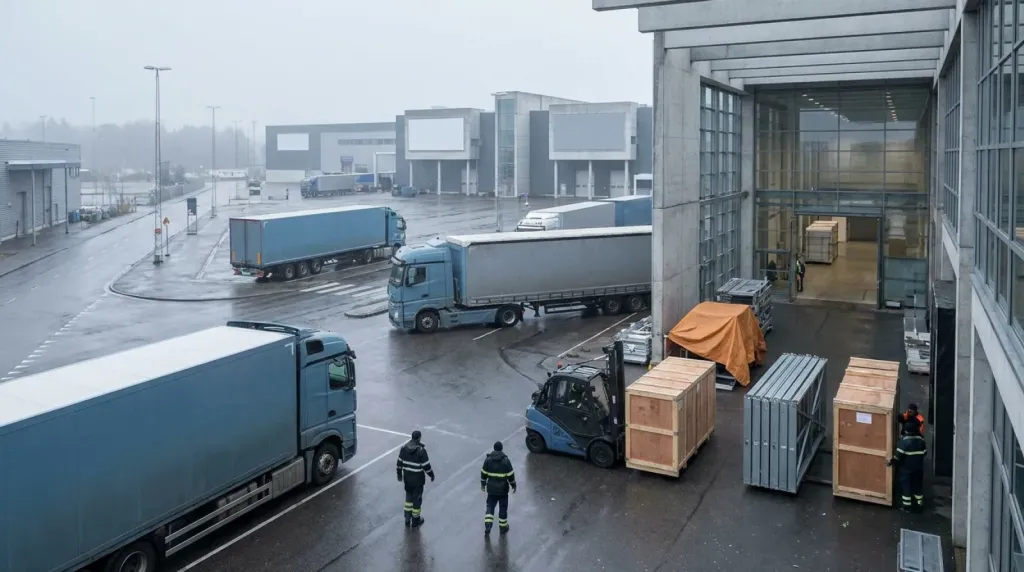
- Execute unloading on site. Deliver items to the congress hall according to site instructions and arrange empty crate management.
- Coordinate post-event collection. Plan the re-loading and return shipment in line with the dismantling timetable established by the venue.
Definitions
- CMR: An international consignment note governing the carriage of goods by road under international agreements.
- ATA Carnet: An international customs document used for the temporary duty-free admission of goods for trade fairs and exhibitions.
- Exhibitor manual: A technical guide issued by event organisers specifying regulations, operational schedules, and safety rules at a venue.
- T2: A transit document proving the internal Union status of goods moving across non-EU territories.
Checklist for event logistics
- Review instructions in the exhibitor manual for the event at Citywest Hotel, Convention and Event Centre.
- Verify vehicle access routes from the N7 road and parking regulations around the venue.
- Prepare the CMR consignment note and comprehensive packing specification.
- Mark all crates and pallets clearly with the stand number and exhibitor name.
- Confirm goods-in-transit insurance coverage for the complete route to Dublin.
- Schedule departures with sufficient buffer time for potential ferry delays.
When do these rules not apply?
The outlined logistics procedures do not apply to goods that do not hold EU customs status or when exhibits are sold directly from the booth to a foreign entity. Rules regarding temporary admission do not apply to shipments entered under permanent import clearance, unless duty suspension schemes are specifically granted. Stand construction services depend on private contract terms with the appointed builder.
The OTSL role
OTSL Sp. z o.o., headquartered in Kielce, provides international freight management to exhibition sites across Europe. Supported by our facility in Kielce and our buffer warehouse in Milton Keynes, England, we coordinate movements between Poland, the UK, and Ireland. Our solutions include road transport services, and you can learn more about customs documentation in our article on the ATA carnet for trade fairs. See also: Exhibition Logistics: Punchestown Event Centre Naas and Exhibition logistics at RDS Dublin: booth transport and exhibits.