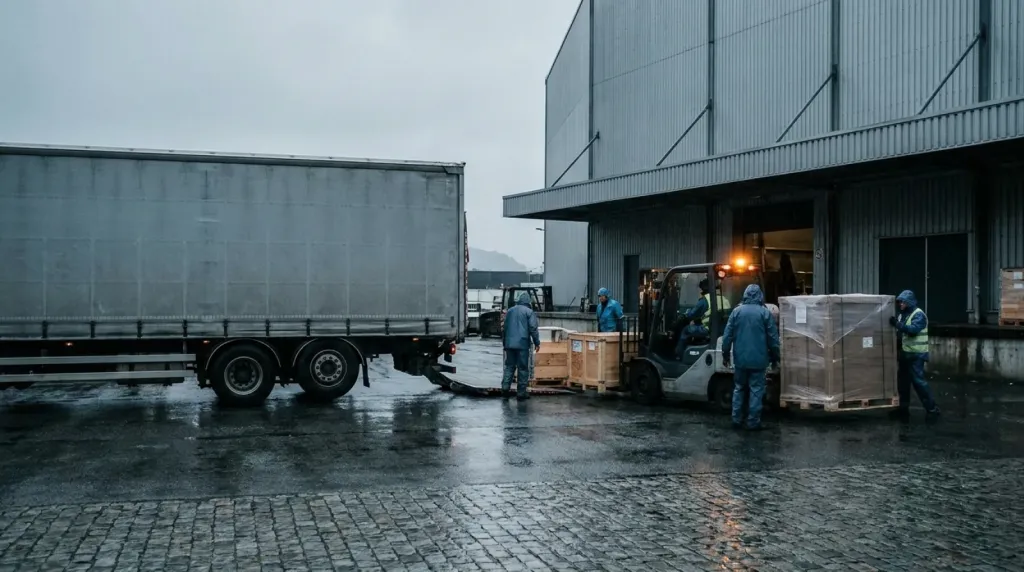
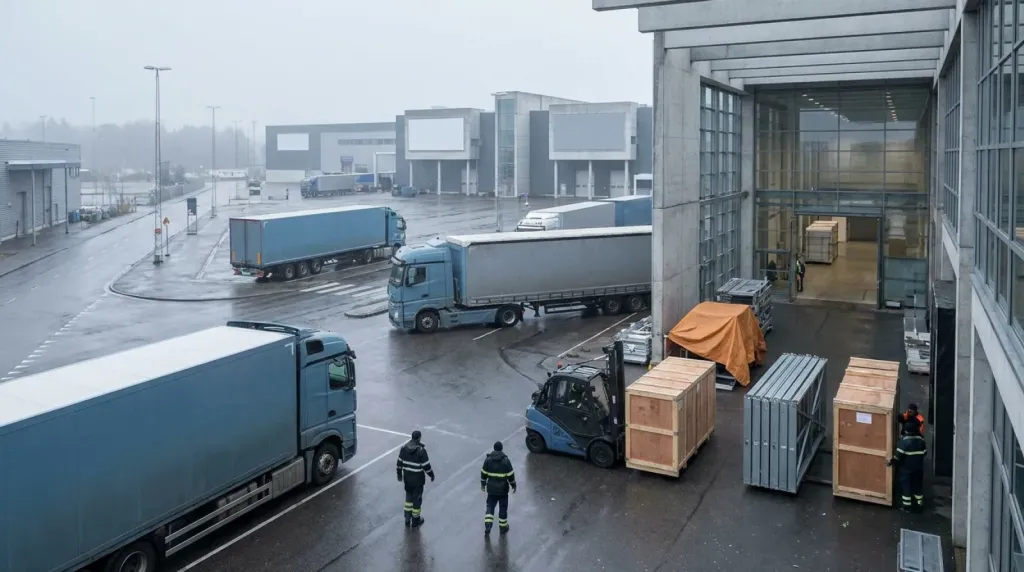
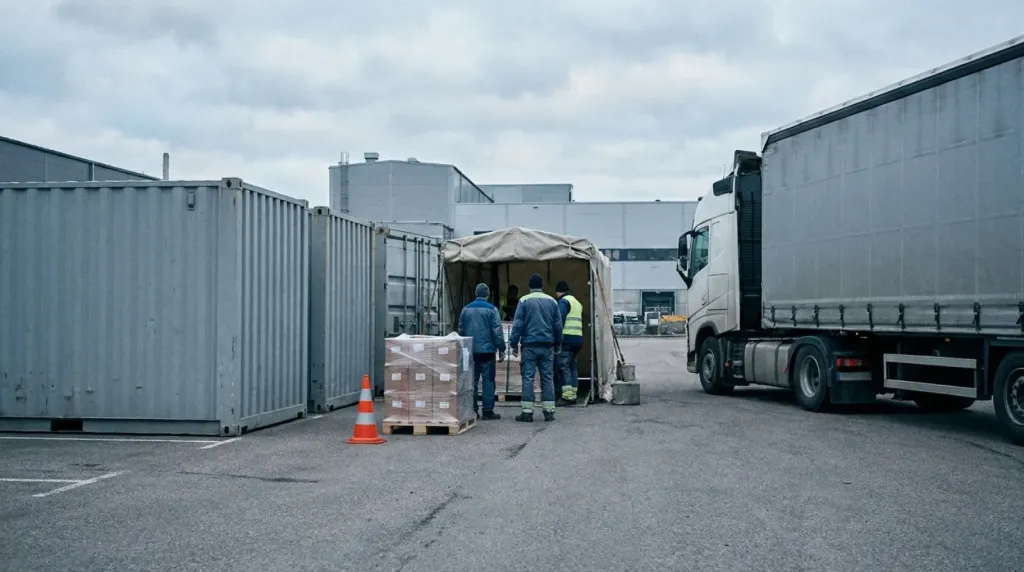
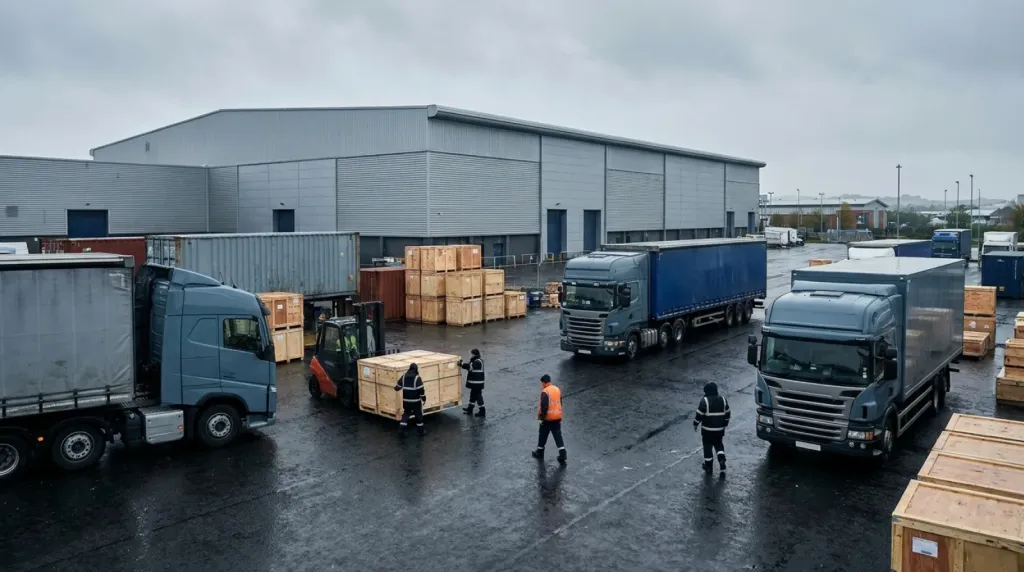
 AI image
Exhibition logistics for events hosted at Międzynarodowe Targi Łódzkie in the city of Łódź requires precise schedule management for delivering stand structures and display equipment. Thanks to the venue's location in the geographical centre of Poland, near the intersection of the A1 and A2 motorways, road transport access is convenient, though unloading slots depend on the organiser manual for each specific event.
How to plan transport to Międzynarodowe Targi Łódzkie effectively?
Organising transport to Międzynarodowe Targi Łódzkie involves taking full advantage of Łódź's strategic position in central Poland. The proximity to the A1 and A2 motorway junction simplifies long-distance road haulage from both domestic locations and international routes coming from the United Kingdom or continental Europe. However, vehicle entry to the venue remains strictly regulated by event managers.
Before dispatching any vehicle, you must check the technical guide provided in the exhibitor manual for the chosen exhibition. These regulations specify allocated assembly times, vehicle notification requirements, and internal traffic rules within the fairground halls. Arriving outside designated time slots can result in delayed access to unloading bays or compulsory waiting at off-site parking areas.
What are the main requirements for transporting exhibits and booth structures?
Exhibition booths and promotional assets frequently involve oversized units or sensitive electronics vulnerable to handling damage. Securing cargo on pallets or using specialised flight cases with ratchet strapping is essential. Floor load capacities and access door dimensions depend on the specific hall's technical configuration, meaning you must confirm these details in the documentation provided by Międzynarodowe Targi Łódzkie.
For goods originating outside the European Union customs area, such as shipments from the UK, customs clearance procedures must be completed prior to arrival. Items brought in temporarily for display purposes can utilise simplified duty relief customs regimes, provided that all re-export formalities are completed after the fair concludes.
Delivery of stand build and exhibits step by step
- Reviewing the exhibitor manual. Check the build-up schedules, vehicle access rules, and delivery slot conditions published by the organisers of Międzynarodowe Targi Łódzkie.
- Cargo packing and preparation. Secure all stand materials and exhibits onto pallets or into flight cases, creating a detailed packing list with weights and dimensions.
- Issuing transport documentation. Prepare the consignment note and, if transporting from non-EU countries, assemble customs documentation for temporary admission.
- Executing road haulage. Route the haulage vehicle via the A1/A2 motorway junction in Łódź, ensuring the driver arrives within the specified time window.
- Unloading and empty container management. Offload equipment at the assigned hall zone and transfer empty crates to designated storage facilities or off-site vehicles.
- Dismantling and return transport. Collect materials and execute reload according to the dismantling timetable set by the event organizer.
Definitions
- CMR: Convention on the Contract for the International Carriage of Goods by Road, an international agreement governing road freight transport documentation.
- ATA Carnet: International Customs Document (Admission Temporaire/Temporary Admission) facilitating the duty-free temporary import and export of exhibition goods.
- EORI: Economic Operators Registration and Identification number, used by customs authorities across the European Union to identify commercial entities.
- Temporary Admission Procedure: A customs regime allowing non-EU goods to enter EU territory with total or partial relief from import duties for specific events.
Checklist for exhibition delivery in Łódź
- Confirmed assembly hours and vehicle access requirements in the exhibitor manual for Międzynarodowe Targi Łódzkie.
- Prepared a comprehensive packing list detailing piece counts, dimensions, and gross weights.
- Arranged adequate cargo insurance coverage for booth components and valuable exhibits.
- Completed necessary customs paperwork for goods originating outside the European Union.
- Briefed the driver on motorway routing via the A1/A2 junction and fairground access rules.
- Organised storage or collection of empty packing materials after stand setup.
When do these rules not apply?
The fair logistics procedures described here do not apply to small parcel deliveries handled by regular parcel courier services sent directly to the administrative offices of the event, unless the event handbook specifies otherwise. Furthermore, these guidelines do not apply to dangerous goods, chemical substances, or ultra-heavy machinery exceeding standard hall floor limits, where transport arrangements depends on specialized safety approvals, venue engineering consent, and separate legal permits.
The OTSL role
OTSL Sp. z o.o., headquartered in Kielce with operational backup in Kielce and a buffer warehouse in Milton Keynes, UK, assists exhibitors in organising the transport of booth structures and display items. We handle transport movements using vehicles such as a rigid truck with tail lift to ensure smooth offloading at venue halls. We assist with customs formalities, providing guidance on customs clearance and ATA Carnets, as detailed in our guide on ATA Carnet for trade fairs. Clients can also use our facility in Kielce and buffer storage in Milton Keynes.