 AI image
Tail-lift deliveries usually fail not because of the vehicle but because something was missing at the consignee: nobody on site, nowhere to roll a pallet truck, a pallet heavier than declared, or an entrance too tight for a 12-tonner. All of it can be caught with one phone call before loading. A failed delivery means the goods return and a second run, which costs more than the original freight.
Confirm this with the consignee
- Who receives, and during which hours. A name and a mobile number, not a switchboard. The driver needs someone to call from the street.
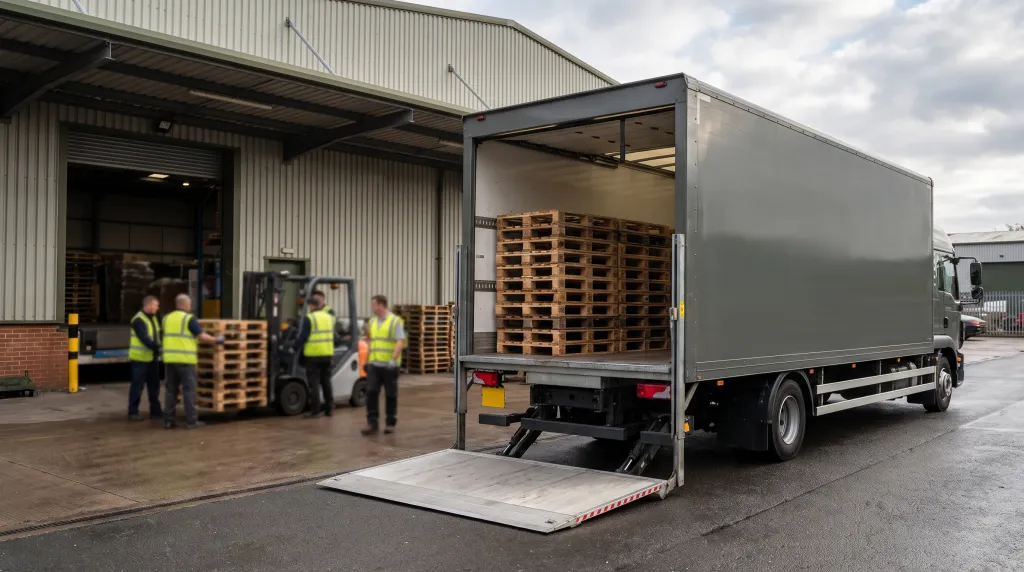
- Is there a ramp. If yes, no tail lift is needed and the vehicle can be cheaper.
- Weight of the heaviest pallet. Above 1.5 tonnes the tail lift is out.
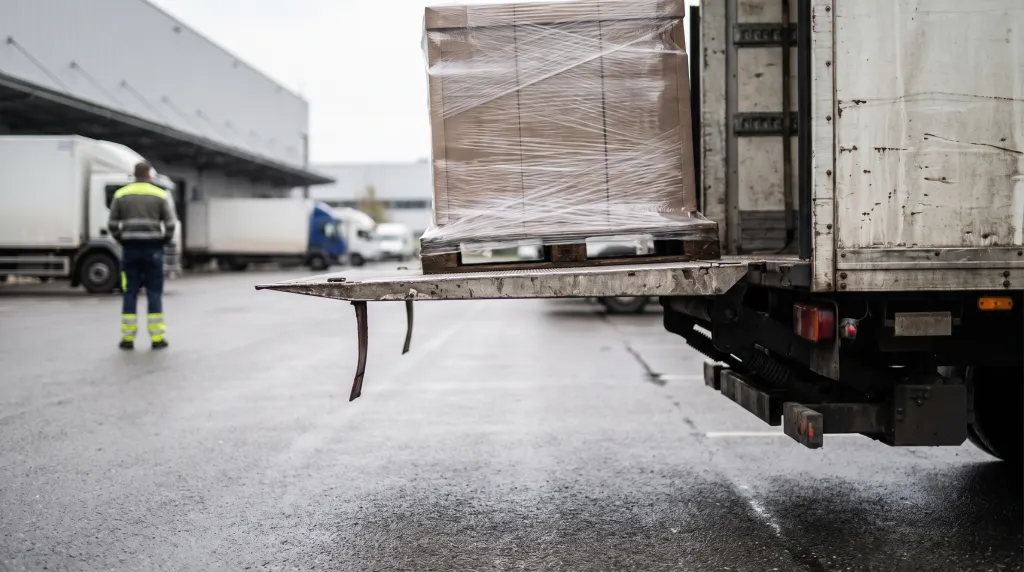
- Ground behind the vehicle. Paving, asphalt and concrete are fine. Sand, gravel, mud and slopes are not.
- Access. Gate width, turning radius, street weight limits, low bridges, and city access restrictions in Western Europe.
- Does the consignee have a pallet truck. Our vehicles carry one, but with many pallets and one person on site it is worth knowing in advance.
What the driver will not do
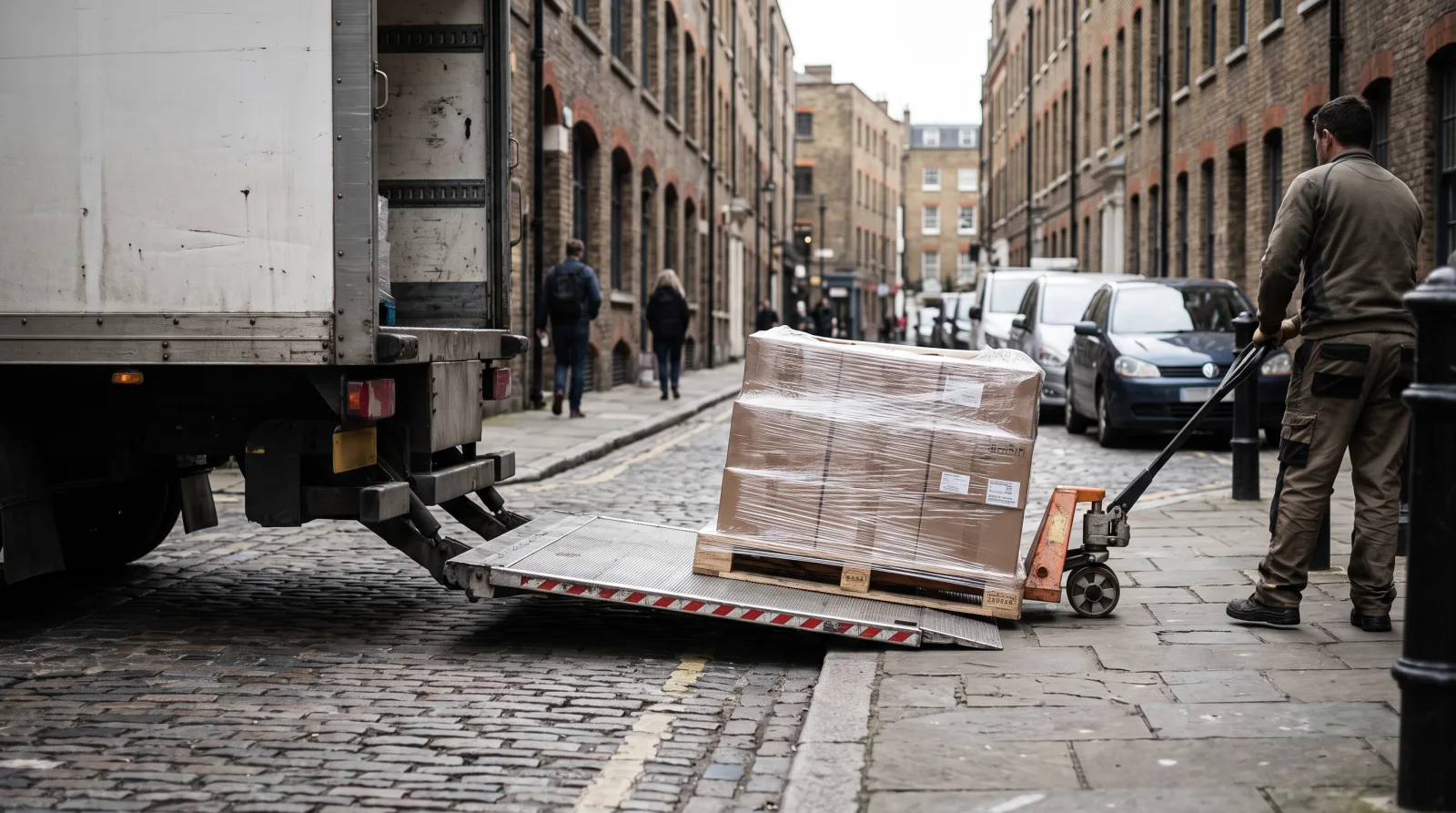
This causes most of the misunderstandings. The driver brings the pallet down on the lift and places it safely next to the vehicle. He does not carry goods into the building, take a pallet truck up steps, unpack pallets or place goods on shelves. If inside delivery is needed, it has to be agreed and priced separately.
City access restrictions
For deliveries into city centres in Germany, the Netherlands, Belgium, France and Austria, low-emission zones and delivery time windows come into play. Access may be allowed only during set hours or only for vehicles meeting an emission standard. Check it before planning the route, because it can move a delivery by a full day.
Receiving hours are not opening hours
One of the most common traps. A company works 8 to 17 but only receives goods until 14, because after that the warehouseman handles despatch. A shop is open until 20 but takes deliveries only before opening. So the question is not "when are you open" but "during which hours do you receive deliveries" — and it is worth asking plainly, because the gap can be several hours.
Documents on receipt
The person receiving should know they are signing a consignment note and be authorised to do so. The signature confirms receipt in apparent condition, so any packaging damage must be written into the document while the driver is present, not reported a day later. Without a reservation on the document, pursuing a claim later becomes considerably harder.
What does happens when a delivery fail?
If unloading is impossible, the goods do not stay at the address. They return to base or go into a warehouse, which triggers two costs: a repeat run and possible storage. In practice the cheapest answer is often to redirect the vehicle to the nearest warehouse and rebook for the next day with the right equipment, rather than holding the vehicle at the address hoping somebody turns up.
Deliveries to private addresses
A private address is a different risk category from a business: no firm ground, a narrow street, no parking, nobody home during working hours. For these, confirming the slot by phone the day before is not a formality but a condition of success.
What does OTSL do?
On tail-lift jobs we walk this list with you and contact the consignee before departure. We run tail-lift distribution to Germany, the Netherlands, Belgium, France and Austria, and exhibition work across Europe, so we know the access constraints on those lanes.
Specification, parameters and a quote form: rigid truck with tail lift, 12 t and 18 t.
Definitions
- Delivery without a ramp: Unloading cargo at street level using a tail lift and a pallet truck.
- Tail lift: A hydraulic platform attached to the rear of a commercial vehicle used to lower goods to the ground.
- Pallet truck: A manual device designed to move palletised loads across hard, level ground.
- Freight: The charge or payment for transporting goods by road.
When does this rule not apply?
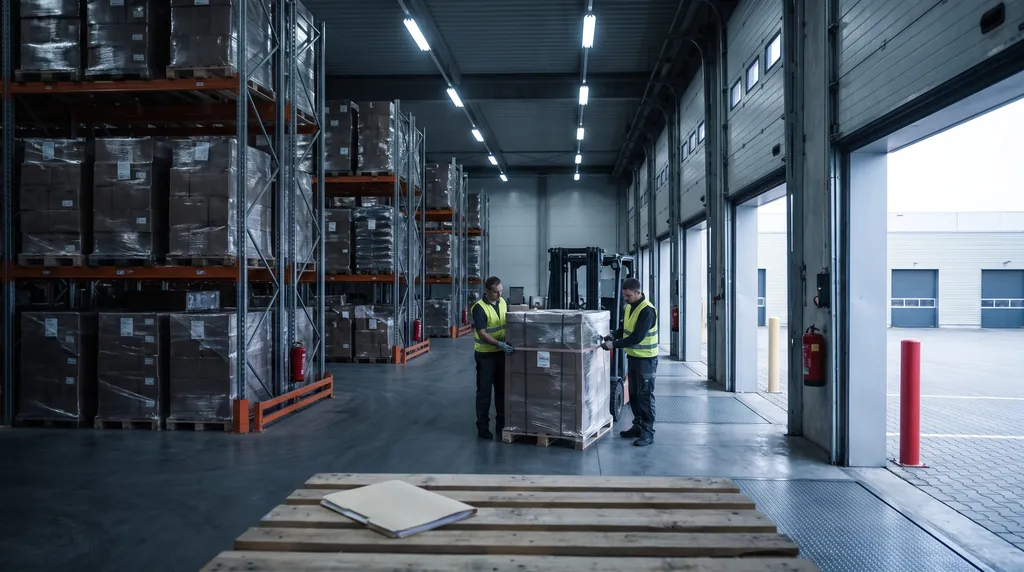
This rule does not apply when the consignee possesses an operational forklift or a dedicated loading ramp, as lowering cargo to street level via a tail lift is no longer required.
The OTSL role
OTSL coordinates non-ramp deliveries by verifying unloading conditions, vehicle access limits, and recipient contact details prior to dispatch. If you need organised transport, our Groupage (LTL) service handles tail-lift shipments across Europe, while our guide on delivering to hard-to-reach locations details how to manage urban access restrictions. See also: Tail lift, lorry crane or dock: how to unload where there is no ramp.