 AI image
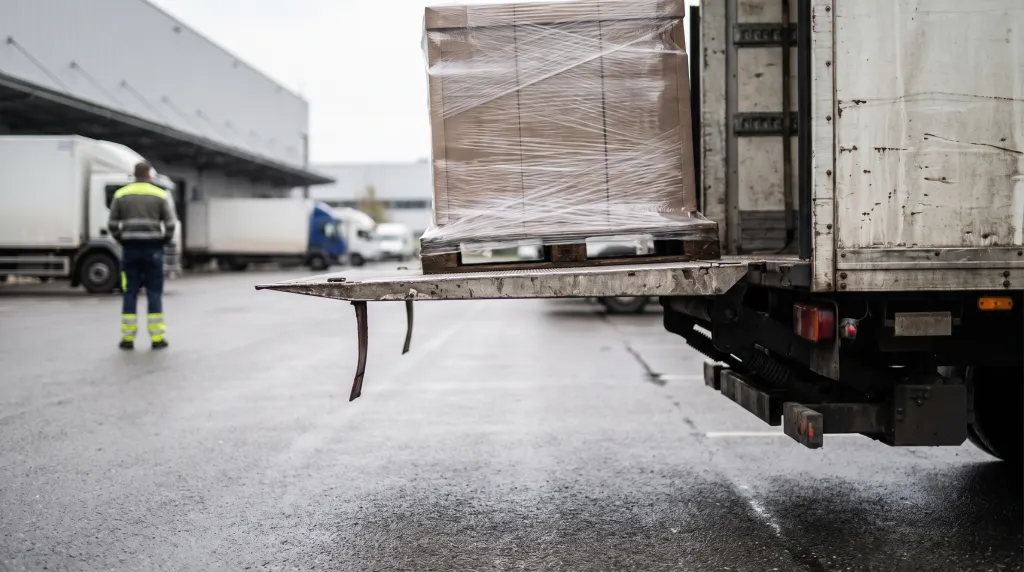
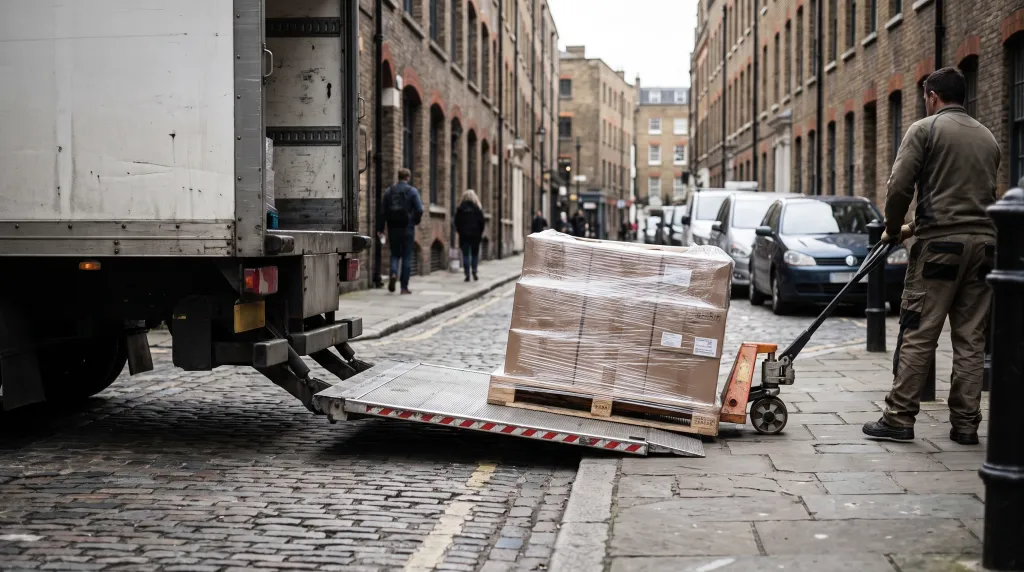
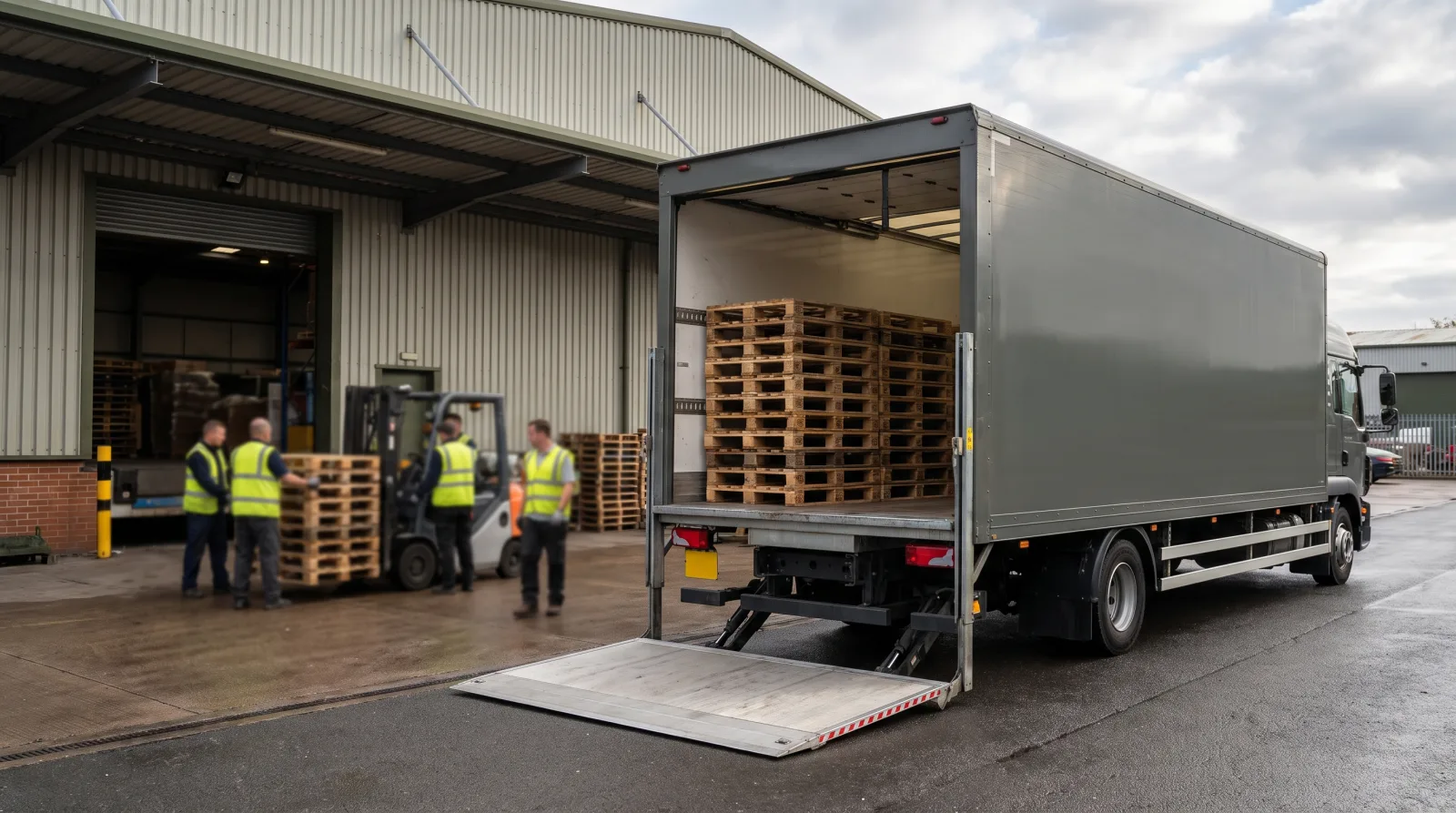
Our rigid trucks take 18 euro pallets, and the hydraulic tail lift raises up to 1.5 tonnes per cycle. Read the two numbers together: space runs out at 18 pallets, but payload or the lift limit usually runs out first. If a single pallet weighs more than 1.5 tonnes, a tail lift is not an option, however much deck space is left.
What does actually fit?
Pallet count follows body length, not gross weight. On the vehicles we run to Germany, the Netherlands, Belgium, France and Austria the standard is 18 euro pallets in a single layer. Industrial pallets of 120 × 100 cm take more room, so fewer of them fit.
| Parameter | 12 t rigid | 18 t rigid |
|---|---|---|
| Euro pallets (120 × 80 cm) | up to 18 | up to 18 |
| Tail lift capacity | up to 1.5 t | up to 1.5 t |
| Typical payload | approx. 5–6 t | approx. 8–10 t |
| When to choose | light goods, many drops | heavy goods, fewer drops |
Why pallet count is rarely the bottleneck
In practice a job hits one of three limits, and almost never the deck space:
- Payload. A 12 t rigid carries roughly 5–6 tonnes of goods once the vehicle and the lift are deducted. Eighteen pallets at 400 kg each is already 7.2 tonnes, which is over the limit.
- Tail lift capacity. Our lifts raise up to 1.5 tonnes. That is a per-cycle limit covering the pallet together with the pallet truck and the operator, if they ride the platform.
- Height and stability. A pallet taller than the body interior, or with a shifted centre of gravity, will not travel safely regardless of weight.
How to order so the truck does not come back empty
Four details are enough: pallet count, weight of the heaviest single pallet, pallet height, and whether the consignee has a ramp. That last question decides whether a tail lift is needed at all, and it is usually the biggest difference in price and vehicle availability.
Do the arithmetic before ordering
The simplest check takes a minute and saves a failed run. Multiply pallet count by average pallet weight. If the result exceeds the payload of the variant you picked, you need a bigger vehicle or two runs. Then check the heaviest single pallet: above 1.5 tonnes the tail lift is out regardless of the total.
A worked example: 18 pallets at 300 kg is 5.4 tonnes, which fits a 12-tonner. The same 18 pallets at 500 kg is 9 tonnes, so only an 18-tonner will do. And 10 pallets at 1.8 tonnes cannot go by tail lift at all, even though they take up less space than either.
Pallet height, the forgotten variable
The pallet count assumes a single layer. If the goods allow stacking, twice as much fits in the same floor area, but then body interior height and stack stability decide everything. Stacked pallets must be secured so the top layer cannot shift under braking, and on a tail lift they come down separately, which lengthens time at the drop.
How long does unloading take?
One pallet down the lift is typically 2–4 minutes including placing it safely. Eighteen pallets at one drop therefore means 40 minutes to an hour at the vehicle. That matters when planning time windows and for city-centre deliveries where waiting is restricted. Across several drops, unloading time can weigh more than the kilometres.
What does OTSL do?
We keep a large fleet of 12 and 18 tonne rigids with tail lifts in constant service on Western European lanes and on exhibition work across Europe. We match the vehicle to the specific load and delivery point rather than sending whatever is free.
Specification, parameters and a quote form: rigid truck with tail lift, 12 t and 18 t.
Definitions
- Rigid truck: A lorry with a single fixed body, operating without a semi-trailer or drawbar trailer.
- Gross vehicle weight (GVW): The maximum legal total weight of the vehicle including its cargo.
- Tail lift: A hydraulic platform attached to the rear of a vehicle to lower goods to street level.
- Euro pallet: A standardized transport pallet measuring 120 by 80 centimetres.
When does this rule not apply?
The standard pallet capacity rule does not apply when individual pallets exceed 1.5 tonnes or when larger industrial units are loaded, as hydraulic tail lifts cannot operate beyond their maximum lift capacity regardless of available floor space.
The OTSL role
OTSL manages international distribution and cargo planning to ensure payload limits are respected. Explore our Groupage (LTL) services or read more on pallet standards in Pallets, packaging and load securing in international transport.