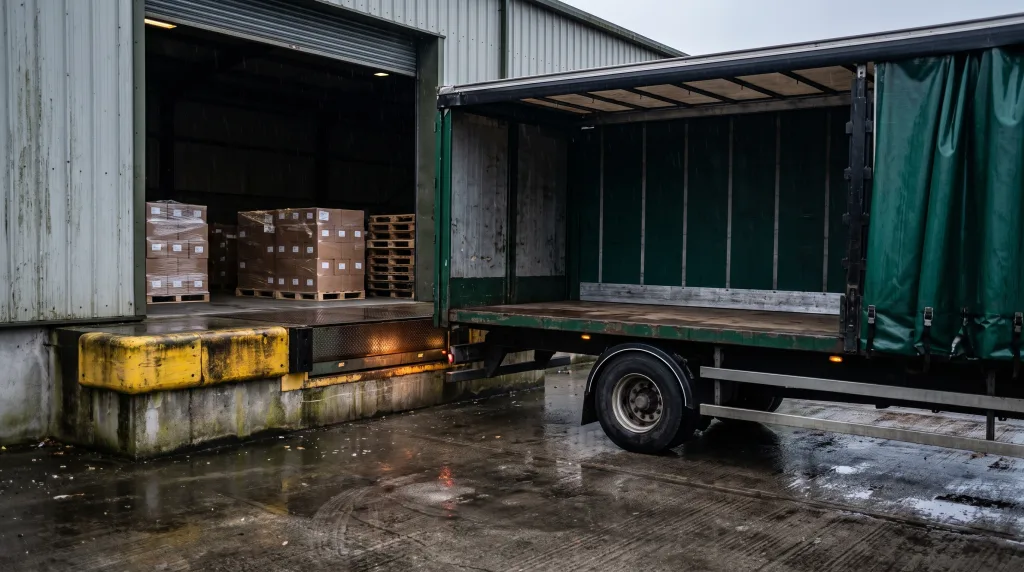
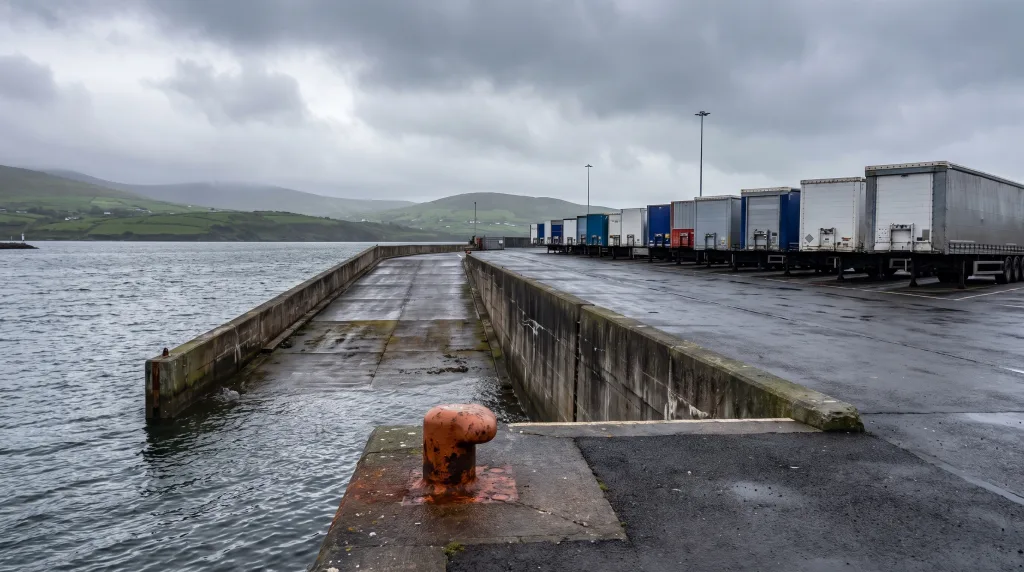
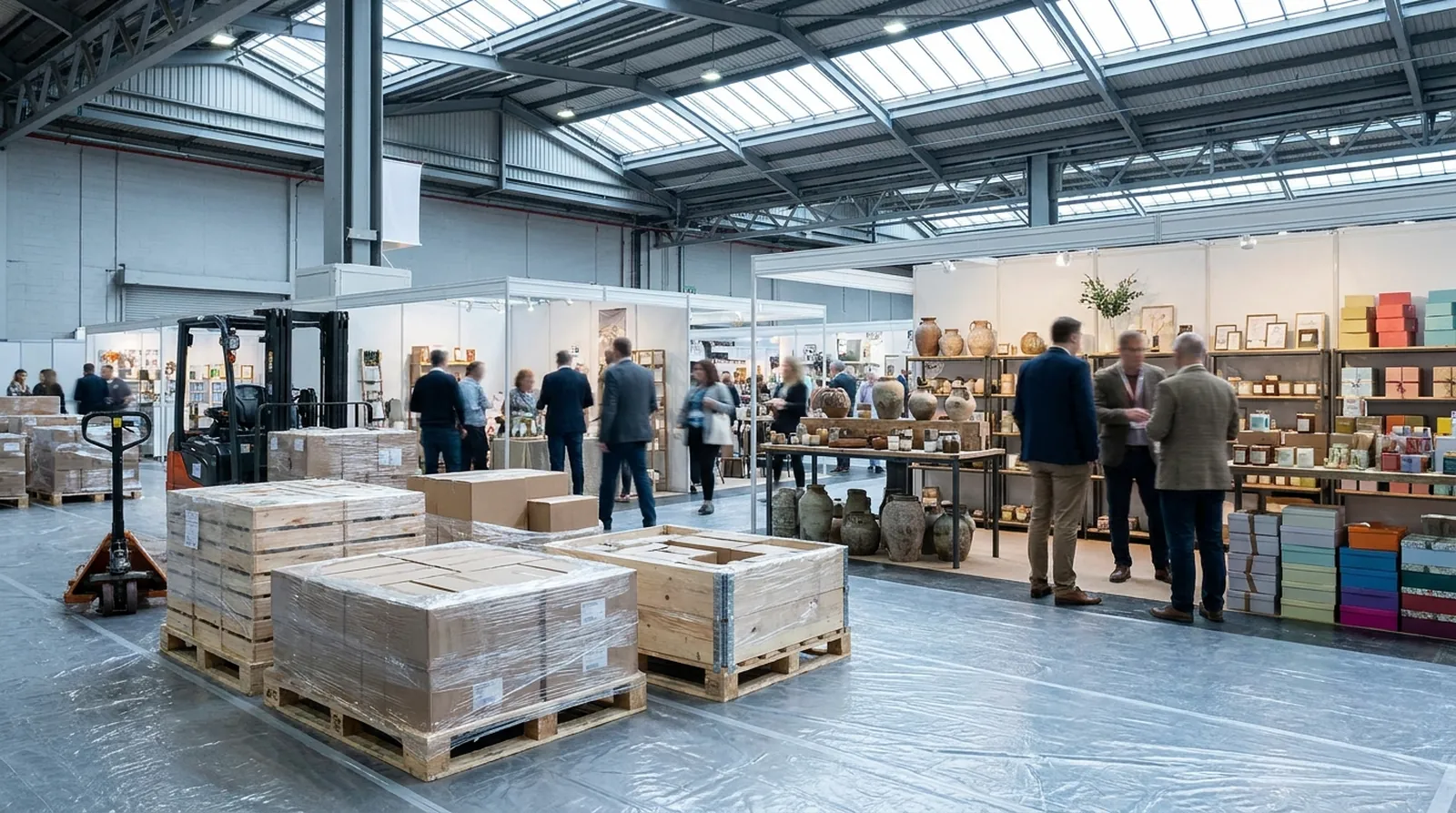
 AI image
Spring Fair at the National Exhibition Centre in Birmingham is a major British home and gift industry event. For a Polish exhibitor it differs from EU fairs in one fundamental detail: the UK is outside the customs union, so exhibits and the stand cross a customs border both ways. Without documents prepared in advance the stand can get stuck not in traffic, but in clearance.
ATA carnet or clearance: which one
A display that returns to Poland after the fair usually travels on an ATA carnet: temporary admission without duty and tax. Goods that stay in the UK, for example sold pieces or consumables, need regular clearance. Usually both modes combine in one trip, and that split must be planned before loading, not on the ferry.
What Spring Fair service looks like
- Transport of stand and goods with clearance in our own agencies in Poland and the UK.
- Delivery booked to the venue and organiser rules.
- A buffer on the British side: our Milton Keynes warehouse sits between London and Birmingham, so goods can wait for the assembly window on site, not in a lay-by.
- After the fair: return on the carnet, follow-up sales from the UK warehouse or distribution to clients.
More about the islands: transport to fairs in the UK and exhibition logistics at the NEC.
How should you schedule your transport timeline to avoid customs and hall delays?
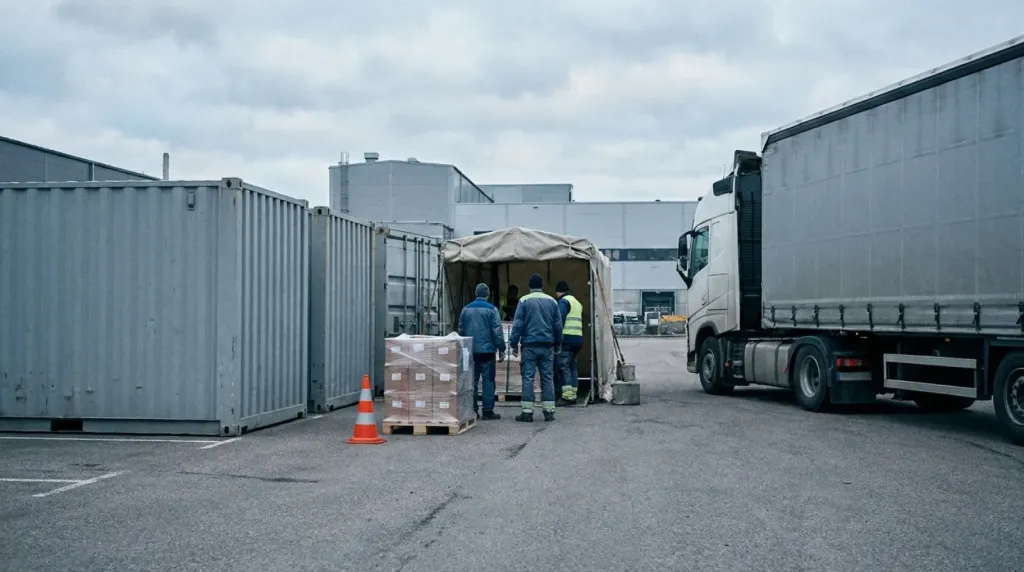
Time planning for transport to the UK requires accounting for three critical points: customs declarations, the sea crossing, and the rigid delivery window at the exhibition venue. You must submit all documentation for the ATA Carnet procedure to the customs broker at least 72 hours before loading begins in Poland. Every item listed on the packing list must match the actual cargo by 100% in terms of weight, value, and description. A discrepancy in total weight exceeding 5 kg can lead to an immediate physical inspection by UK Border Force or HMRC at the port, which adds a delay of at least 24 hours to your schedule. Furthermore, the vehicle must be loaded so that items under temporary admission are easily accessible for visual inspection without unloading the entire trailer.
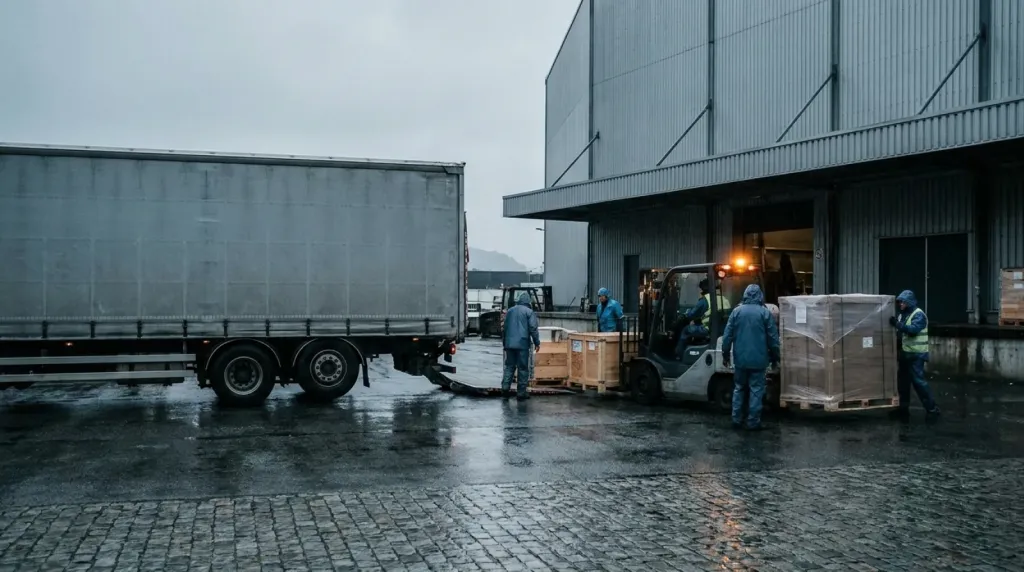
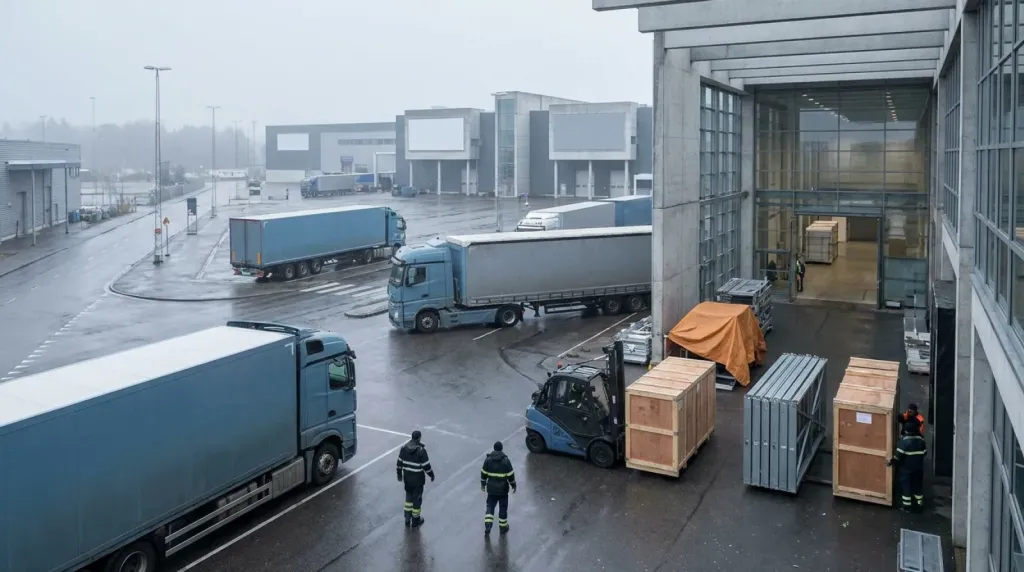
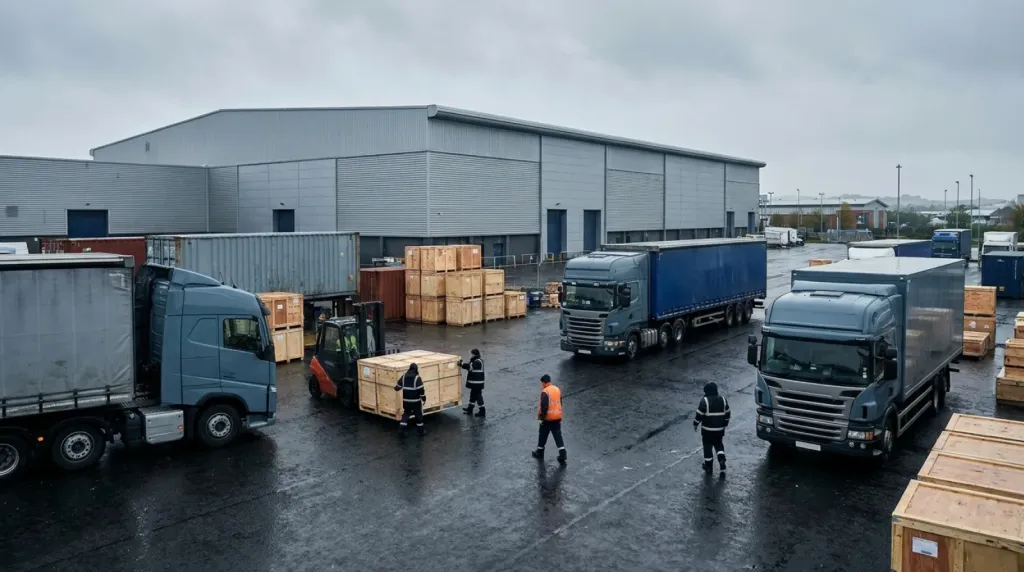
At the NEC Birmingham, a strict traffic management system governs all venue access. Heavy goods vehicles over 3.5 tonnes gross vehicle weight are assigned a specific slot granting a timeframe of exactly 2 hours to enter, unload, and vacate the hall loading bay. If your shipment contains oversized items exceeding a height of 2.4 metres or individual pallet units weighing over 500 kg, you must request specialised forklift handling at least 48 hours prior to arrival. Failing to pre-book handling equipment results in the immediate cancellation of your allocated slot and redirects the driver to an off-site holding area, causing delays between 6 and 12 hours before another slot becomes available.
- Secure all exhibits on standard European pallets measuring 120 cm x 80 cm wrapped in transparent stretch film to allow quick visual customs checks.
- Incorporate a buffer of at least 12 hours between the completion of stand dismantling and the scheduled outbound UK customs clearance, taking driver rest periods into account.
- Separate consumable goods and printed promotional flyers from permanent exhibition structures, as consumables cannot be re-exported under the same ATA Carnet.
The strict timing rules and mandatory venue slot reservations outlined above do not apply to small sample shipments with a total mass under 50 kg transported via light commercial vehicles under 3.5 tonnes GVW, provided these goods undergo standard permanent import clearance and require no mechanical offloading equipment at the hall.
Step by step
- Separate the cargo. Divide returning display items from items to be sold or consumed at the venue.
- Prepare documentation. Apply for an ATA Carnet for returning goods and prepare standard clearance for remaining items.
- Pack and verify. Secure the load according to the packing list before dispatch.
- Complete customs. Clear customs through agencies in Poland and the UK prior to crossing.
- Deliver on slot. Arrive at the NEC Birmingham strictly within your assigned unloading window.
Definitions
- NEC (National Exhibition Centre): An exhibition venue located in Birmingham hosting the Spring Fair trade event.
- ATA Carnet (Admission Temporaire/Temporary Admission): An international customs document allowing the duty-free temporary import and export of exhibition items.
- Standard clearance: A regular customs procedure used for consumable materials or goods intended for sale in the UK.
- Delivery booking: The process of scheduling a specific slot for vehicle unloading at the venue.
When does this rule not apply?
Temporary admission rules do not apply if all goods brought to the exhibition are intended for permanent sale or consumption within the UK.
The OTSL role
We handle stand transport and border customs clearance for trade fair trips. Learn more about our Road transport (FTL) options and read our guide on Exhibition logistics at the NEC Birmingham, delivery and backup.