 AI image
The cost of customs clearance consists of a basic declaration plus items that depend on the specific consignment: the number of tariff codes, clearance on the other side of the border, T1 transit documents, customs inspections, temporary storage and possible truck demurrage. An advertised price of a hundred zloty or so describes the simplest variant, not a typical invoice.
What the price of clearance is really made of
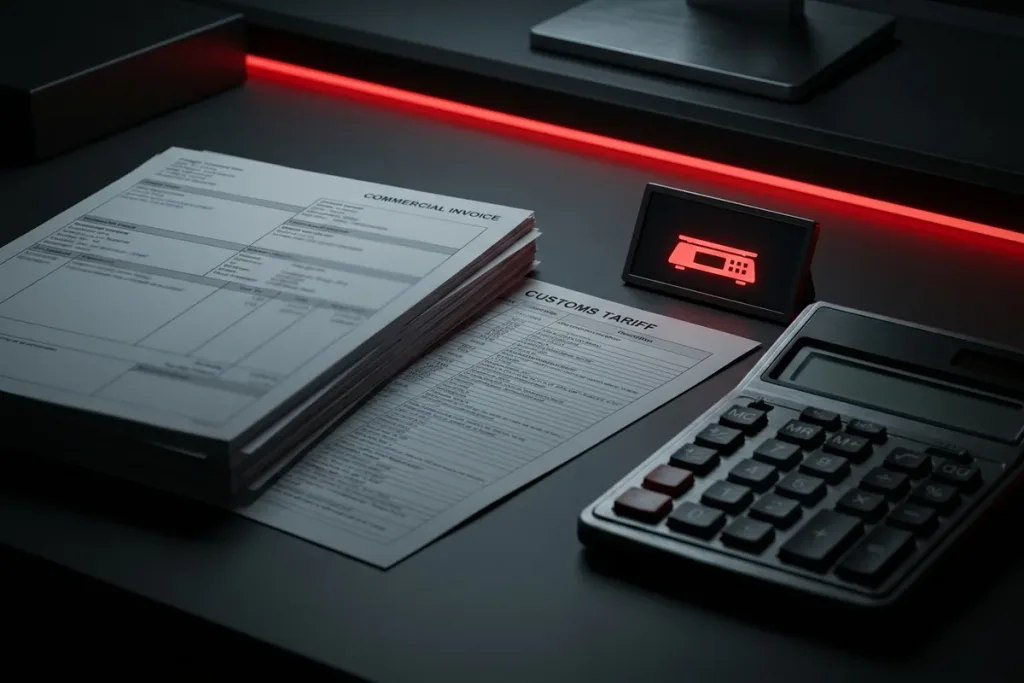
An invoice for customs clearance rarely has a single line. The individual components appear depending on what you ship and how:
| Component | When it appears |
|---|---|
| Base declaration (SAD) | always, this is the line from the advertised price list |
| Additional HS codes | when the consignment has more tariff items than the base price covers |
| Clearance on the other side of the border | export and import are two declarations, often two agencies in two countries |
| T1 transit document and guarantee | when non-Union goods travel through customs territory to the place of clearance |
| Handling an inspection | when customs selects the consignment for a document or physical check |
| Temporary storage warehouse | when the goods wait for clearance longer than the free time allows |
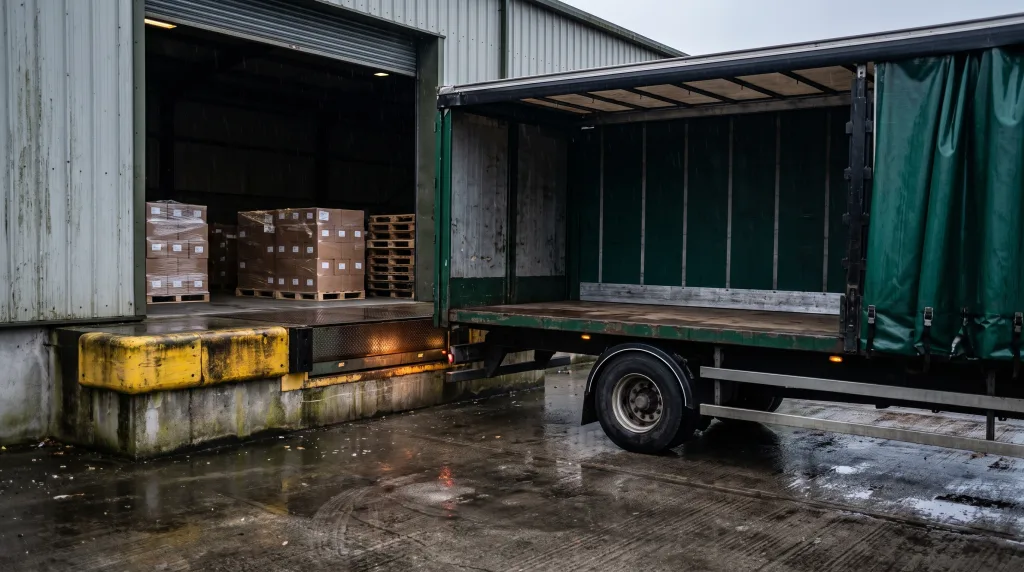
| Truck demurrage | when the vehicle stands still because documents are missing or a check is under way |
| Out-of-hours work | evening, weekend and holiday clearances, where the office offers them at all |
Why clearance from 150 zloty is rarely the final price
The mechanism is simple and it is not a scam, as long as the price list says openly what the base price covers. The advertised amount usually applies to one declaration with one or a few tariff items, lodged during office hours, with no transit, no inspection and no waiting. A typical commercial consignment looks different: a dozen different products on a pallet means a dozen HS codes, an export from Poland still needs an import on the destination side, and a single typo on the invoice can hold a truck at the border. Each of these elements has its line in the price list and all of them legitimately end up on the invoice. The problem arises when a customer compares offers on the base price alone and learns about the remaining components after the fact.
When comparing offers it therefore pays to ask three questions: how many tariff items the base price includes, whether the quoted amount covers both sides of the border, and what happens when the consignment is selected for inspection. The answers say more about the final cost than the headline price does.
Missing documents cost the most
The biggest lines on a clearance invoice almost never come from the agency price list, they come from waiting. A truck standing at the border because the consignee EORI (Economic Operators Registration and Identification) number is missing or the invoice lacks delivery terms generates demurrage charged for every day started. Goods moved into temporary storage wait for explanations at the expense of the party who ordered the transport. On top of that comes the consignee risk: a held-up delivery means a stopped production line or an empty shelf. How an agency works when the paperwork is incomplete is described in our article on clearance with incomplete documents.
What to prepare to pay less
- EORI numbers for both parties, verified before loading. How to get one is explained in our article on the EORI number.
- A commercial invoice with Incoterms, value, currency and a goods description that can be matched to an HS code. Who is responsible for what under each rule is covered in our piece on Incoterms and who arranges customs.
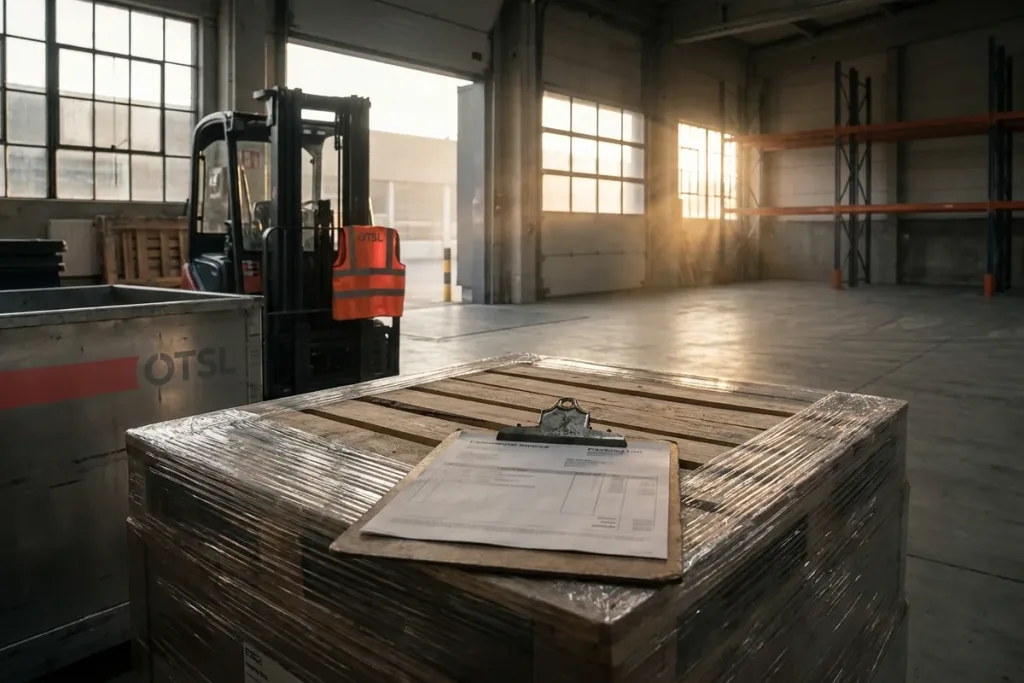
- A packing list consistent with the invoice: number of packages, gross and net weights, split into items.
- A transit decision made in advance: does the cargo move under T1 to be cleared inland, or is it cleared at the border. The differences are explained in our article on T1 and T2 transit.
- A power of attorney for the customs agency signed before the first clearance, not on the day the truck is already standing at the border.
A complete set of documents does not lower the price list rates, but it eliminates the lines that hurt most: demurrage, storage and repeated declarations after corrections.
The OTSL role
We handle customs clearance in-house and quote it on the basis of the actual consignment: the number of items, the direction and the clearance route, not an advertising slogan. Before the transport we tell you which components are certain and which depend on inspections and documents. Contact us if you want to know the real cost of clearing your goods before you see it on an invoice.
What determines the final price of customs clearance?
The final invoice amount depends on the baseline entry fee alongside additional variables such as the number of extra tariff codes, necessary T1 transit forms, potential temporary storage fees, and truck demurrage at the border.
Step by step
- Document collection. You gather commercial invoices and packing lists necessary for submitting the declaration.
- Tariff classification. You assign appropriate commodity codes to every line item in the consignment.
- Declaration lodging. The customs agency submits the electronic declaration to the relevant customs system.
- Customs inspection. Customs authorities verify the declaration and may select the consignment for physical check.
- Final invoicing. You receive an invoice covering the base entry and any additional clearance components.
Definitions
- SAD (Single Administrative Document): An electronic customs declaration submitted by a customs agency on behalf of an importer or exporter.
- HS Code (Harmonised Commodity Description and Coding System): An international standard for classifying goods where each commodity group forms a separate tariff line.
- T1 Document (External Transit Procedure): A customs document allowing non-Union goods to move between customs offices without immediate payment of duties.
- Temporary storage warehouse: A designated location where goods await customs clearance after presentation to customs authorities.
- Vehicle demurrage: The waiting time incurred by a transport vehicle during customs clearance or physical border inspections.
When does this rule not apply?
The standard price for customs clearance does not apply to consignments with multiple tariff lines or shipments requiring transit documentation and physical border inspections, unless specific terms have been agreed in advance.