 AI image
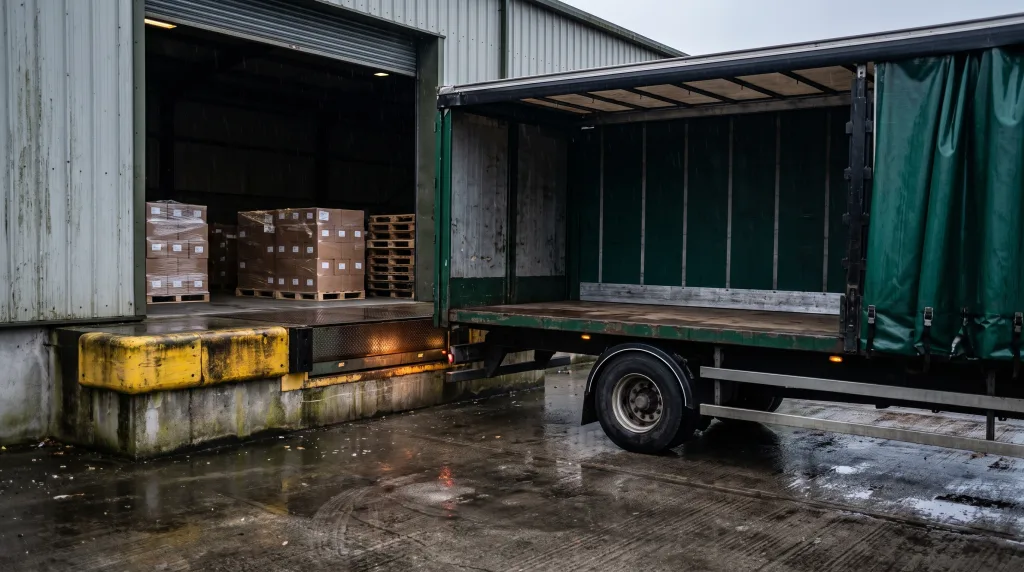
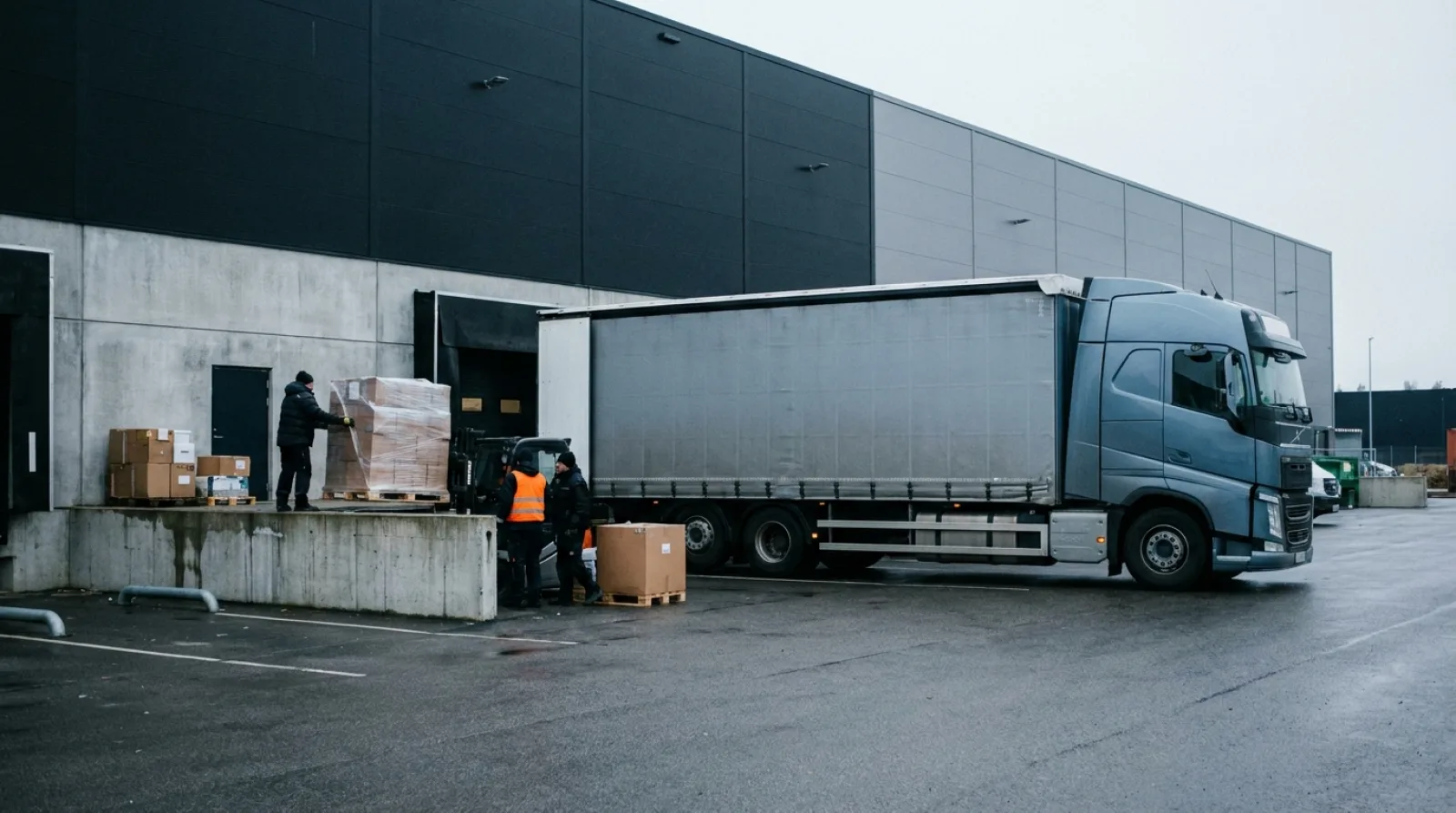
Preparing cargo for pickup before a trade fair requires packing all items into transport-ready crates or pallets, producing a detailed cargo list with weights and dimensions, marking centres of gravity, and designating an authorised person to sign documentation. The pickup schedule must be calculated backwards from the designated assembly slot at the exhibition venue, accounting for transit duration and loading buffers.
Why is pickup at the exhibitor facility the most vulnerable link?
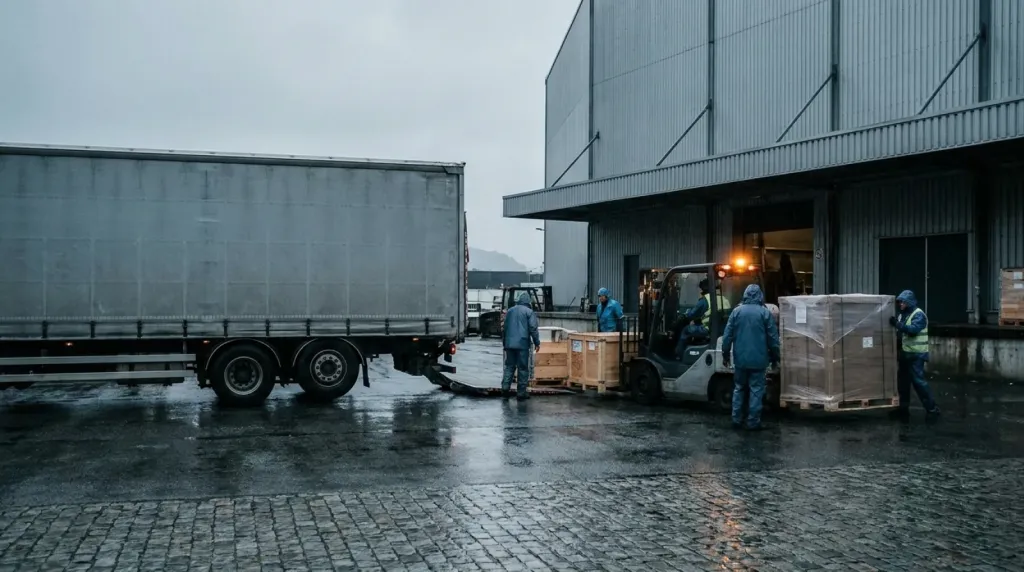
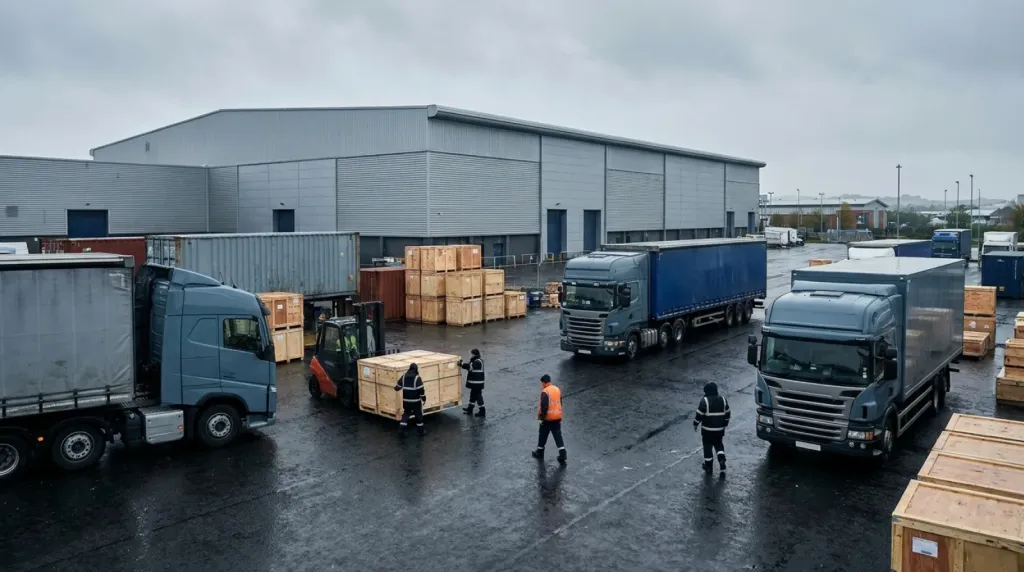
Cargo pickup at the exhibitor premises represents the initial critical point in trade fair logistics. When a vehicle arrives at the loading bay and the goods remain unpacked, cargo lists are missing, or no decision-maker is present, the entire transport timetable collapses. Delays during loading erode the safety margin allocated for transit, ultimately causing the vehicle to miss its assigned unloading slot at the exhibition hall.
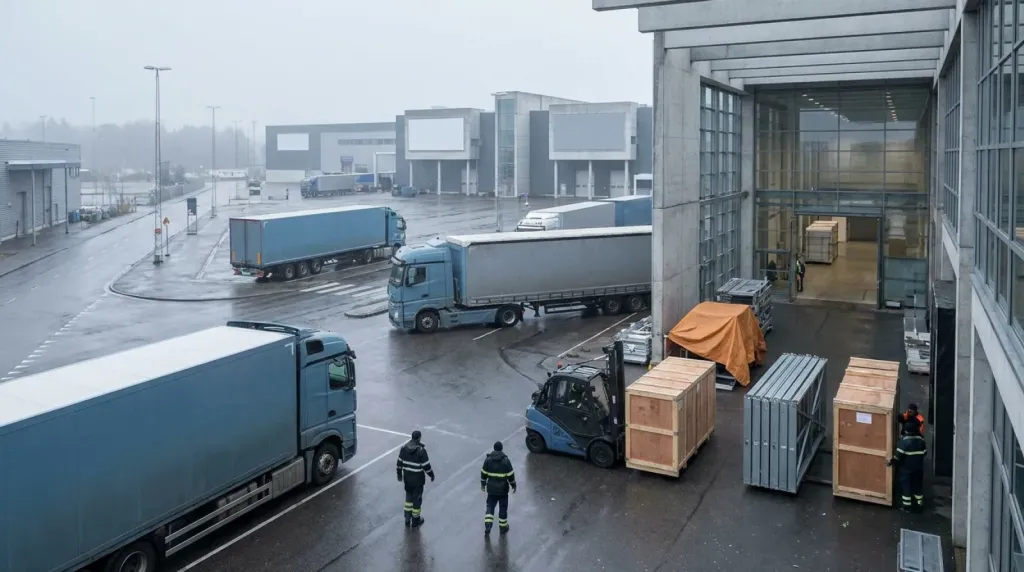
Exhibition centres operate strict traffic management schedules. Missing a slot means the transport must wait for an open technical window, which can delay stand construction by hours or compromise the overall exhibition setup. Consequently, efficient loading at the exhibitor site directly determines whether the exhibition deadline is met without emergency interventions.
How to prevent discrepancies in customs and transport documentation?
The cargo list established at pickup forms the mandatory legal basis for issuing customs paperwork, including ATA (Admission Temporaire, the temporary admission document) Carnet documents or temporary admission declarations. Discrepancies between physical items loaded onto the trailer and the details listed on paper emerge during border checks or customs inspections, rather than at the origin warehouse. Mismatched weight figures, missing serial numbers, or unlisted components result in immediate customs holds.
To ensure smooth border crossings, the documentation drafted at pickup must contain exact details for every package. It must outline precise gross weights, external dimensions, item descriptions, and individual values. The driver collecting the freight verifies package counts and markings against the provided paperwork to ensure seamless processing along the transport route.
Preparing cargo for collection step by step
- Drafting a detailed cargo specification: Compile a comprehensive list of all display items, stand structures, and equipment including accurate weights, dimensions, and declared values before transport arrival.
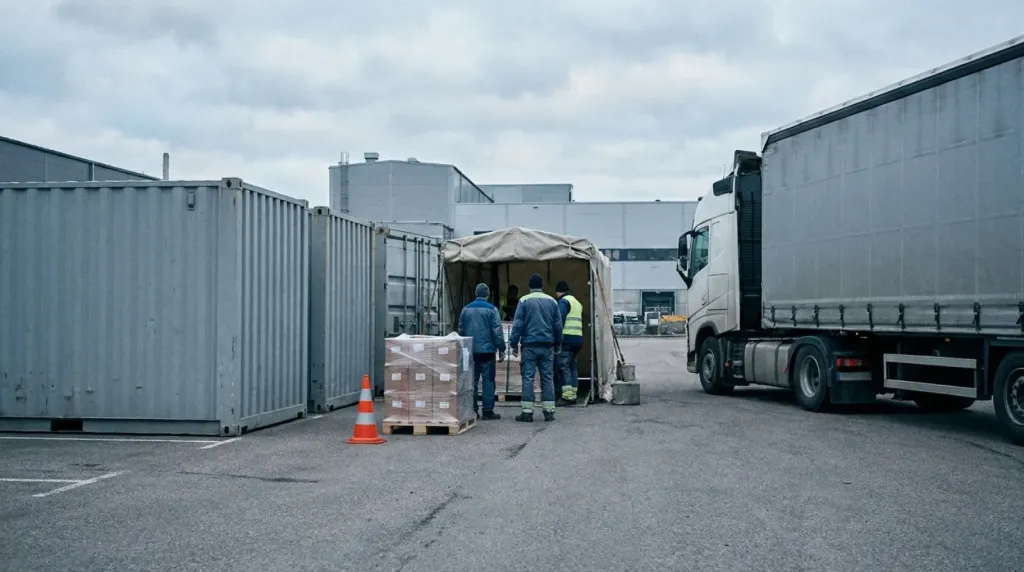
- Securing items in transport packaging: Consolidate loose items and materials into closed wooden crates or onto sturdy pallets suitable for mechanical handling by forklifts.
- Marking packages and weight centres: Apply top/bottom orientation labels to packages and clearly identify the centre of gravity on heavy or oddly shaped machinery.
- Designating an authorised representative: Appoint an on-site contact person who holds formal authority to release goods, sign consignment notes, and issue shipping documents.
- Calculating the collection time backwards: Determine pickup timing by working back from the assigned hall unloading slot, subtracting estimated transit time and necessary loading allowances.
Definitions
- ATA Carnet: An international customs document that permits duty-free temporary export and import of non-perishable display goods and equipment.
- Assembly slot: A scheduled time window assigned by exhibition organisers during which a delivery vehicle is permitted entry to the venue for unloading.
- Centre of gravity: The point within a piece of cargo where its total weight is concentrated, essential for safe crane and forklift lifting.
- Cargo specification: A detailed inventory document stating individual package counts, dimensions, gross weights, and monetary values of transported items.
Checklist for cargo pickup readiness
- Are all exhibit items and stand structures fully packed on pallets or in crates?
- Do actual gross weights and external dimensions match the documentation?
- Are centres of gravity clearly marked on non-standard cargo units?
- Are all packages labelled with venue address details and stand numbers?
- Is an authorised representative present on site to sign logistics documents?
When do these pickup rules not apply?
The described cargo preparation procedures do not apply to small parcels shipped via standard courier networks using automated sorting hubs. These rules also do not apply to barge or rail transport modes. Specific access timing depends on the regulations set out by the venue management and the exhibitor manual provided by the event organiser.
The OTSL role
For exhibitions held at Targi Kielce, OTSL provides the option to collect cargo early from the exhibitor facility into its own staging warehouse in Kielce. This enables exhibitors to clear production space early and schedule final hall delivery precisely within the venue entry window. Explore our dedicated services for customs clearance and ATA carnet processing. You can also read our informative guides on Delivery to Targi Kielce, slots, booking and unloading and Warehouse next to the Kielce fairground.